Lebanon Energy Ministry Delays Petrol Tender One Week to Enable 'Competition'

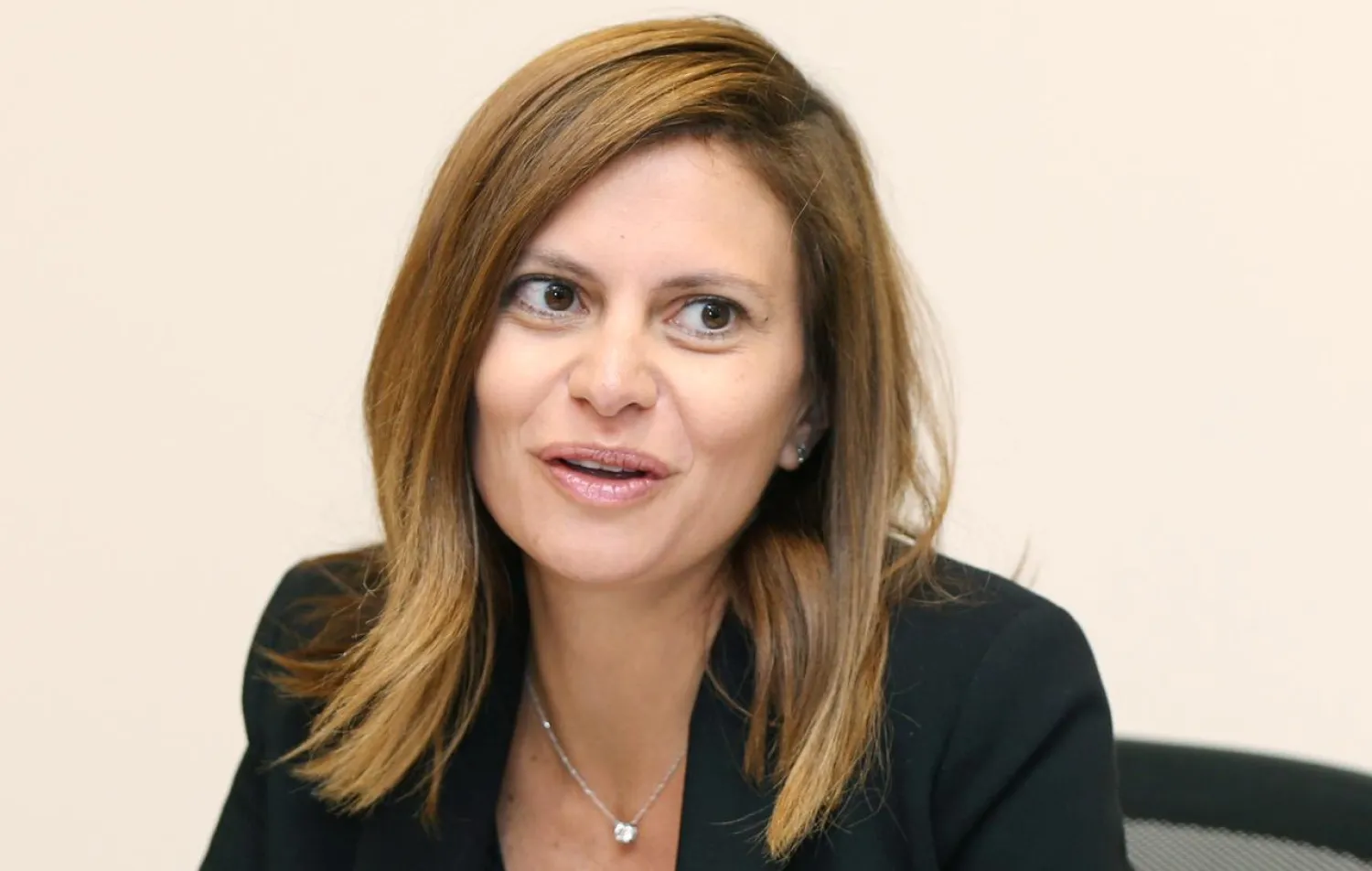
Lebanese Minister of Energy and Water, Nada Boustani Khoury at her office in Beirut, Lebanon, August 21, 2019. REUTERS/Mohamed Azakir/File Photo
TT

Lebanon Energy Ministry Delays Petrol Tender One Week to Enable 'Competition'

Lebanese Minister of Energy and Water, Nada Boustani Khoury at her office in Beirut, Lebanon, August 21, 2019. REUTERS/Mohamed Azakir/File Photo

Lebanon's energy ministry delayed a fuel tender by one week on Monday to allow for more competition as it seeks to stave off supply shortages during the worst economic crisis in decades.

The ministry is trialing a state tender for 150,000 tons of 95 octane gasoline and has received offers from two companies.

The tender, which aims to supply around 10% of the country's needs, is a first in import-dependent Lebanon, where private companies usually procure fuel.

Gas stations suspended a strike on Friday to hold talks with authorities, after shutting down across the country and complaining of losses from buying dollars on the black market.

Caretaker Energy Minister Nada Boustani has said private buyers recently sought to hike petrol pump prices to compensate for the rising cost of dollars on the parallel market, now the main source of hard currency.

The country's economic crisis has been long in the making and now come to a head. The Lebanese pound has slumped as much as 40% below the official dollar peg rate in recent days on the parallel market and a hard currency crunch has left many importers unable to bring in goods, forcing up prices.

Since protests erupted on Oct. 17 and with political gridlock over forming a new government, pressure has piled on the financial system. Banks have curbed US dollar withdrawals and blocked nearly all transfers abroad.

The central bank said in September it would prioritize foreign currency reserves for fuel, medicine, and wheat, though buyers must still supply 15% of their dollar needs.

Fuel imports had since resumed, but traders were asking for 100% of the bill in US dollars to keep buying.

Boustani said on Monday she hoped the central bank would re-evaluate its plan to deal with the ministry under the same mechanism that covers 85% of the dollar need for importing fuel, rather than all of it.

"We took the decision (to postpone) to guarantee more competition and get the best prices for the Lebanese state," she told a press conference.


KSIA Commences Construction of Third Runway to Enhance Operational Efficiency

 The airport will incorporate the King Khalid terminals - SPA
The airport will incorporate the King Khalid terminals - SPA
TT

KSIA Commences Construction of Third Runway to Enhance Operational Efficiency

 The airport will incorporate the King Khalid terminals - SPA
The airport will incorporate the King Khalid terminals - SPA

King Salman International Airport (KSIA), a PIF company, has commenced construction works on the third runway, marking a strategic step that reflects continued progress in airfield development and enhances the airport’s operational readiness to support long-term growth in air traffic demand.

The third runway forms a key component of the KSIA Master Plan and represents a major milestone in the airport’s expansion journey.
According to a press release issued by the KSIA, the project is being delivered in collaboration with FCC Construcción SA and Al-Mabani General Contractors Company and has been designed in alignment with Riyadh’s prevailing wind patterns to ensure safe and efficient aircraft operations under all operating conditions, SPA reported.

The current operational capacity stands at 65 aircraft movements per hour. With the implementation of operational enhancements and the introduction of the third runway, capacity is expected to increase to 85 aircraft movements per hour, contributing to improved operational efficiency and supporting long-term growth.

The third runway incorporates multiple access taxiways to ensure smooth aircraft flow and will span 4,200 meters in length.

Acting CEO of KSIA Marco Mejia said: “Launching construction of the third runway marks a pivotal step in delivering the KSIA Master Plan and reflects our commitment to developing world-class infrastructure capable of supporting future growth, enhancing operational efficiency, and expanding long-haul connectivity without constraints.”

King Salman International Airport is a strategic and transformative national project that reflects the Kingdom’s ambition to position Riyadh as a global capital and a leading aviation hub. The project was announced by His Royal Highness Prince Mohammed bin Salman bin Abdulaziz, Crown Prince, Prime Minister, Chairman of the Council of Economic and Development Affairs and Chairman of the Board of Directors of King Salman International Airport, underscoring its national significance and its role in advancing the objectives of Saudi Vision 2030.

Located on the existing site of King Khalid International Airport in Riyadh, the airport will incorporate the King Khalid terminals, in addition to three new terminals, residential and leisure assets, six runways, and logistics facilities. Spanning 57 square kilometers, it is designed to accommodate 100 million passengers annually and handle over two million tons of cargo by 2030.

This phase of construction contributes to strengthening King Salman International Airport’s international flight network across multiple global destinations, reinforcing Riyadh’s position as an internationally connected aviation gateway and supporting national development objectives within the air transport sector.


Mawani, Arabian Chemical Terminals Sign Land Lease for Jubail Port Storage Tanks

Mawani, Arabian Chemical Terminals Sign Land Lease for Jubail Port Storage Tanks
TT

Mawani, Arabian Chemical Terminals Sign Land Lease for Jubail Port Storage Tanks

Mawani, Arabian Chemical Terminals Sign Land Lease for Jubail Port Storage Tanks

The Saudi Ports Authority (Mawani) signed a contract with Arabian Chemical Terminals Ltd. to establish storage tanks for chemical and petrochemical materials at Jubail Commercial Port, with an investment exceeding SAR500 million on an area of 49,000 square meters.

The project will contribute to enhancing operational efficiency and increasing handling capacity in line with the objectives of the National Transport and Logistics Strategy to consolidate the Kingdom’s position as a global logistics hub, SPA reported.

This step is part of Mawani’s efforts to strengthen the role of the private sector in supporting the gross domestic product and to reinforce the position of Jubail Commercial Port as a driver of commercial activity. The project’s storage capacity will reach 70,000 cubic tons, boosting the competitiveness of the Kingdom’s ports at both regional and international levels.

The project aims to develop and expand storage capacity and the export of chemical and petrochemical materials in accordance with the highest international standards while supporting supply chains. It includes the establishment and development of specialized facilities for storing and exporting chemical and petrochemical products, as well as the provision of storage and distribution services for local and international import and export of chemicals in line with global quality and safety standards.

The project will contribute to supporting national supply chains, boosting the Kingdom’s chemical logistics capabilities, and raising operational efficiency and capacity, thereby improving customer competitiveness. It also supports the achievement of Saudi Vision 2030 objectives by promoting the development of infrastructure to advance the energy, industry, and supply chain sectors in the Kingdom.


Oil Prices Stable as Investors Seek Clarity on Russia-Ukraine Talks

A view shows the crude oil terminal Kozmino on the shore of Nakhodka Bay near the port city of Nakhodka, Russia August 12, 2022. REUTERS/Tatiana Meel
TT

Oil Prices Stable as Investors Seek Clarity on Russia-Ukraine Talks

A view shows the crude oil terminal Kozmino on the shore of Nakhodka Bay near the port city of Nakhodka, Russia August 12, 2022. REUTERS/Tatiana Meel

Oil prices were little changed on Tuesday as investors took stock of ​dented hopes of a Russia-Ukraine peace deal and rising geopolitical tensions in the Middle East around Yemen, Reuters reported.

Brent crude futures for February delivery, which expire on Tuesday, were up 15 cents at $62.09 a barrel as of 0918 GMT. The more active March contract was at $61.61, up 12 cents.

US West Texas Intermediate ‌crude gained 14 ‌cents to $58.22.

The Brent and ‌WTI ⁠benchmarks ​settled ‌more than 2% higher in the previous session as Saudi Arabia launched airstrikes against Yemen and after Moscow accused Kyiv of targeting Putin's residence, denting hopes of a peace deal.

Kyiv dismissed Moscow's accusation as baseless and designed to undermine peace negotiations. After a phone call ⁠with Putin, US President Donald Trump said he was angered by details ‌of the alleged attack.

"I think the ‍markets are sensing that ‍a deal is going to be very hard ‍to come by," said Marex analyst Ed Meir.

Traders also watched other Middle East developments after Trump said the United States could support another major strike on Iran were Tehran to resume rebuilding its ballistic missile or nuclear weapons programs.

Despite renewed fears of potential supply disruptions, perceptions of an oversupplied global market remain and could cap prices, analysts say.

Marex's Meir said prices would trend downwards in the first quarter of 2026 due to ‌a "growing oil glut".