Lebanon Faces Tough Path to Soft Landing or Deeper Crisis

University students light a torch and wave Lebanese flags during anti-government protest in Beirut, Lebanon, November 6, 2019. (Reuters)
TT

Lebanon Faces Tough Path to Soft Landing or Deeper Crisis

University students light a torch and wave Lebanese flags during anti-government protest in Beirut, Lebanon, November 6, 2019. (Reuters)

Lebanese politicians must agree a new government that can stabilize the economy and attract international support if the country is to stave off even deeper economic crisis.

Assuming such a government can be formed, there is still no easy way forward for a country driven toward economic collapse by years of bad governance, corruption and waste.

The least damaging scenario would be a “soft landing” guided by the International Monetary Fund (IMF), economists say, though IMF support has not been broached in public by Lebanese leaders. The economic crisis is the worst since the 1975-90 civil war.

The following scenarios sketch out what might happen in a situation where Lebanon gets a government with international backing, and in a scenario where deadlock continues.

New government agreed, emergency plan drawn up

Caretaker Prime Minister Saad Hariri and his political foes including the Iran-backed Hezbollah party agree on a government that is either led by Hariri or has his blessing.

The government would engage with Western and Gulf Arab states over emergency support. A donor meeting could be convened, probably by France. The response may well include an injection of billions of dollars into the financial system by wealthy donors.

But given the scale of the crisis, Lebanon would also need an IMF program, economists say. Aid would be tied to implementation of reforms.

“We have to bring in the IMF,” said Marwan Mikhael, head of research at Blominvest Bank. IMF support would be vital to ensuring “an orderly adjustment”, added Capital Economics Senior Economist Jason Tuvey. “At least you would ensure the banking system would not collapse and protect the poorest in society.”

“The IMF would not be able to lend to Lebanese without a debt restructuring, so that would have to happen one way or another. I suspect the IMF would also push for a currency devaluation. They estimate it (is) 50% over-valued,” he said, according to Reuters.

A negotiated debt restructuring could include “a haircut” on large bank deposits, Tuvey said. This would reduce their value while leaving the accounts of smaller depositors untouched so the wealthy would carry the burden.

A senior banker said a deposit haircut could be avoided if a stability strategy was enacted now, but could not rule it in a worst-case scenario. “You have to do a debt restructuring and the sooner the better,” the banker said.

Mikhael said a debt restructuring would lengthen maturities and reduce interest rates but not reduce the debt value.

“In the positive scenario, you might have a parallel market for a few months because the capital controls will remain in place until you see things have started to work,” added Mikhael, who believed the pound’s official value would be maintained.

Political crisis continues

Lebanon remains without a new government.

Dollars continue to leave the banks despite controls. In the near term, this leads banks to block all dollar withdrawals, Mikhael said. “The parallel market will flourish more, you will have higher inflation,” he said.

Starved of capital inflows, a sovereign debt default would become inevitable sooner or later. Tuvey said this could happen as early as March. Mikhael said the central bank had enough reserves to cover maturities for a year. “It can be more but then the forex of the central would be very thin,” he said.

The drain on currency reserves would leave the government with no choice but to devalue the pound, Tuvey said. “In this scenario it could be much messier and the currency could overshoot its fair value,” Tuvey said.

Sovereign debt default “runs the risk of banks suffering large write-downs on their balance sheets”, he said. “This is where you run a risk of the collapse in the banking sector.”

The senior banker said the banks’ fixed assets including property would help to shield them from collapse.

“If you put in place the stability strategy today, you surely don’t have to go into a deposit haircut. But the more you wait, the more painful it will be.”


Oil Falls as Trump Says New Iran Attacks ‘Unlikely’

A worker walks past oil pipes at a refinery in Wuhan, Hubei province March 23, 2012. (Reuters)
TT

Oil Falls as Trump Says New Iran Attacks ‘Unlikely’

A worker walks past oil pipes at a refinery in Wuhan, Hubei province March 23, 2012. (Reuters)

Oil prices fell at Monday's open after US President Donald Trump said he was highly unlikely to order new Iran attacks while talks to end the conflict make progress, despite both nations' reports of attacks on ships in or near the Strait of Hormuz.

Brent was down 84 cents, or 0.85%, to $97.48 a barrel by 0138 GMT, while West Texas Intermediate fell 32 cents, or 0.35%, to $90.51 a barrel.

The fall reversed minor gains made on Friday’s settlement as the market assessed the possibility of further US ‌strikes on Iran, ‌although Brent fell 17% last week, the ‌steepest ⁠weekly drop since the ⁠start of the COVID pandemic and the biggest in absolute terms, according to LSEG data dating back to 1988.

"It depends on whether or not they sign a very strong agreement," Trump told CNN in a phone interview. "The answer is, highly unlikely it's going to be necessary."

Trump had hinted at renewing attacks on Iran after ⁠last week's US midterm elections, but there has ‌been no sign of a large-scale ‌US military operation. Iran has said it would respond by striking US and ‌Israeli targets.

Tim Waterer, chief analyst at KCM Trade, called ‌Trump's comments "more measured" but said "the market is still waiting to see whether the midterms have produced a lasting shift in Trump’s approach to the conflict, or whether this is just another temporary change in tone."

Oil is headed ‌for a glut again as recovering Middle Eastern oil flows, rising production from other countries and ⁠weak demand have ⁠pushed global supply above consumption, JPMorgan said in a report on Friday, estimating a surplus of 1.1 million barrels per day in September, widening to 1.4 million bpd in October.

On Sunday, Iraq reached an understanding with the US to allow Iraqi oil exports through the Strait of Hormuz via a shipping lane near Oman, Foreign Minister Fuad Hussein said in an interview with Al Jazeera.

He said Iraq's losses from the Iran war and disruptions to oil exports had reached $60 billion.


Bahraini Transport Minister to Asharq Al-Awsat: Each Country to Finance Its Share of Gulf Railway Project

A conceptual rendering of the Gulf railway interconnection project. (X)
TT

Bahraini Transport Minister to Asharq Al-Awsat: Each Country to Finance Its Share of Gulf Railway Project

A conceptual rendering of the Gulf railway interconnection project. (X)

The Gulf Cooperation Council (GCC) member states took a new step toward completing the railway interconnection project by signing the project's general agreement in Bahrain on Sunday. This comes as part of efforts to establish an integrated transport network linking the six nations and boosting the movement of passengers, goods, and commercial trade among them.

Bahraini Minister of Transportation and Telecommunications Dr. Sheikh Abdulla bin Ahmed Al Khalifa told Asharq Al-Awsat that each country will fund and execute the portion of the project located within its territory.

Meanwhile, the costs, fees, and expenses associated with the shared interconnection components among member states will be determined collectively, he added.

He explained that the agreement establishes a joint framework for the project's execution and operation, while defining the obligations of member states and their coordination mechanisms.

He noted that the network, which extends some 2,117 kilometers, aims to transport 6 million passengers and 200 million tons of freight by 2030, with the figures projected to rise to more than 8 million passengers and 271 million tons of freight by 2045.

The project spans from Kuwait, passing through Saudi Arabia, Bahrain, Qatar, and the UAE, all the way to Oman, with the goal of achieving full network operations by December 2030.

According to the minister, interconnection lines between adjacent countries can become operational as soon as their components are completed, without the need to wait for the entire Gulf network to be finalized.

National financing and potential partnerships

On private sector participation, Al Khalifa said that it remains one of the viable options for financing, executing, or operating certain components of the project, depending on the outcomes of economic and financial studies. He stressed that there is no unified public-private partnership model approved across the entire network.

There are currently no pre-existing agreements with specific international partners to finance or execute the project, he said. However, the expertise of global companies in the fields of design, engineering, technology, and operating systems could be utilized based on the project's needs and its various phases.

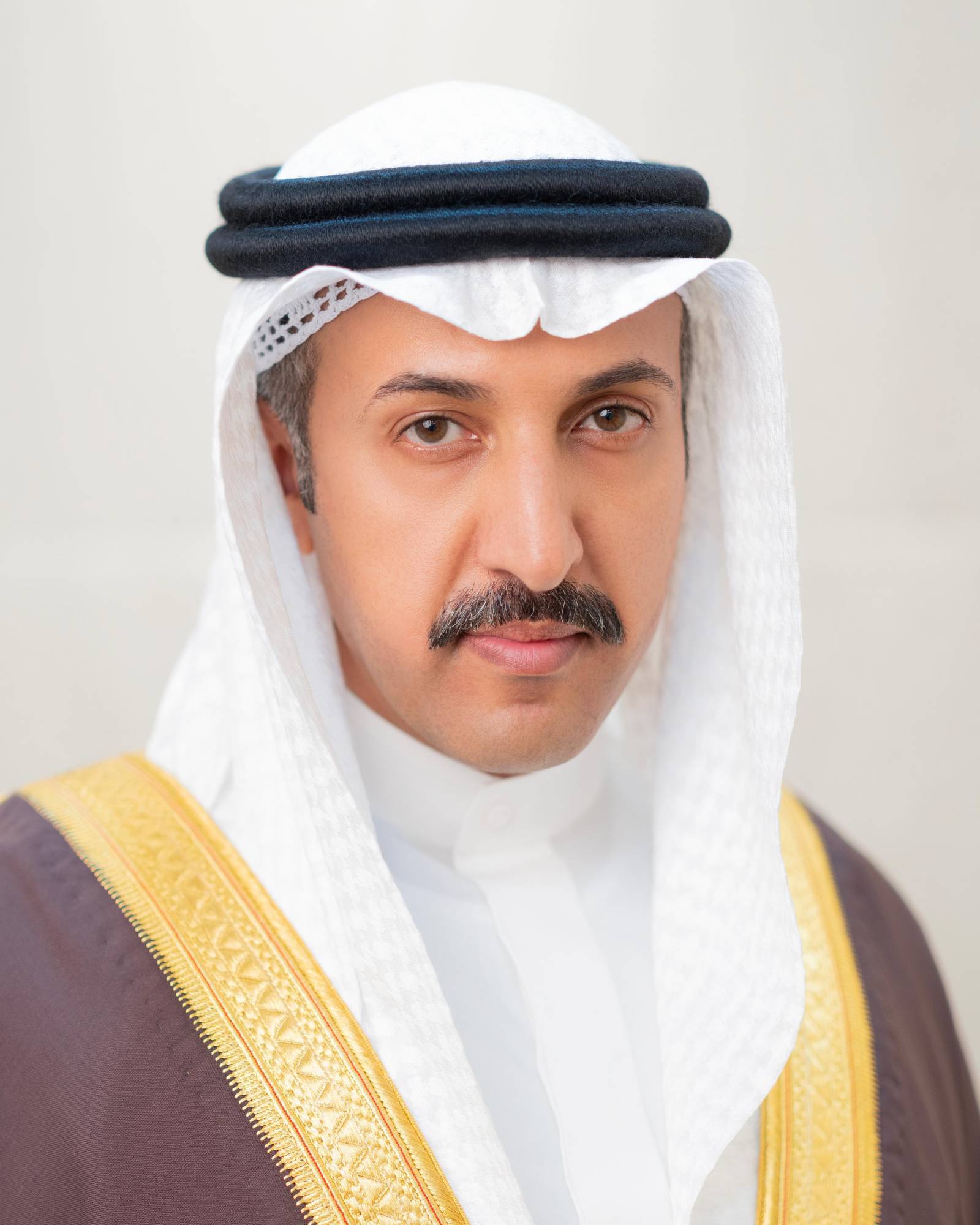
Bahraini Minister of Transportation and Telecommunications Dr. Sheikh Abdulla bin Ahmed Al Khalifa.

Concerning the project's announced completion rate, the minister explained that the 50 percent figure represents the average progress achieved across member states, and does not mean that half of the construction work for the entire Gulf network has been completed.

The project's cost estimates are currently undergoing review and updates in light of economic shifts, rising prices for materials and services, construction costs, and inflation, he revealed without specifying an updated total cost at the present time.

Returns beyond passenger and freight transport

Al Khalifa said that the economic impact of the project is not limited to facilitating passenger movement and freight transport, but extends to improving supply chain efficiency, boosting trade among GCC countries, and linking industrial centers, economic zones, and logistical hubs, as well as supporting employment and investment opportunities.

He added that determining the project's exact contribution to the gross domestic product (GDP) or estimating expected savings in time and costs remains premature, given that returns vary depending on transport routes, the nature of the cargo, and the points of origin and destination.

In light of the challenges facing maritime navigation in the region, the minister stressed that the Gulf railway network is not intended to serve as a substitute for maritime transport. Instead, it acts as a complementary route that boosts transport options and connectivity among GCC nations, increasing the resilience of supply chains against disruptions that could affect various modes of transportation.

He noted that integration between ports, roads, railways, and airports will strengthen the flexibility of the Gulf transport system, while connecting to broader international logistical corridors remains a future possibility contingent on completing studies, understandings, and coordination with the relevant countries and entities.

King Hamad Bridge to link Bahrain and Saudi Arabia

Regarding the connection between Bahrain and Saudi Arabia, Al Khalifa explained that the King Hamad Bridge project includes road lanes and railway lines, enabling the international passenger station in Bahrain to connect with the Saudi railway network and forming one of the essential components for completing the Gulf interconnection.

He added that work is underway on the privatization procedures for the King Fahd Causeway Authority, alongside completing the necessary studies and procedures to transition to the execution of the new bridge project.

Achieving the connection between Bahrain and Saudi Arabia is a fundamental requirement for operating the railway line between the two countries within the project's targeted timeframe in December 2030,e he said.


Egypt Seeks Faster Progress on Libya Gas, Refining and Power Projects

Egyptian Foreign Minister Badr Abdelatty speaks during a press conference with Minister of Information Diaa Rashwan (not pictured) in Cairo, Egypt, March 25, 2026. (Reuters)
TT

Egypt Seeks Faster Progress on Libya Gas, Refining and Power Projects

Egyptian Foreign Minister Badr Abdelatty speaks during a press conference with Minister of Information Diaa Rashwan (not pictured) in Cairo, Egypt, March 25, 2026. (Reuters)

Egypt aims to accelerate energy projects with Libya, including gas pipeline links, refining of Libyan crude in Egypt and an electricity interconnection, Egyptian Foreign Minister Badr Abdelatty said late on Saturday.

Abdelatty's comments were in ‌a ministry ‌statement after a meeting ‌with ⁠Libya’s acting oil ⁠and gas minister Khalifa Abdulsadek in Tripoli.

Abdelatty also ‌called for cooperation on petroleum products and the completion of projects to refine Libyan ‌oil in Egypt and re-export it, the statement said, ⁠adding ⁠that Abdulsadek had said that Libya would continue implementing existing projects and would visit Cairo soon to continue technical talks with Egypt’s petroleum and electricity ministers.

The statement did not provide details on costs or the status of the projects.