


As Crisis Hits, Lebanese Businesses Fight for Survival

Scores of Lebanese businesses have closed amid a severe economic crisis | AFP
TT

As Crisis Hits, Lebanese Businesses Fight for Survival

Scores of Lebanese businesses have closed amid a severe economic crisis | AFP

After decades of hard work, self-made Lebanese chocolatier Roger Zakhour thought he would finally be able to pass a successful business to his daughter. But then the economic crisis hit.

Instead of reaping profits this Christmas, he and his 29-year-old daughter are marking down their handmade ice cream logs.

"If it continues like this, in a few months I'll be bankrupt," the 61-year-old said sitting in his small shop, surrounded by colorful stacks of hand-crafted chocolates.

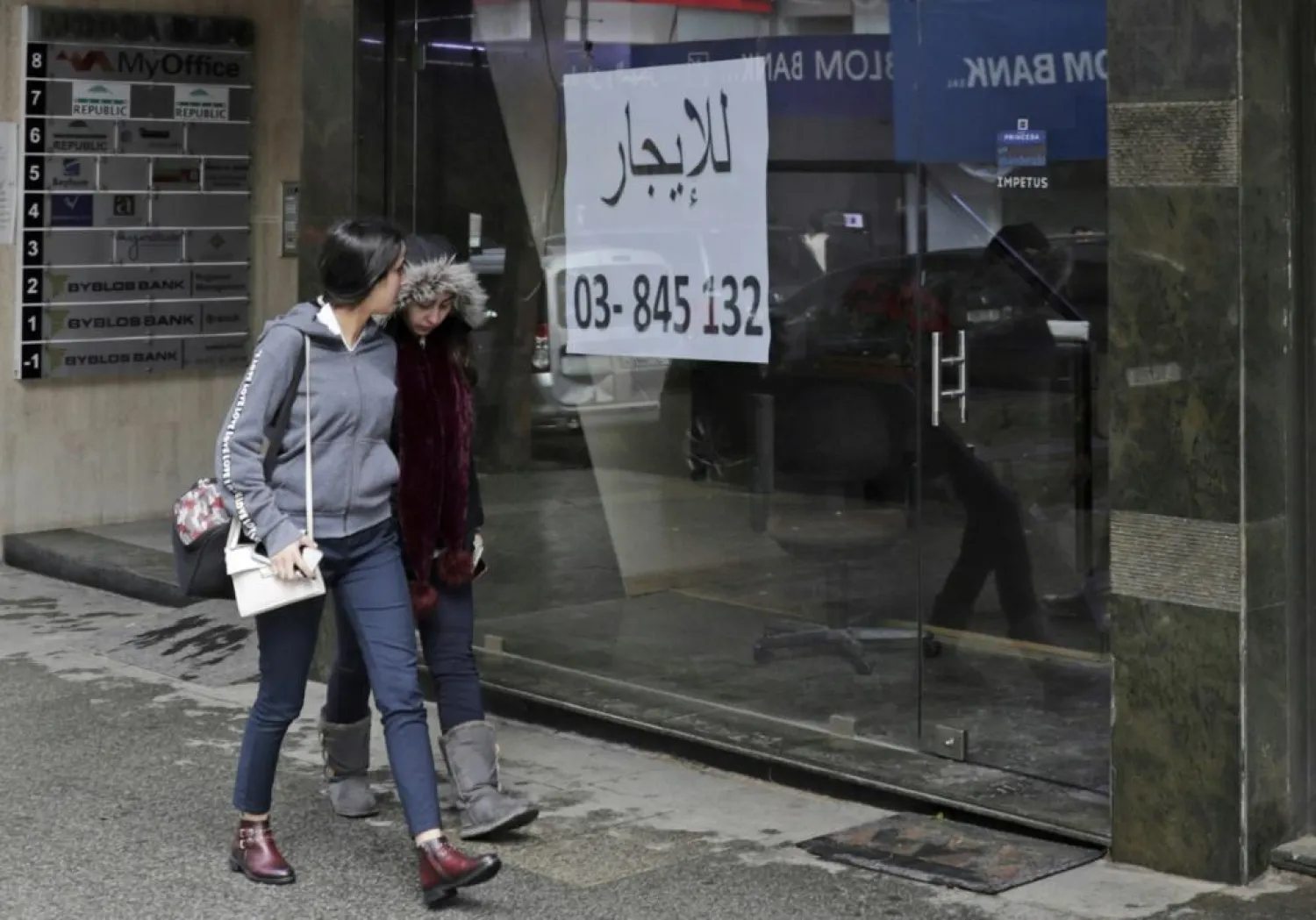
In protest-hit Lebanon, a free-falling economy, price hikes, and a severe dollar liquidity crunch have left local businesses struggling to stave off collapse.

Zakhour started making chocolates and then ice cream in the 1990s, refining his recipes until he became a go-to for five-star hotels and well-off Lebanese.

But as the economy worsened over the autumn, high-end hotels drastically reduced their orders and walk-in customers became rare.

Banks have restricted access to dollars since the end of the summer, sending prices soaring as importers struggle to secure enough hard currency to buy supplies.

"We're heading somewhere we never imagined we would," said Zakhour, who had just upgraded his kitchen when sales dropped off.

- Support fellow citizens -

In pursuit of high-quality products, Zakhour imports his ingredients, paying in euros or dollars.

But with withdrawals restricted and no transfers abroad, that is no longer viable.

"Now when something runs out, that's it," he said.

Unprecedented protests have swept Lebanon since October 17, with people from all backgrounds demanding a complete overhaul of a political class they deem useless and corrupt.

The government stepped down on October 29, but endless political deadlock has delayed a new one being formed to tackle the urgent need for economic reforms.

Zakhour's business is just one of thousands struggling to stay afloat.

Many Lebanese have been forced to close shop, and a large number have been fired or seen their salaries slashed by half, even as the cost of living increases.

Watching all this unfold, 31-year-old nursery school teacher Lea Hedary Kreidi and her family racked their brains to see how they could help.

Shortly after protests started, they launched a group on Facebook called "Made in Lebanon -- The Lebanese Products Group" to encourage Lebanese to buy locally produced goods.

In just two months, they amassed more than 32,000 members, who post ads for locally or homemade goods, or ask for local alternatives to imported products.

- 'Made in Lebanon' -

"We're used to going shopping and buying what our mothers used to buy. We grab what's in front of us without checking if it's made in Lebanon or not," she said, seated at home by a sparkling Christmas tree.

But there are locally made options for numerous products, including detergent, shampoo, nappies, peanut butter, ketchup, and children's building blocks.

"I was surprised by how many things there were that I didn't know about," said the mother of a baby boy.

In her drive to support her fellow citizens, Kreidi now skips her usual supermarket in favor of nearby small grocers.

This Christmas, only the children in her family will be receiving presents, which will all be made in Lebanon.

In Beirut, bar manager Rani al-Rajji says he is also having to adapt -- moving away from increasingly expensive imports while also remaining affordable.

"As much as I can, I'm trying to lessen the blow so our guests don't feel they've lost their purchasing power and can no longer afford to go out," said the 43-year-old, who is also an architect.

To do this, he and his co-founders are trying to increase local brands from a fifth to around a half of all bar and kitchen supplies.

"We're trying to use local products for all those with an alternative made in Lebanon," he said, sitting at the bar.

And they are also attempting to cut out unnecessary packaging and marketing costs, serving wine directly from the barrel and beer from the keg.

"We can't replace everything, but we can try to give Lebanese products more life, encourage their consumption," he said.

But some cash-strapped consumers say buying local is not their chief concern.

In a Beirut supermarket, 35-year-old Mariam Rabbah clutched a nearly empty basket wondering what to buy with her diminished salary.

"Everything is more expensive and we're now paid half," she said.

"Now what we care about is if something is cheap and good quality -- not whether it's imported or Lebanese."



Lockheed Martin: Saudi Arabia Is Strategic Choice for Global Defense Hub

Lockheed Martin took part in the recent World Defense Show in Riyadh. (Asharq Al-Awsat)
TT

Lockheed Martin: Saudi Arabia Is Strategic Choice for Global Defense Hub

Lockheed Martin took part in the recent World Defense Show in Riyadh. (Asharq Al-Awsat)

Saudi Arabia’s push to localize half of its defense spending under Vision 2030 is drawing deeper commitments from US defense giant Lockheed Martin, which says it will expand local manufacturing, transfer advanced technologies, and further integrate the Kingdom into its global aerospace and defense supply chains.

Building Saudi partnerships

Steve Sheehy, vice president for international business development at Lockheed Martin’s aeronautics division, said the company is stepping up efforts to partner with both established and emerging Saudi aerospace firms.

Lockheed Martin is looking to build partnerships across maintenance, repair and overhaul, as well as component manufacturing and repair, particularly in advanced avionics, Sheehy told Asharq Al-Awsat.

Speaking after the company’s participation in the World Defense Show in Riyadh, he said Lockheed Martin is also targeting emerging fields such as additive manufacturing, from plastics to metals, and advanced composite materials.

The goal, he said, is twofold: plug gaps in the company’s global supply chain while transferring know-how and strengthening local capabilities in a mutually beneficial model.

Sheehy described the Saudi aerospace sector as established and growing. He also noted that it has a solid base in maintenance and manufacturing, as well as a clear shift toward advanced technologies, creating room for deeper collaboration between national firms and global industry leaders.

Alignment with Vision 2030

Retired Brigadier General Joseph Rank, chief executive of Lockheed Martin in Saudi Arabia and Africa, said the company’s strategy in the Kingdom is rooted in a long-term partnership aligned with Vision 2030, especially the target of localizing 50 percent of defense spending.

Lockheed Martin, he said, is focused on transferring knowledge and advanced technologies, developing local industrial capabilities and building an integrated defense ecosystem that positions Saudi Arabia firmly within global supply chains.

Rank said the company is working closely with government entities and national companies to strengthen local manufacturing, empower Saudi talent and establish a sustainable industrial base that supports innovation and creates high-quality jobs.

Lockheed Martin is advancing manufacturing and repair work on defense equipment, including components of the THAAD air defense system, missile launch platforms, and interceptor missile canisters, in cooperation with Saudi partners, Rank said.

The company has also opened a maintenance center in Riyadh for the Sniper Advanced Targeting Pod system, the first of its kind in the Middle East, to enhance maintenance and technical support capabilities.

Beyond hardware, Lockheed Martin is investing in transferring and localizing advanced technologies in air defense, command and control, and digital manufacturing. It is also supporting science, technology, engineering and mathematics programs and hands-on training in cooperation with national universities.

Broad local network

Rank said the company relies on a wide network of partners in the Kingdom. At the forefront are the General Authority for Military Industries, the main government partner in localization agreements, and Saudi Arabian Military Industries, a key manufacturing and technology transfer partner.

Other collaborators include the Advanced Electronics Company for advanced systems maintenance, the Middle East Propulsion Company and AIC Steel for producing THAAD components and platforms, and the National Company for Mechanical Systems for advanced manufacturing technologies.

Academic partnerships extend to King Abdullah University of Science and Technology, King Saud University, King Fahd University of Petroleum and Minerals, and Princess Nourah bint Abdulrahman University, supporting research and developing national talent.

Localizing aerospace manufacturing

Rank said localizing aerospace manufacturing is a strategic priority. Lockheed Martin has launched projects to produce interceptor missile launch platforms and canisters inside the Kingdom and awarded contracts for key components to Saudi companies, qualifying them to join its global supply network beyond the US.

The company is evaluating and qualifying hundreds of Saudi firms to produce defense equipment to international standards, focusing on technology transfer and building local expertise as a step toward manufacturing more integrated systems in the future.

Company officials said the approach goes beyond supplying systems. It centers on technology transfer, digital manufacturing, and command-and-control systems, laying the groundwork for the production of integrated systems in the Kingdom and strengthening Saudi Arabia’s position as a regional hub for aerospace and defense.


Türkiye TPAO, Shell Sign Deal to Carry out Exploration Work offshore Bulgaria

A Shell logo is seen at a gas station in Buenos Aires, Argentina, March 12, 2018. (Reuters)
TT

Türkiye TPAO, Shell Sign Deal to Carry out Exploration Work offshore Bulgaria

A Shell logo is seen at a gas station in Buenos Aires, Argentina, March 12, 2018. (Reuters)

Türkiye Petrolleri (TPAO) has signed a partnership agreement with Shell to carry out exploration work in Bulgaria's maritime zone, the Turkish energy ministry and British oil major said on Wednesday.

European Union member Bulgaria, which had been totally dependent on Russian gas until 2022, has been seeking to diversify its gas supplies and find cheaper sources, Reuters reported.

TPAO and Shell will jointly explore the Khan Tervel block, located near Türkiye's Sakarya gas field, and will hold a five-year licence in Bulgaria's exclusive economic zone, Minister Alparslan Bayraktar said.

Shell will continue as operator of the block, while TPAO will take a 33% interest in the licence, a Shell spokesperson said.

Since the start of this year, TPAO has signed energy cooperation agreements with ExxonMobil, Chevron and BP for possible exploration work in the Black Sea and the Mediterranean.

In April, Shell signed a contract with Bulgaria's government to allow the oil major to explore 4,000 square metres in the block.


Saudia Signs Strategic Partnership Agreement with Six Flags and Aquarabia Qiddiya City

udia will develop special travel packages designed to enable visitors to experience world-class attractions - SPA
TT

Saudia Signs Strategic Partnership Agreement with Six Flags and Aquarabia Qiddiya City

udia will develop special travel packages designed to enable visitors to experience world-class attractions - SPA

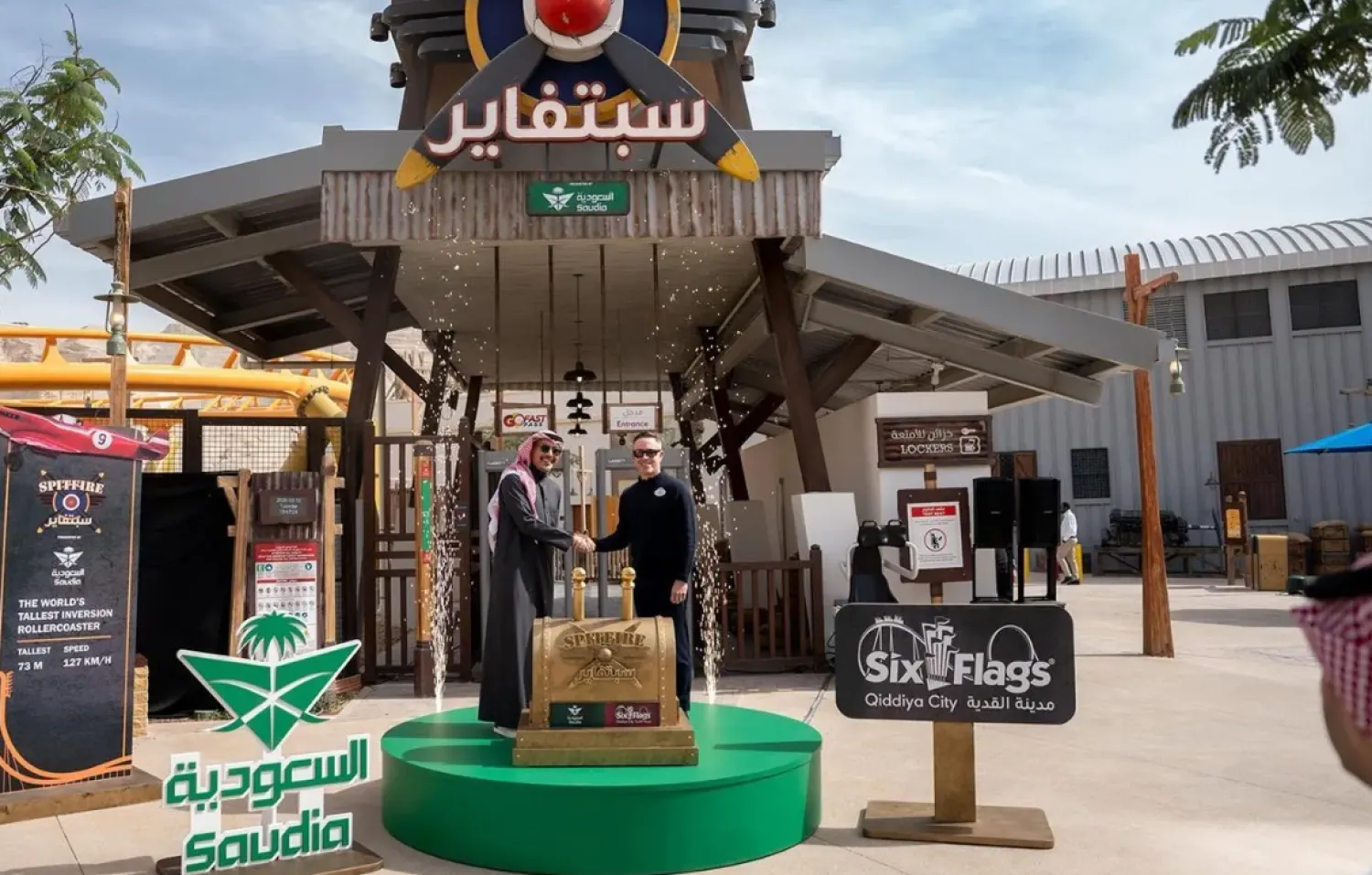
Saudia Airlines has signed a five-year strategic partnership with Six Flags and Aquarabia Qiddiya City, becoming the official premier partner exclusively in the airline category.

As part of the partnership, Saudia will develop special travel packages designed to enable visitors to experience world-class attractions. The collaboration also brings the spirit of Six Flags and Aquarabia Qiddiya City to the skies through special aircraft branding across Saudia’s fleet, SPA reported. 

Chief Marketing Officer of Saudia Group Khaled Tash said in a press release: "Saudia is committed to supporting national development projects as part of its contribution to Vision 2030, aligned with our strategy to bring the world to the Kingdom. Partnerships of this scale with national partners play a key role in positioning Saudi Arabia as a leading global destination for entertainment and tourism."

Park President of Six Flags and Aquarabia Qiddiya City Brian Machamer added: "Our partnership with Saudia not only reflects a shared ambition to connect the Kingdom to the world through world-class entertainment experiences, but strengthens our ability to attract visitors from around the world and realize our vision of setting a new global benchmark for immersive, world-class theme park entertainment and reinforcing Saudi Arabia’s growing presence on the global tourism stage."

Six Flags Qiddiya City sets a new benchmark for exceptional entertainment regionally and globally. Spanning six iconic themed lands, the theme park takes visitors on an immersive journey across 28 rides and attractions designed to world-class standards. Beyond the scale and diversity of its offerings, Six Flags Qiddiya City stands out for pushing the boundaries of engineering and entertainment, featuring five exclusive, record-breaking rides that have redefined global benchmarks. Leading these innovations is Falcons Flight, the roller coaster that has captured global attention as the fastest, tallest, and longest in the world.

Aquarabia Qiddiya City delivers a distinctive aquatic entertainment experience, offering 22 rides and water attractions, along with a man-made river designed for both relaxation and family-friendly water fun. For guests seeking privacy and elevated comfort, Aquarabia features 91 luxury cabanas, positioning the destination as a fully integrated leisure offering that redefines water-based entertainment to the highest international standards.

Located in the Tuwaiq Mountains near Riyadh, Qiddiya City is an emerging destination bringing together entertainment, sports, and culture. Six Flags and Aquarabia Qiddiya City form part of its entertainment offering.