Travelers are Venturing out Again but Avoiding Planes, International Trips, Survey Shows

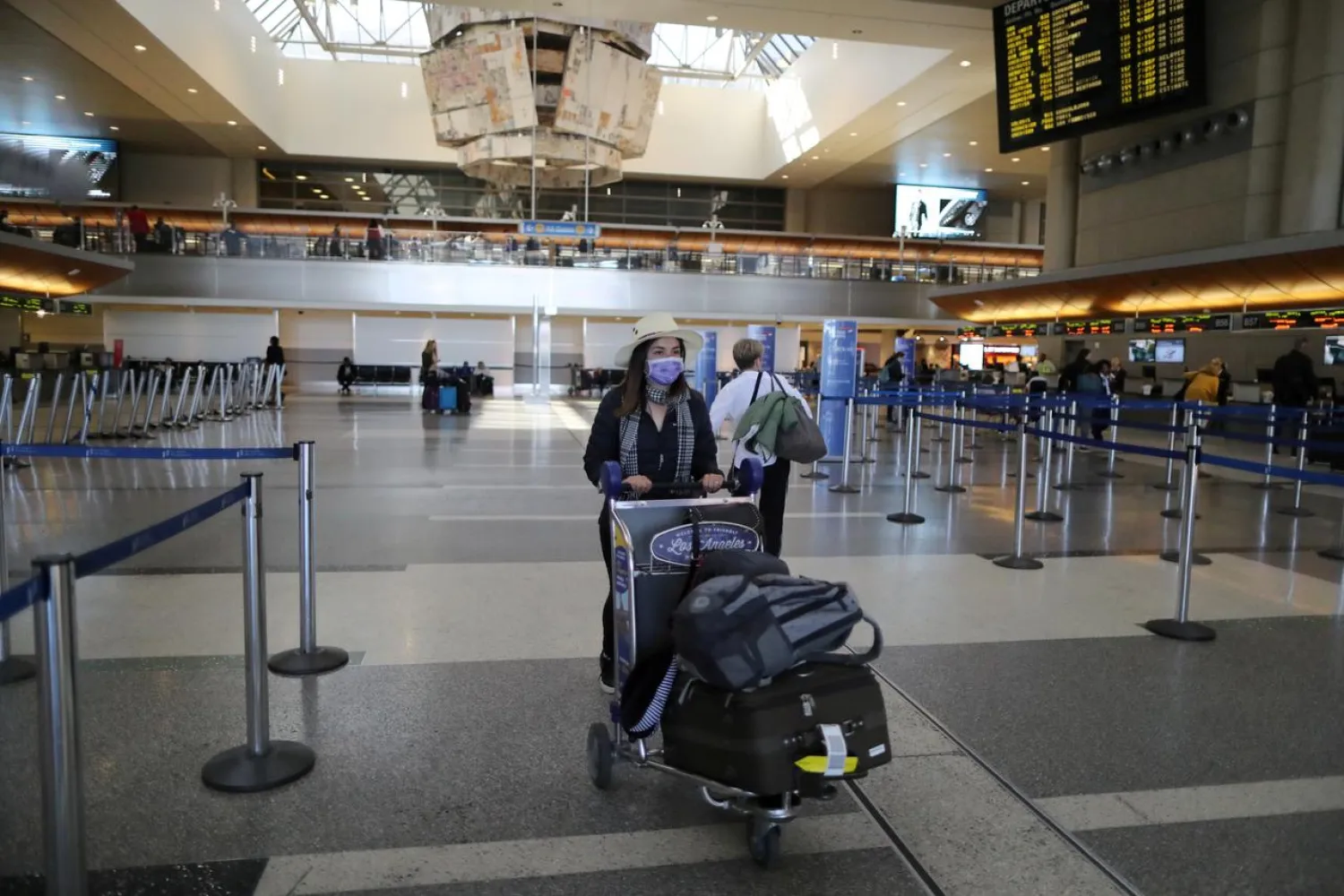
A woman walks through the empty international terminal at LAX airport in Los Angeles, California, US, amid reports of the coronavirus, March 11, 2020. (Reuters)
TT

Travelers are Venturing out Again but Avoiding Planes, International Trips, Survey Shows

A woman walks through the empty international terminal at LAX airport in Los Angeles, California, US, amid reports of the coronavirus, March 11, 2020. (Reuters)

Travelers are hitting the road again and taking vacations even as the coronavirus pandemic shows no signs of abating in many countries, a survey on Tuesday showed.

About 51% of people in North America and Latin America plan to book trips in the next six months, compared with 38% in Asia and Europe, according to the survey by software maker Oracle Corp.

However, travelers want to stay close to home, preferring to drive and to avoid international trips.

Due to travel restrictions and lengthy lockdowns in many countries to control the spread of the novel coronavirus, tens of thousands of hotels have closed and occupancy levels have fallen below 20% for weeks, said Alex Alt, general manager of Oracle Hospitality.

“One thing that’s refreshing is that consumers want to travel,” he told Reuters. “There is a resilience and an appetite to be on the road, to explore, to experience.”

With US coastal towns a favorite destination, occupancy among 600 US hotels that Oracle tracks has risen for five straight weeks and recently hit its highest levels since mid-March.

“I’d say the industry largely expects it to continue through the summer months,” Alt said. “The key will be for the business travel to come back to complement that leisure travel.”

COVID-19 cases have surged around the United States and the death toll has topped 130,000, prompting the European Union last week to exclude Americans travelers for its “safe” travel list.

To assuage concerns about infections, 90% of hotels have increased or planned to increase cleaning and disinfecting. In addition, 70% of hotels already are or are planning to adopt contactless technology for check-in, food ordering and concierge services, according to the survey.

Oracle surveyed 4,600 consumers and 1,800 hotel executives in the United States, Mexico, United Kingdom, Germany, Singapore and Australia in mid-April through early May.


Gold Slides to Nearly 4-month Low

FILED - 02 February 2026, Bavaria, Munich: Gold bars lie in a safe on a table at the precious metal dealer Pro Aurum. Photo: Sven Hoppe/dpa
TT

Gold Slides to Nearly 4-month Low

FILED - 02 February 2026, Bavaria, Munich: Gold bars lie in a safe on a table at the precious metal dealer Pro Aurum. Photo: Sven Hoppe/dpa

Gold prices slipped more than 2% on Monday, hitting a nearly four-month low, as an escalating Middle East conflict stoked inflation concerns and expectations of higher global interest rates.

Spot gold fell 2.7% to $4,366.94 per ounce as of 0432 GMT, extending losses into a ninth straight session. The metal, which fell to its lowest since January 2 on the day, lost more than 10% last week.

US gold futures ⁠for April delivery ⁠fell 4.5% to $4,369.90, Reuters reported.

"With the Iranian conflict into its fourth week, and oil prices hanging around the $100 level, expectations have pivoted from rate cuts to potential rate hikes, which have tarnished gold's appeal from a yield point of view," said Tim Waterer, chief market analyst, KCM Trade.

"Gold's high liquidity appears to be hurting it during this risk-off period. 

Downturns in stock markets are leading to gold portions being closed to cover margin calls on other assets," Waterer said.

Asian shares fell and oil prices stayed well above $110 a barrel, as investors weighed US and Iranian threats to target energy ⁠facilities.

The closure ⁠of the Strait of Hormuz kept crude elevated, stoking inflation fears by pushing up transport and manufacturing costs. While rising inflation typically boosts gold's appeal as a hedge, high rates curb demand for the non-yielding asset.

Market pricing for a US Federal Reserve rate hike this year has shot up, and is now seen as far more likely than a rate cut, with rate futures pricing in around a 32% chance of a rate hike by December, per the CME FedWatch tool.

Spot silver lost 3.4% to $65.45 per ounce. Spot platinum fell 3.4% to $1,857.67 and palladium was steady at $1,403.10.


Asian Stocks Tumble as Trump Gives Iran 48-hour Ultimatum

The surge in oil prices since the war began have fanned concerns about a fresh spike in inflation. Brandon Bell / GETTY IMAGES NORTH AMERICA/AFP
TT

Asian Stocks Tumble as Trump Gives Iran 48-hour Ultimatum

The surge in oil prices since the war began have fanned concerns about a fresh spike in inflation. Brandon Bell / GETTY IMAGES NORTH AMERICA/AFP

Stocks tumbled Monday and oil prices rose after Donald Trump and Iranian leaders traded threats over the key Strait of Hormuz, while Israel said the Middle East war could last several more weeks.

With the conflict now in its fourth week and showing no sign of ending, the head of the International Energy Agency warned of the worst global energy crisis in decades and said the world economy was under "major threat" from the crisis.

Observers, meanwhile, have also raised the prospect of a surge in inflation that could force central banks to hike interest rates, while the choking off of fertilizer shipments has also fanned concerns about global food security.

The US president on Saturday gave Iran 48 hours to reopen the Strait of Hormuz to shipping or face the destruction of its energy infrastructure, reported AFP.

The ultimatum, made just a day after the US leader said he was considering "winding down" military operations, came as the waterway -- through which a fifth of global oil and gas flows -- remained effectively closed.

Trump wrote on Truth Social that the US would "hit and obliterate" Iranian power plants -- "starting with the biggest one first" -- if Tehran did not fully reopen the strait within 48 hours, or 23:44 GMT on Monday, according to the time of his post.

That came a day after Trump ruled out a ceasefire agreement, saying Washington had the upper hand.

Iran warned Hormuz "will be completely closed" if Trump acted on his threat.

And powerful parliament speaker Mohammad Bagher Ghalibaf threatened to irreversibly destroy vital infrastructure across the region, which he said would cause oil prices to rise "for a long time", if Tehran's own infrastructure was hit.

The latest escalation came as Israel's military said it will expand its ground operations in Lebanon against Iran-backed militant group Hezbollah, while a spokesman said the country faced "weeks" more fighting against Iran and Hezbollah.

The escalation hammered stock markets, with Seoul and Tokyo -- which had been the standout performers before the war started -- taking the brunt of the selling, shedding as much as six and five percent, respectively, at one point.

Hong Kong shed more than three percent, while Shanghai, Taipei and Manila all lost more than two percent. Sydney, Singapore and Wellington were also deep in negative territory.

South Korea's won dropped to 1,510 won per dollar, its weakest level since 2009.

Oil prices edged up, with Brent sitting around $112 and West Texas Intermediate just below $100.

- Deadline focus -

"The outcome and Trump's next steps, particularly in the event of escalation, would have significant implications for markets through the remainder of the week and into month and quarter end," wrote Pepperstone's Chris Weston.

He added that while the president has often pulled back from the brink on issues in the past "has also shown credibility in following through with military action when demands are not met, so markets will place weight on his weekend post on Truth Social".

"If we move past the deadline, focus will quickly shift to the scale of any action against Iran and the nature of Iran's response, particularly toward US bases and its allies."

Meanwhile, IEA boss Fatih Birol said Monday: "The global economy is facing a major, major threat today, and I very much hope that this issue will be resolved as soon as possible.

"No country will be immune to the effects of this crisis if it continues to go in this direction. So there is a need for global efforts."

His remarks came as central banks reconsider their monetary policies amid expectations that the surge in oil prices will send inflation soaring, with the Reserve Bank of Australia last week hiking interest rates.

The prospect of higher borrowing costs has hammered non-yielding gold, which has fallen for eight straight days and just suffered its worst weekly drop since 1983.

Bullion was sitting around $4,350 Monday, having hit a record high of almost $5,600 at the end of January.


China's Sinopec Posts 36.8% Drop in 2025 Net Profit

People walk past SINOPEC petrol station, in Shanghai, China, 19 March 2026.  EPA/ALEX PLAVEVSKI
People walk past SINOPEC petrol station, in Shanghai, China, 19 March 2026. EPA/ALEX PLAVEVSKI
TT

China's Sinopec Posts 36.8% Drop in 2025 Net Profit

People walk past SINOPEC petrol station, in Shanghai, China, 19 March 2026.  EPA/ALEX PLAVEVSKI
People walk past SINOPEC petrol station, in Shanghai, China, 19 March 2026. EPA/ALEX PLAVEVSKI

China Petroleum & Chemical Corp, known as Sinopec, reported a 36.8% decline in 2025 net profit on Sunday, citing rising substitution by new energy sources, and weak petrochemical margins, according to the company's filing.

The world's largest oil refiner by capacity posted net income attributable to shareholders of 31.8 billion yuan ($4.62 billion), based on Chinese accounting standards, in a filing to the Shanghai stock exchange.

Refinery throughput fell 0.8% last year to 250.33 million metric tons, equivalent to 5 million barrels per day. The company forecast refinery throughput would remain stable at about 250 million tons in 2026.

Gasoline and diesel production fell 2.4% and 9.1%, respectively, to 62.61 million tons and 52.64 million tons, while kerosene production rose 7.3% year-on-year to 33.71 million tons.

Annual refining ⁠gross margin was ⁠330 yuan ($47.93) per ton, up 27 yuan year-on-year, mainly due to sharply improved margins for refining by-products such as sulfur and petroleum coke, which offset the impact of high import crude premiums and freight costs.

The company's gasoline sales fell 2.5% year-on-year to 61.1 million tons, with the average price falling 7.7%, while diesel sales fell 9.1% to 51.2 million tons, and the average price fell 8% in ⁠2025, Reuters reported.

Kerosene sales were 24.2 million tons, up 4% year-on-year, while the average price was down 9.9% from 2024.

In 2025, the company's domestic crude oil output reached 255.75 million barrels, up 0.7% year-on-year, while overseas crude oil output was 26.65 million barrels.

Sinopec expects domestic crude oil output to reach 255.6 million barrels in 2026, remaining largely stable, while overseas output is expected to drop to 25.31 million barrels.

Natural gas production rose 4% year-on-year to 1,456.6 billion cubic feet in 2025 and is expected to reach 1,471.7 billion cubic feet in 2026.

The company's ethylene production rose 13.5% year-on-year to 15.28 million tons in 2025.

In 2025, the ⁠company's external sales ⁠revenue from chemical products totaled 378.0 billion yuan, down 9.6% year-on-year, mainly because of lower product prices.

Sinopec's capital spending was 147.2 billion yuan in 2025 with 70.9 billion yuan on exploration and development.

Sinopec said it plans capital spending from 131.6 billion to 148.6 billion yuan this year, including 72.3 billion yuan for exploration and development, mainly for crude oil capacity expansion at Jiyang and Tahe, natural gas capacity projects in western and southern Sichuan, and oil and gas storage and transport facilities.

Sinopec's Hong Kong-listed shares have risen 0.21% year-to-date, outperforming a 1.38% drop in the Hang Seng Index , while lagging behind its peers PetroChina and CNOOC, which have posted 17.58% and 42.63% gains year-to-date, respectively.