


Egypt Launches Initiative to Encourage Buying of Local Productshttps://english.aawsat.com/home/article/2412181/egypt-launches-initiative-encourage-buying-local-products
Egypt Launches Initiative to Encourage Buying of Local Products
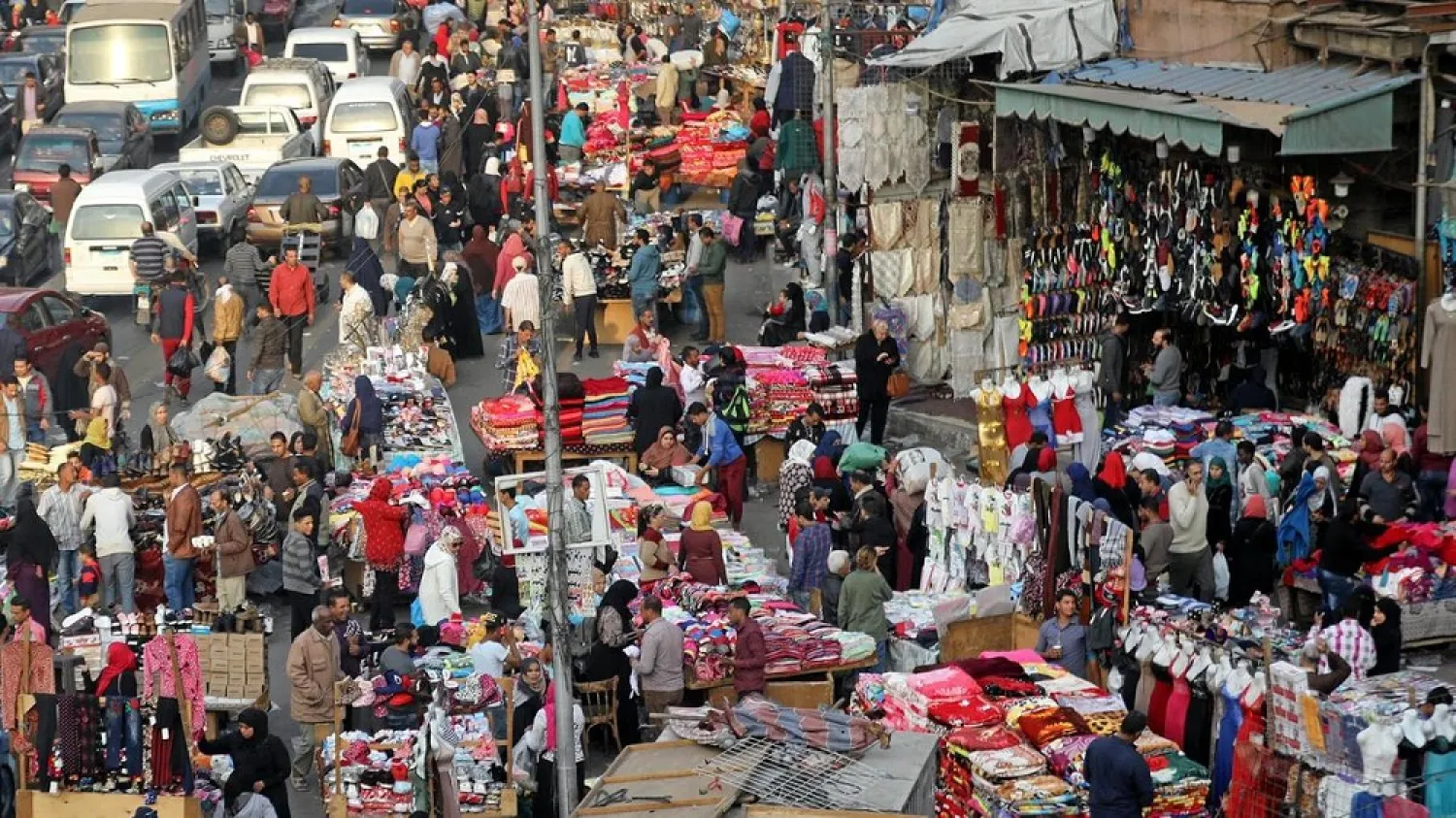
People shop at Al Ataba, a popular market in downtown Cairo, Egypt. (Reuters)
Egypt launched an initiative to stimulate consumption and encourage demand for local products to help citizens of limited income, which will ease the impact of the coronavirus pandemic, announced Finance Minister Mohamed Mait.
The Finance Ministry issued a statement Saturday saying that the EGP12.5 million-presidential initiative will kick off on Sunday and offer a discount of up to 20 percent on goods.
He pointed out that the objectives of the initiative are to stimulate consumption and local trade, which will double production at factories, and thus increase employment opportunities, which will be reflected on the economy through raising growth rates and creating job opportunities.
The Minister revealed the types of commodities listed under the initiative include durable goods, such as refrigerators, washing machines, furniture, clothes and sanitary ware.
He explained that this will allow sale by installments through financing goods at low interest rates in cooperation with some Egyptian banks and consumer finance companies.
Meanwhile, Tarek Real Estate Investment and Development inaugurated a complex to market local products in various industrial and commercial fields estimated at billions of dollars.
The company said in a press statement Saturday the Cairo mall covers an area exceeding 54,000 square meters, making it the largest in the country in terms of service and space.
The statement the location was chosen in the vicinity of the industrial zone in the 6th of October city to promote various Egyptian industries and help a number of factories to compete and reach the consumer.
Saudi Investment Minister Inaugurates Lenovo Regional HQ in Riyadhhttps://english.aawsat.com/business/5261591-saudi-investment-minister-inaugurates-lenovo-regional-hq-riyadh
Saudi Investment Minister Inaugurates Lenovo Regional HQ in Riyadh
Al-Saif said Lenovo’s decision to establish its regional headquarters in the Kingdom reflects the strength of the Saudi economy. SPA
Saudi Minister of Investment Fahad Al-Saif inaugurated on Sunday Lenovo’s regional headquarters for the Middle East, Türkiye, and Africa in Riyadh, marking a significant step in the Kingdom’s efforts to strengthen its position as a regional hub for global companies in line with the objectives of Saudi Vision 2030.
Al-Saif stated that Lenovo’s decision to establish its regional headquarters in the Kingdom reflects the strength of the Saudi economy, the attractiveness of its investment environment, and the pace of its economic transformation.
He noted that the move highlights the success of the regional headquarters program in attracting leading global companies and enabling them to manage and expand their operations from Saudi Arabia.
He added that Lenovo’s investments in Saudi Arabia include developing research and development programs, enhancing local skills, and establishing a manufacturing platform with an annual production capacity of approximately eight million units, contributing to the creation of high-quality jobs and supporting the localization of technology and industry.
Al-Saif emphasized that such partnerships with global companies strengthen the Kingdom’s position in global technology value chains, support the growth of national industry, accelerate knowledge transfer and human capital development, and provide a platform for international firms to expand and innovate in one of the region’s fastest-growing markets.
Rapid Recovery of Oil Facilities Reinforces Saudi Arabia’s Reliability as a Global Energy Supplierhttps://english.aawsat.com/business/5261531-rapid-recovery-oil-facilities-reinforces-saudi-arabia%E2%80%99s-reliability-global-energy
Rapid Recovery of Oil Facilities Reinforces Saudi Arabia’s Reliability as a Global Energy Supplier
Two Aramco employees at one of the company's facilities (Aramco)
Saudi Arabia demonstrated exceptional readiness and a rapid response in containing the fallout from the recent attacks on some of its oil facilities, restoring operations in record time. It swiftly repaired damage and brought production systems back online with high efficiency.
The Kingdom’s success in restoring full crude throughput via the East–West pipeline, returning the Manifa facility to full operating capacity, and countering attempts to disrupt critical infrastructure underscores its technical and professional capabilities.
This was achieved through a highly professional emergency response system that thwarted attempts to cut off a key artery of global energy supply.
Saudi Arabia’s Ministry of Energy announced on Sunday the full restoration of crude throughput via the East–West pipeline to approximately 7 million barrels per day, along with the return of the Manifa facility to its full operating capacity of around 300,000 barrels per day. This came just days after assessing damage from the attacks. Efforts are still ongoing to restore the full production capacity of the Khurais field, estimated at 300,000 barrels per day.
The East–West pipeline (Petroline) stretches 1,200 kilometers from Abqaiq in the east to Yanbu on the Red Sea coast and serves as a primary alternative route for crude exports in light of the closure of the Strait of Hormuz.
The Kingdom activated an emergency plan to increase exports via this pipeline to the Red Sea amid the effective closure of the strait due to ongoing regional conflict, which has constrained a major export route for Gulf producers. As a result, oil tankers were rerouted to Yanbu port to load shipments, providing a critical supply artery for global markets.
Yanbu Commercial Port, one of Saudi Arabia's important seaports in the current period (Ports)
Operational Flexibility and a Global Safety Valve
The operational flexibility demonstrated by Saudi Aramco and the broader energy system reflects a qualitative shift, underscoring the Kingdom’s ability to protect its assets through advanced engineering and technical infrastructure capable of rapid recovery.
This response extended beyond the technical dimension, reaffirming Saudi Arabia’s firm commitment to ensuring the stability of oil supplies and strengthening its position as a reliable supplier capable of managing crises with high efficiency.
The swift restoration of operations also sends a reassuring signal to global markets that Saudi energy security remains a stabilizing force for the international economy, regardless of the severity of threats. It reinforces the Kingdom’s leadership role in supporting global stability and the reliability of its supplies under the most challenging geopolitical conditions.
In remarks to Asharq Al-Awsat, energy expert and former adviser to the Saudi oil minister, Dr. Mohammad Al-Sabban, said the Kingdom has, for decades, particularly since the 1970s, proven itself a dependable source of global oil supplies under all circumstances.
He noted that Saudi Aramco’s response reflects a high level of efficiency and preparedness, successfully addressing the impact of attacks that disrupted around 300,000 barrels per day in production, in addition to damage affecting the East–West pipeline.
He added that the company was able within a short period to restore affected refined products, repair faults, and resume operations efficiently, highlighting the Kingdom’s strong resilience and Aramco’s accumulated expertise in crisis management and navigating global market fluctuations.
Al-Sabban said restoring throughput to around 7 million barrels per day via the East–West pipeline, as announced by the Ministry of Energy, sends a clear reassurance to global markets regarding the stability of Saudi supplies.
He stressed that these developments confirm Saudi Arabia’s ability to remain a reliable energy supplier, particularly amid ongoing geopolitical challenges in the Gulf region, including tensions surrounding the Strait of Hormuz.
The East–West pipeline, built in the last century, has become a strategic and vital corridor for Saudi oil exports to global markets.
Russia Ready to Supply Gas to the EU if it Has a Surplushttps://english.aawsat.com/business/5261506-russia-ready-supply-gas-eu-if-it-has-surplus
Kremlin spokesman Dmitry Peskov looks on as Russia's President Vladimir Putin (not pictured) and Togo's President of the Council of Ministers Faure Gnassingbe (not pictured) meet at the Kremlin in Moscow, Russia November 19, 2025. REUTERS/Ramil Sitdikov/Pool/File Photo
Russia Ready to Supply Gas to the EU if it Has a Surplus
Kremlin spokesman Dmitry Peskov looks on as Russia's President Vladimir Putin (not pictured) and Togo's President of the Council of Ministers Faure Gnassingbe (not pictured) meet at the Kremlin in Moscow, Russia November 19, 2025. REUTERS/Ramil Sitdikov/Pool/File Photo
Russia is ready to continue supplying gas to the European Union if there are volumes remaining after supplies to alternative markets, Russian state news agency TASS reported on Sunday.
"There is plenty of it for now. But alternative markets are very voracious, there are a great many requests for supplies," Kremlin spokesman Dmitry Peskov was quoted as saying, Reuters reported.
However, Europe will find a way to buy gas even if Russia does not supply it, Peskov said.
"There are so many gas liquefaction plants, both in Europe and in the Middle East, that this process, this spot market, functions like a living organism," Peskov added.
لم تشترك بعد
انشئ حساباً خاصاً بك لتحصل على أخبار مخصصة لك ولتتمتع بخاصية حفظ المقالات وتتلقى نشراتنا البريدية المتنوعة
