


World Bank Raises Egypt's Package by $300 Million to Counter Iran War Impact

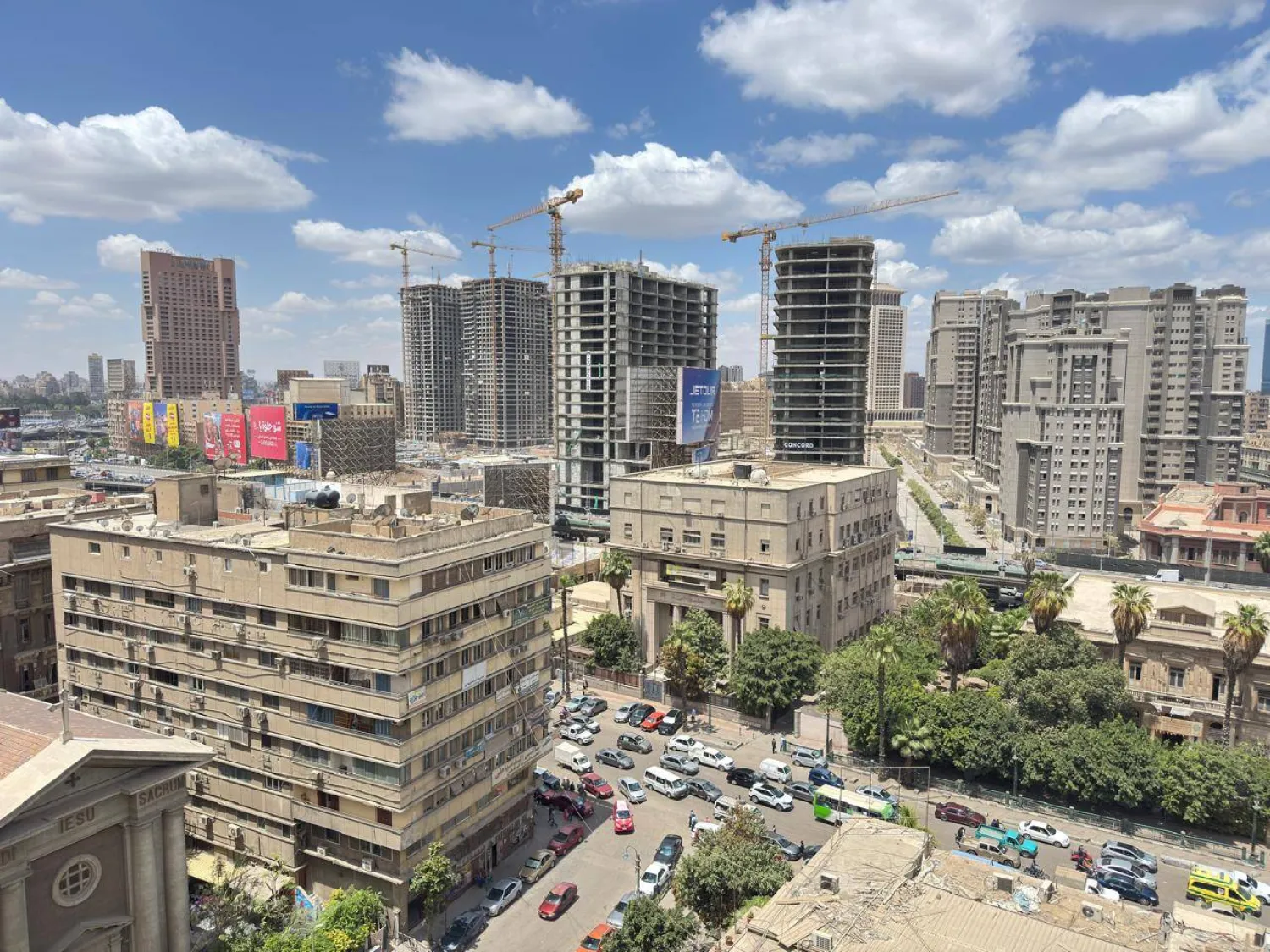
Construction work on buildings in downtown Cairo (Photo: Abdelfattah Farag)
TT

World Bank Raises Egypt's Package by $300 Million to Counter Iran War Impact

Construction work on buildings in downtown Cairo (Photo: Abdelfattah Farag)

Egypt will receive an extra $300 million as part of a World Bank development financing package to help it confront fallout from the Iran war, Stephane Guimbert, the World Bank's division director for Egypt, Yemen, and Djibouti, told reporters on Saturday.

The package, consisting of $800 million from the World Bank and a $200 million British guarantee, is to support private sector–led job creation, macroeconomic stability, and the green transition. The bank's board approved it on Friday.

The bank's share was increased from $500 million due ⁠to "the uncertainty in ⁠the region and the shock facing Egypt, like other countries, because of the war in Iran," Reuters quoted him as saying.

The financing is on terms unavailable in commercial markets — at around 6% interest, with a maturity of 30 years and a grace period before repayments ⁠begin, Guimbert said.

The operation is the second in a three-part program. The first was approved in June 2024; a third is planned for next year.

Other lenders, including the Asian Infrastructure Investment Bank, are expected to provide complementary parallel financing.

Private investment in Egypt has risen to around 6% of GDP from roughly 4%, Guimbert said, but noted this remained far below peer economies where private investment often exceeds 20% of GDP. ⁠The ⁠bank is also advising Egypt on how to boost foreign direct investment.

Egypt has the potential to achieve 6% annual medium-term growth if macroeconomic stability and structural reforms are maintained, he added. At that pace, Egypt could generate roughly 2 million jobs annually compared with around 600,000 currently.

On social protection, Guimbert said Egypt's Takaful and Karama cash transfers offered more targeted support to poor families than its large-scale bread subsidy program. "In times of crisis, you want to lean heavily on Takaful and Karama," he said.



Saudi Real Estate Sector Prepares for a New Wave of Foreign Investment

Saudi Arabia's capital, Riyadh (Digital Government Authority)
TT

Saudi Real Estate Sector Prepares for a New Wave of Foreign Investment

Saudi Arabia's capital, Riyadh (Digital Government Authority)

Saudi Arabia’s real estate market is preparing to enter a new investment phase following the approval of the executive regulations governing property ownership by non-Saudis, a move that strengthens the sector’s appeal to foreign capital and opens the door to broader opportunities across residential, commercial, and hospitality projects.

The sector is expected to benefit from a wider investor base, positioning real estate as one of the key drivers of growth within the Kingdom’s expanding economy.

During its session on Tuesday, the Council of Ministers, chaired by the Custodian of the Two Holy Mosques, King Salman bin Abdulaziz, approved the executive regulations for non-Saudi property ownership and endorsed the geographical zones in which non-Saudis will be permitted to own real estate.

Minister of Municipalities and Housing Majed Al-Hogail said the Cabinet’s approval of the executive regulations and designated ownership zones marks an important step toward launching a new phase for the Saudi real estate market.

The sector is entering a new stage as the impact of the non-Saudi property ownership framework begins to take shape in market activity. Specialists expect the influx of new investments to encourage developers to expand supply and improve the quality of real estate products.

Experts believe the next phase will not be limited to growing demand. It is also expected to intensify competition among projects, enhancing market efficiency and contributing to a stronger balance between supply, demand, and prices.

Stimulating the Market

Khaled Al-Jasser, a real estate specialist and chairman of Amaken International Group, told Asharq Al-Awsat that the move represents a significant boost for the Kingdom’s real estate ecosystem, strengthening investment activity and stimulating market momentum by broadening participation and expanding available opportunities.

According to Al-Jasser, the measure is also expected to increase real estate supply, enhance competitiveness, improve market efficiency, and provide beneficiaries with a wider range of options and more balanced pricing.

The chairman of Amaken International Group added that the initiative enhances the attractiveness of the Saudi real estate market to foreign investors, particularly in light of the Kingdom’s evolving legislative environment and ongoing reforms. These factors support the inflow of foreign capital and reinforce the real estate sector’s position as one of the most promising sectors under the objectives of Vision 2030.

Attracting Capital

For his part, economic analyst Ahmed Al-Shahri told Asharq Al-Awsat that the approval of the executive regulations for non-Saudi property ownership marks a turning point for the market because it addresses a critical issue: transforming real estate from a locally traded asset into a more open investment sector capable of attracting capital.

The significance of the move lies not only in allowing ownership but also in creating a more competitive market capable of attracting developers and investors seeking long-term opportunities in a Saudi economy currently undergoing rapid expansion.

Al-Shahri expects the impact to be reflected in stronger demand for high-quality real estate products, increased appeal of residential, commercial, and hospitality projects, and greater incentives for developers to bring additional supply to market in order to meet the needs of new categories of investors and residents in the Kingdom.

“This means the most significant impact may be seen in the expansion of the market’s overall size, rather than solely in higher prices,” he said.

Price Balance

He continued: “As for prices, the initial phase may support values in the most attractive locations due to the entry of new demand. However, over the medium term, increased supply and stronger competition among developers will serve as an important balancing factor, because a healthy real estate sector is not built on continuous price increases but on the market’s ability to maintain equilibrium between supply and demand.”

Al-Shahri explained that the move could shift the sector from a phase of “product scarcity and rising value” to one defined by “product quality and market competitiveness.” Projects distinguished by location, services, and design will become best positioned to attract investment, while lower-quality developments may face greater pressure to preserve their value.

The non-Saudi property ownership law entered into force on January 22, 2026. The framework consists of 15 articles governing property ownership procedures for foreign individuals, companies, and non-profit entities.


Arcapita, Hines to Explore Joint investments in GCC Industrial and Logistics Real Estate

Arcapita's headquarters in Manama, Bahrain. Photo: Asharq Al-Awsat
TT

Arcapita, Hines to Explore Joint investments in GCC Industrial and Logistics Real Estate

Arcapita's headquarters in Manama, Bahrain. Photo: Asharq Al-Awsat

Arcapita Group Holdings Limited, the global alternative investment firm, and Hines, one of the world’s largest real assets investment managers, announced on Wednesday a partnership to together explore the creation of an institutional-grade platform focused on industrial and logistics real estate assets across the Gulf Cooperation Council (GCC).

The platform would seek to combine Hines’ global real estate investment, development and operating standards with Arcapita’s regional investment, structuring and asset management expertise, supported by Lintara, Arcapita’s local operating platform, a joint statement said.

Through the partnership, the two companies would focus on jointly originating, structuring and executing investments across both development opportunities and stabilized income-producing assets, it added.

Arcapita is headquartered in Manama, Bahrain. It also operates from its offices in the United States, the United Kingdom, Saudi Arabia, the United Arab Emirates and Singapore.

Hines is based in Houston, Texas.

Martin Tan, Arcapita’s Chief Investment Officer, said: “This strategic partnership marks an important step in our approach to the GCC industrial and logistics opportunity. Market fundamentals across the region have reached a depth and maturity that support the case for a dedicated, institutional-scale platform rather than a transaction-led strategy.”

“As GCC countries continue to focus on supply chain resilience and national self-sufficiency, we see a compelling opportunity to help deliver modern logistics infrastructure at scale. By bringing together Arcapita’s long standing regional track record, sourcing and asset management capabilities with Hines’ globally recognized development expertise, the platform would be well positioned to pursue high-quality opportunities across the sector.”

As for Hines’ Global Head of Real Estate, Steve Luthman, he said that the GCC represents one of the most compelling logistics growth markets globally.

He welcomed “the opportunity to partner with Arcapita to explore the development of a structured, platform-led entry into a rapidly growing market, backed by deep local relationships and execution capability.”


Airlines Should Still Avoid Airspace Over Iran After Framework Deal, EU Agency Warns

 A Kish Air Airlines McDonnell Douglas MD-82 passenger aircraft prepares for landing at Tehran's Mehrabad Airport on June 20, 2026. (AFP)
A Kish Air Airlines McDonnell Douglas MD-82 passenger aircraft prepares for landing at Tehran's Mehrabad Airport on June 20, 2026. (AFP)
TT

Airlines Should Still Avoid Airspace Over Iran After Framework Deal, EU Agency Warns

 A Kish Air Airlines McDonnell Douglas MD-82 passenger aircraft prepares for landing at Tehran's Mehrabad Airport on June 20, 2026. (AFP)
A Kish Air Airlines McDonnell Douglas MD-82 passenger aircraft prepares for landing at Tehran's Mehrabad Airport on June 20, 2026. (AFP)

Airlines ‌should continue to avoid the airspace over Iran, Iraq and Lebanon and remain cautious across the region despite the framework deal between Washington and Tehran, because violations remained possible, the ‌EU aviation safety ‌agency EASA said.

EASA ‌said ⁠on Wednesday it ⁠was extending its conflict-zone advisory for the region until July 1.

Short-term violations of the US-Iran ceasefire remain possible, ⁠in particular in ‌and ‌around the Strait of ‌Hormuz and neighboring airspace, the ‌agency said.

The agency also flagged the fragile ceasefire between Israel and Hezbollah, creating ‌the potential for military activity impacting the airspace ⁠of ⁠Lebanon.