


Beirut Tragedy Reinforces Yemeni Fears of Similar Disaster at Safer

Beirut Tragedy Reinforces Yemeni Fears of Similar Disaster at Safer
TT

Beirut Tragedy Reinforces Yemeni Fears of Similar Disaster at Safer

Beirut Tragedy Reinforces Yemeni Fears of Similar Disaster at Safer

The tragedy witnessed by the Lebanese capital Beirut due to the explosion of dangerous material stored in the port of the city raised the fears of Yemenis of a similar disaster taking place in the port of Ras Isa, north of the city of Hodeidah.

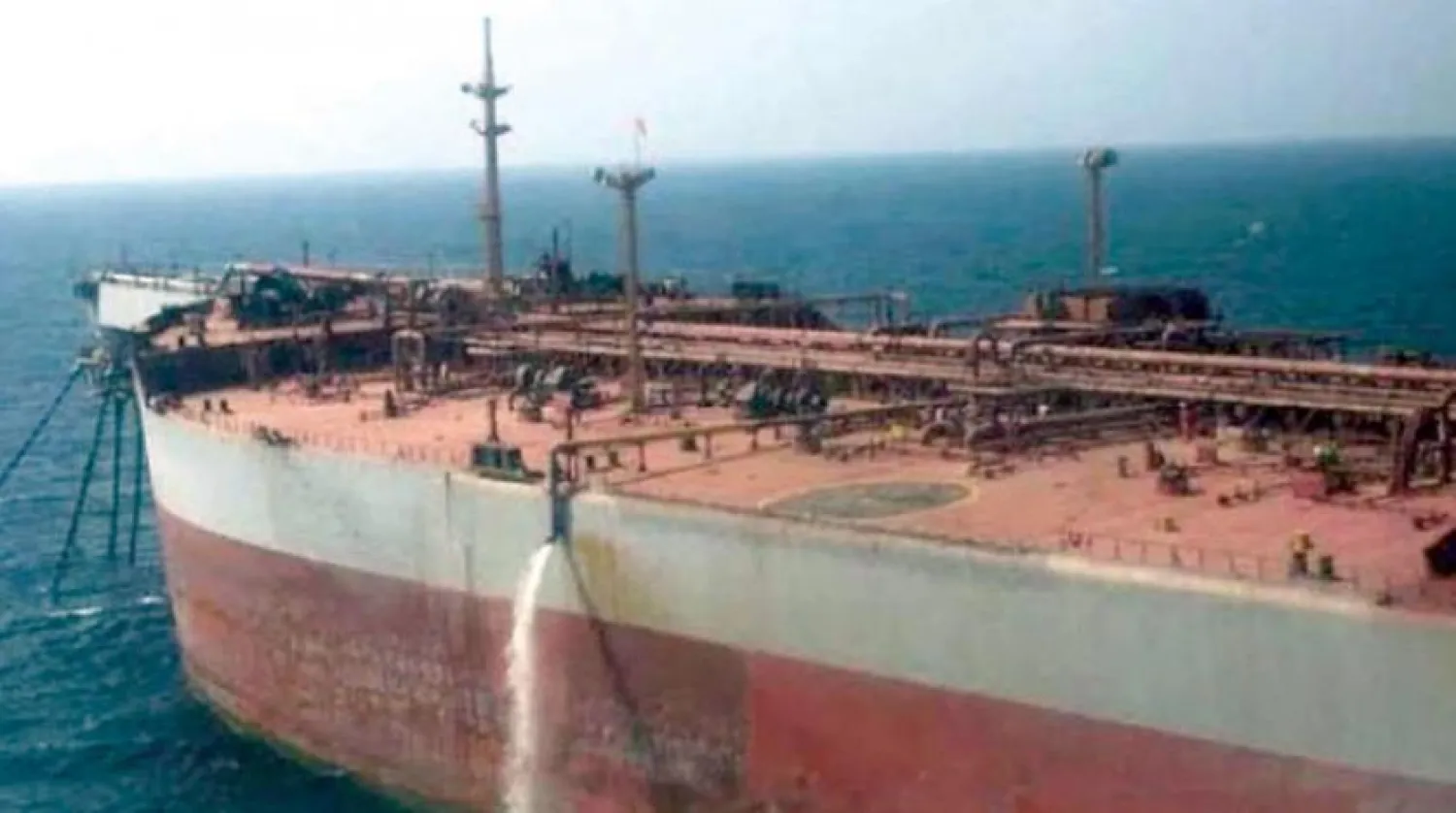
Fears are amplified in light of Houthi militias continuing to prevent United Nations teams from accessing and maintaining the derelict oil tanker, Safer.

Government and international reports predicted that an explosion at Safer, an oil tanker which is carrying around 1.2 million oil barrels, could lead to a disaster and the shutting down of the Hodeidah port.

Hodeidah port is the entry gate for some 70% of imports to Yemen. More so, the environmental impact of an explosion at Safer will take around three decades to resolve.

Yemeni political activists, who spoke to Asharq Al-Awsat, tied the major destruction caused by the Beirut port blast to the potential disaster at Safer, where corrosion in the platform’s hull has allowed seawater to spill into parts of the tanker.

“The similarity lies in the neglect of the Houthi militia, like the Hezbollah militia in Lebanon, and the result would be staggering losses that affect both Yemen and Lebanon, countries which have the problem of terror gangs controlled by Tehran,” said the undersecretary of the Ministry of Information in the Yemeni government Abdul Basit Al-Qaidi.

“Wherever Iran's militia lands in the region, disaster strikes, and the disaster of the explosion of the Safer oil tanker in the Red Sea is no less dangerous than the Beirut explosion, and its effects will be more like the effects that a nuclear bomb could leave and require decades to deal with if it exploded,” he added.

Al-Qaidi warned of the international community neglecting the Safer dilemma and said that Houthis aren’t only being neglectful of the problem at hand but are also dealing with it with malicious intent.



Report: US Forces to Complete Withdrawal from Syria within a Month 

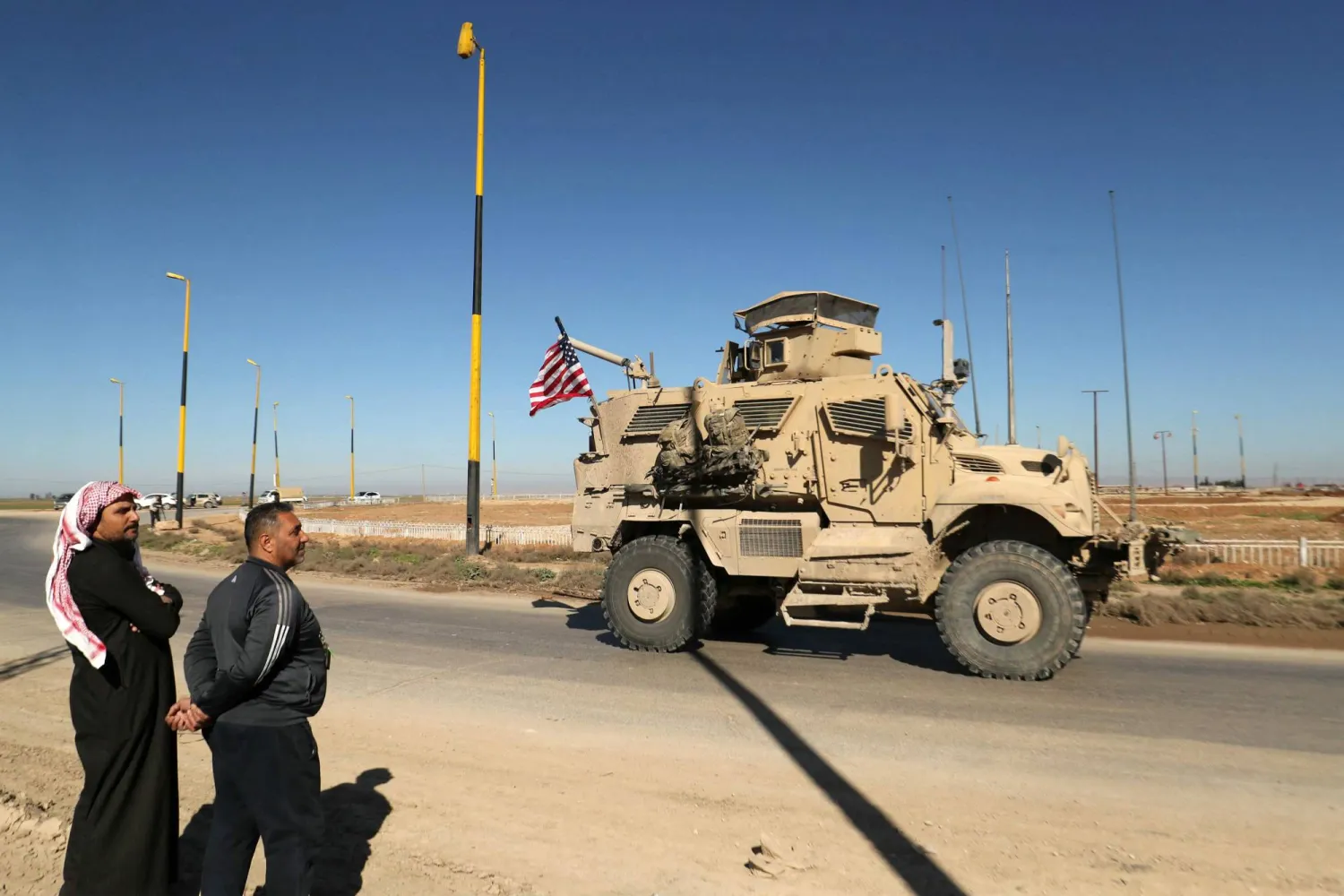
Men watch as a US military mine-resistant ambush protected (MRAP) armored fighting vehicle moves in a convoy along a highway outside Qamishli in Syria's northeastern Hasakah province on February 23, 2026. (AFP)
TT

Report: US Forces to Complete Withdrawal from Syria within a Month 

Men watch as a US military mine-resistant ambush protected (MRAP) armored fighting vehicle moves in a convoy along a highway outside Qamishli in Syria's northeastern Hasakah province on February 23, 2026. (AFP)

US forces that led the anti-ISIS coalition in Syria will complete their withdrawal from the country within a month, three sources told AFP on Monday.

"Within a month, they will have withdrawn from Syria and there will no longer be any military presence in the bases," a Syrian government official said, with a Kurdish source confirming the development.

A third source, a diplomat, said the withdrawal should be completed within 20 days.

The United States began withdrawing on Monday from a major base in a northeastern region still under the control of Kurdish forces.


Israeli Team in Peace Council Reveals Vision for Gaza Reconstruction

A female member of the al-Ghafir family, sits of the debris of the al-Hasayna Mosque as she recites from a copy of the Quran, during the holy month of Ramadan in western Gaza City on February 21, 2026. (Photo by Omar AL-QATTAA / AFP)
TT

Israeli Team in Peace Council Reveals Vision for Gaza Reconstruction

A female member of the al-Ghafir family, sits of the debris of the al-Hasayna Mosque as she recites from a copy of the Quran, during the holy month of Ramadan in western Gaza City on February 21, 2026. (Photo by Omar AL-QATTAA / AFP)

While many observers remain skeptical about the chances of success for President Donald Trump’s comprehensive Middle East peace plan, figures close to the US administration are projecting confidence. Among them are three Israelis selected for key roles in the project, though they do not formally represent the Israeli government.

According to a report in Yedioth Ahronoth, the officials insist the initiative is already underway, with Egypt, Türkiye and Qatar playing influential roles in persuading Hamas to cooperate. Despite skepticism within parts of Israel’s political and military leadership regarding the feasibility of the plan — and the ability of Trump advisers Steve Witkoff and Jared Kushner to implement it — the Peace Council members argue that progress so far is “encouraging.”

The Israeli members of the council are Israeli-Cypriot businessman Yakir Gabay, high-tech entrepreneur Liran Tancman, and Michael Eisenberg, who serves as Prime Minister Benjamin Netanyahu’s representative at the US coordination headquarters in Kiryat Gat.

They contend that Hamas’ agreement to disarm, coupled with reforms to Palestinian school curricula to promote “a culture of peace and tolerance,” would transform Trump’s initiative into “a historic opportunity to turn Gaza into a true Riviera.”

Gabay outlined the first phase: removing 70 million tons of rubble and unexploded ordnance, recycling usable materials, demolishing and sealing hundreds of kilometers of tunnels, and establishing rapid temporary housing in reinforced tents. Parallel efforts would focus on building infrastructure and permanent residential towers.

Plans also include modern hospitals, schools, factories, agricultural zones, road and rail networks, energy and water facilities, data centers, a seaport and an airport. Contractors experienced in constructing millions of housing units across the Middle East would be recruited, with funding reportedly secured. Hundreds of thousands of jobs are expected to be created. In addition to housing and workplaces, 200 hotels are planned.

Tancman, who advises Israel’s national cyber directorate, pledged to introduce advanced technological solutions in cooperation with American, Arab and Palestinian partners. This includes upgrading Gaza’s internet network from 2G to 5G and making access free of charge. Mechanisms for exporting Gaza-made goods are also under development.

A “New Era”?

Officials told Yedioth Ahronoth that reconstruction has effectively begun in Rafah and is expected to take three years. Israel is currently clearing debris, with 100,000 homes slated for construction in the first phase to house 500,000 residents. Infrastructure alone is projected to cost $5 billion. Ultimately, 400,000 homes are planned, with total infrastructure costs estimated at $30 billion, alongside a similar sum for construction.

A senior Peace Council member suggested that if Hamas responds positively, Israel could consider measures such as amnesty for its leaders or even purchasing weapons for cash. “Gaza and its people could enter a new era—connected and open to the world,” he said.

Separately, The Times of Israel cited a US official confirming that funds would not flow before Hamas agrees to disarm, adding that Israel must also act constructively.

An Arab diplomat cautioned that sustained pressure on both sides would be essential to ensure the plan’s success and the establishment of a technocratic administration in Gaza.


Al-Wadiah Border Security Foils Attempt to Smuggle Thousands of Captagon Pills from Yemen 

Members of the Al-Wadiah battalion boast extensive experience allowing them to thwart ongoing smuggling attempts. (Al-Wadiah battalion) 
TT

Al-Wadiah Border Security Foils Attempt to Smuggle Thousands of Captagon Pills from Yemen 

Members of the Al-Wadiah battalion boast extensive experience allowing them to thwart ongoing smuggling attempts. (Al-Wadiah battalion) 

The “Al-Wadiah Port Security and Protection Battalion” thwarted an attempt to smuggle 4,925 Captagon pills bound for Saudi Arabia from areas under Houthi control in Yemen.

Col. Osama Al-Assad, commander of the battalion, said the seizure was made during routine inspection procedures at the land crossing.

Security personnel grew suspicious of an incoming vehicle and, after a thorough search, discovered the pills professionally concealed in an apparent attempt to evade detection.

In remarks to Asharq Al-Awsat, Al-Assad said the confiscated drugs were documented in line with legal procedures and the suspects were referred to the competent authorities for further investigation.

He stressed that coordination with the Saudi side remains strong and ongoing at the highest levels, expressing appreciation to the Kingdom for its continued support to Yemen in general and to the battalion in particular, helping bolster border security between the two neighbors.

In a recent interview with Asharq Al-Awsat, Al-Assad revealed that most drug smuggling networks operating from Yemen into Saudi territory are directly linked to the Houthi militants.

He noted that the battalion had previously arrested a Houthi leader attempting to enter Saudi Arabia using a forged passport and Umrah visa, suggesting the motives were security-related rather than religious.

Regarding the latest operation, Al-Assad said preliminary investigations indicate that most drug shipments intercepted at the crossing originate from Houthi-controlled areas.

He accused the group of relying on drug trafficking as a source of funding for its activities, posing a threat to Yemen’s national security, neighboring countries, and regional stability.

The battalion’s mission includes securing and protecting the Al-Wadiah crossing, combating various forms of smuggling, including drugs, human trafficking, forged documents, and unidentified individuals, and arresting wanted suspects, including members of al-Qaeda and fugitives evading court rulings.