Italian Expert Believes Arms Depot was at Site of Beirut Blasthttps://english.aawsat.com/home/article/2436446/italian-expert-believes-arms-depot-was-site-beirut-blast
Italian Expert Believes Arms Depot was at Site of Beirut Blast
An aerial view shows the massive damage at Beirut port’s grain silos and the area around it on Wednesday, one day after a massive explosion hit the area in the heart of the Lebanese capital. Photo: AFP
Italian Expert Believes Arms Depot was at Site of Beirut Blast
An aerial view shows the massive damage at Beirut port’s grain silos and the area around it on Wednesday, one day after a massive explosion hit the area in the heart of the Lebanese capital. Photo: AFP
Danilo Coppe, one of Italy’s best known explosives experts, said Friday that he did not believe the Beirut Port explosion was caused by ammonium nitrate, but rather an arms warehouse at or near the site.
“I do not believe there was that amount of ammonium nitrate at the Port of Beirut, nor that there was a fireworks depot,” he told the Italian daily Corriere.
The expert, nicknamed Mr. Dynamite, explained that when ammonium nitrate detonates, it generates an unmistakable yellow cloud.
“Instead, from the videos of the explosion, in addition to the white sphere that can be seen expanding – which is condensation of the sea air – you can clearly see a brick orange column tending to bright red, typical of lithium’s presence.”
He said the explosion was that of a weapons warehouse.
“Lithium-metal is a propellant for military missiles, so I think there were armaments there,” Coppe confirmed.
He explained it was not 2,700 tons that exploded, because if it had been 2,700 tons that would mean 100 containers of ammonium nitrate.
“And 100 containers do not explode simultaneously like that. Anything is possible in this life, but I don't think it was ammonium nitrate that exploded,” the expert noted.
Tuesday's massive explosion killed 154 people, injured 5,000 and smashed a swathe of the city.
Lebanon’s Interior Minister Mohammed Fahmi told a local TV station that it appeared the blast was caused by the detonation of more than 2,700 tons of ammonium nitrate that had been stored in a warehouse at the dock ever since it was confiscated from a cargo ship in 2014.
Witnesses reported seeing an orange cloud like that which appears when toxic nitrogen dioxide gas is released after an explosion involving nitrates.
A truck loaded with firewood drives through the Al-Basateen neighborhood in Aden, Yemen, Tuesday, Oct. 13, 2026. (AP)
TT
TT
Houthis Attack Yemen's Aden Airport with Ballistic Missile
A truck loaded with firewood drives through the Al-Basateen neighborhood in Aden, Yemen, Tuesday, Oct. 13, 2026. (AP)
The Houthi group renewed its attacks on Aden International Airport with a ballistic missile on Wednesday, amid intensifying battles on the Taiz fronts.
Elsewhere, the Yemeni Armed Forces continue to deplete the personnel and equipment capabilities of the Iranian-backed group under Operation Dawn of Yemen across various fronts, most notably in Taiz and western Lahj.
Meanwhile, the humanitarian crisis in Taiz Governorate is worsening as the Houthis continue to block supply routes amid escalating clashes around the provincial capital, which is home to more than 600,000 civilians.
UN agencies have warned of severe repercussions threatening nearly three million people in the governorate, particularly children, women, and displaced persons, driven by declining food, water, and fuel supplies, and mounting pressure on healthcare facilities and basic services.
Families are rationing drinking water as diesel shortages hobble pumping stations and sanitation systems, said Akhil Iyer, UNICEF's representative in Yemen.
Water production in Taiz has fallen by about 50%, according to Save the Children.
“We find children in an extremely dangerous situation where they are not able to have their basic needs satisfied. They are not able to access sufficient food and water and healthcare,” said Rishana Haniffa, Save the Children's country director for Yemen.
Water Rationing, Rubbish Pile-up Raise Disease Fears in Yemen’s Besieged Taizhttps://english.aawsat.com/arab-world/5332047-water-rationing-rubbish-pile-raise-disease-fears-yemen%E2%80%99s-besieged-taiz
A woman and children wait to fill jerrycans with drinking water from a charity tank in the southwestern city of Taiz, Yemen, October 20, 2026. (Reuters)
TT
TT
Water Rationing, Rubbish Pile-up Raise Disease Fears in Yemen’s Besieged Taiz
A woman and children wait to fill jerrycans with drinking water from a charity tank in the southwestern city of Taiz, Yemen, October 20, 2026. (Reuters)
Families have started rationing water in and around Yemen's Taiz city, where renewed fighting has disrupted fuel supplies and access to water systems serving 3 million people, aid groups and UN agencies said.
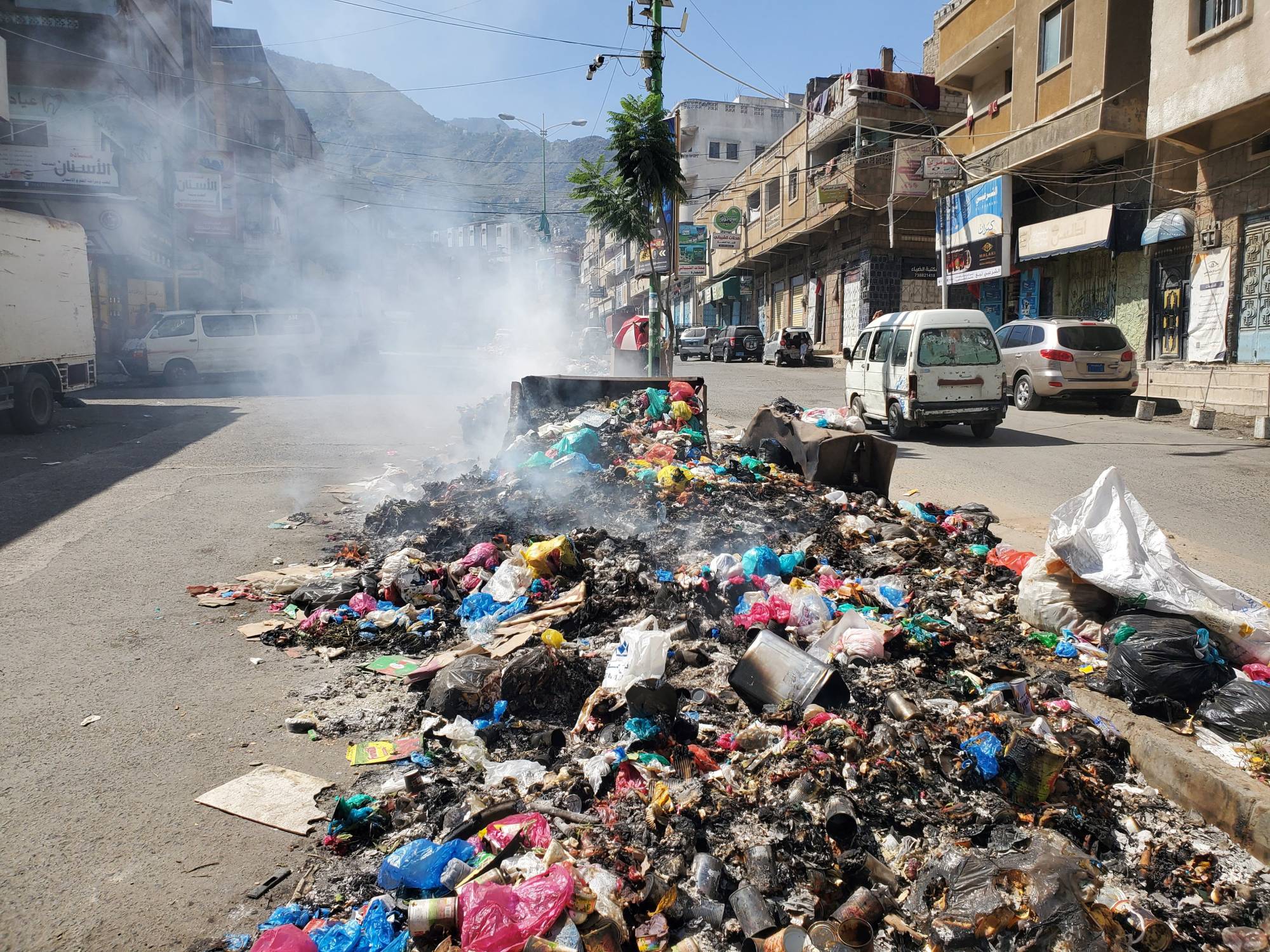
Meanwhile, mounting piles of rubbish along major roads are raising fears of disease outbreaks in the city, Yemen's third-largest.
Fighting between the legitimate government and the Iran-allied terrorist Houthi militia since September has cut key supply routes, including the Taiz-Aden corridor, worsening shortages of water, food and fuel in and around the city.
The lack of fuel is hampering the operation of water pumps and hospitals, while disruption to waste collection has left rubbish piled along roads of the city, a stronghold of anti-Houthi forces which is now under siege by the militants.
The Taiz governorate hosts nearly half of the 250,000 people displaced by the latest escalation, aid groups said.
"The state of the rubbish in the city is very wretched, and the build-up is terrible, like nothing before,” Taiz resident Abdelbari al-Qadi told Reuters.
Sanitation worker Ali Ahmed said authorities could no longer go to the main dumping site because of clashes, and they were forced to burn it in the streets.
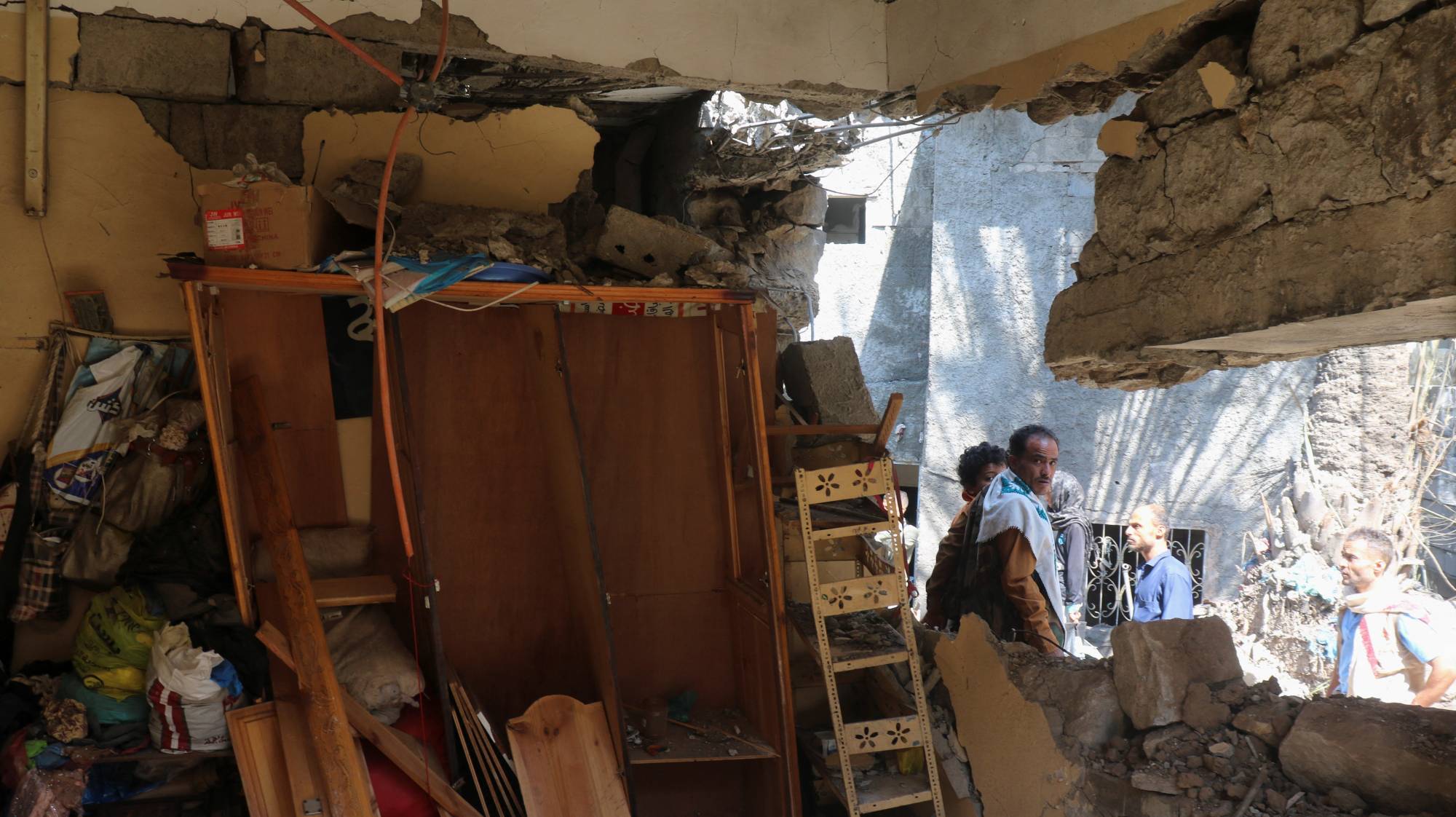
People inspect damage at a house hit by a Houthi missile in the southwestern city of Taiz, Yemen October 21, 2026. (Reuters)
'EXTREMELY DANGEROUS SITUATION' FOR CHILDREN, SAYS RELIEF OFFICIAL
Families are rationing drinking water as diesel shortages hobble pumping stations and sanitation systems, said Akhil Iyer, UNICEF's representative in Yemen.
"I get the water with difficulty. We wait in queues from the morning until our turn comes,” Alaa Khalil told Reuters while people queued to fill jerry cans in Taiz, where most residents depend on trucked water.
Access to the Al-Dhubab aquifer, a major source of trucked water for Taiz, has been restricted, while fuel disruptions have affected pumps, creating a severe water crisis, said Wathiq Aghbari, director general of the Local Water and Sanitation Authority in the governorate.
Water production in Taiz has fallen by about 50%, according to Save the Children.
“We find children in an extremely dangerous situation where they are not able to have their basic needs satisfied. They are not able to access sufficient food and water and healthcare,” said Rishana Haniffa, Save the Children's country director for Yemen.
Aid groups are exploring other sources, including a shallow aquifer west of the city. The cost of a water truck has tripled from about 23,000 Yemeni rials ($14.80) before the latest escalation to about 70,000 rials ($45), according to UNICEF.
CARE International says cash assistance is buying less food and water as prices rise.
“We feel the situation is really getting out of hand unless we able to negotiate access to have water tankers come in to the city,” said Iman Abdullahi, CARE Yemen country director.
A pile of garbage on a street in the southwestern city of Taiz, Yemen, October 19, 2026. Picture taken with a mobile phone. (Reuters)
RUBBISH BUILD-UP 'WILL CAUSE DISEASES', SAYS HEALTH OFFICIAL
"The build-up of rubbish is very harmful and will cause diseases, whether respiratory or otherwise," said Abdulrahman al-Sabri, director of Taiz Governorate's Health Office, adding that dengue fever and cholera cases were spreading.
Cholera cases have tripled since early September from 221 to 683 this month, while hospitals face medicine shortages and 12 facilities have fuel supplies sufficient for only about four days, the World Health Organization said.
A doctor who asked not to be named for security reasons said some families could not reach healthcare facilities because of fighting around the city.
The Danish Refugee Council said the impact of deteriorating water and sanitation conditions could spread beyond Taiz city. It pointed to overstretched resources in crowded displacement sites across the governorates of Taiz, Lahj, Abyan and Aden.
The spread of disease could also worsen hunger in Taiz governorate, UNICEF said. It has identified 52,000 acutely malnourished children in Taiz so far this year. Road closures have halted UNICEF's deliveries of a therapeutic food for severely malnourished children in Taiz.
Sudan’s Currency Tumbles to New Low as War Hammers Economyhttps://english.aawsat.com/arab-world/5331937-sudan%E2%80%99s-currency-tumbles-new-low-war-hammers-economy
People stand at a market in Omdurman, Sudan, September, 19, 2026. (Reuters)
TT
TT
Sudan’s Currency Tumbles to New Low as War Hammers Economy
People stand at a market in Omdurman, Sudan, September, 19, 2026. (Reuters)
Sudan's currency hit a new low of 10,000 Sudanese pounds to the dollar on Wednesday in parallel market trading, continuing a dramatic fall over recent months as wartime conditions take their toll on the economy.
The rapid 60% depreciation has heaped hardship on Sudanese still trying to regain their footing after devastating conflict and forced displacement caused by the war between Sudanese armed forces and the paramilitary Rapid Support Forces, putting basic food items out of reach.
Sudan's official exchange rate remains stuck at 4,200 SDG to the dollar, a rate last seen on the parallel market in army-controlled areas in May.
A large portion of that fall has happened over the past month, as the pound fell from a previous low of 8,000, depreciating 20%. Prior to the start of the war in April 2023, the rate was about 600 pounds to the dollar.
Currency traders cited import demands as a chief factor as the government increased the tightly controlled customs dollar, used to calculate duties, to more than 5,600 this week.
As the war continues Sudan has decreased production of key dollar earners while its chief export, gold, has increasingly been smuggled abroad. Meanwhile, the army-controlled government has said the war and reconstruction efforts require dollar-draining imports.
لم تشترك بعد
انشئ حساباً خاصاً بك لتحصل على أخبار مخصصة لك ولتتمتع بخاصية حفظ المقالات وتتلقى نشراتنا البريدية المتنوعة