


South Africa's Poor Scramble for Anti-HIV Drugs Amid Virus

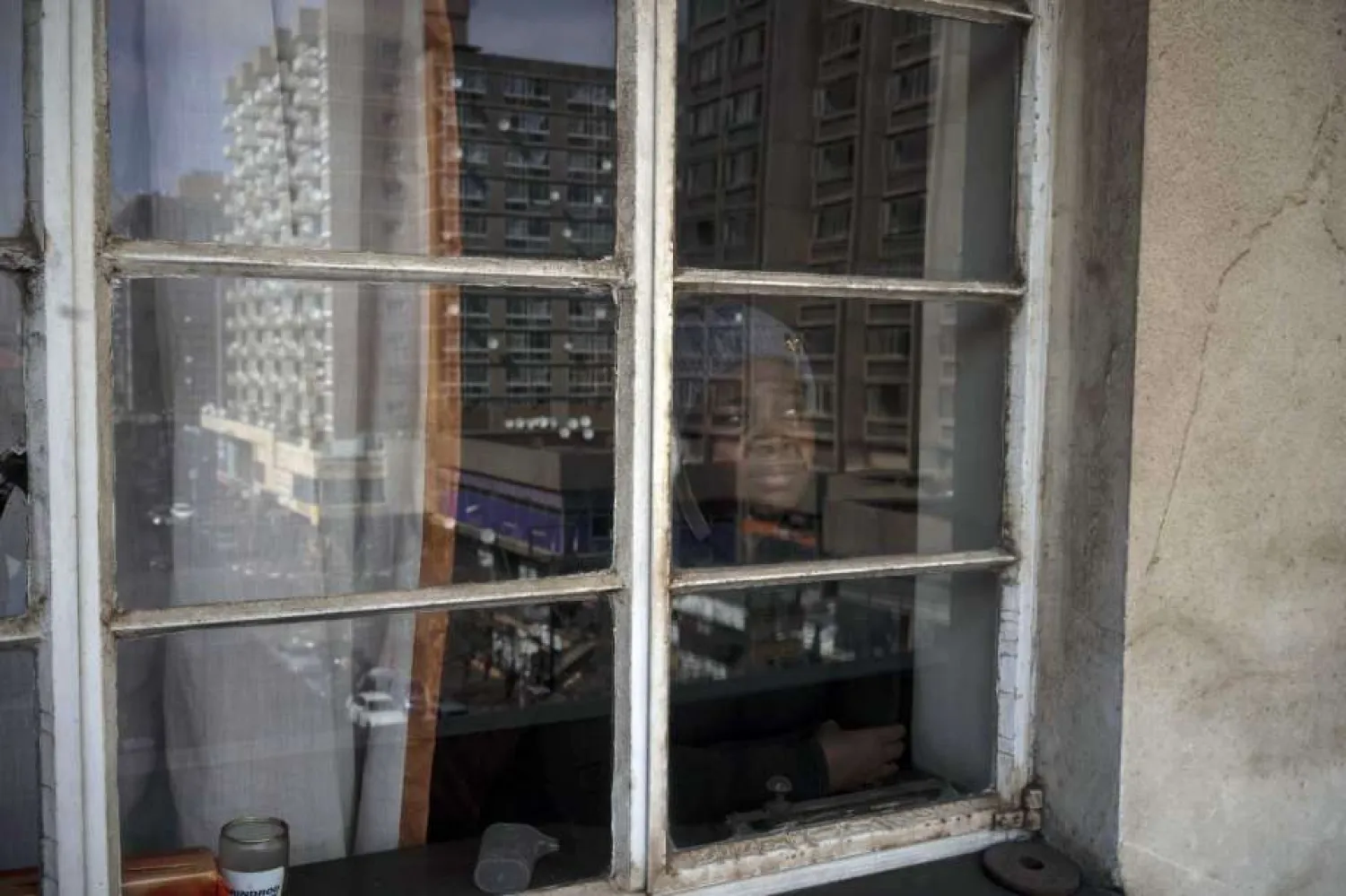
Sibongile Zulu poses for a portrait inside her home in Johannesburg, South Africa, Tuesday, July 28, 2020. Zulu is HIV positive and couldn't get her full medication for two months due to a lack of stock in government pharmacies. Across Africa and around the world, the COVID-19 pandemic has disrupted the supply of antiretroviral drugs to many of the more than 24 million people who take them, endangering their lives. An estimated 7.7 million people in South Africa are HIV positive, the largest number in the world, and 62% of them take the antiretroviral drugs that suppress the virus and prevent transmission. (AP Photo/Bram Janssen)
TT

South Africa's Poor Scramble for Anti-HIV Drugs Amid Virus

Sibongile Zulu poses for a portrait inside her home in Johannesburg, South Africa, Tuesday, July 28, 2020. Zulu is HIV positive and couldn't get her full medication for two months due to a lack of stock in government pharmacies. Across Africa and around the world, the COVID-19 pandemic has disrupted the supply of antiretroviral drugs to many of the more than 24 million people who take them, endangering their lives. An estimated 7.7 million people in South Africa are HIV positive, the largest number in the world, and 62% of them take the antiretroviral drugs that suppress the virus and prevent transmission. (AP Photo/Bram Janssen)

When her regular clinic ran out of her government-funded HIV medications amid South Africa´s COVID-19 lockdown, Sibongile Zulu panicked. A local pharmacy had the drugs for $48, but she didn´t have the money after being laid off from her office job in the shutdown to slow the spread of the coronavirus.

Desperate for the lifesaving medication, the single mother of four called a friend -- a nurse with a local charity helping people with HIV, the Sister Mura Foundation. She's one of the lucky ones: Since April, the foundation has provided Zulu with the drugs, purchased locally.

Across South Africa and around the world, the pandemic has disrupted the supply of antiretroviral drugs, endangering the lives of many of the more than 24 million people globally who take the medications that suppress the HIV virus.

In sub-Saharan Africa alone, a study by UNAIDS found that a six-month disruption of antiretroviral therapy could lead to 500,000 additional AIDS-related deaths.

The disruptions are particularly troubling in South Africa, which has 7.7 million HIV-positive people, the world's largest number, with 62% of those depending on the government's antiretroviral program, also the world´s largest. Anti-coronavirus restrictions have hindered both imports of the drugs and the local production and distribution of the medications, according to a report by UNAIDS.

In addition, many HIV patients have stopped going to the often-crowded clinics for fear of being exposed to the coronavirus. And others cannot afford the transport fares to reach clinics.

In June, UNAIDS Executive Director Winnie Byanyima said countries should "urgently make plans now to mitigate the impacts of higher costs and reduced availability of antiretroviral medicines."

"I call on countries and buyers of HIV medicines to act swiftly in order to ensure that everyone who is currently on treatment continues to be on it, saving lives and stopping new HIV infections," Byanyima said.

HIV positive people who contract COVID-19, are more than twice as likely to die from the disease as people without HIV, according to an early study of mortality rates in South Africa's Western Cape province, the country's first epicenter for the disease.

"We´re worried that we´re going to be seeing an increase in deaths in co-infections such as TB and other opportunistic infections," Dr. Nomathemba Chandiwana, an HIV research clinician, told The Associated Press.

Clinics in central Johannesburg have seen a 10% to 25% drop in people coming for HIV treatment, she said. On top of that, several clinics have had to close temporarily when nurses and doctors have become sick with COVID-19.

"Some clinics see 60 to 80 patients per day, so when one closes, for even a week, it means many people are not getting their drugs. It´s a serious threat," said Chandiwana, who works for Ezintsha, part of the University of the Witwatersrand.

COVID-19 is similarly disrupting vaccinations. The past few months have seen a 25% reduction in childhood immunizations, according to Shabir Madhi, a professor of vaccinology at the same university, who warned of possible outbreaks of measles.

The diagnosis and treatment of tuberculosis also has also been hampered by the pandemic, risking the lives of many of South Africa's neediest citizens, health experts say.

"Disruptions to these medications is a public health problem. It threatens the poor and most vulnerable," said Vinyarak Bhardwaj, deputy director of Doctors Without Borders´ program in South Africa, which has HIV programs in the Western Cape and KwaZulu-Natal provinces.

"We´re responding to this threat by helping to minimize shortages and by providing stable HIV patients with multi-month prescriptions to limit their visits to the clinics. We´re also increasing treatment advice by telephone and the internet," he said.

Reliable supplies of antiretroviral drugs are so critically important in South Africa that a monitoring program, Stop Stockouts, was created in 2013 and is closely tracking and responding to the disruptions amid the COVID-19 pandemic.

The mill town of Ngodwana in the country´s northeast, a truck stop on the highway to Mozambique, is a microcosm of South Africa´s inequality, rated as the world´s highest.

Ngodwana´s 3,500 residents are mostly Black, living in a densely packed shantytown, with limited electricity and running water. Safe distancing is nearly impossible. Years ago, the truck traffic was blamed for bringing HIV to the area; now come fears it will become a hot spot for COVID-19.

Many in Ngodwana can no longer afford to travel the 40 kilometers (25 miles) to the town of Nelspruit to get their drugs and don´t feel comfortable going to the crowded local clinic. So the Dutch-based aid group North Star Alliance set up a tented drop-in center and started home visits.

Clad in a mask, gloves and protective surgical gown, nurse Nomautanda Siduna walked through Ngodwana´s dirt streets to a mud-walled, tin-roofed home. Once inside, she quickly got to work, distributing a two-month supply of antiretroviral drugs to the HIV-positive woman, a sex-worker, and advising her how to stay as safe as possible amid the pandemic.

"You must know that with COVID out there, you must take your treatment, every day, same time, like you´re always doing," Siduna told her. "And you must use a condom when you´re sleeping with anyone."

Pretty Mkhabela, 34, said the pandemic frightens her and that she´s taking new precautions as a sex worker.

"Yes, I´m scared," Mkhabela said. "When I work with my client, I use a mask and my client also uses a mask."

Another resident, Rose Khondowa, tried to get her antiretroviral drugs by traveling to Nelspruit, but encountered only a locked gate after a COVID-19 outbreak among hospital workers caused the clinic to temporarily close. She didn´t have enough money, about $4, for a second trip.

By chance, she saw the North Star Alliance gazebo in Ngodwana and succeeded in getting a month´s supply of antiretroviral drugs.

"If I didn´t find them," she said, "I would have died."


Turkish FM to Attend Trump’s Board of Peace Meeting in Washington, Italy as ‘Observer’ 

28 November 2025, Berlin: Turkish Foreign Minister Hakan Fidan during a joint press conference with German Foreign Minister Wadephul. (dpa)
TT

Turkish FM to Attend Trump’s Board of Peace Meeting in Washington, Italy as ‘Observer’ 

28 November 2025, Berlin: Turkish Foreign Minister Hakan Fidan during a joint press conference with German Foreign Minister Wadephul. (dpa)

‌Turkish Foreign Minister Hakan Fidan will travel to Washington in lieu of President Recep Tayyip Erdogan for the inaugural meeting of US President Donald Trump's "Board of Peace" on Thursday, the foreign ministry said on Wednesday.

A Turkish diplomatic source told Reuters ‌that Fidan, during the ‌talks, would call ‌for ⁠determined steps to ⁠resolve the Palestinian issue and emphasize that Israel must end actions to hinder the flow of aid into Gaza and stop its ceasefire violations.

Fidan ⁠will also reiterate Türkiye's ‌readiness ‌to contribute to Gaza's reconstruction and its ‌desire to help protect Palestinians ‌and ensure their security, the source said.

He will also call for urgent action against Israel's "illegal ‌settlement activities and settler violence in the West Bank", ⁠the ⁠source added.

According to a readout from Erdogan's office, the president separately told reporters on Wednesday that he hoped the Board of Peace would help achieve "the lasting stability, ceasefire, and eventually peace that Gaza has longed for", and would focus on bringing about a two-state solution.

The board, of which Trump is the chairman, was initially designed to oversee the Gaza truce and the territory's reconstruction after the war between Hamas and Israel.

Meanwhile, Italy will be present at the meeting as an "observer", Italian Foreign Minister Antonio Tajani said Wednesday.

"I will go to Washington to represent Italy as an observer to this first meeting of the Board of Peace, to be present when talks occur and decisions are made for the reconstruction of Gaza and the future of Palestine," Tajani said according to ANSA news agency.

Italy cannot be present as anything more than an observer as the country's constitutional rules do not allow it to join an organization led by a single foreign leader.

But Tajani said it was key for Rome to be "at the forefront, listening to what is being done".

Since Trump launched the Board of Peace at the World Economic Forum in Davos in January, at least 19 countries have signed its founding charter.


Energy Secretary: US to Stop Iran's Nuclear Ambitions 'One Way or the Other'

US Secretary of Energy Chris Wright speaks during a press conference after a meeting with Venezuela's acting president Delcy Rodriguez at the Miraflores Presidential Palace in Caracas on February 11, 2026. (Photo by Juan BARRETO / AFP)
TT

Energy Secretary: US to Stop Iran's Nuclear Ambitions 'One Way or the Other'

US Secretary of Energy Chris Wright speaks during a press conference after a meeting with Venezuela's acting president Delcy Rodriguez at the Miraflores Presidential Palace in Caracas on February 11, 2026. (Photo by Juan BARRETO / AFP)

The United States will deter Iran from acquiring nuclear weapons "one way or the other", US Energy Secretary Chris Wright warned on Wednesday.

"They've been very clear about what they would do with nuclear weapons. It's entirely unacceptable," Wright told reporters in Paris on the sidelines of meetings of the International Energy Agency.

"So one way or the other, we are going to end, deter Iran's march towards a nuclear weapon," Wright said.

US and Iranian officials held talks in Geneva on Tuesday aimed at averting the possibility of US military intervention to curb Tehran's nuclear program.

Iran said following the talks that they had agreed on "guiding principles" for a deal to avoid conflict.

US Vice President JD Vance, however, said Tehran had not yet acknowledged all of Washington's red lines.


Iran, Russia to Conduct Joint Drills in the Sea of Oman 

This handout photo released by Iran's Revolutionary Guards Corps (IRGC)'s official website Sepanews on February 17, 2026, shows boats maneuvering around a tanker vessel during a military exercise by members of the IRGC and navy in the Strait of Hormuz. (Sepahnews / AFP)
TT

Iran, Russia to Conduct Joint Drills in the Sea of Oman 

This handout photo released by Iran's Revolutionary Guards Corps (IRGC)'s official website Sepanews on February 17, 2026, shows boats maneuvering around a tanker vessel during a military exercise by members of the IRGC and navy in the Strait of Hormuz. (Sepahnews / AFP)

Iran and Russia will conduct naval maneuvers in the Sea of Oman on Thursday, following the latest round of talks between Tehran and Washington in Geneva, Iranian media reported.

On Monday, the Revolutionary Guards, the ideological arm of Iran's military, also launched exercises in the strategic Strait of Hormuz, a challenge to US naval forces deployed in the region.

"The joint naval exercise of Iran and Russia will take place tomorrow (Thursday) in the Sea of Oman and in the northern Indian Ocean," the ISNA agency reported, citing drill spokesman, Rear Admiral Hassan Maghsoudloo.

"The aim is to strengthen maritime security and to deepen relations between the navies of the two countries," he said, without specifying the duration of the drill.

The war games come as Iran struck an upbeat tone following the second round of Oman-mediated negotiations in Geneva on Tuesday.

Previous talks between the two foes collapsed following the unprecedented Israeli strike on Iran in June 2025, which sparked a 12-day war that the United States briefly joined.

US President Donald Trump has deployed a significant naval force in the region, which he has described as an "armada."

Iranian officials have repeatedly threatened to block the Strait of Hormuz, particularly during periods of tension with the United States, but it has never been closed.

A key passageway for global shipments of oil and liquefied natural gas, the Strait of Hormuz has been the scene of several incidents in the past and has returned to the spotlight as pressure has ratcheted amid the US-Iran talks.

Iran announced on Tuesday that it would partially close it for a few hours for "security" reasons during its own drills in the strait.
