Proposal of Tunisia ‘Government of Competencies’ Turned down by Key Parties

People walk past municipal elections posters in Tunis. (Reuters)
TT

Proposal of Tunisia ‘Government of Competencies’ Turned down by Key Parties

People walk past municipal elections posters in Tunis. (Reuters)

Tunisia's Prime Minister-designate Hichem Mechichi continued on Thursday his political consultations to form a new government, but failed to reach any progress with blocs representing key parties in the parliament. These parties, which emerged victorious in the last parliamentary elections, are insisting on the formation of a political government that takes into account the results of the 2019 polls.

Parliament Speaker and head of the moderate Islamist Ennahda party, Rached Ghannouchi is a main supporter of the proposal. However, smaller parties back the formation of an independent government of competencies, which observers say will allow them to participate in the government coalition.

Other parties, such as the Heart of Tunisia, People's Movement and Democratic Current, will be harmed by such a government seeing as they were elected to rule and implement their electoral programs. They therefore, view a government of competencies as a “clear coup” against the electoral results and one that is loyal to President Kais Saied.

The Free Destourian Party and National Reform, each boasting 16 MPs, National Bloc, with 11 MPs, and Tahya Tounes, with 14 MPs, endorse an independent government. On the other side of the divide, are the Ennahda (54 MPs), Democratic Current (38 MPs), Heart of Tunisia (27 MPs) and Dignity Coalition (19 MPs), who reject a government of competencies. They represent the majority at parliament and can reject Mechichi’s government lineup when it is presented to a vote at the legislature.

As part of his consultations on Thursday, the PM-designate met with heads of organizations and associations, as well as President of the Supreme Judicial Council Youssef Bouzakher, Chairman of the Bar of Association Ibrahim Bouderbala, President of the Association of Tunisian Judges Anas Hamadi, and General Secretary of the Union of Tunisian Judges Amira al-Amri.

Bouderbala said the political class must reach consensus over the nation’s common interest. He said the “delicate” situation demands that everyone agree on a number of common goals to “save Tunisia.”

Former PM and head of Tahya Tounes, Youssef Chahed urged parties to parties to accept the formation of a government that excludes them. He predicted that they will reach an agreement over a cabinet lineup proposed by Mechichi.


Hamas Holds Consultations in Cairo to Revive Gaza Agreement

 Palestinians shop at a market in preparation for Eid al-Fitr in Khan Younis, southern Gaza Strip, Tuesday. March 17, 2026. (AP)
Palestinians shop at a market in preparation for Eid al-Fitr in Khan Younis, southern Gaza Strip, Tuesday. March 17, 2026. (AP)
TT

Hamas Holds Consultations in Cairo to Revive Gaza Agreement

 Palestinians shop at a market in preparation for Eid al-Fitr in Khan Younis, southern Gaza Strip, Tuesday. March 17, 2026. (AP)
Palestinians shop at a market in preparation for Eid al-Fitr in Khan Younis, southern Gaza Strip, Tuesday. March 17, 2026. (AP)

Hamas Holds Consultations in Cairo to Revive Gaza Agreement

With Israel preoccupied with the war on Iran, Hamas has kicked off consultations in Cairo to overcome obstacles in implementing the second phase of the Gaza ceasefire agreement.

The second phase was supposed to start in mid-January, but has since stalled for various reasons, including the war on Iran.

Experts told Asharq Al-Awsat that Hamas officials are seeking new ways forward that would set the agreement on the right path, put a stop to Israeli violations and reach solutions to daily crises caused by the Israeli siege on the enclave.

Hamas officials held a series of meetings with Egyptian intelligence members and United Nations envoy Nikolay Mladenov that tackled political and field developments in Gaza, reported Egyptian and Qatari media. Egypt and Qatar have played the role of mediator in reached the ceasefire.

Two sources close to Hamas told Asharq Al-Awsat that the movement’s delegation was led by Nizar Awadallah and includes leading Hamas member Ghazi Hamad.

They discussed the Israeli violations, efforts to merge Hamas members with the police, operating the Rafah border crossing and the Gaza committee that is supposed to take over control of the enclave from Hamas.

The sources revealed that Hamas’ disarmament was on the table, but discussions over it will be resumed once Palestinian police and international stabilization forces are deployed in Gaza.

A member of the committee told Asharq Al-Awsat on Tuesday that it did not meet with the Hamas delegation, declining to name the reason.

‘Board of Peace’

Three sourced told Reuters on Monday that envoys from US President Donald Trump's "Board of Peace" have met representatives of Hamas in Cairo in an effort to safeguard the Gaza ceasefire, under serious strain since the United States and Israel began bombing Iran.

The weekend meeting is the first publicly reported since the start of the Iran war between the movement and the board, a new international body personally headed by Trump, which has been tasked with overseeing post-war Gaza.

Following the meeting, Israel announced on Sunday that it would soon reopen the sole crossing for pedestrians between Gaza and Egypt, shut since the Iran bombing campaign began. One of the sources said he believed the Israeli announcement was a direct result of the meeting between Hamas and the board.

Prior to the war in Iran, Trump's plan for Gaza was his flagship initiative for ‌the Middle East.

The ‌sources said the Hamas representatives warned the board that the movement ‌could ⁠back away from ⁠its previous promises under the Gaza ceasefire if Israel maintains new restrictions on Gaza imposed during the Iran war.

Israel shut Gaza's borders after the war's launch on February 28, saying crossings could not be operated safely. It later resumed the limited flow of goods and aid but kept shut the sole crossing for pedestrians into Egypt, at Rafah on Gaza's southern edge. On Sunday it announced it would reopen the crossing later this week following a "security assessment".

Reuters has previously reported that talks on the disarmament of Hamas - meant to be a focus of the next phase of Trump's plan - have been ⁠on hold since the start of the Iran war.

Further meetings expected this week

One ‌of the sources said Trump's board was represented at the talks with ‌Hamas by Aryeh Lightstone, an American aide to Trump's special envoy Steve Witkoff. The other two sources said meetings that included ‌Lightstone were on the agenda although they were unable to confirm whether Lightstone had attended yet.

Further meetings ‌were expected this week. The sources spoke on the condition of anonymity because they were not authorized to speak publicly.

A US official said that Lightstone had attended Gaza-related meetings in Cairo in the past several days, without confirming whether he met with the Hamas delegation. US negotiators were continuing to meet with regional partners to fulfil Trump's 20-point plan for Gaza, the US official added.

Israel's ‌government did not immediately respond to a request for comment on whether its decision to reopen the Rafah crossing was a result of the Cairo meeting. ⁠Hamas declined to comment.

Continued Israeli strikes on Gaza

Trump's plan for Gaza began with an October ceasefire that left Israel controlling more than half the enclave's territory, with nearly all its more than 2 million people crammed into a narrow strip of land under Hamas control.

The initiative had appeared to gain momentum in the month leading up to the war with Iran, including new pledges for reconstruction and the reopening of Rafah.

Israel's military has continued to strike Gaza during the broader regional war, including attacks on Sunday that killed 12 people, including nine police officers. The military has cited threats or fire by Hamas for its attacks.

A Palestinian official with knowledge of the Cairo talks said that Hamas believed Israel was exploiting the war on Iran to slip away from its obligations under Trump's plan. Israel rejects this.

Trump's Gaza plan has hinged in part on whether Hamas fighters would lay down their arms in exchange for amnesty, a step intended to pave the way for reconstruction and further Israeli military withdrawals.

None of the sources said whether disarmament would be discussed in Cairo talks this week.


Scores Killed, Injured in Israeli Strikes in Central Beirut

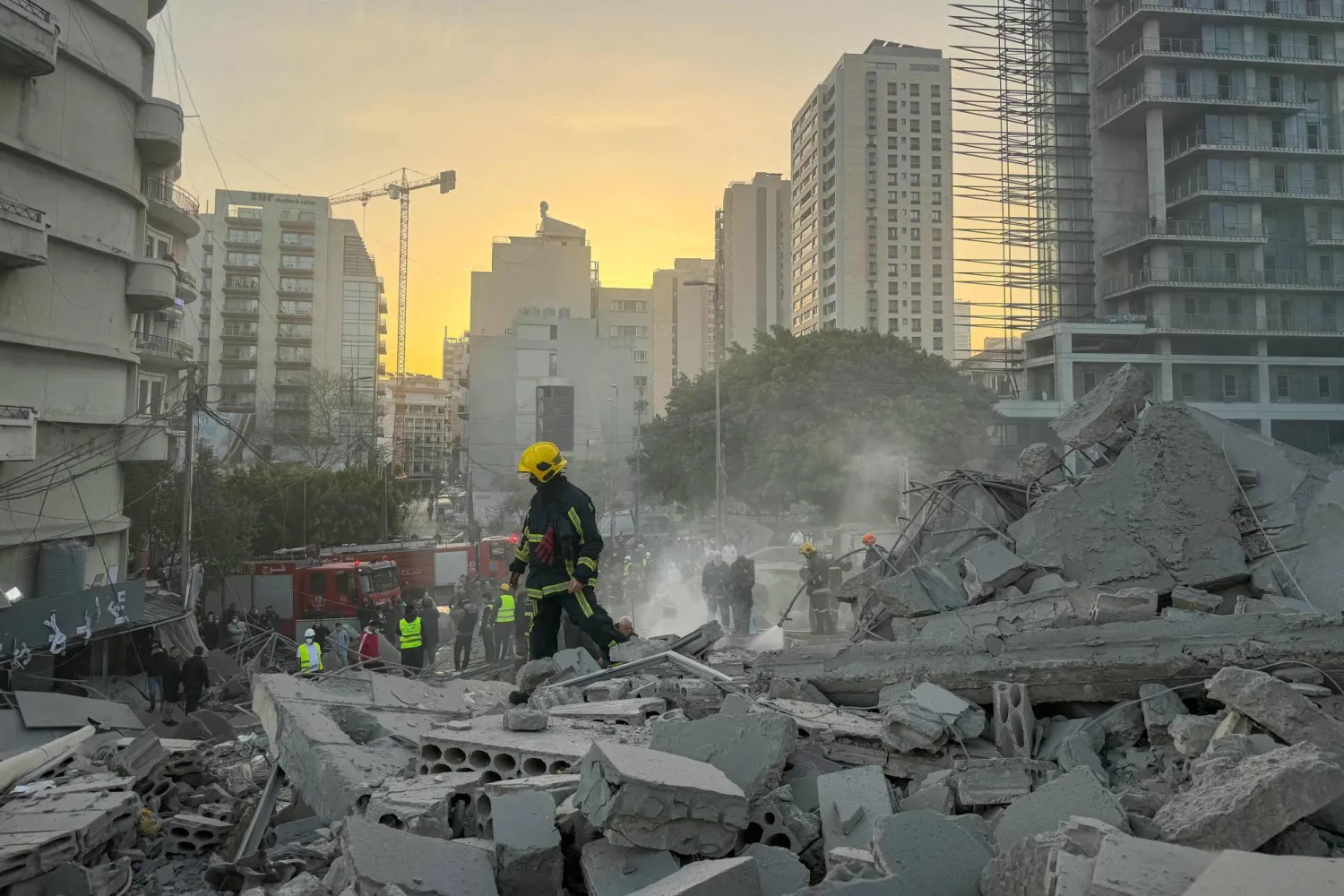
A firefighter walks past rubble at the site of an Israeli airstrike in Beirut's Bashoura neighborhood on March 18, 2026. (Photo by Ibrahim AMRO / AFP)
TT

Scores Killed, Injured in Israeli Strikes in Central Beirut

A firefighter walks past rubble at the site of an Israeli airstrike in Beirut's Bashoura neighborhood on March 18, 2026. (Photo by Ibrahim AMRO / AFP)

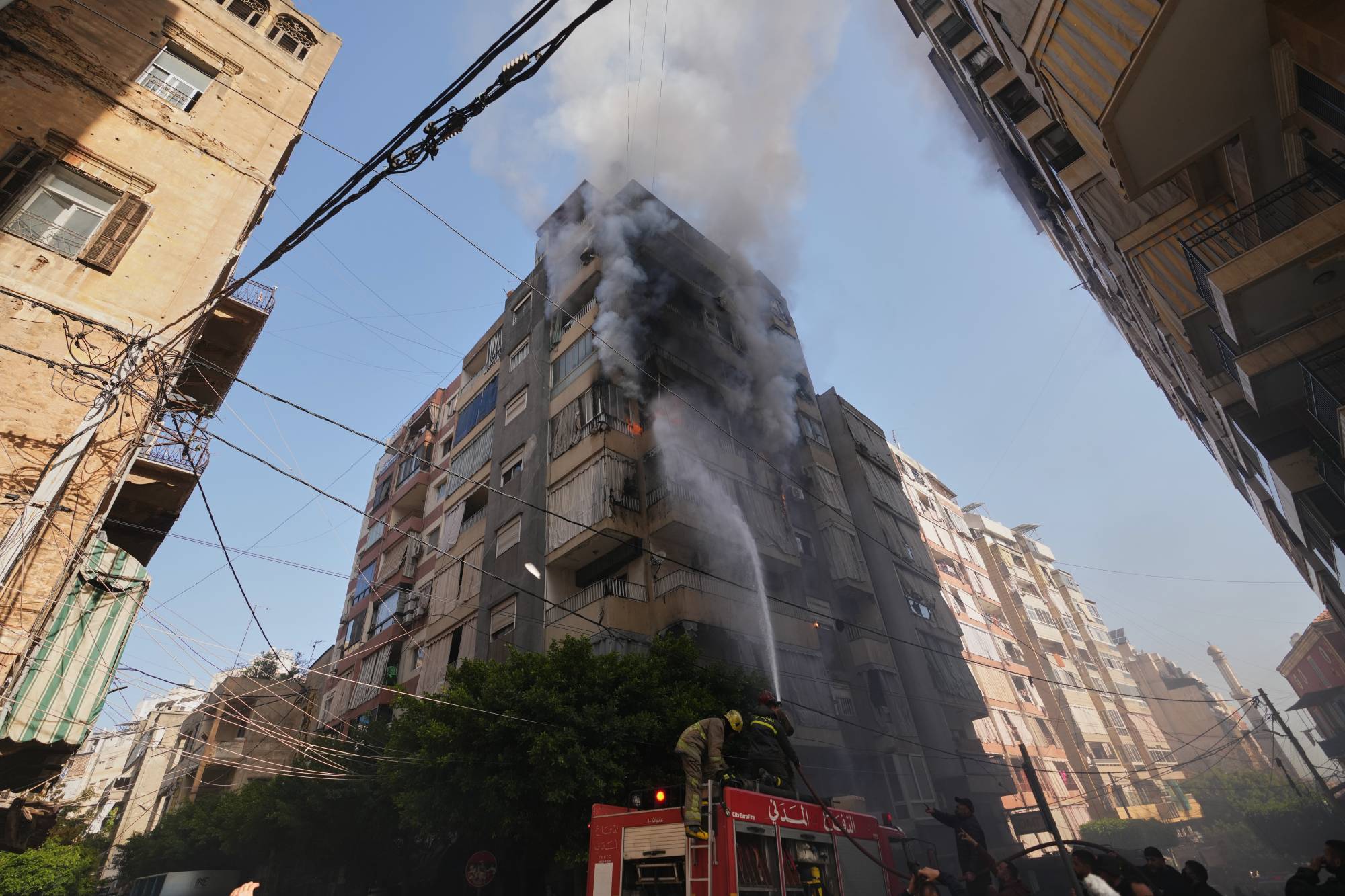
Dozens of people were killed and injured on Wednesday when Israel carried out several strikes on apartments in Beirut.

After issuing an evacuation warning, an Israeli airstrike struck an apartment building in Bashoura, central Beirut, completely flattening it as day broke.

Two earlier strikes on residential apartments in other central Beirut neighborhoods early Wednesday killed at least six people and wounded 24 others, according to the Lebanese Health Ministry.

During rush hour, a new Israeli strike hit central Beirut's Zuqaq al-Blat neighborhood, state media reported.

A blast was heard throughout the capital, and plumes of smoke were seen rising from the area.

Israeli strikes targeting central Beirut have become increasingly frequent in recent days, with or without prior warning. The attacks have hit far from the city’s southern suburbs, for which the army issued evacuation notices early in the war with Hezbollah.


Firefighters spray water on a burning residential building following an Israeli airstrike in central Beirut, Lebanon, Wednesday, March 18, 2026. (AP Photo/Hassan Ammar)


Also Wednesday, the state-run National News Agency reported strikes on Beirut's southern suburbs, a Hezbollah stronghold.

Furthermore, the Israeli military said it had "begun striking Hezbollah terror targets in southern Lebanon" including in the Tyre area, where the NNA reported at least four strikes including on a house.

The Israeli military issued another warning on Wednesday, signaling imminent strikes on four towns in the Tyre area and near the border.

Late Tuesday, Israel's army had issued an evacuation order for most of the southern city of Tyre as well as swathes of surrounding areas, saying it planned to "act forcefully" against Hezbollah.


The Full Story of Lebanon’s Initiative for Negotiations with Israel and its Challenges

President Joseph Aoun meets with French Ambassador to Lebanon Herve Magro at the Baabda presidential palace. (Lebanese Presidency)
TT

The Full Story of Lebanon’s Initiative for Negotiations with Israel and its Challenges

President Joseph Aoun meets with French Ambassador to Lebanon Herve Magro at the Baabda presidential palace. (Lebanese Presidency)

Authorities in Lebanon now see little option but to seek a humanitarian truce during the upcoming Eid al-Fitr, after ceasefire efforts in the war between Israel and Hezbollah collapsed against entrenched positions on both sides.

Israel is demanding Hezbollah’s “complete surrender” before halting operations in Lebanon. The party, in turn, has tied its stance to Iran’s position, after entering the wider conflict involving Tehran, Washington, and Tel Aviv.

A senior Lebanese official told Asharq Al-Awsat that Israeli Prime Minister Benjamin Netanyahu sent a ceasefire proposal, relayed by French President Emmanuel Macron, to Lebanese President Joseph Aoun 10 days ago.

Hezbollah’s decision to cut communication channels, followed by its launch of its “Al-Asf Al-Maakoul” (Eaten Straw) a wide military operation, derailed the initiative and led to Israel hardening its position.

Hezbollah’s posture remains the main domestic obstacle to ending the war. The group has yet to present a clear political position outlining its readiness to stop the fighting or its objectives, even as it escalates militarily in parallel with diplomatic efforts.

Lebanese delegation

The Lebanese source said no date or venue has been set for talks with Israel, and no formal Israeli response has been received. Messages conveyed through Macron and United Nations Special Coordinator for Lebanon Jeanine Hennis-Plasschaert have, however, raised a central question still unanswered by Beirut: if fighting stops, will Hezbollah stop firing rockets?

Lebanon, the source said, cannot afford a delay. Aoun is moving to finalize a negotiating delegation expected to include four figures representing the country’s main sects.

Named so far are former ambassador Simon Karam, a Christian who took part in “mechanism” committee meetings, Foreign Ministry Secretary-General Ambassador Abdel Sattar Issa, a Sunni nominated by Prime Minister Nawaf Salam, and Shawki Bou Nassar, a Druze figure named by senior Druze leader Walid Jumblatt.

Parliament Speaker Nabih Berri is still refusing to name a Shiite representative, conditioning this on a ceasefire and the return of displaced people.

He has also yet to respond to a proposal to appoint a member to a parallel “shadow delegation” to accompany the talks. The source said Israel is insisting, through indirect messages, on the inclusion of a Shiite member.

The source said Berri could prove pivotal, as the only figure capable of exerting pressure on Hezbollah at this stage and beyond.

Israel’s Maariv newspaper, citing Israeli sources, said Tel Aviv sees Berri as able to either back or block any move. While he opposes negotiations under fire and insists on a ceasefire first, Israeli assessments suggest he could later endorse any understandings that align with Lebanon’s interests and internal balance, providing political cover for Hezbollah to accept them.

United States

The source said Washington’s silence should not be read as negative. The US is fully focused on its conflict with Iran, but has not given Israel a free hand in Lebanon, otherwise the situation would look different.

He added that Aoun’s initiative has been well received in Washington, with President Donald Trump’s adviser for African affairs, Massad Boulos, and the president’s son-in-law, Jared Kushner, officially tasked with following the file and leading the expected negotiations.

Negotiations under fire

The source ruled out a near-term end to Israeli operations, saying Aoun is pressing ahead on the basis that negotiations under fire are better than negotiations after devastation.

The president fears what Israel may be preparing for Lebanon in the coming period and is seeking to avert it before it is too late, the source said.

The displacement crisis is placing severe strain on state institutions amid a lack of external support. The source questioned who would fund reconstruction given regional instability and global economic pressures.

During a visit to Beirut last week, United Nations Secretary-General Antonio Guterres launched a $308 million humanitarian appeal for displaced people, but only about $100 million has been raised, far short of the needs of 1.3 million displaced.

Hezbollah's weapons

Aoun’s initiative does not aim at a peace deal with Israel, but at technical talks starting with a ceasefire, an Israeli withdrawal, prisoner releases, and border demarcation, the source said.

Hezbollah’s weapons would then become an inevitable issue, with no remaining justification, to be handled firmly in line with government decisions and Lebanon’s interest that arms be held exclusively by the state.

Aoun and the government had opted to address the issue through dialogue, but tougher measures would be a last resort if Hezbollah fails to respond to what serves Lebanon’s interests, particularly those of the Shiite community, which the source said has paid a heavy price for entering a new “support war” with an unfavorable balance of power and no clear military horizon.

The Lebanese army has already begun tightening its grip on armed Hezbollah members, who can no longer move weapons or fighters freely through checkpoints in the south. The army is now aware of multiple sites it could target after the war ends.

The source rejected claims that the war is existential for Lebanon’s Shiites, describing them as a founding community with strong representation across state institutions and parliament, never marginalized.

He said they are expected to play a central role in rebuilding Lebanon and supporting its stability and prosperity, adding that reducing the community to a single party or movement is not realistic.