


Inflation Rate in Tunisia Slows to 5.4% in August

Inflation Rate in Tunisia Slows to 5.4% in August
TT

Inflation Rate in Tunisia Slows to 5.4% in August

Inflation Rate in Tunisia Slows to 5.4% in August

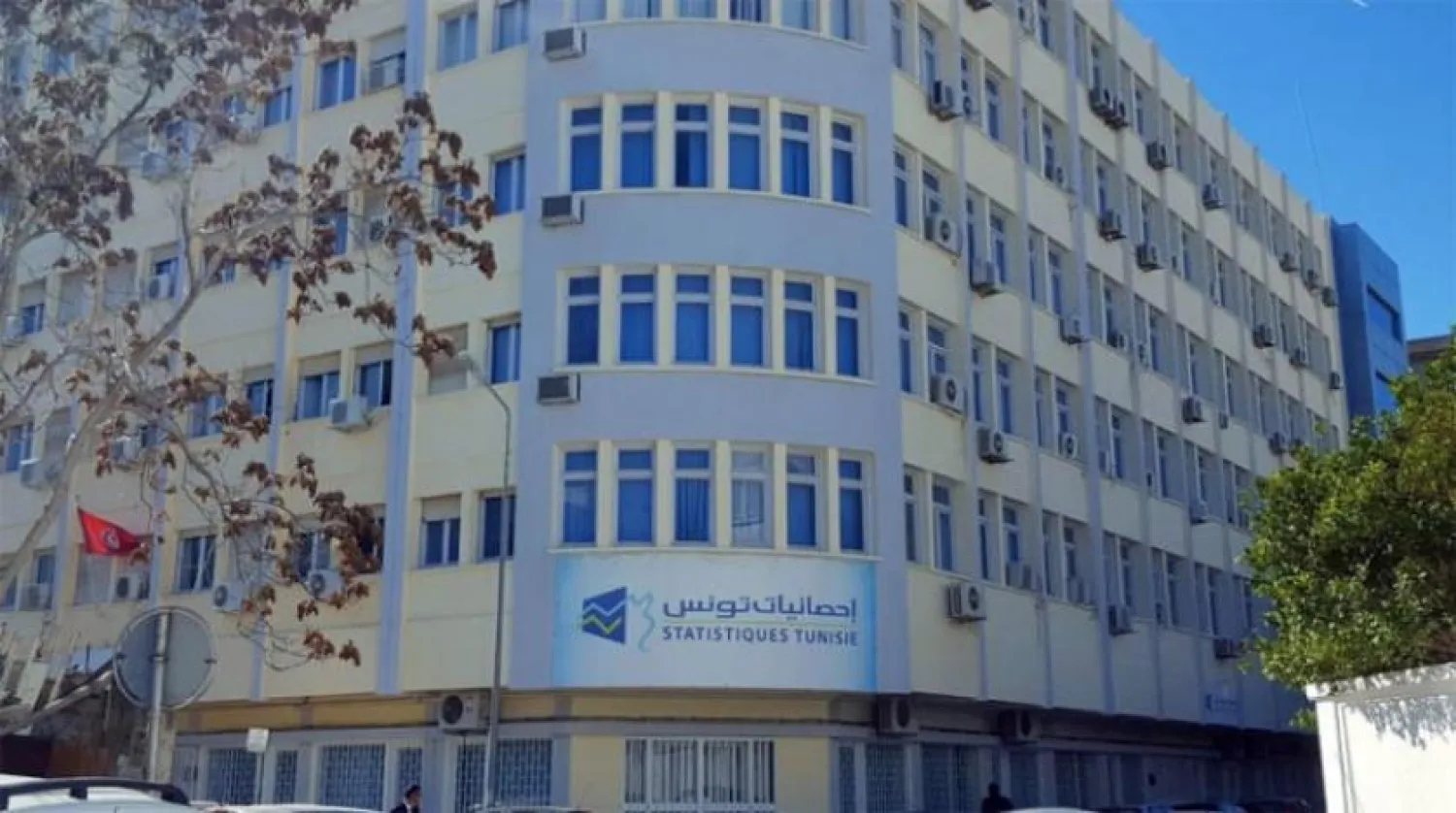
Tunisia’s annual inflation rate in August slowed to 5.4 percent from 5.7 percent in July and 5.8 percent in June, official data showed on Saturday.

According to the National Statistics Institute (INS), the decrease is due to a decline in food prices to 3.9 percent in August compared with 4.3 percent in June.

Tunisia had recorded very high inflation rates during the past few years, amounting to 7.8 percent.

Some economists expected the rate to reach 10 percent due to the slowdown in the traditional economic engines, especially investments and exports.

The Central Bank of Tunisia (BCT) has sought to raise the administrative interest rate in the financial market to pressure the inflation rate and raise it in more than one occasion to reach the range of 7.75 percent.

It finally decided to cut its key interest rate by 100 basis points to 6.75 percent, as it responded to the negative impact of the COVID-19 on the global growth outlook.

Tunisian authorities raised the interest rate nine times during the period between 2013 and 2019, prompting criticism in the country’s financial market.

However, Central Bank Governor Marwan Abbasi said it is a preemptive process to control the increasing rise in the inflation rate.

The BCT carried out a study in cooperation with the United Nations Development Program (UNDP) on the impact of the coronavirus pandemic on the Tunisian economy.

The Bank confirmed that by the end of the year, the economic recession will lead to a 4.4 percent decline in GDP, a 4.9 percent decrease in total investment operations, an eight percent drop for household consumption and exports, and a 9.6 percent decrease in imports.

The study noted that these are negative indicators that will have implications on social and economic stability.

The unemployment rate is predicted to increase from 15 to 21.6 percent, an increase of no less than 274.5000 unemployed citizens.

The decline in economic activity as well as state and individual revenues will lead to a decline in the annual income levels of about 475,000 Tunisians.



Saudi Economy Records Strongest Growth in Two Years in 2025

The Saudi capital, Riyadh (Reuters) 
TT

Saudi Economy Records Strongest Growth in Two Years in 2025

The Saudi capital, Riyadh (Reuters) 

Saudi Arabia’s economy posted its strongest growth in two years in 2025, expanding by 4.5 percent, supported by gains across all major economic sectors and a robust performance in the final quarter of the year.

According to estimates released by the General Authority for Statistics (GASTAT), real gross domestic product (GDP) grew 4.5 percent in 2025 compared with 2024, driven by growth in oil and non-oil and government activities.

Oil-related activities rose 5.7 percent, while non-oil sectors expanded by 4.9 percent. Government activities recorded more modest growth of 0.9 percent.

Data showed that non-oil sectors were the main contributor to overall GDP growth in 2025, adding 2.8 percentage points to the annual expansion. Oil activities contributed 1.4 percentage points, while government activities and net taxes on products added 0.1 and 0.2 percentage points, respectively.

Sector performance

All major economic sectors recorded positive growth during the year.

Wholesale and retail trade, restaurants and hotels led sectoral growth, expanding 6.2 percent. Financial, insurance and business services followed with 6.1 percent, while electricity, gas and water activities grew 6 percent.

Crude oil and natural gas activities increased 5.8 percent, and oil refining rose 5.7 percent.

Spending components

On the expenditure side, private final consumption grew 3.5 percent in 2025. However, government final consumption spending declined 3.5 percent, while gross fixed capital formation fell 1.7 percent.

In external trade, exports of goods and services rose 8.9 percent, while imports increased 4.7 percent during the year. According to the data, Saudi Arabia’s GDP at current prices reached 4.789 trillion riyals in 2025.

Crude oil and natural gas activities accounted for the largest share of economic output at 17.1 percent, followed by government activities at 14 percent and wholesale and retail trade, restaurants and hotels at 12.3 percent.

Manufacturing industries (excluding oil refining) contributed 11.1 percent to GDP, followed by construction at 8 percent, and financial, insurance and business services at 7 percent.

Fourth-quarter performance

Quarterly data showed that real GDP grew 5 percent in the fourth quarter of 2025 compared with the same period a year earlier. Seasonally adjusted GDP rose 1.4 percent compared with the third quarter of 2025.

During the fourth quarter, oil activities grew 10.8 percent year-on-year and 1.8 percent quarter-on-quarter. Non-oil activities expanded 4.3 percent annually and 1.7 percent quarterly. Government activities, however, declined 1.2 percent year-on-year and 0.2 percent quarter-on-quarter.

Crude oil and natural gas activities recorded the highest annual growth in the fourth quarter at 12.4 percent, followed by wholesale and retail trade, restaurants and hotels with 5.4 percent growth.

On the expenditure side in the fourth quarter, private final consumption rose 3.6 percent year-on-year, while gross fixed capital formation declined 3.1 percent annually, though it increased 1.8 percent compared with the previous quarter.

Government final consumption spending fell 8.5 percent year-on-year and 3.2 percent quarter-on-quarter. Meanwhile, exports rose 12.8 percent annually, while imports increased 1 percent year-on-year and 2.4 percent compared with the third quarter.


Aramco Bolsters Global Oil Market Stability Amid Rising Regional Tensions

Aramco's oil field in the Empty Quarter, Shaybah, Saudi Arabia, January 12, 2024. (Reuters)
TT

Aramco Bolsters Global Oil Market Stability Amid Rising Regional Tensions

Aramco's oil field in the Empty Quarter, Shaybah, Saudi Arabia, January 12, 2024. (Reuters)

Amid growing logistical challenges facing the energy sector, operational moves by Saudi Aramco are emerging as a stabilizing factor in global oil supply. The company has offered additional crude shipments on the spot market, a step analysts see as aimed at absorbing supply shocks and ensuring the continued flow of oil through key energy corridors.

The move aligns with Saudi Arabia’s long-standing role as a leading global producer and is intended to limit price volatility and maintain balance between supply and demand at a time of heightened geopolitical uncertainty.

Reuters reported that Aramco has offered more than 4 million barrels of Saudi crude through rare spot tenders, as tensions between the United States and Iran disrupt Middle Eastern exports.

Mohammad Al-Sabban, former senior adviser to the Saudi energy minister, said the current surge in oil prices does not necessarily reflect an immediate shortage of supply. Instead, it is largely driven by what energy markets call a “geopolitical risk premium.”

Speaking to Asharq Al-Awsat, Al-Sabban said prices remaining above $100 per barrel reflect global anxiety that the conflict could expand and threaten future supply security.

He noted that higher prices, while boosting short-term revenues and fiscal surpluses for oil-exporting countries, also bring hidden costs. These include increased spending on security measures to protect oil infrastructure — costs that rise in a volatile regional environment where Gulf states face mounting security pressures.

Al-Sabban also pointed out that spot market sales are currently generating greater returns than long-term futures contracts. The uncertainty surrounding the conflict has led buyers to pay premiums for immediate deliveries, making spot transactions more attractive during the current crisis.

Strategic chokepoint

Shipping through the Strait of Hormuz, which carries roughly 20 percent of global oil supply, remains central to the crisis.

Al-Sabban warned that even a temporary closure of the waterway would inevitably reduce available supplies, potentially triggering panic in markets and forcing countries to draw from strategic reserves.

He recalled historical precedents, noting that during the Iran-Iraq war, energy markets became a hub for speculation, with negative economic consequences emerging later.

Asked whether the conflict represents a short-term economic opportunity or a broader risk for regional economies, Al-Sabban said the reality is a mix of both. High prices may offer temporary gains as long as oil remains above $100 a barrel, but a prolonged conflict could ultimately impose heavier economic burdens through rising logistical and security costs.

Flexible response

Financial and economic adviser Hussein Al-Attas said Aramco’s decision to release additional cargoes on the spot market reflects significant flexibility in managing supply and responding quickly to market shifts amid rising demand and concerns about potential shortages.

He told Asharq Al-Awsat that the move sends an important signal to global markets that Saudi Arabia continues to play the role of a swing producer, capable of intervening to maintain market balance and ease fears about supply security.

Al-Attas added that the recent surge in oil prices is largely tied to geopolitical tensions in a region that represents the heart of global energy supply.

While Brent crude could remain above $100 in the short term if supply concerns persist, he noted that history shows price spikes driven by political tensions are often temporary unless they lead to a prolonged disruption in supply.

Higher oil prices naturally increase revenues for exporting countries, potentially strengthening fiscal balances and enabling governments to finance spending and development projects, Al-Attas remarked.

Gulf states, particularly Saudi Arabia and the United Arab Emirates, may therefore benefit financially in the short term.

However, he cautioned that such gains are usually temporary rather than structural. Prolonged high energy prices can slow global economic growth by fueling inflation, which may eventually reduce demand for oil. As a result, the current price surge may represent a temporary financial opportunity rather than a lasting shift in oil revenues.

Ultimately, Al-Attas said the crisis carries two opposing dynamics: Gulf countries may benefit financially in the short term, but any wider regional conflict could pose greater risks to economic and commercial stability.

For that reason, he added, the region’s strategic interest ultimately lies in stable energy markets and uninterrupted oil flows, which are essential for sustaining global demand and supporting long-term economic growth.


Egypt Raises Fuel Prices by up to 30 Percent

A gas station in the Egyptian capital, Cairo. (Reuters)
TT

Egypt Raises Fuel Prices by up to 30 Percent

A gas station in the Egyptian capital, Cairo. (Reuters)

Egypt raised domestic fuel prices by up to 30 percent on Tuesday, blaming "exceptional" global energy pressures caused by the Middle East war, which has disrupted oil supplies and shipping routes.

The increases, announced by the petroleum ministry, apply to gasoline, diesel and natural gas used in vehicles.

In a statement, the ministry said the adjustments were driven by "disruptions in supply chains, rising risk levels and higher maritime shipping and insurance costs", which have pushed petroleum product prices to "levels not seen in years".

Oil prices briefly surged above $119 a barrel on Monday before plunging to around $84 after US President Donald Trump said the US-Israel war with Iran would end soon.

Diesel, one of Egypt's most widely used fuels, rose by three Egyptian pounds, or about 17.1 percent, to 20.50 pounds ($0.38) per liter, up from 17.50 pounds.

Prices for 80-octane gasoline rose by about 16.9 percent, to 20.75 pounds per liter, while 92-octane gasoline increased by roughly 15.6 percent to 22.25 pounds.

Prices for 95-octane climbed by about 14.3 percent to 24 pounds, the ministry said.

Natural gas used for vehicles saw the largest hike, jumping 30 percent to 13 pounds per cubic meter.

Egypt has raised fuel prices four times over the past two years under an $8 billion loan program from the International Monetary Fund.

An October increase of up to 13 percent was expected to be the last under the plan.