
2 Years Later, Deal on Southern Syria Draws Worrying Scenario for Country’s Future

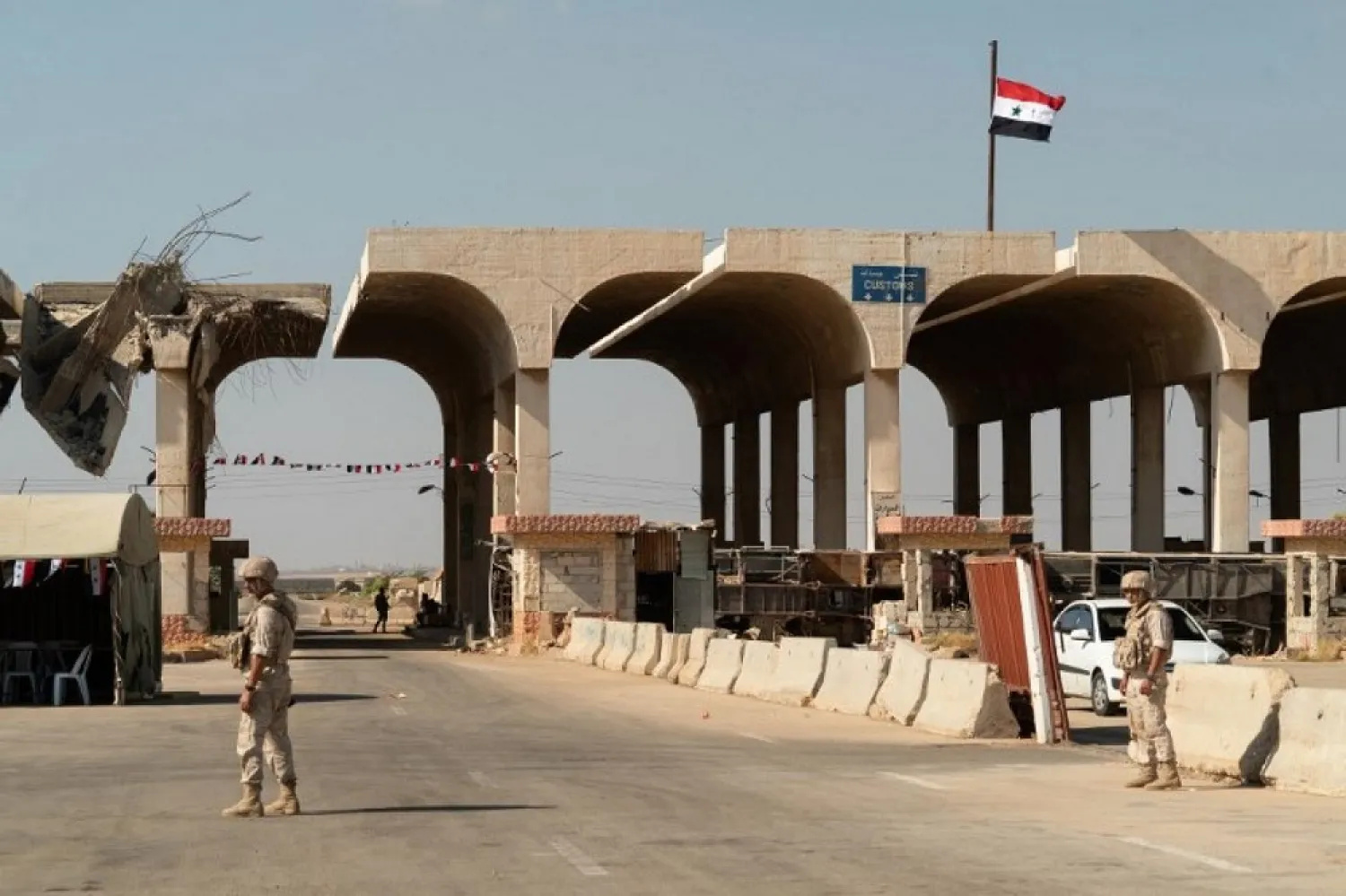
Russian forces patrol the Nassib border crossing with Jordan in the Syrian province of Daraa. (AFP file photo)
TT

2 Years Later, Deal on Southern Syria Draws Worrying Scenario for Country’s Future

Russian forces patrol the Nassib border crossing with Jordan in the Syrian province of Daraa. (AFP file photo)

Two years have passed since Syrian regime troops returned to southern and southwestern parts of the country as part of a deal that allowed the government and pro-Damascus forces to restore control over the Daraa and Quneitra countrysides. The agreement received the blessing of Jordan and Israel and was part of a prior understanding reached between the United States and Russia.

Some of the conditions of the deal demanded that the opposition surrender positions to the regime in Daraa and that pro-Iran militias pull out of border regions near Jordan and the Israeli-occupied Golan Heights.

Two years since the agreement, violence still persists in the region. A sense of frustration grips the opposition forces that were promised autonomous rule in certain areas, but was never materialized. The Jordanian government is still incapable of completely returning Syrian refugees back to their homes. Israel constantly carries out air strikes against “Iranian positions”. With diplomatic attention shifting to northern and northwestern Syria, the Washington-based Center for Global Policy has raised questions about the lessons that can be derived from the deal in the South and its implications for the rest of the war-ravaged country:

The driving force behind the deal has been Russia, the main player in Syria since its military intervention in 2015. The origins of the deal lie in a May 2017 agreement between Russia, Iran, and Turkey that established four “de-escalation zones” in Syria, the goal of which was to help the Syrian government defeat the opposition and Free Syrian Army (FSA), said a report by the center, released earlier this month.

At the time, the United States had been more involved in Syria, both overtly with the al-Tanf military base in Homs, which is dedicated to training anti-ISIS forces in the region, and covertly with a secret, CIA-headed effort to train and arm Syrian rebel forces. One goal of the United States was to protect the interests of its regional allies, such as Israel and Jordan, making Iran’s involvement in the talks disconcerting to Washington.

In July 2017, US President Donald Trump and Russian President Vladimir Putin announced a ceasefire agreement between the Syrian government and opposition. Ahead of the agreement, Trump shut down CIA efforts to fund the opposition factions, in effect agreeing to let Russia maintain the upper hand in Syria. (Moscow has tried to push Washington to shutter al-Tanf, but no agreement has been reached.) Talks between Russia and the United States continued, specifically with regard to Iran’s continued presence and Israeli security, until a deal was reached in 2018 to remove pro-Iran forces from South Syria.

In July 2018, a Russian-backed military campaign took over Quneitra and Daraa provinces. A Syrian opposition official told the writer that US and Jordanian representatives directed the FSA to surrender their weapons and accept US-Russian agreements, which involved forming local councils, recognizing Syria’s official flag and signing settlement agreements.

During talks with opposition figures, Russia proposed forming new FSA groups under the Russian-controlled 5th Corps of the Syrian military. Moscow’s aim was to create their own local army so they can control what is happening there and prevent Iran from recruiting Syrian militias.

Daraa two years later
The city of Daraa is largely empty. Eyewitnesses have reported that government forces have one checkpoint at the entrance of the city from the Amman-Damascus highway with portraits of president Bashar Assad and statements of glorification for the official army. Pro-government checkpoints inside the city are scarce, with a lackluster presence for the army, security forces and Russian officials.

On the other hand, the surrounding countryside, which was an opposition stronghold before 2018, records a new bombing or assassination attempt on a daily basis. The opposition group Tajamo Ahrar Houran has claimed 415 assassination attempts over two years – of those 277 attempts targeted civilians, 133 targeted former opposition fighters that joined government forces following the settlement, and 48 targeted opposition fighters and leaders who remained unaffiliated. The Syrian Observatory for Human Rights reported that 525 people were killed and assassinated in just one year, including 56 opposition fighters who agreed to “settlements and reconciliations,” 19 Hezbollah and pro-Iran fighters, and 17 fighters from the 5th Corps.

The US-Russian agreement didn’t stop government forces from seeking to seize full control of South Syria. It also failed to completely keep Iranian forces away from the Jordanian or Israeli borders. Russia has had to intervene on multiple occasions to stop government forces from raiding Daraa countryside. In one example, government forces sent military reinforcements to Tafas, reportedly from the 4th Armored Division and the Republican Guard who are believed to be more intimate with Iran. This came after former FSA fighters took control of a government checkpoint ahead of an attack on Tafas. Those tensions prompted a Russian intervention.

Russia and Iran
Iran may have withdrawn its non-Syrian militias, but it didn’t stop seeking to consolidate its power and presence through other means, mainly by enlisting Syrian militias in the countrysides of Daraa, Sweida, and Quneitra to keep the pressure on Israel. Iran also tried to bolster its leverage by supporting the Syrian army’s 4th Armored Division, considering that its commander, Bashar Assad’s younger brother Maher al-Assad, is close to Tehran. This was clear with the 4th Division resurfacing after the Russian-backed 5th Corps had established its grounds.

Tehran and Moscow have been engaged in a quiet struggle over South Syria, which is being played out via two proxy forces in the Syrian military: the Iranian-leaning 4th Division and the Russian-backed 5th Corps. This struggle manifested itself in repeated attempts by each side to take full control of the province. The 4th Division sought to enlist fighters, especially former opposition fighters, by offering them monthly wages and other privileges including protection and keeping them stationed in Daraa rather than deploying them to Idlib or central Syria.

According to some activists and officials in Daraa, Russia and its 5th Corps, which has former opposition fighters who agreed to the settlement and declined to go to Idlib, still have the upper hand. I was told by an opposition leader that the 5th Corps is planning to raise its manpower to 20,000 fighters. Many are now opting to join the 5th Corps rather than joining the government army or the 4th Division or turning into fugitives.

Ahmad al-Ouda, the leader of 5th Corps, sponsored a graduation ceremony that was attended by Russian officers at which hundreds of fighters shouted anti-Assad chants, such as “Long live Syria” and “Down with Bashar Assad.”

Israeli Response
In late June, Damascus and the Syrian Observatory for Human Rights reported on Israeli air strikes in southwest Syria. Four provinces were targeted: Deir Ezzour, Homs, Hama and Sweida. “One of our military points near Salkhad, south of Sweida have been targeted.” SANA reported. Israel renewed its air strikes in late August, indicating that it believes Russia has failed to keep Iran away from the west of Syria.

Israel has conducted hundreds of air strikes in recent years, but these were the first that targeted the Sweida countryside, near the Jordanian border. This suggests an Iranian presence remains in South Syria. Israel notably targeted a radar station in Tal al-Sahn, Sweida countryside in late-June according to the “Sweida 24” network, giving rise to speculation that Iran is trying to capture this particular summit to install listening devices after Russia took control of the strategic point of Tal al-Hara in Daraa as part of US-Russian understandings.

Iran has long sought to install cells in Golan, coupled with Hezbollah taking over the al-Hadar town in the Quneitra countryside. Israel has targeted Iran and Hezbollah cells multiple times, including assassinating Jihad Mughnieh, son of the prominent Hezbollah leader Imad Mughnieh, as he was trying to establish a presence in Golan.

Israel also carried out air strikes on a cell in Quneitra countryside in early August, followed by bombing a communication point for the Syrian army in a Disengagement Zone. Israeli Prime Minister Benjamin Netanyahu warned of a “heavy” response in case of a retaliation in tandem with military exercises by the Israeli army in the occupied parts of Golan. This came after a rare visit made by Gen. Mark Miley, the US Chairman Joint Chiefs of Staff, to Tel Aviv to coordinate against Iran, particularly in Syria. The visit was designed to signal to Iran and Hezbollah the extensive coordination between the United States and Iran. The Beirut explosion, however, reshuffled plans.

Lessons from the South Syria deal
The United States, Jordan and the Syrian opposition have different goals, none of which were met with the implementation of the South Syrian deal.

Jordan has yet to secure its northern borders as smuggling has continued from Syria, while Damascus has made no efforts to provide better settings for the return of IDPs or refugees. The Daraa-Nassib highway is still not secure, making it difficult to resume moving cargo from Lebanon to the Gulf through Jordan.

The US abandonment of the FSA has yielded no significant gains – either for the opposition, which was hoping to enjoy some degree of local authority, or Jordan, which was hoping for a safe zone into which refugees could re-enter the country.

Even those who opted to pledge allegiance to the central government haven’t gained much. A number of parliamentary candidates have voiced grievances over electoral corruption, accusing the security apparatus of registering voter names for detainees or deceased people to ensure victory for fully pro-government candidates at the expense of independent candidates.

Washington may never have been serious in supporting the FSA, especially after the rise of ISIS and al-Nusra Front, but has made a huge gamble by abandoning the FSA without receiving anything in return from Moscow.

Other parties haven’t been impervious to such losses. Israel’s targeting of possible Iranian presence in Syria reflects the poor outcome of these understandings. The lack of a regulatory body over the execution of the agreement has always been a significant vulnerability insofar its execution hinges almost completely on Russia’s willingness to do so, with no accountability from the United States or any third parties such as the United Nations.

The Assad regime has made it clear that its survival strategy is to keep a delicate balance between its two allies, Moscow and Tehran, without favoring either, fearing that relying solely on one will make Damascus vulnerable to the other and other regional and global foes. The ongoing struggle between Iran and Russia in South Syria is a demonstration of this strategy that turned the regime’s areas of control, including the south, to conflict grounds.

Washington has to keep the pressure on Moscow for the deal to survive, and the current scenario in the south should be taken into consideration in any future US-Russian talks with regard to the northeast of the Euphrates, where the Kurdish Syrian Democratic Forces are in control. The Russians are still testing US resolve in that region, effectively threatening the ceasefire that was signed in mid-July 2017 and renewed last December in light of the United States withdrawing from parts of the Syrian-Turkish borders.

Washington showing more resolve in light of the South Syria deal would yield more sustainable outcomes. The South Syria deal is a telltale sign that Russia is willing to use any potential agreement to bolster the Syrian government’s authority toward fully retaking Syria and crushing the opposition as long as there is no accountability mechanism. This situation leaves Syria to further plunge into chaos and threatens neighboring countries, including US allies.


Iran’s Khamenei Faces Gravest Crisis of His Rule as US Strike Force Gathers

A handout picture made available by Iran's Supreme Leader Office shows Iranian Supreme Leader Ali Khamenei addressing a ceremony in Tehran, Iran, 17 February 2026, amid heightened regional tensions following an increased US military presence in the Middle East. (EPA/Iran’s Supreme Leader Office Handout)
TT

Iran’s Khamenei Faces Gravest Crisis of His Rule as US Strike Force Gathers

A handout picture made available by Iran's Supreme Leader Office shows Iranian Supreme Leader Ali Khamenei addressing a ceremony in Tehran, Iran, 17 February 2026, amid heightened regional tensions following an increased US military presence in the Middle East. (EPA/Iran’s Supreme Leader Office Handout)

Ali Khamenei has crushed unrest and survived foreign pressure before but, with his envoys racing to avert threatened American airstrikes through ongoing talks, Iran's Supreme Leader faces the gravest crisis of his 36-year rule.

An embittered population toils under a sanctions-hit economy. Huge protests in January were crushed at a cost of thousands of lives. Israeli and US. strikes last year smashed prized nuclear and missile facilities. Iran's regional policy lies in tatters, with old allies and proxies weakened or gone.

With the risk of war hanging over the Middle East, the 86-year-old's fierce devotion to the Islamic Republic, his implacable hostility to the West and his record of guile in spinning out negotiations will shape the fate of the region.

PRESERVING IRAN'S ISLAMIC REPUBLIC AT ALL COSTS

Already this year, he has ordered the deadliest crackdown since the 1979 revolution, saying protesters "should be put in their place" before security forces opened fire on demonstrators chanting "Death to the dictator!".

US President Donald Trump's threats to bomb Iran again come only months after Khamenei was forced into hiding last June by strikes that killed several close associates and Revolutionary Guard commanders.

That assault was among the many indirect results of the attack on Israel by the Iran-backed Palestinian group Hamas on October 7, 2023, which not only triggered the war in Gaza but also spurred Israel to hammer Tehran's other ‌regional proxies.

With Hezbollah weakened ‌in Lebanon and Syria's Bashar al-Assad toppled, Khamenei's reach across the Middle East has been stunted. Now he faces ‌US demands ⁠to abandon Iran's ⁠best remaining strategic lever, its arsenal of ballistic missiles.

Iran has even offered apparent concessions on its nuclear program, which it says is purely civilian but is seen by the West and Israel as a path to an atomic bomb.

But Khamenei refuses to even discuss giving up missiles, which Iran sees as its only remaining deterrent to Israeli attack, a display of intransigence that may itself invite US airstrikes.

As the US military buildup intensifies, Khamenei's calculations will draw on a character molded by revolution, years of turmoil and war with Iraq, decades of sparring with the United States, and a ruthless accumulation of power.

Khamenei has ruled since 1989 and holds ultimate authority over all branches of government, the military and the judiciary.

While elected officials manage day-to-day affairs, no major policy - especially one concerning the United States - proceeds without his explicit approval; Khamenei's mastery of Iran's complex system of clerical rule combined with limited democracy ensures that no ⁠other group can challenge his decisions.

AS LEADER, KHAMENEI WAS ONCE FAR FROM SUPREME

Early in his rule, Khamenei was ‌often dismissed as weak and an unlikely successor to the Islamic Republic's late founder, the charismatic Khomeini.

When he was appointed Supreme Leader, Khamenei had difficulty wielding power through religious authority, as the theocratic system foresaw. After struggling for a long time to ‌emerge from the shadow of his mentor, it was by forging a formidable security apparatus devoted solely to him that he finally imposed himself.

Khamenei distrusts the West, ‌particularly the US, which he accuses of seeking to topple him.

In a typically pugnacious speech after January's protests, he blamed Trump for the unrest, saying: "We consider the US president criminal for the casualties, damages and slander he inflicted on the Iranian nation." Yet despite his ideological rigidity, he has shown a willingness to bend when the survival of the republic is at stake.

The concept of "heroic flexibility", first mentioned by Khamenei in 2013, permits tactical compromises to advance his goals, mirroring Khomeini's choice in 1988 to embrace a ceasefire after eight years of war with Iraq.

Khamenei’s guarded ‌endorsement of Iran's 2015 nuclear deal with six world powers was another such moment, as he calculated that sanctions relief was necessary to stabilize the economy and buttress his grip on power.

Trump quit the 2015 pact during his first ⁠term in 2018 and reimposed crippling sanctions on ⁠Iran. Tehran reacted by gradually violating all agreed curbs on its nuclear program.

LOYAL SECURITY STRUCTURE KEY TO KHAMENEI'S POWER

At times of increasing pressure, Khamenei has repeatedly turned to the Iranian Revolutionary Guard Corps (IRGC) and the Basij, a paramilitary force numbering hundreds of thousands of volunteers, to snuff out dissent.

It was they who crushed the protests that exploded after Mahmoud Ahmadinejad's re-election as president in 2009 amid allegations of vote fraud.

In 2022, Khamenei was just as ruthless in arresting, imprisoning or executing protesters enraged by the death in custody of the young Iranian-Kurdish woman Mahsa Amini.

And it was again the Guards and Basij who crushed the latest round of protests in January.

His power also owes much to the parastatal financial empire known as Setad, which is under Khamenei's direct control. Worth tens of billions of dollars, it has grown hugely during his rule, investing billions in the Revolutionary Guards.

Scholars outside Iran paint a picture of a secretive ideologue fearful of betrayal - an anxiety fueled by an assassination attempt in June 1981 with a bomb hidden in a tape recorder that paralyzed his right arm.

Khamenei himself suffered severe torture, according to his official biography, in 1963, when at 24 he served the first of many terms in prison for political activities under the rule of the shah.

After the revolution, as deputy defense minister, Khamenei became close to the Guards during the 1980-88 war with Iraq, which claimed a million lives from both sides.

He won the presidency with Khomeini's support but was a surprise choice as successor when the supreme leader died, lacking both his popular appeal and his superior clerical credentials.

Karim Sadjadpour at the Carnegie Endowment for International Peace said that "accident of history" had transformed a "weak president to an initially weak supreme leader to one of the five most powerful Iranians of the last 100 years".


US Strikes on Iran Could Target Individual Leaders, Officials Say

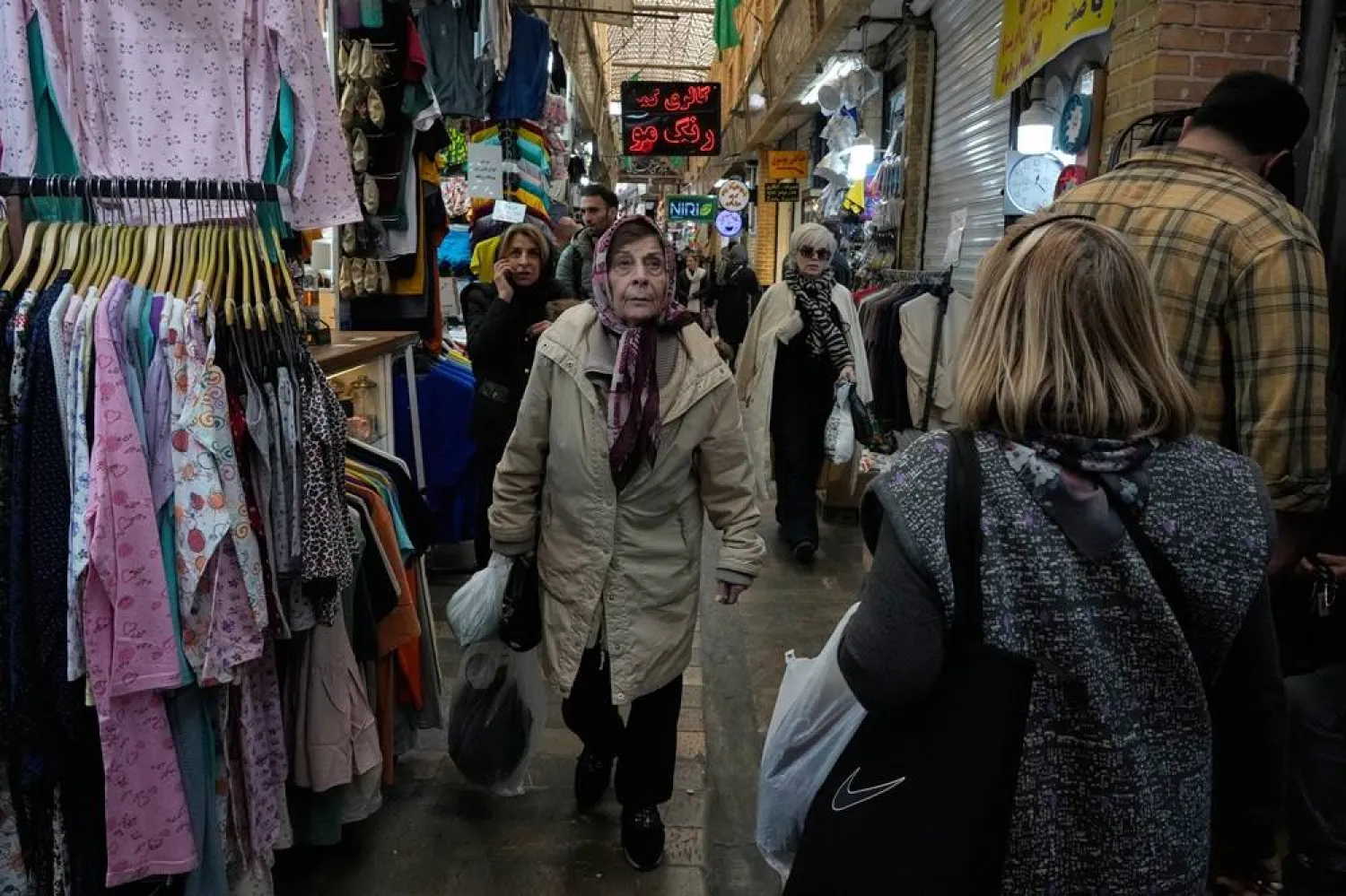
 People walk at Tajrish traditional bazaar in northern Tehran, Iran, Thursday, Feb. 19, 2026. (AP)
People walk at Tajrish traditional bazaar in northern Tehran, Iran, Thursday, Feb. 19, 2026. (AP)
TT

US Strikes on Iran Could Target Individual Leaders, Officials Say

 People walk at Tajrish traditional bazaar in northern Tehran, Iran, Thursday, Feb. 19, 2026. (AP)
People walk at Tajrish traditional bazaar in northern Tehran, Iran, Thursday, Feb. 19, 2026. (AP)

US military planning on Iran has reached an advanced stage with options including targeting individuals as part of an attack and even pursuing regime change in Tehran, if ordered by President Donald Trump, two US officials told Reuters.

The military options are the latest signs that the United States is preparing for a serious conflict with Iran should diplomatic efforts fail. Reuters first reported last week that the US military is preparing for a sustained, weeks-long operation against Iran that could include striking Iranian security facilities as well as nuclear infrastructure.

The latest revelations suggest more granular, ambitious planning ahead of a decision by Trump, who has in recent days publicly floated the idea of regime change in the country.

The US officials, who spoke on condition of anonymity due to the sensitive nature of the planning, did not offer further details on which individuals could be targeted or how the US military could attempt to carry out regime change without a large ground force.

Pursuing regime change would mark another shift away from Trump's vows during the presidential campaign to abandon what he has called the failed policies of past administrations, which included military efforts to topple governments in Afghanistan and Iraq.

Trump has assembled a massive amount of firepower in the Middle East, but most of the combat ‌capabilities are aboard warships ‌and fighter aircraft. Any major bombing campaign could also count on support from US-based bombers.

In his first term, ‌Trump ⁠showed a willingness ⁠to carry out targeted killings by approving a 2020 attack on Iran's top general, Qassem Soleimani, who led the foreign espionage and paramilitary arm of Iran's Revolutionary Guard Corps, known as the Quds Force.

The Trump administration formally labeled the IRGC a foreign terrorist organization in 2019, the first time Washington had applied the designation to another nation’s military.

One of the US officials noted Israel's success targeting Iranian leaders during its 12-day war with Iran last year. At the time, regional sources told Reuters at least 20 senior commanders were killed, including the armed forces chief of staff, Major General Mohammad Bagheri.

"The 12-day war and Israeli strikes against individual targets really showed the utility of that approach," the US official said, adding that the focus was on those involved in command and control of IRGC forces.

Still, the official cautioned that targeting individuals requires additional intelligence ⁠resources. Killing a particular military commander would mean knowing their exact location and understanding who else might be harmed in ‌the operation.

It was unclear to the officials who spoke with Reuters what intelligence the US has ‌on Iranian leaders who could potentially be targeted by the United States.

The White House and Pentagon did not immediately respond to requests for comment.

REGIME CHANGE AS A POSSIBLE GOAL

Trump ‌has openly floated the possibility of changing the government in Iran, saying last week it "seems like that would be the best thing that could happen." ‌He declined to say who he wanted to take over Iran, but said, "there are people."

While regime change operations have traditionally involved major movement of US ground forces, Trump turned to special operations forces to oust Venezuela's President Nicolas Maduro, sending them to grab him from his Caracas compound last month in an audacious raid.

At the same time, the US president has also held out hope for diplomacy, saying on Thursday that "really bad things" would happen if no deal were reached. He appeared to set a deadline of no more than ‌10 to 15 days before the US might take action.

Iran's Revolutionary Guard has warned it could retaliate against US military bases in the region if the US strikes Iranian territory.

In a letter on Thursday to UN Secretary-General Antonio Guterres, Tehran said it would not start any war but that "in the event that it is subjected to military aggression, Iran will respond decisively and proportionately" in its exercise of the right of self-defense.

US officials have told Reuters they fully expect Iran to fight back in the event of an attack, raising the risk of US casualties and a regional conflict, given the number of countries that could come under fire from Iran's missile arsenal.

Trump's threats to bomb Iran have pushed up oil prices, and on Thursday a Russian warship joined planned Iranian naval drills in the Gulf of Oman, a vital sea route for global energy shipments.

THREATS TO SHUT STRAIT OF HORMUZ

Tehran has in the past threatened to shut down the Strait of Hormuz if it is attacked, a move that would choke off a fifth of global oil flows.

Iranian and US negotiators met on Tuesday and Iranian Foreign Minister Abbas Araqchi said they had agreed on "guiding principles." White House press secretary Karoline Leavitt said on Wednesday, however, that the two sides remained far apart on some issues.

Iran has resisted making major concessions on its nuclear program, though insisting it is for peaceful purposes. The US and Israel have in the past accused Tehran of trying to develop a nuclear bomb.

A senior US official said Iran would make a written proposal on how to address US concerns.

Trump called on Tehran on Wednesday to join the US on the "path to peace."

"They can't have a nuclear weapon, it's very simple," he said. "You can't have peace in the Middle East if they have a nuclear weapon."


First Ramadan After Truce Brings Flicker of Joy in Devastated Gaza 

Worshippers perform evening Tarawih prayer on the first night of the holy fasting month of Ramadan at the Al-Kanz Mosque, which was damaged during the Israel-Hamas war, in Gaza City, Tuesday, Feb. 17, 2026. (AP)
TT

First Ramadan After Truce Brings Flicker of Joy in Devastated Gaza 

Worshippers perform evening Tarawih prayer on the first night of the holy fasting month of Ramadan at the Al-Kanz Mosque, which was damaged during the Israel-Hamas war, in Gaza City, Tuesday, Feb. 17, 2026. (AP)

Little Ramadan lanterns and string lights appeared on streets lined with collapsed buildings and piles of rubble in Gaza City, bringing joy and respite as Islam's holiest month began -- the first since October's ceasefire.

In the Omari mosque, dozens of worshippers performed the first Ramadan morning prayer, fajr, bare feet on the carpet but donning heavy jackets to stave off the winter cold.

"Despite the occupation, the destruction of mosques and schools, and the demolition of our homes... we came in spite of these harsh conditions," Abu Adam, a resident of Gaza City who came to pray, told AFP.

"Even last night, when the area was targeted, we remained determined to head to the mosque to worship God," he said.

A security source in Gaza told AFP Wednesday that artillery shelling targeted the eastern parts of Gaza City that morning.

The source added that artillery shelling also targeted a refugee camp in central Gaza.

Israel does not allow international journalists to enter the Gaza Strip, preventing AFP and other news organizations from independently verifying casualty figures.

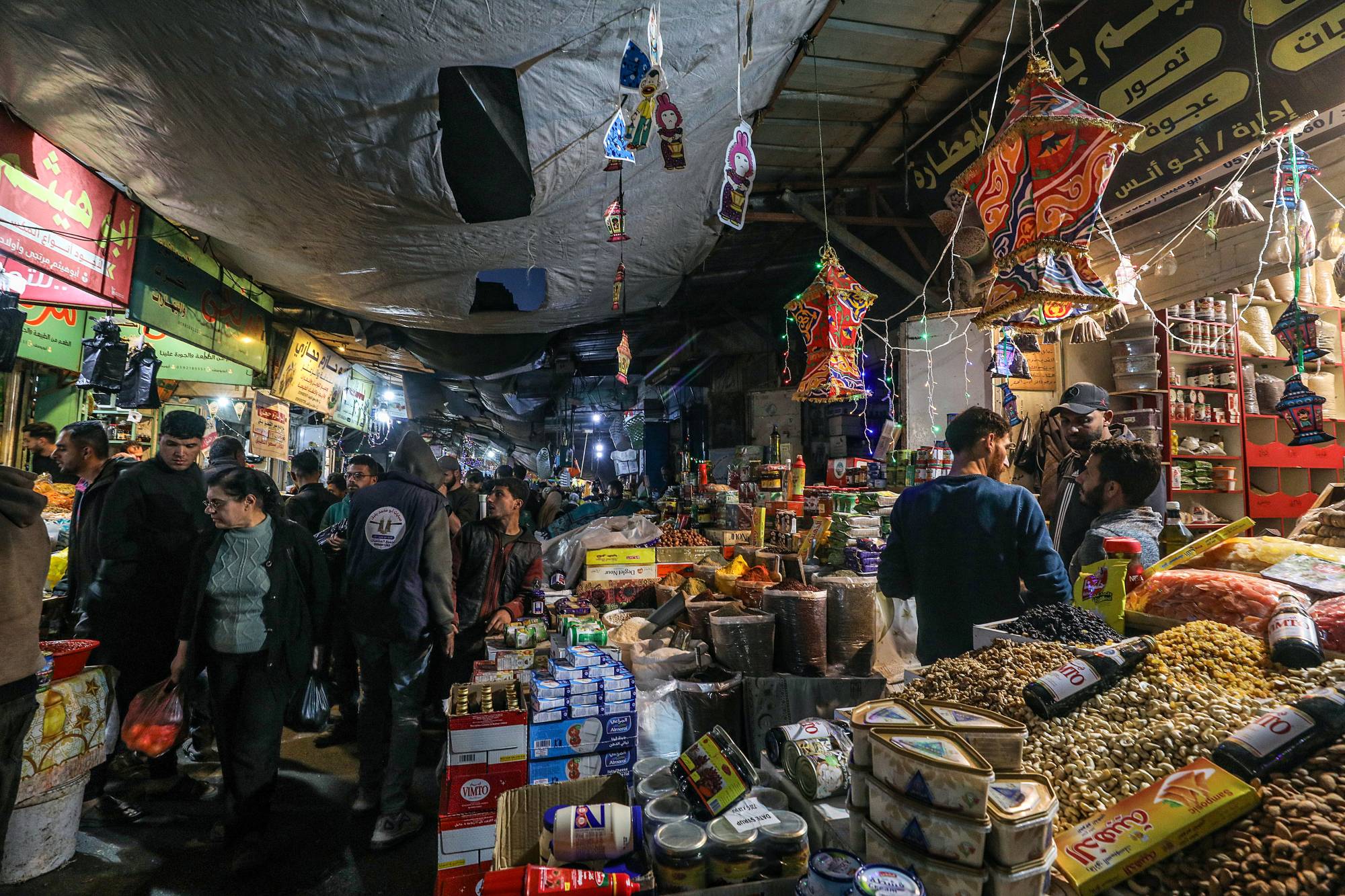
A Palestinian vendor sells food in a market ahead of the holy month of Ramadan in Gaza City, 17 February 2026. (EPA)

- 'Stifled joy' -

In Gaza's south, tens of thousands of people still live in tents and makeshift shelters as they wait for the territory's reconstruction after a US-brokered ceasefire took hold in October.

Nivin Ahmed, who lives in a tent in the area known as Al-Mawasi, told AFP this first Ramadan without war brought "mixed and varied feelings".

"The joy is stifled. We miss people who were martyred, are still missing, detained, or even travelled," he said.

"The Ramadan table used to be full of the most delicious dishes and bring together all our loved ones," the 50-year-old said.

"Today, I can barely prepare a main dish and a side dish. Everything is expensive. I can't invite anyone for Iftar or suhoor," he said, referring to the meals eaten before and after the daily fast of Ramadan.

Despite the ceasefire, shortages remain in Gaza, whose battered economy and material damage have rendered most residents at least partly dependent on humanitarian aid for their basic needs.

But with all entries into the tiny territory under Israeli control, not enough goods are able to enter to bring prices down, according to the United Nations and aid groups.

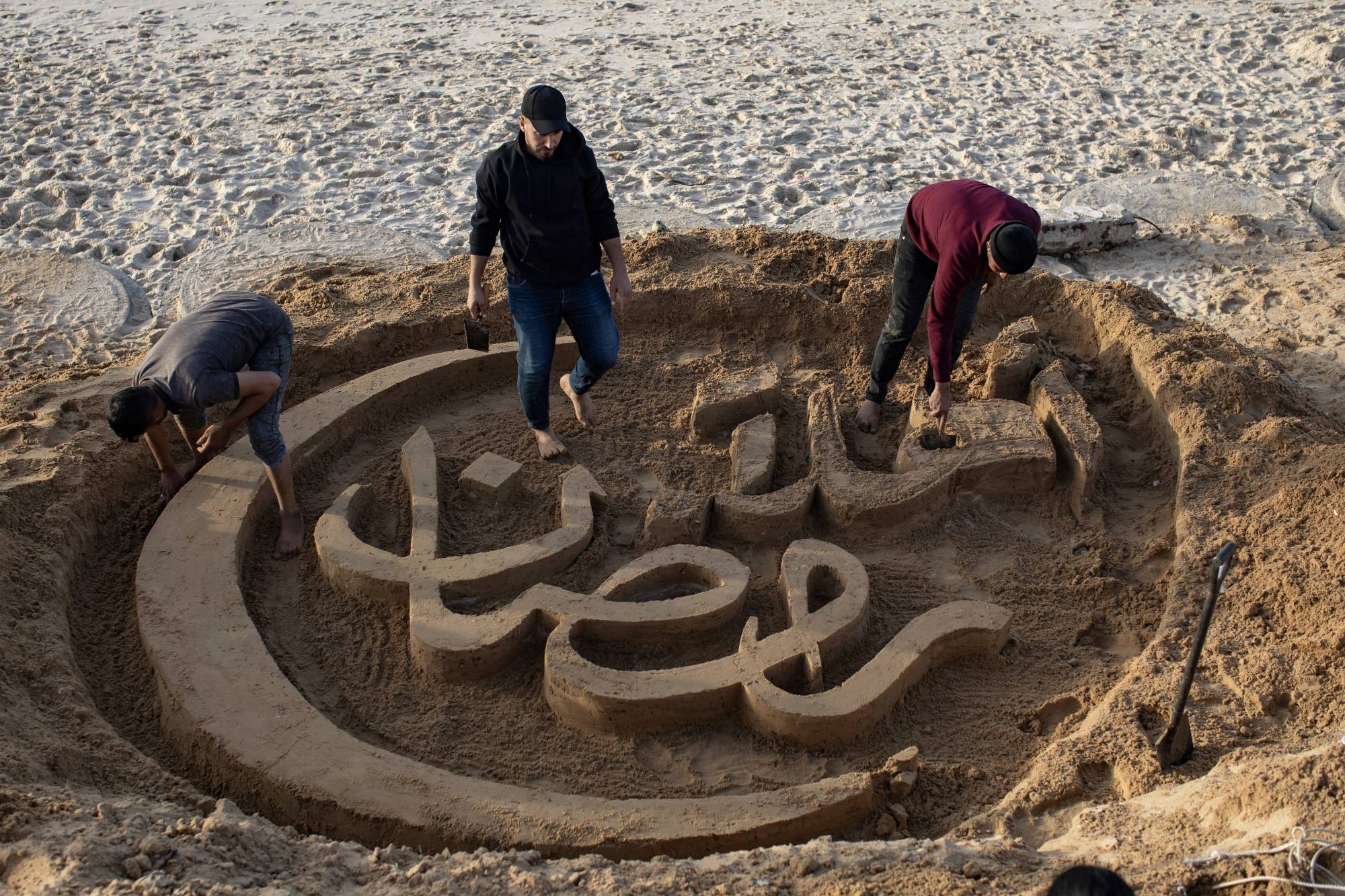
A sand sculpture bearing the phrase "Welcome, Ramadan," created by Palestinian artist Yazeed Abu Jarad, on a beach in Khan Younis, southern Gaza Strip, 17 February 2026, amid a ceasefire between Israel and Hamas. (EPA)

- 'Still special' -

Maha Fathi, 37, was displaced from Gaza City and lives in a tent west of the city.

"Despite all the destruction and suffering in Gaza, Ramadan is still special," she told AFP.

"People have begun to empathize with each other's suffering again after everyone was preoccupied with themselves during the war."

She said that her family and neighbors were able to share moments of joy as they prepared food for suhoor and set up Ramadan decorations.

"Everyone longs for the atmosphere of Ramadan. Seeing the decorations and the activity in the markets fills us with hope for a return to stability," she added.

On the beach at central Gaza's Deir al-Balah, Palestinian artist Yazeed Abu Jarad contributed to the holiday spirit with his art.

In the sand near the Mediterranean Sea, he sculpted "Welcome Ramadan" in ornate Arabic calligraphy, under the curious eye of children from a nearby tent camp.

Nearly all of Gaza's 2.2 million residents were displaced at least once during the more than two years of war between Israel and Hamas, sparked by the latter's unprecedented October 7 attack on Israel.

Mohammed al-Madhoun, 43, also lives in a tent west of Gaza City, and hoped for brighter days ahead.

"I hope this is the last Ramadan we spend in tents. I feel helpless in front of my children when they ask me to buy lanterns and dream of an Iftar table with all their favorite foods."

"We try to find joy despite everything", he said, describing his first Ramadan night out with the neighbors, eating the pre-fast meal and praying.