Lebanon and Israel, Long-Time Foes, to Start Talks on Disputed Watershttps://english.aawsat.com/home/article/2562186/lebanon-and-israel-long-time-foes-start-talks-disputed-waters
Lebanon and Israel, Long-Time Foes, to Start Talks on Disputed Waters
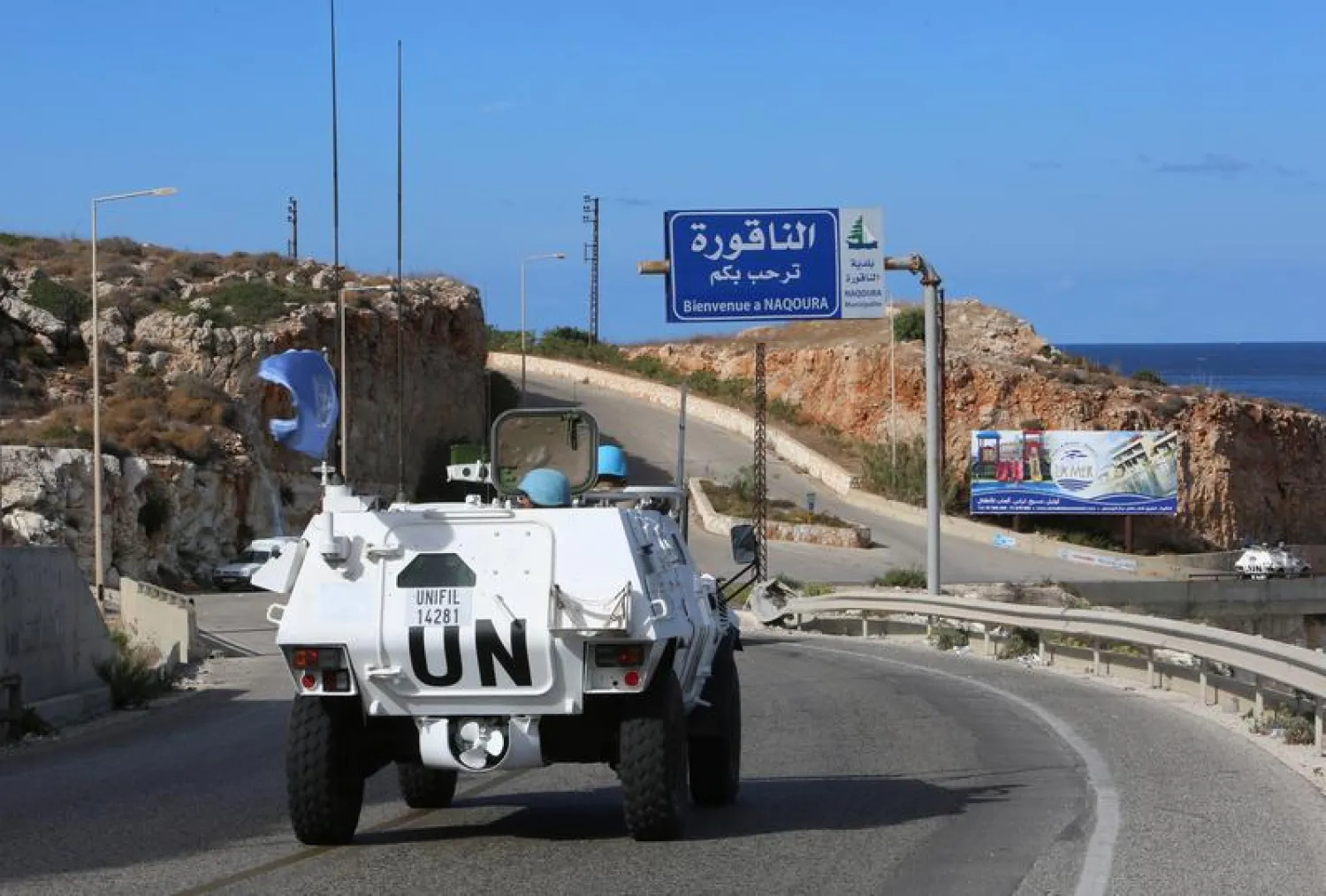
UN peacekeepers (UNIFIL) drive in a vehicle in Naqoura, near the Lebanese-Israeli border, southern Lebanon October 13, 2020. (Reuters)
Lebanon and Israel, formally still at war after decades of conflict, launch talks on Wednesday to address a long-running dispute over their maritime border running through potentially gas-rich Mediterranean waters.
The US-mediated talks follow three years of intense diplomacy by Washington and were announced less than a month after the United States stepped up pressure on political allies of the Iran-backed Lebanese group Hezbollah.
They also come after the United Arab Emirates and Bahrain agreed to establish full relations with Israel, under US-brokered deals which realign some of Washington’s closest Middle East allies against Iran.
Hezbollah, which fought a five-week conflict with Israel in 2006, says the talks are not a sign of peace-making with its long-time enemy. Israel’s energy minister also said expectations for Wednesday’s meeting should be realistic.
“We are not talking about negotiations for peace and normalization, rather an attempt to solve a technical, economic dispute that for 10 years has delayed the development of offshore natural resources,” minister Yuval Steinitz tweeted.
Nevertheless, US Secretary of State Mike Pompeo has described the decision to go ahead with the talks as historic, and said Washington looked forward to separate talks later over disagreements on the two countries’ land border.
Wednesday’s meeting will be hosted by the United Nations peacekeeping force UNIFIL, which has monitored the disputed land boundary since Israel’s’ military withdrawal from south Lebanon in 2000, ending a 22-year occupation.
A Lebanese security source says the two sides will meet together in the same room in UNIFIL’s base in south Lebanon, but will direct their talks through a mediator.
Lebanon crisis
Disagreement over the sea border had discouraged oil and gas exploration near the disputed line.
That may be a minor irritation for Israel, which already pumps gas from huge offshore fields. For Lebanon, yet to find commercial reserves in its own waters, the issue is more pressing.
Lebanon is desperate for cash from foreign donors as it faces the worst economic crisis since its 1975-1990 civil war, and its currency has collapsed. The financial meltdown was compounded by an explosion that wrecked a swathe of Beirut in August, killing nearly 200 people, and the COVID-19 pandemic.
Struggling to form a new government to tackle the multiple crises, some Lebanese politicians even argued this week over the formation of their negotiating team, with the prime minister’s office complaining it was not consulted by the presidency.
Hezbollah’s political ally, the Shiite Amal party, has also come under pressure. Last month the United States sanctioned Amal leader Nabih Berri’s top aide for corruption and financially enabling Hezbollah, which it deems a terrorist organization.
For Hezbollah and Amal, the decision to start the border talks was a “tactical decision to neutralize the tensions and the prospect of sanctions ahead of the US elections,” said Mohanad Hage Ali, a fellow at the Carnegie Middle East Center, according to Reuters.
Berri, an influential leader in charge of the border file, has denied being pushed into the talks.
In 2018 Beirut licensed a group of Italy’s Eni, France’s Total and Russia’s Novatek to carry out long-delayed offshore energy exploration in two blocks. One of them, Block 9, contains waters disputed with Israel.
How Israel Has Emptied Southern Lebanon Far Beyond the Front Lineshttps://english.aawsat.com/arab-world/5278041-how-israel-has-emptied-southern-lebanon-far-beyond-front-lines
An Israeli military artillery unit drives into Lebanon after crossing the Israeli‑Lebanese border, as seen from northern Israel, May 27, 2026. (Reuters)
TT
TT
How Israel Has Emptied Southern Lebanon Far Beyond the Front Lines
An Israeli military artillery unit drives into Lebanon after crossing the Israeli‑Lebanese border, as seen from northern Israel, May 27, 2026. (Reuters)
The ceasefire agreed in Lebanon last month has brought little respite for civilians, who are being driven from a steadily expanding swathe of the country by a relentless Israeli campaign of evacuations and air strikes.
The US-brokered truce announced on April 16, after about six weeks of fighting, has failed to halt the violence between Israel and Hezbollah. Both are carrying out near-daily attacks while accusing the other of violating the pact.
That's left hundreds of thousands of civilians in southern Lebanon displaced from their homes. Shortly after the ceasefire declaration, Israel published a map marking out a buffer zone covering nearly 600 square km (230 sq miles) that it had occupied with ground forces, and listing 57 towns and villages where it had warned residents to evacuate.
Since then, though, the Israel military has carried out hundreds of air strikes on a far wider area outside that occupied zone and issued evacuation orders covering more than 100 additional Lebanese towns and villages, according to a Reuters review of Israeli statements.
Together with the occupied zone, these orders span about 2,000 sq km of Lebanon – about a fifth of the entire country – much of which has been rendered effectively off-limits to residents, according to the review and interviews with local officials, aid workers and displaced people. The reporting provides one of the most detailed pictures yet of the growing displacement crisis engulfing this small country on the eastern Mediterranean.
The fighting is part of a wider conflagration across the Middle East sparked by the Hamas-led attacks on Israel of October 7, 2023. Israel aims to drive back its sworn enemies – Iran and its proxy forces, including Hezbollah and Hamas – with a stated strategy to create "buffer zones" along its borders with Gaza, Syria and now Lebanon to safeguard its citizens.
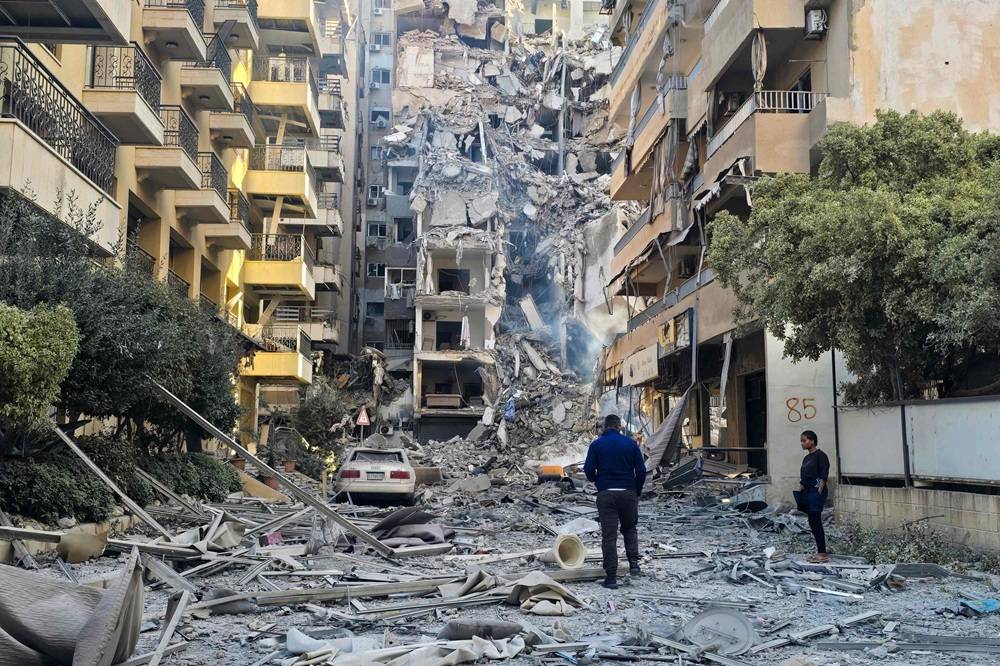
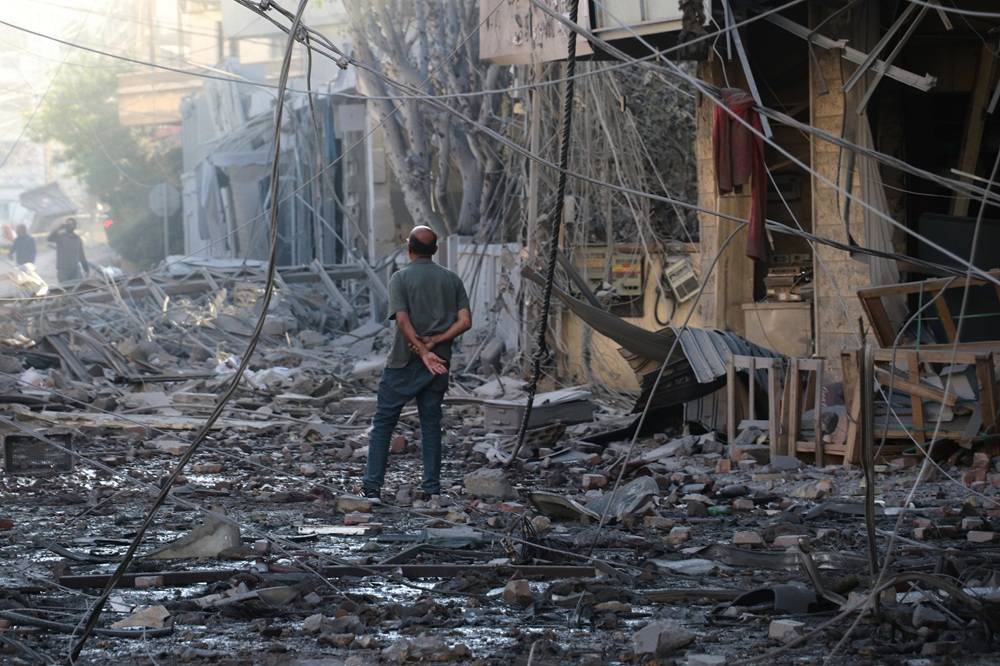
People look at the damages at the site of an Israeli strike in Tyre, southern Lebanon, on May 28, 2026. (AFP)
The growing evacuation area, along with confusion about ongoing attacks and the eventual extent of the Israeli buffer zone, has made many residents fear they may never return to their homes.
"There is no way we are coming back now," said Iyad Watfi, a mukhtar – elected official – in Bazouriye, who said the town once home to 13,000 people had been hit by multiple air strikes and evacuation orders since the truce. "Last week, we had 20 buildings destroyed in the town in one night."
Only a tiny portion of the population remained, with most others sheltering in tents to the north, he said, adding that few felt safe to return in the foreseeable future.
The latest Lebanese conflict erupted on March 2 when Hezbollah fired rockets at northern Israel in solidarity with Iran, which was under Israeli and US attack. Israel responded with a ground invasion of Lebanon, leading to fighting that has so far killed more than 3,000 people and displaced hundreds of thousands, according to the Lebanese government.
The Israeli army told Reuters its air campaign in Lebanon since the ceasefire was not aimed at displacing civilians but rather designed to eliminate threats from Hezbollah, which it accused of embedding forces and weaponry in civilian areas. It characterized the evacuation notices as "recommendations" issued before air strikes, allowing citizens to leave if they choose.
Southern Lebanon "remains an active combat zone where Israeli troops continue to engage with terrorist elements on a daily basis," it added.
Hezbollah's media office didn't respond to a request for comment. The group has itself carried out regular attacks, including kamikaze drone strikes, since the ceasefire. It has said that, despite the truce, it has the right to resist continued Israeli aggression and denies placing military assets in civilian areas.
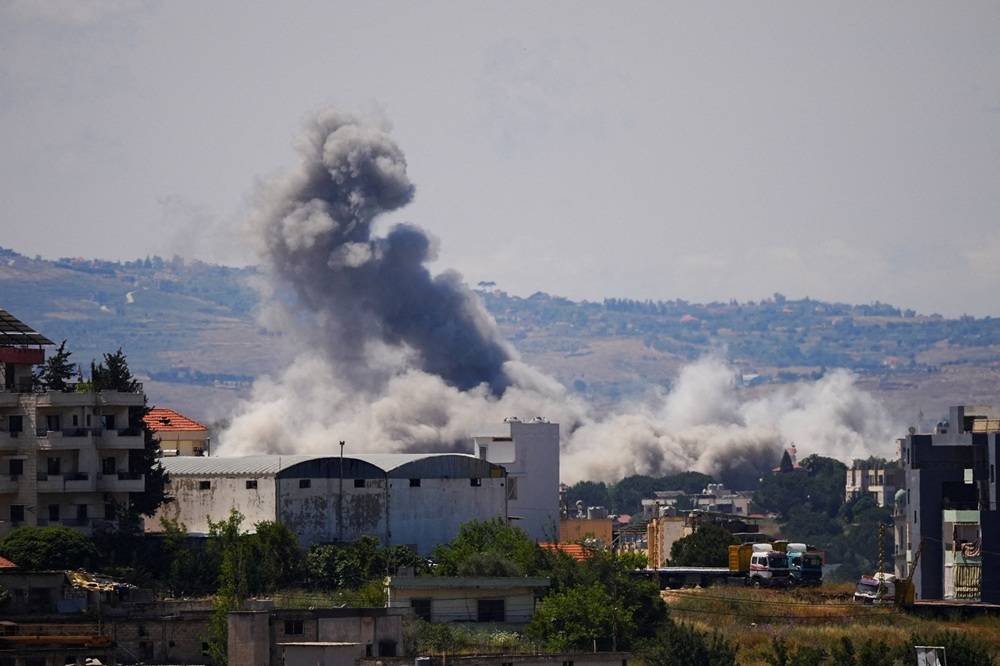
Smoke billows from southern Lebanon following Israeli strikes, as seen from Nabatieh, Lebanon May 28, 2026. (Reuters)
Reuters reached mukhtars from 20 of the towns and villages subject to Israeli evacuation orders since the ceasefire, communities with pre-conflict populations ranging from hundreds to thousands of people. Most estimated the percentage of residents remaining in single digits, saying most had fled northwards or to the coastal cities of Tyre and Sidon.
"People's nerves are shattered. They can't take it anymore, so they left," said Ali Nazzal, a mukhtar in Srifa who said the village was virtually deserted. "The ceasefire is a lie."
The situation looks increasingly bleak for civilians in Lebanon. Israeli Prime Minister Benjamin Netanyahu pledged on Monday that Israel would escalate its strikes, prompting residents to flee southern suburbs of Beirut, further to the north.
Israel has since issued a new slew of evacuation orders, encompassing more than a dozen new towns and villages and declaring a large section of the south a "combat zone".
The ongoing conflict could have implications for the broader US-Israeli war on Iran, with Tehran demanding a halt to Israeli attacks in Lebanon as a condition in peace talks.
ISRAEL STRIKES OVER 1,000 TARGETS SINCE TRUCE
On March 31, Netanyahu said his country's area of occupation in Lebanon would stretch to the Litani River, about 30 km north of the border with Israel. He described it as "a vast buffer zone" to thwart anti-tank fire and the threat of invasion.
By the April 16 ceasefire, Israeli forces had only occupied about half of that area. However, the subsequent barrage of air strikes and evacuation orders has driven people from areas even well beyond the river.
Only about half the towns and villages subject to evacuation orders since the ceasefire are south of the Litani, with the rest to the north of the river, some more than 20 km from the waterway, the review of Israeli statements found.
On May 12, the Israeli military said it had struck more than 1,100 targets since the ceasefire, including weapons warehouses, launchers and sites where Hezbollah was operating. Reuters identified the location of more than 300 of those strikes during the first month of the ceasefire by reviewing reports published by Lebanon's state news agency.
An analysis of nighttime lights data captured by the satellite-based VIIRS sensor, which was carried out for Reuters by Professor Hadi Jaafar at the American University of Beirut, showed a significant reduction in light emissions across south Lebanon since the conflict began. The light levels have remained depressed in some areas during the ceasefire, strongly suggesting that many displaced residents have not returned, Jaafar said.
A man checks the site of destroyed buildings that were hit in Israeli airstrikes in the southern port city of Tyre, Lebanon, Thursday, May 28, 2026. (AP)
'WE WANT TO RETURN, EVEN TO SLEEP ON GROUND'
Israeli forces have used explosives and bulldozers in demolitions that effectively erase many villages in the 600 sq km zone its ground forces occupied before the ceasefire after the defense minister vowed on March 31 to destroy "all homes" near the border.
In areas outside Israeli occupation, many residents tried to return during the ceasefire but were driven out again, often within days, by renewed evacuation orders and air strikes, according to local officials, displaced people and aid workers.
Hawraa Yousef Ghadbouni, 39, said she fled from the southern town of Qlaileh to the coastal city of Sidon after the latest conflict began on March 2, sleeping in a car with her husband and three children.
After the ceasefire, they returned and found their home partially standing, with two rooms still intact, amid ruined houses and shops. Within a day, shelling and air strikes forced them to flee again, this time to the coastal city of Tyre, about 10 km to the north. When Tyre, too, was bombed, they returned to Sidon, taking refuge in a school turned shelter.
"We want to return, even if we have to sleep on the ground," Ghadbouni said. "What matters is going back. Life here is not sustainable."
In the town of Bedias, about a half-hour drive north of Qlaileh, Wael al-Amin, a 48-year-old medic, was sitting outside his brother's home on May 10, drinking coffee and watching his children play despite the steady buzz of a drone overhead.
"I thought, 'Let them play'," he said from a hospital in Tyre. "These are children. Who would target them?"
Moments later, a blast tore through his brother's house, sending a cloud of debris into the air. Amin stumbled through the smoke until he found his eight-year-old son, wounded amid the rubble.
"He told me, 'I'm here'," he said.
Amin pulled the boy to safety before discovering that his brother had been killed in the strike.
With 19 Ports and 70 Upgraded Silos, Egypt Aims to Become Global Grain Hubhttps://english.aawsat.com/arab-world/5278008-19-ports-and-70-upgraded-silos-egypt-aims-become-global-grain-hub
With 19 Ports and 70 Upgraded Silos, Egypt Aims to Become Global Grain Hub
Egyptian President Abdel Fattah al-Sisi during the inauguration of the New Delta project days ago. (Egyptian Presidency)
Egypt is intensifying efforts to position itself as a global hub for grain storage and trade as regional conflicts continue to disrupt international food supply chains.
Cairo’s push is anchored in its strategic geographic location, a network of 19 commercial ports and recently upgraded grain silos with expanded storage capacity. Economists interviewed by Asharq Al-Awsat described the initiative as part of Egypt’s broader ambition to play a larger role in regional food security and global supply stability.
In televised remarks Monday, Amr Abdo, a member of the Federation of Egyptian Chambers of Commerce, said that plans to establish a global strategic grain storage center were “an urgent necessity” amid escalating regional conflicts and supply-chain disruptions.
Abdo noted that Egypt’s strategic partnership with Russia — the world’s largest grain exporter — gives Cairo access to advanced storage technologies and technical expertise that help reduce spoilage and moisture loss while securing wheat imports at competitive prices.
The initiative gained momentum during the Fifth International Grain Forum, held in the Russian city of Sochi from May 20 to 23. On the sidelines of the event, Egypt’s Supply and Internal Trade Minister Sherif Farouk met Russian Agriculture Minister Oksana Lut and outlined Egypt’s goal of establishing “an integrated global logistics center for grains and edible oils.”
Farouk characterized the project as one of Egypt’s most important strategic initiatives, designed to transform the country into a regional and international hub for the storage, trading and processing of grains and food commodities.
He added that Egypt’s strategic location, combined with major upgrades to ports, economic zones and transportation networks, creates significant opportunities for Russian companies and institutions to participate through direct investment and technology transfer in storage, transport, silo management and logistics services.
Major storage expansion
According to Egyptian government figures, Egypt now operates 70 grain silos nationwide built to modern technological standards as part of a national program aimed at increasing wheat and grain storage capacity and safeguarding strategic reserves.
Economic expert Medhat Nafea, a member of the cabinet’s economic advisory committee, said that Egypt boasts substantial advantages that could help make the project viable.
He pointed to the country’s location, its 19 commercial ports, expanded silo capacity, modern storage infrastructure and Egypt’s potential role as a transit hub for exports.
Nafea stressed that transforming Egypt into a regional grain center would require major investments in storage capacity, digitalization and transportation networks, though he added that the goal “appears realistic” through cooperation with Russia.
Khaled El-Shafei, head of the Capital Center for Economic Studies, described the initiative as a potentially transformative step that could significantly strengthen Egypt’s role in securing global supply chains.
“Egypt’s move toward establishing a global grain hub could represent an unprecedented economic and developmental leap,” El-Shafei remarked, noting that Egypt’s geographic position linking East and West, along with its status as a gateway to Africa, gives it major strategic advantages.
International coordination
On April 20, Egyptian Prime Minister Mostafa Madbouly chaired a meeting to review developments related to plans for a global center for the storage, supply and trade of grains and edible oils.
Officials indicated that technical studies are being prepared for discussions between President Abdel Fattah al-Sisi and leaders of several countries as part of broader efforts to strengthen cooperation on food security.
Days later, on April 26, Russia’s Maritime Board announced that Russian presidential aide and board chairman Nikolai Patrushev discussed prospects for establishing a grain and energy hub in Egypt during talks in Cairo with Egyptian Transport Minister Kamel al-Wazir, according to Russian media.
The Russian official added that Moscow plans to direct a significant share of its exports to South Asia and Africa through Egyptian territory.
Nafea underscored the importance of attracting large-scale foreign investment from countries expected to benefit from the project, predicting substantial financial returns that could help reduce Egypt’s import bill and ease global food-security pressures.
El-Shafei acknowledged that the initiative still faces challenges but maintained that Egypt’s diplomatic relationships and ongoing infrastructure development could help secure international backing.
“The project is highly promising if there is genuine commitment and sustained cooperation to implement it,” he stressed, adding that global grain supplies increasingly require secure hubs for storage and trade.
He added that Egypt’s broader vision extends beyond becoming merely a grain-trading center to positioning itself as a global commercial and logistics hub.
Al-Burhan Announces Plans for Broad Political Dialogue Inside Sudanhttps://english.aawsat.com/arab-world/5278002-al-burhan-announces-plans-broad-political-dialogue-inside-sudan
Al-Burhan Announces Plans for Broad Political Dialogue Inside Sudan
Muslim worshippers pray during Eid al-Adha prayers, at Al-Sayyid Abdul Rahman al-Mahdi mosque, in Khartoum, Sudan, Wednesday, May 27, 2026. (AP)
Sudanese army chief and Transitional Sovereignty Council Chairman Lt. Gen. Abdel Fattah al-Burhan announced plans for a comprehensive political dialogue inside Sudan aimed at completing the country’s transition to civilian democratic rule.
In an address delivered on the eve of Eid al-Adha, al-Burhan declared that the government would provide full support for the initiative, which he said would include involvement by those directly affected by the war.
He also reaffirmed the military’s commitment to continue fighting “until every inch of the country is cleared” of the Rapid Support Forces (RSF).
According to a statement released by the Sovereignty Council on Facebook, al-Burhan said: “This holiday comes as the capital of my country regains its strength, and as our people prove every day that they are stronger and braver than any conspiracy.”
Arrangements were underway for “a comprehensive political dialogue through which Sudanese will agree on the foundations of national reconstruction and governing principles that unite Sudan and end its recurring crises,” he revealed.
The dialogue, he said, would determine the path toward completing Sudan’s civilian democratic transition.
Al-Burhan stressed that the talks would take place inside Sudan and would include “those who bear the pain,” referring to people affected by the conflict between the army and RSF that erupted in April 2023.
He rejected externally imposed political initiatives, saying Sudanese citizens “will not accept the outcomes of conferences and dialogues held in foreign capitals, where positions are bought and sold.”
“The Sudanese government will invite national forces, excluding those whose hands are stained with the blood of the Sudanese people,” he stated, pledging government support for implementing the dialogue’s outcomes.
Previous statements by al-Burhan indicated that the door remained open to national reconciliation, welcoming anyone willing to align with the state against the RSF.
No immediate reaction was made by political and civilian groups aligned with the military or by the civilian pro-democracy coalition, known as “Somoud,” which opposes the continuation of the war.
Al-Burhan’s remarks came as fierce fighting continued in Blue Nile State in southeastern Sudan, where the RSF has reportedly deployed thousands of fighters in an effort to seize full control of the region.
Despite recent battlefield gains by the army and its recapture of several towns in Blue Nile State, the RSF continues to control the strategic border town of Kurmuk near Ethiopia.
On Wednesday, Sudanese army personnel released video footage from the town of Al-Baraka, saying they had regained full control of the area after defeating RSF fighters and allied forces, inflicting heavy casualties, and capturing several combat vehicles.
لم تشترك بعد
انشئ حساباً خاصاً بك لتحصل على أخبار مخصصة لك ولتتمتع بخاصية حفظ المقالات وتتلقى نشراتنا البريدية المتنوعة