



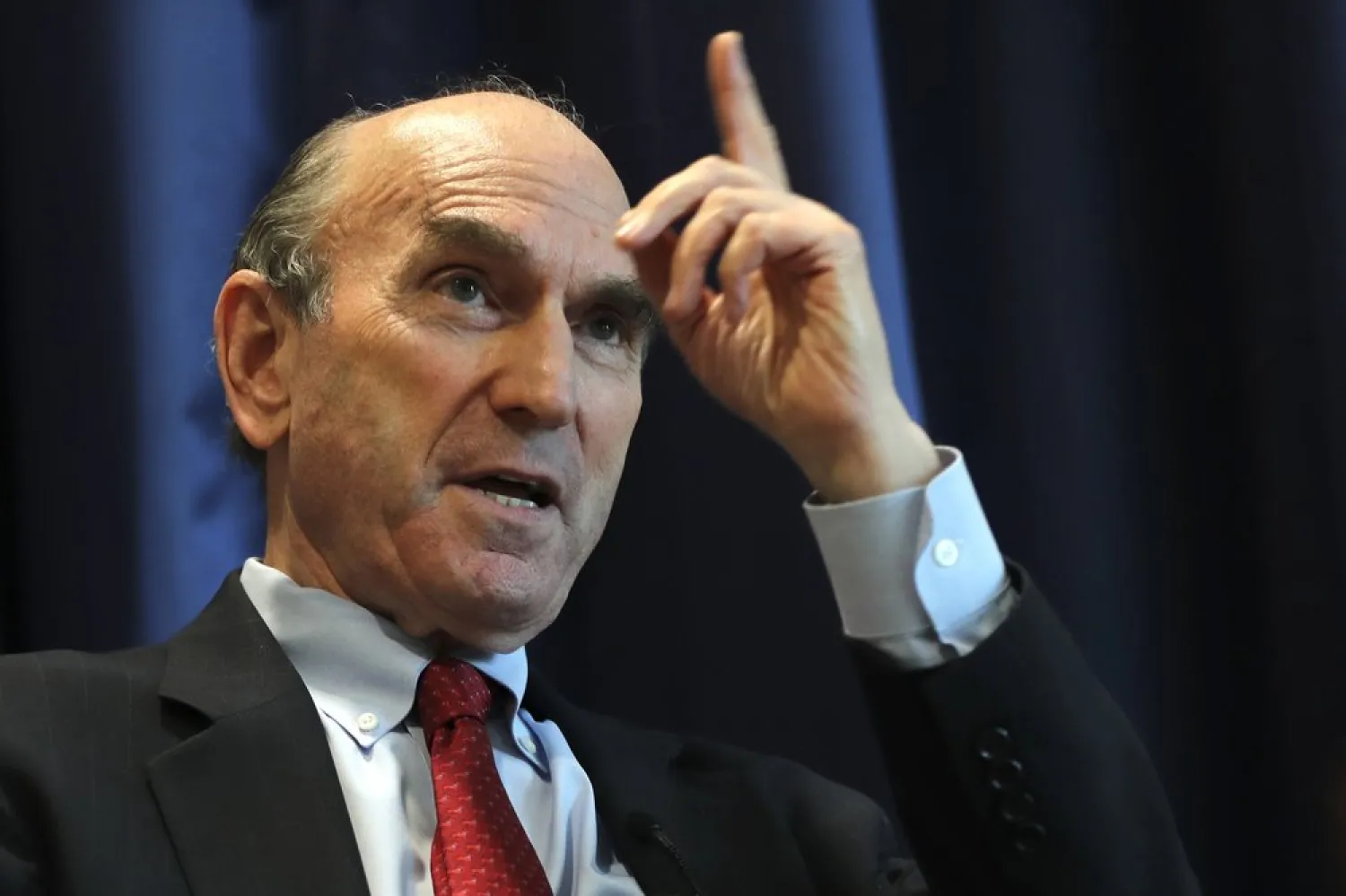

The US special representative for Iran insisted Thursday a pressure campaign of sanctions targeting Iran would persist into the administration of Joe Biden, even as the president-elect has pledged to potentially return America to Tehran's nuclear deal with world powers.
Elliot Abrams, who also serves as the US special representative to Venezuela, said sanctions targeting Iran for human rights violations, its ballistic missile program and its regional influence would go on. That, as well as continued scrutiny by United Nations inspectors and American partners in the Mideast, would maintain that pressure, he said.
Iran now has far more uranium than allowed under the deal since President Donald Trump unilaterally withdrew from the accord in 2018.
"Even if you went back to the (deal) and even if the Iranians were willing to return ... this newly enriched uranium, you would not have solved these really fundamental questions of whether Iran is going to be permitted to violate long-term commitments it has made to the world community,” Abrams told The Associated Press in an interview at the US Embassy in Abu Dhabi.
Iran's enriched uranium stockpile, which would have been under 300 kilograms (660 pounds) in the deal, now stands at over 2,440 kilograms (5,380 pounds) , according to the latest report by UN inspectors.
Iran also is enriching uranium to as much as 4.5% purity, higher than allowed under the accord but still far lower than weapons-grade levels of 90%.
Tehran abandoned all limits on its enrichment months after Trump's pullout from the agreement, even as the deal's other international partners China, France, Russia, the United Kingdom and Germany have tried unsuccessfully to salvage it.
Meanwhile, Iran has begun construction at its underground Natanz enrichment site after a fire and explosion it described as “sabotage” struck its advanced centrifuge assembly plant in July.
Abrams described the construction as “another Iranian challenge” to the International Atomic Energy Agency, the UN agency that Iran still allows to monitor its nuclear sites. He also criticized Iran for its slow response in allowing the IAEA to investigate a suspicious site outside of Tehran where it discovered particles of uranium of man-made origin.
“Iran denies that it ever had a nuclear weapons program," Abrams said.
“Therefore, it can’t now say, well, things you found from 2003, were part of our old nuclear weapons program. They’re caught in their own lie.”


