

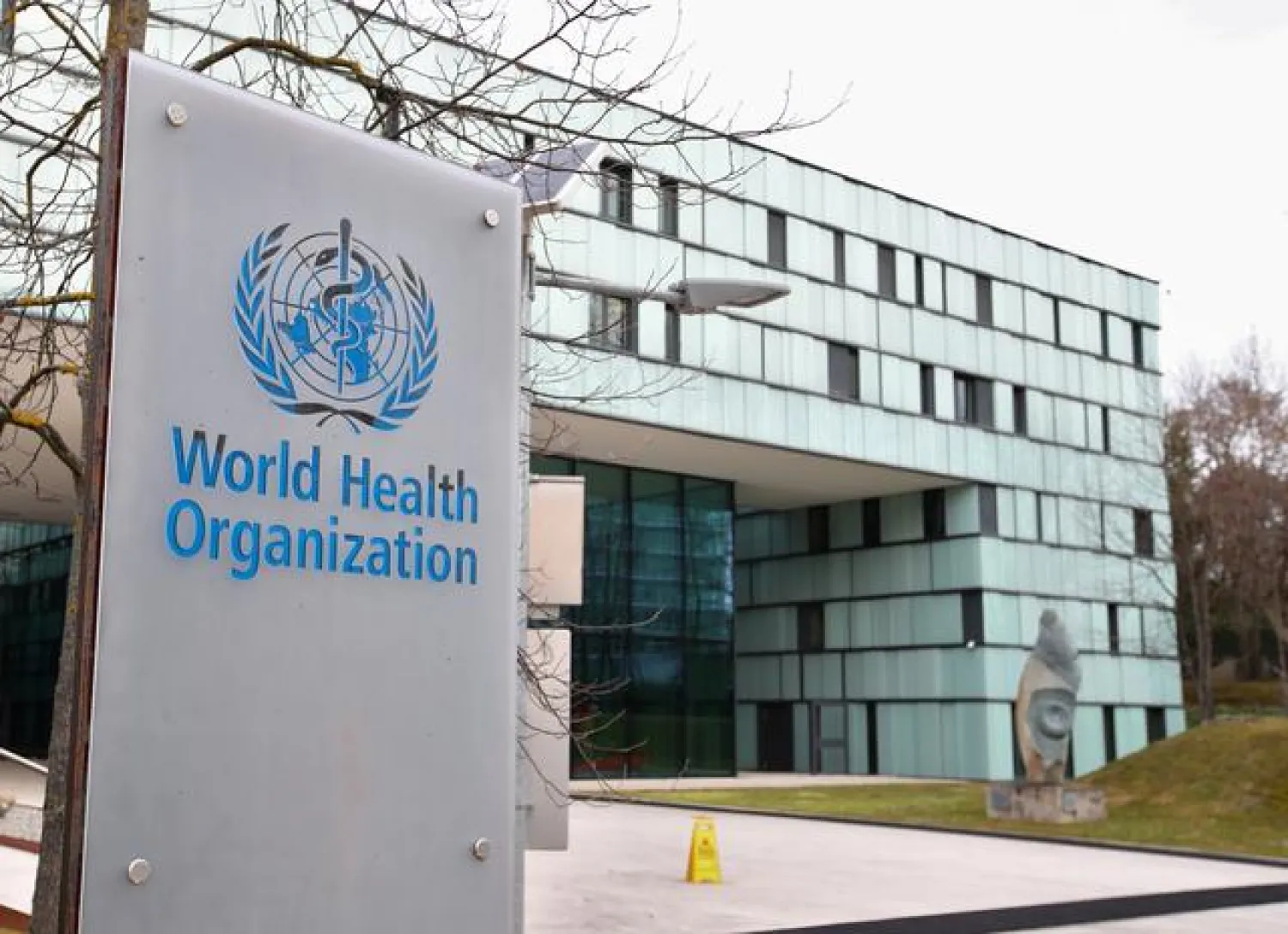

WHO Vaccine Scheme Risks Failure, Leaving Poor Countries No COVID Shots Until 2024

Photo: REUTERS
Photo: REUTERS
TT

WHO Vaccine Scheme Risks Failure, Leaving Poor Countries No COVID Shots Until 2024

Photo: REUTERS
Photo: REUTERS

The global scheme to deliver COVID-19 vaccines to poorer countries faces a "very high" risk of failure, potentially leaving nations home to billions of people with no access to vaccines until as late as 2024, internal documents say.

The World Health Organization's COVAX program is the main global scheme to vaccinate people in poor and middle income countries around the world against the coronavirus. It aims to deliver at least 2 billion vaccine doses by the end of 2021 to cover 20% of the most vulnerable people in 91 poor and middle-income countries, mostly in Africa, Asia, and Latin America.

But in internal documents reviewed by Reuters, the scheme's promoters say the program is struggling from a lack of funds, supply risks, and complex contractual arrangements which could make it impossible to achieve its goals.

"The risk of a failure to establish a successful COVAX Facility is very high," says an internal report to the board of Gavi, an alliance of governments, drug companies, charities, and international organizations that arranges global vaccination campaigns. Gavi co-leads COVAX alongside the WHO.

The report and other documents prepared by Gavi are being discussed at Gavi's board meetings on Dec. 15-17.

The failure of the facility could leave people in poor nations without any access to COVID-19 vaccines until 2024, one of the documents says.

The risk of failure is higher because the scheme was set up so quickly, operating in "uncharted territory," the report says.

"Current risk exposure is deemed outside of risk appetite until there is full clarity on the size of risks and possibilities to mitigate them," it says. "It therefore requires intensive mitigation efforts to bring the risk within risk appetite."

Gavi hired Citigroup last month to provide advice on how to mitigate financial risks.

In one Nov. 25 memo included in the documents submitted to the Gavi board, Citi advisors said the biggest risk to the program was from clauses in supply contracts that allow countries not to buy vaccines booked through COVAX.

A potential mismatch between vaccine supply and demand "is not a commercial risk efficiently mitigated by the market or the MDBs," the Citi advisors wrote, referring to multilateral development banks such as the World Bank.

"Therefore it must either be mitigated through contract negotiation or through a Gavi risk absorption layer that is carefully managed by a management and governance structure."

Asked about the documents, a Gavi spokesman said the body remains confident it can achieve its goals.

"It would be irresponsible not to assess the risks inherent to such a massive and complex undertaking, and to build policies and instruments to mitigate those risks," he added.

The WHO did not respond to a request for comment. In the past it has let Gavi take the lead in public comments about the COVAX program.

Citibank said in a statement: "As a financial advisor, we are responsible for helping Gavi plan for a range of scenarios related to the COVAX facility and supporting their efforts to mitigate potential risks."

SUPPLY DEALS

COVAX's plans rely on cheaper vaccines that have so far yet to receive approval, rather than vaccines from frontrunners Pfizer/BioNTech and Moderna that use more expensive new mRNA technology. The Pfizer vaccine has already been approved for emergency use in several countries and deployed in Britain and the United States, and the Moderna vaccine is expected to be similarly approved soon.

COVAX has so far reached non-binding supply agreements with AstraZeneca, Novavax, and Sanofi for a total of 400 million doses, with options to order several hundred million additional shots, one of the Gavi documents says.

But the three companies have all faced delays in their trials that could push back some possible regulatory approvals to the second half of 2021 or later.

This could also increase COVAX's financial needs. Its financial assumptions are based on an average cost of $5.20 per dose, one of the documents says.

Pfizer's vaccines costs about $18.40-$19.50 per dose, while Moderna's costs $25-$37. COVAX has no supply deals with either of those firms. Nor is it prioritizing investment in ultra-cold distribution chains in poor countries, necessary for the Pfizer vaccine, as it still expects to use mostly shots which require more conventional cold storage, one of the Gavi documents says.

On Tuesday a WHO senior official said the agency was in talks with Pfizer and Moderna to include their COVID-19 vaccines as part of an early global rollout at a cost for poor countries possibly lower than current market prices.

Other shots are being developed worldwide and COVAX wants to expand its portfolio to include vaccines from other companies.

Rich countries, which have booked most of the currently available stocks of COVID-19 vaccines, are also planning to donate some excess doses to poor countries, although is not clear whether that would be through COVAX.

FINANCIAL PRESSURE

To meet its target of vaccinating at least 20% of people in poor countries next year, COVAX says it needs $4.9 billion in addition to $2.1 billion it has already raised.

If vaccine prices are higher than forecast, supply is delayed or the additional funds are not fully collected, the facility faces the prospect of failure, the documents say.

So far Britain and European Union countries are the main donors to COVAX, while the United States and China have made no financial commitments. The World Bank and other multilateral financial institutions are offering cheap loans to poor countries to help them buy and deploy vaccines through COVAX.

The facility is issuing vaccine bonds which could raise as much as $1.5 billion next year if donors agreed to cover the costs, one of the Gavi documents says. COVAX is also receiving funds from private donors, mainly the Bill and Melinda Gates Foundation.

But even under the best financial conditions, COVAX could still face failure, because of disproportionate financial risks caused by its complex deal-making process.

COVAX signs advance purchase contracts with companies on vaccine supplies that need to be paid for by donors or receiving countries that have the means to afford them.

But under clauses included in COVAX contracts, countries could still refuse to buy pre-ordered volumes if they prefer other vaccines, or if they manage to acquire them through other schemes, either faster or at better prices.

The facility could also face losses if countries were not able to pay for their orders, or even if herd immunity were developed too quickly, making vaccines no longer necessary, the Citigroup report said. It proposed a strategy to mitigate these risks including through changes in supply contracts.



King Charles Calls for More Compassion in Christmas Speech

Britain's King Charles, along with members of the royal family, arrives to attend the Royal Family's Christmas Day service at St. Mary Magdalene's church, as the royals take residence at the Sandringham estate in eastern England, Britain, December 25, 2025. REUTERS/Hannah McKayg Rights
TT

King Charles Calls for More Compassion in Christmas Speech

Britain's King Charles, along with members of the royal family, arrives to attend the Royal Family's Christmas Day service at St. Mary Magdalene's church, as the royals take residence at the Sandringham estate in eastern England, Britain, December 25, 2025. REUTERS/Hannah McKayg Rights

Britain's King Charles III called for "compassion and reconciliation" at a time of "division" across the world in his annual Christmas Day message broadcast on Thursday.

The 77-year-old monarch said he found it "enormously encouraging" how people of different faiths had a "shared longing for peace".

In the year of the 80th anniversary of end of World War II, the king said the courage of servicemen and women and the way communities came together back then carried "a timeless message for us all".

"As we hear of division both at home and abroad, they are the values of which we must never lose sight," Charles said in a pre-recorded message from Westminster Abbey, broadcast on British television at 1500 GMT.

"With the great diversity of our communities, we can find the strength to ensure that right triumphs over wrong. It seems to me that we need to cherish the values of compassion and reconciliation the way our Lord lived and died."

In October, Charles became the first head of the Church of England to pray publicly with a pope since the schism with Rome 500 years ago, in a service led by Leo XIV at the Vatican.

A few days earlier Charles met survivors of a deadly attack on a synagogue and members of the Jewish community in the northern English city of Manchester.

This is the second time in succession that the king has made his festive address from outside a royal residence.

Last year he spoke from a former hospital chapel as he thanked medical staff for supporting the royal family in a year in which he announced his cancer diagnosis.


Israel Says Member of Elite Iran Unit Killed in Lebanon Strike

A Pakistani woman holds a national flag of Iran during a rally in solidarity with the Iranian people, in Karachi, Pakistan, 22 June 2025. EPA/SHAHZAIB AKBER
TT

Israel Says Member of Elite Iran Unit Killed in Lebanon Strike

A Pakistani woman holds a national flag of Iran during a rally in solidarity with the Iranian people, in Karachi, Pakistan, 22 June 2025. EPA/SHAHZAIB AKBER

The Israeli military said on Thursday that its forces killed a member of ​Iran's Quds Force in Lebanon who had been involved in planning attacks from Syria and Lebanon.
The military identified the man as Hussein Mahmoud Marshad al-Jawhari, calling him a key operative in ‌the force's ‌unit 840.

He was ‌assassinated ⁠in ​the ‌area or Ansariyeh, the military added in a statement, without giving any further details of his death, Reuters reported.

Al-Jawhari "operated under the Revolutionary Guard Corps (IRGC) and was involved in terror activities, ⁠directed by Iran, against the State of ‌Israel and its security ‍forces," the statement said.

Israel ‍and Iran fought a brief ‍war in June and the Israeli military has been carrying out strikes in Lebanon on a near-daily basis, in ​what it says is an effort to stop Iranian-backed Lebanese ⁠group Hezbollah from rebuilding.

A US-backed ceasefire agreed in November 2024 ended more than a year of fighting between Israel and Hezbollah and required the disarmament of the powerful armed group, beginning in areas south of the river adjacent to Israel.


Coastguard Rescue 52 Migrants off Greece, Boy Missing

A dinghy transporting dozens of refugees and migrants is pulled towards Greece's Lesbos island after being rescued by a war ship during their sea crossing between Türkiye and Greece on February 29, 2020. Aris Messinis, AFP/File picture
TT

Coastguard Rescue 52 Migrants off Greece, Boy Missing

A dinghy transporting dozens of refugees and migrants is pulled towards Greece's Lesbos island after being rescued by a war ship during their sea crossing between Türkiye and Greece on February 29, 2020. Aris Messinis, AFP/File picture

Greek coastguard were searching Thursday for a missing child off the island of Farmakonisi after rescuing 52 migrants in two separate incidents in the Aegean Sea, local media reported.

They found 13 migrants who had arrived on the small, uninhabited island, but one boy was reported missing from the group, said the ANA news agency, AFP reported.

Another 39 migrants were found on board an inflatable boat off the southern island of Crete, according to the same source. They were taken to the village of Kaloi Limenes in Crete. No details about their nationality were provided.

Two coastguard vessels and an airforce helicopter were deployed for the operation off Farmakonisi, opposite the Turkish coast.

Many migrants try to reach the Greek islands from Türkiye or Libya as a way of entering the European Union. But both crossings are perilous.

Earlier this month, 17 people were found dead in a migrant boat drifting off Crete. Another 15 people were reported missing.

The UN refugee agency said more than 16,770 asylum seekers in the EU have arrived on Crete since the start of the year -- more than any other island in the Aegean Sea.