
Russia, US Wage Early Silent Battle over Syria Presidential Elections

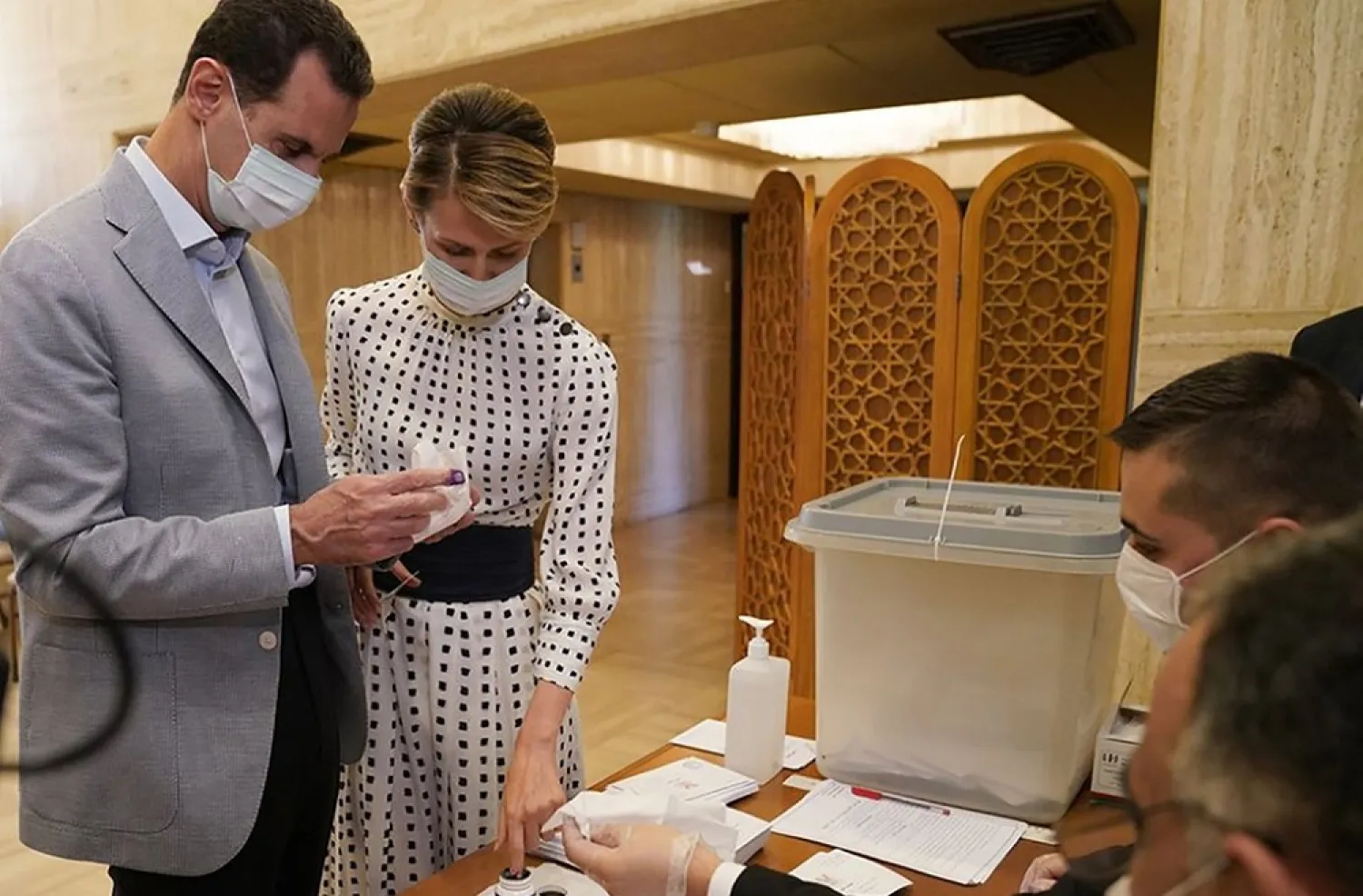
Bashar Assad and his wife Asma at a polling station in Damascus on July 19. (AFP)
TT

Russia, US Wage Early Silent Battle over Syria Presidential Elections

Bashar Assad and his wife Asma at a polling station in Damascus on July 19. (AFP)

The upcoming Syrian presidential elections will be the scene of an “early silent battle” between Russia and its allies on the one side and the United States and its partners on the other. The elections will be the first to be held after Russia cemented its military presence in the war-torn country and during the first months of Joe Biden’s term as US president. They will also be held amid the significant field developments and the drawing of borders of the three “areas of influence” in Syria. Significantly, they are also being held amid a crippling economic crisis, western economic sanctions and Syria’s political and diplomatic isolation.

Clear message
Moscow, along with Damascus and Tehran, wants to hold the elections according to the current 2012 constitution and without any reforms that would be introduced in line with UN Security Council resolution 2254. Russia sees the elections as an opportunity to “open a new chapter” with regional and international forces and make them contend with the status quo and the “legitimate government”.

The Syrian Constitutional Committee has held four rounds of talks in Geneva and is set to meet again in late January to discuss the constitution. Other rounds had tackled “national principles”. Damascus has, however, sent a clear message that constitutional reform will not take place before the presidential elections, which are scheduled for mid-2021. Moscow has also backed it with a clearer message that “there is no timeframe” for constitutional reform and that the “elections are a sovereign Syrian affair.”

This means that the no constitutional reform will take place before the end of Bashar Assad’s term in mid-July. The elections will therefore, go ahead according to the 2012 constitution that grants wide privileges to the president, effectively paving the way for Assad’s third term in office.

The constitution also stipulates that any presidential candidate should have resided in Syria for ten consecutive years before running and they should garner the approval of 35 lawmakers.

The National Progressive Front, which includes a coalition of parties led by the ruling Baath, had won 183 out of the 250-seat parliament in the July elections earlier this year, meaning it controls who will run for president.

For Damascus, Moscow and Tehran, constitutional reform will be addressed after 2021, or rather when Assad wins a new seven-year term in office. He is expected to implement reform during the next parliamentary elections, set for 2024, unless he decides to hold them earlier.

A point of contention between Moscow and Damascus is the former’s desire for more candidates to run in the elections. Russia has been gradually testing the waters with various opposition candidates to that end. However, it will face obstacles in this regard, including the reluctance of central figures to run in a “sham election”. Other obstacles are the stipulation that the candidate should have lived in Syria for ten years and the support of 35 MPs.

Moscow’s intentions were clear when a Russian reporter asked Foreign Minister Sergei Lavrov during his visit to Damascus in September if the ten-year condition would be annulled. Damascus, however, stood firm. Late Syrian Foreign Minister Walid al-Moallem said at the time: “The presidential elections will be held on time. As for annulling the ten-year residency condition, that is for the higher electoral commission. In principle, anyone who meets the conditions is eligible to run in the elections.”

Conditions to run in elections are, however, a constitutional affair, not one for the higher electoral commission

Tehran has backed Moallem’s statements. Foreign Minister Mohammad Javad Zarif had in recent days stated that the “Syrian government is legitimate and very cooperative in the political process and constitutional reform.” Moscow, meanwhile, is still searching for the mechanisms to transform the upcoming elections into the beginning of a new chapter of how the West and region deal with Damascus. It is hoping that the new phase would “end Syria’s isolation and pave the way for reconstruction and normalization of political and diplomatic relations.” Key to this is amending the 2012 constitution to “add color” to the elections.

Calm consultations
Western countries, meanwhile, are holding calm consultations away from the media to take a united stand on how to deal with the elections. The US wants to “ignore” the polls as it did the parliamentary ones when it stated that it “will not recognize any elections that are not held according to resolution 2254.” The resolution calls for holding elections under the supervision of the UN and participation of Syrians, including those displaced abroad. Washington’s allies are meanwhile divided, with some wanting to ignore the polls, others proposing supporting an opposition candidate and others suggesting setting clear UN-approved standards to recognize any election.

Some countries have tried to persuade UN envoy to Syria, Geir Pedersen, to declare a position on the elections. He said that the elections are beyond his jurisdiction that are outlined in resolution 2254. He instead appointed an “elections advisor”, prompting a proposal for the declaration of standards and principles so that the elections can be recognized. The UN will be tasked with announcing them.

France had drafted a “non-paper” that sets the special standards of the polls. The document, a copy of which was obtained by Asharq Al-Awsat, said: “Should the elections be free, transparent and neutral, and should they be held in a safe environment whereby all segments of Syrian society, including refugees abroad, take part without impediment, then the upcoming polls can effectively and truly cement stable legitimate institutions in the country.” These institutions are an “integral part of the broader political process in line with resolution 2254.” The elections can also be part of the permanent settlement for the conflict.

The omission of any of these conditions is an opportunity for the Assad regime to restore its false legitimacy in the post-conflict phase and deter refugees abroad from even thinking about returning home.

Strict conditions
The document, therefore, set strict conditions for the West to accept the elections. They are:

1- Cementing trust on the ground with the aim of preparing safe and impartial conditions during and after the elections. This will ensure that the electoral process is credible and the people’s rights are guaranteed.

2- Providing strong guarantees that refugees and the displaced will take part in the vote. Some 12 million refugees are displaced in Syria and abroad, so it is very important that they have their voice heard in the elections and that they even be allowed to run.

3- Providing the legal ground for holding electoral reform, including reforming articles 84 and 85 of the constitution and forming an independent UN-supervised panel to review electoral nominations.

4- UN supervision of the elections would provide strict impartiality in the electoral process. To that end, the organization must oversee the entire process, starting with reforming the electoral law, designating electoral roles, the voting, ballot stations and suitable electoral infrastructure.

Western countries did not recognize parliamentary elections held in Syria in 2012, 2016 and 2020 and the presidential elections in 2014. Washington is meanwhile, maintaining its sanctions according to the Caesar Act and is continuing to exert pressure to keep Damascus in political and diplomatic isolation until it begins to implement resolution 2254 and have Iran pull out its militias from Syria among other demands.

Background
The upcoming elections will be the 18th since 1932. The first elections ever held in Syria were the most diverse even though they were held under French mandate. Over 60 nominees ran for president, making them the largest field of candidates to ever run for the presidential elections in any country.

Syrian historians do not give much weight to the 1932 elections because they were held under French rule. They do however, highlight the 1955 elections that witnessed a race between Shukri al-Quwatli and Khalid al-Azm. All other elections after that were either referendums or uncontested affairs.

The diversity and competition of the 1932 race showed just how promising the nascent democracy in Syria was in the early 1930s. It showed just how much it could have prospered were it not for military coups and countercoups that began to plague the country from 1949.


Iran’s Khamenei Faces Gravest Crisis of His Rule as US Strike Force Gathers

A handout picture made available by Iran's Supreme Leader Office shows Iranian Supreme Leader Ali Khamenei addressing a ceremony in Tehran, Iran, 17 February 2026, amid heightened regional tensions following an increased US military presence in the Middle East. (EPA/Iran’s Supreme Leader Office Handout)
TT

Iran’s Khamenei Faces Gravest Crisis of His Rule as US Strike Force Gathers

A handout picture made available by Iran's Supreme Leader Office shows Iranian Supreme Leader Ali Khamenei addressing a ceremony in Tehran, Iran, 17 February 2026, amid heightened regional tensions following an increased US military presence in the Middle East. (EPA/Iran’s Supreme Leader Office Handout)

Ali Khamenei has crushed unrest and survived foreign pressure before but, with his envoys racing to avert threatened American airstrikes through ongoing talks, Iran's Supreme Leader faces the gravest crisis of his 36-year rule.

An embittered population toils under a sanctions-hit economy. Huge protests in January were crushed at a cost of thousands of lives. Israeli and US. strikes last year smashed prized nuclear and missile facilities. Iran's regional policy lies in tatters, with old allies and proxies weakened or gone.

With the risk of war hanging over the Middle East, the 86-year-old's fierce devotion to the Islamic Republic, his implacable hostility to the West and his record of guile in spinning out negotiations will shape the fate of the region.

PRESERVING IRAN'S ISLAMIC REPUBLIC AT ALL COSTS

Already this year, he has ordered the deadliest crackdown since the 1979 revolution, saying protesters "should be put in their place" before security forces opened fire on demonstrators chanting "Death to the dictator!".

US President Donald Trump's threats to bomb Iran again come only months after Khamenei was forced into hiding last June by strikes that killed several close associates and Revolutionary Guard commanders.

That assault was among the many indirect results of the attack on Israel by the Iran-backed Palestinian group Hamas on October 7, 2023, which not only triggered the war in Gaza but also spurred Israel to hammer Tehran's other ‌regional proxies.

With Hezbollah weakened ‌in Lebanon and Syria's Bashar al-Assad toppled, Khamenei's reach across the Middle East has been stunted. Now he faces ‌US demands ⁠to abandon Iran's ⁠best remaining strategic lever, its arsenal of ballistic missiles.

Iran has even offered apparent concessions on its nuclear program, which it says is purely civilian but is seen by the West and Israel as a path to an atomic bomb.

But Khamenei refuses to even discuss giving up missiles, which Iran sees as its only remaining deterrent to Israeli attack, a display of intransigence that may itself invite US airstrikes.

As the US military buildup intensifies, Khamenei's calculations will draw on a character molded by revolution, years of turmoil and war with Iraq, decades of sparring with the United States, and a ruthless accumulation of power.

Khamenei has ruled since 1989 and holds ultimate authority over all branches of government, the military and the judiciary.

While elected officials manage day-to-day affairs, no major policy - especially one concerning the United States - proceeds without his explicit approval; Khamenei's mastery of Iran's complex system of clerical rule combined with limited democracy ensures that no ⁠other group can challenge his decisions.

AS LEADER, KHAMENEI WAS ONCE FAR FROM SUPREME

Early in his rule, Khamenei was ‌often dismissed as weak and an unlikely successor to the Islamic Republic's late founder, the charismatic Khomeini.

When he was appointed Supreme Leader, Khamenei had difficulty wielding power through religious authority, as the theocratic system foresaw. After struggling for a long time to ‌emerge from the shadow of his mentor, it was by forging a formidable security apparatus devoted solely to him that he finally imposed himself.

Khamenei distrusts the West, ‌particularly the US, which he accuses of seeking to topple him.

In a typically pugnacious speech after January's protests, he blamed Trump for the unrest, saying: "We consider the US president criminal for the casualties, damages and slander he inflicted on the Iranian nation." Yet despite his ideological rigidity, he has shown a willingness to bend when the survival of the republic is at stake.

The concept of "heroic flexibility", first mentioned by Khamenei in 2013, permits tactical compromises to advance his goals, mirroring Khomeini's choice in 1988 to embrace a ceasefire after eight years of war with Iraq.

Khamenei’s guarded ‌endorsement of Iran's 2015 nuclear deal with six world powers was another such moment, as he calculated that sanctions relief was necessary to stabilize the economy and buttress his grip on power.

Trump quit the 2015 pact during his first ⁠term in 2018 and reimposed crippling sanctions on ⁠Iran. Tehran reacted by gradually violating all agreed curbs on its nuclear program.

LOYAL SECURITY STRUCTURE KEY TO KHAMENEI'S POWER

At times of increasing pressure, Khamenei has repeatedly turned to the Iranian Revolutionary Guard Corps (IRGC) and the Basij, a paramilitary force numbering hundreds of thousands of volunteers, to snuff out dissent.

It was they who crushed the protests that exploded after Mahmoud Ahmadinejad's re-election as president in 2009 amid allegations of vote fraud.

In 2022, Khamenei was just as ruthless in arresting, imprisoning or executing protesters enraged by the death in custody of the young Iranian-Kurdish woman Mahsa Amini.

And it was again the Guards and Basij who crushed the latest round of protests in January.

His power also owes much to the parastatal financial empire known as Setad, which is under Khamenei's direct control. Worth tens of billions of dollars, it has grown hugely during his rule, investing billions in the Revolutionary Guards.

Scholars outside Iran paint a picture of a secretive ideologue fearful of betrayal - an anxiety fueled by an assassination attempt in June 1981 with a bomb hidden in a tape recorder that paralyzed his right arm.

Khamenei himself suffered severe torture, according to his official biography, in 1963, when at 24 he served the first of many terms in prison for political activities under the rule of the shah.

After the revolution, as deputy defense minister, Khamenei became close to the Guards during the 1980-88 war with Iraq, which claimed a million lives from both sides.

He won the presidency with Khomeini's support but was a surprise choice as successor when the supreme leader died, lacking both his popular appeal and his superior clerical credentials.

Karim Sadjadpour at the Carnegie Endowment for International Peace said that "accident of history" had transformed a "weak president to an initially weak supreme leader to one of the five most powerful Iranians of the last 100 years".


US Strikes on Iran Could Target Individual Leaders, Officials Say

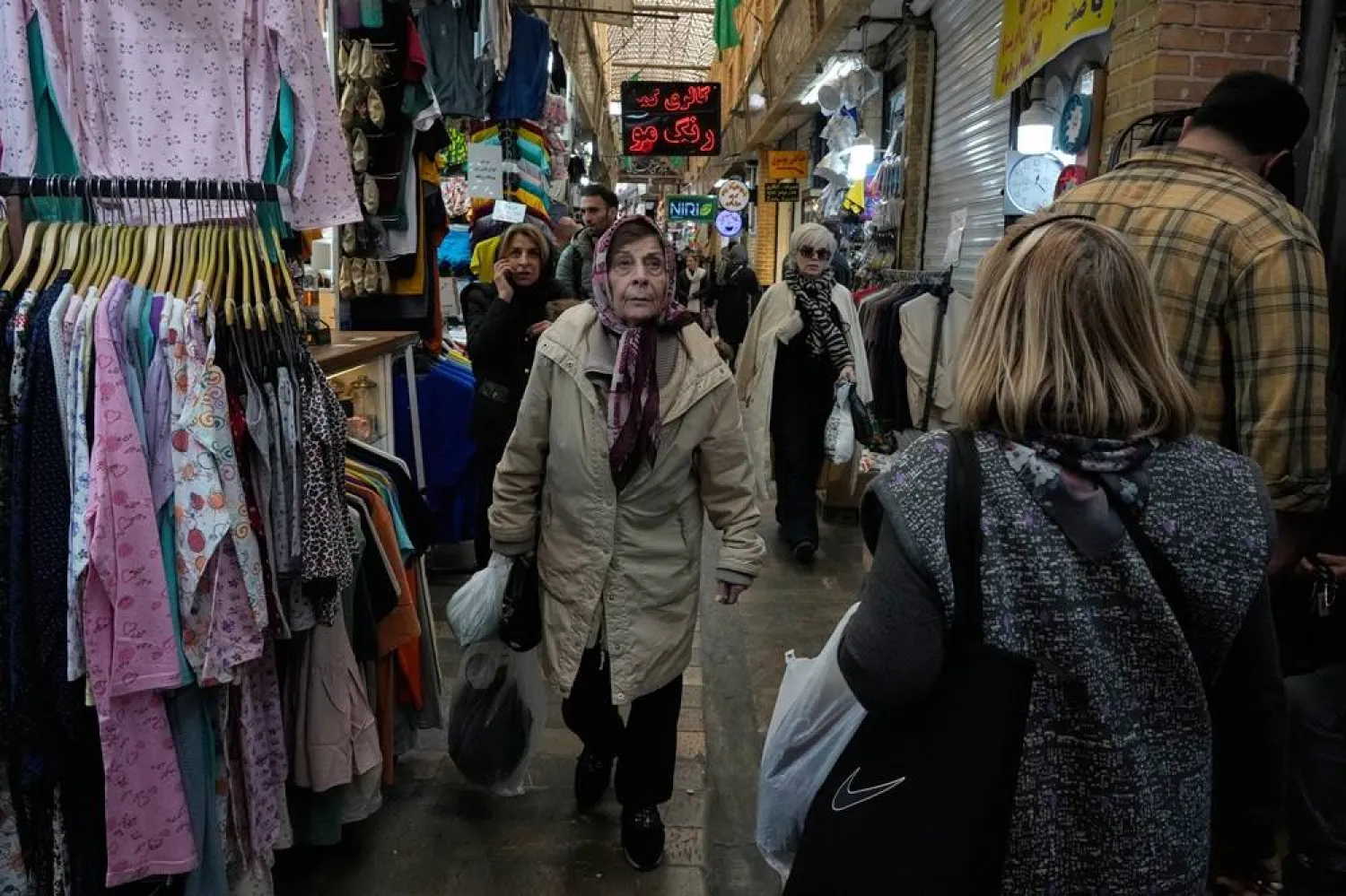
 People walk at Tajrish traditional bazaar in northern Tehran, Iran, Thursday, Feb. 19, 2026. (AP)
People walk at Tajrish traditional bazaar in northern Tehran, Iran, Thursday, Feb. 19, 2026. (AP)
TT

US Strikes on Iran Could Target Individual Leaders, Officials Say

 People walk at Tajrish traditional bazaar in northern Tehran, Iran, Thursday, Feb. 19, 2026. (AP)
People walk at Tajrish traditional bazaar in northern Tehran, Iran, Thursday, Feb. 19, 2026. (AP)

US military planning on Iran has reached an advanced stage with options including targeting individuals as part of an attack and even pursuing regime change in Tehran, if ordered by President Donald Trump, two US officials told Reuters.

The military options are the latest signs that the United States is preparing for a serious conflict with Iran should diplomatic efforts fail. Reuters first reported last week that the US military is preparing for a sustained, weeks-long operation against Iran that could include striking Iranian security facilities as well as nuclear infrastructure.

The latest revelations suggest more granular, ambitious planning ahead of a decision by Trump, who has in recent days publicly floated the idea of regime change in the country.

The US officials, who spoke on condition of anonymity due to the sensitive nature of the planning, did not offer further details on which individuals could be targeted or how the US military could attempt to carry out regime change without a large ground force.

Pursuing regime change would mark another shift away from Trump's vows during the presidential campaign to abandon what he has called the failed policies of past administrations, which included military efforts to topple governments in Afghanistan and Iraq.

Trump has assembled a massive amount of firepower in the Middle East, but most of the combat ‌capabilities are aboard warships ‌and fighter aircraft. Any major bombing campaign could also count on support from US-based bombers.

In his first term, ‌Trump ⁠showed a willingness ⁠to carry out targeted killings by approving a 2020 attack on Iran's top general, Qassem Soleimani, who led the foreign espionage and paramilitary arm of Iran's Revolutionary Guard Corps, known as the Quds Force.

The Trump administration formally labeled the IRGC a foreign terrorist organization in 2019, the first time Washington had applied the designation to another nation’s military.

One of the US officials noted Israel's success targeting Iranian leaders during its 12-day war with Iran last year. At the time, regional sources told Reuters at least 20 senior commanders were killed, including the armed forces chief of staff, Major General Mohammad Bagheri.

"The 12-day war and Israeli strikes against individual targets really showed the utility of that approach," the US official said, adding that the focus was on those involved in command and control of IRGC forces.

Still, the official cautioned that targeting individuals requires additional intelligence ⁠resources. Killing a particular military commander would mean knowing their exact location and understanding who else might be harmed in ‌the operation.

It was unclear to the officials who spoke with Reuters what intelligence the US has ‌on Iranian leaders who could potentially be targeted by the United States.

The White House and Pentagon did not immediately respond to requests for comment.

REGIME CHANGE AS A POSSIBLE GOAL

Trump ‌has openly floated the possibility of changing the government in Iran, saying last week it "seems like that would be the best thing that could happen." ‌He declined to say who he wanted to take over Iran, but said, "there are people."

While regime change operations have traditionally involved major movement of US ground forces, Trump turned to special operations forces to oust Venezuela's President Nicolas Maduro, sending them to grab him from his Caracas compound last month in an audacious raid.

At the same time, the US president has also held out hope for diplomacy, saying on Thursday that "really bad things" would happen if no deal were reached. He appeared to set a deadline of no more than ‌10 to 15 days before the US might take action.

Iran's Revolutionary Guard has warned it could retaliate against US military bases in the region if the US strikes Iranian territory.

In a letter on Thursday to UN Secretary-General Antonio Guterres, Tehran said it would not start any war but that "in the event that it is subjected to military aggression, Iran will respond decisively and proportionately" in its exercise of the right of self-defense.

US officials have told Reuters they fully expect Iran to fight back in the event of an attack, raising the risk of US casualties and a regional conflict, given the number of countries that could come under fire from Iran's missile arsenal.

Trump's threats to bomb Iran have pushed up oil prices, and on Thursday a Russian warship joined planned Iranian naval drills in the Gulf of Oman, a vital sea route for global energy shipments.

THREATS TO SHUT STRAIT OF HORMUZ

Tehran has in the past threatened to shut down the Strait of Hormuz if it is attacked, a move that would choke off a fifth of global oil flows.

Iranian and US negotiators met on Tuesday and Iranian Foreign Minister Abbas Araqchi said they had agreed on "guiding principles." White House press secretary Karoline Leavitt said on Wednesday, however, that the two sides remained far apart on some issues.

Iran has resisted making major concessions on its nuclear program, though insisting it is for peaceful purposes. The US and Israel have in the past accused Tehran of trying to develop a nuclear bomb.

A senior US official said Iran would make a written proposal on how to address US concerns.

Trump called on Tehran on Wednesday to join the US on the "path to peace."

"They can't have a nuclear weapon, it's very simple," he said. "You can't have peace in the Middle East if they have a nuclear weapon."


First Ramadan After Truce Brings Flicker of Joy in Devastated Gaza 

Worshippers perform evening Tarawih prayer on the first night of the holy fasting month of Ramadan at the Al-Kanz Mosque, which was damaged during the Israel-Hamas war, in Gaza City, Tuesday, Feb. 17, 2026. (AP)
TT

First Ramadan After Truce Brings Flicker of Joy in Devastated Gaza 

Worshippers perform evening Tarawih prayer on the first night of the holy fasting month of Ramadan at the Al-Kanz Mosque, which was damaged during the Israel-Hamas war, in Gaza City, Tuesday, Feb. 17, 2026. (AP)

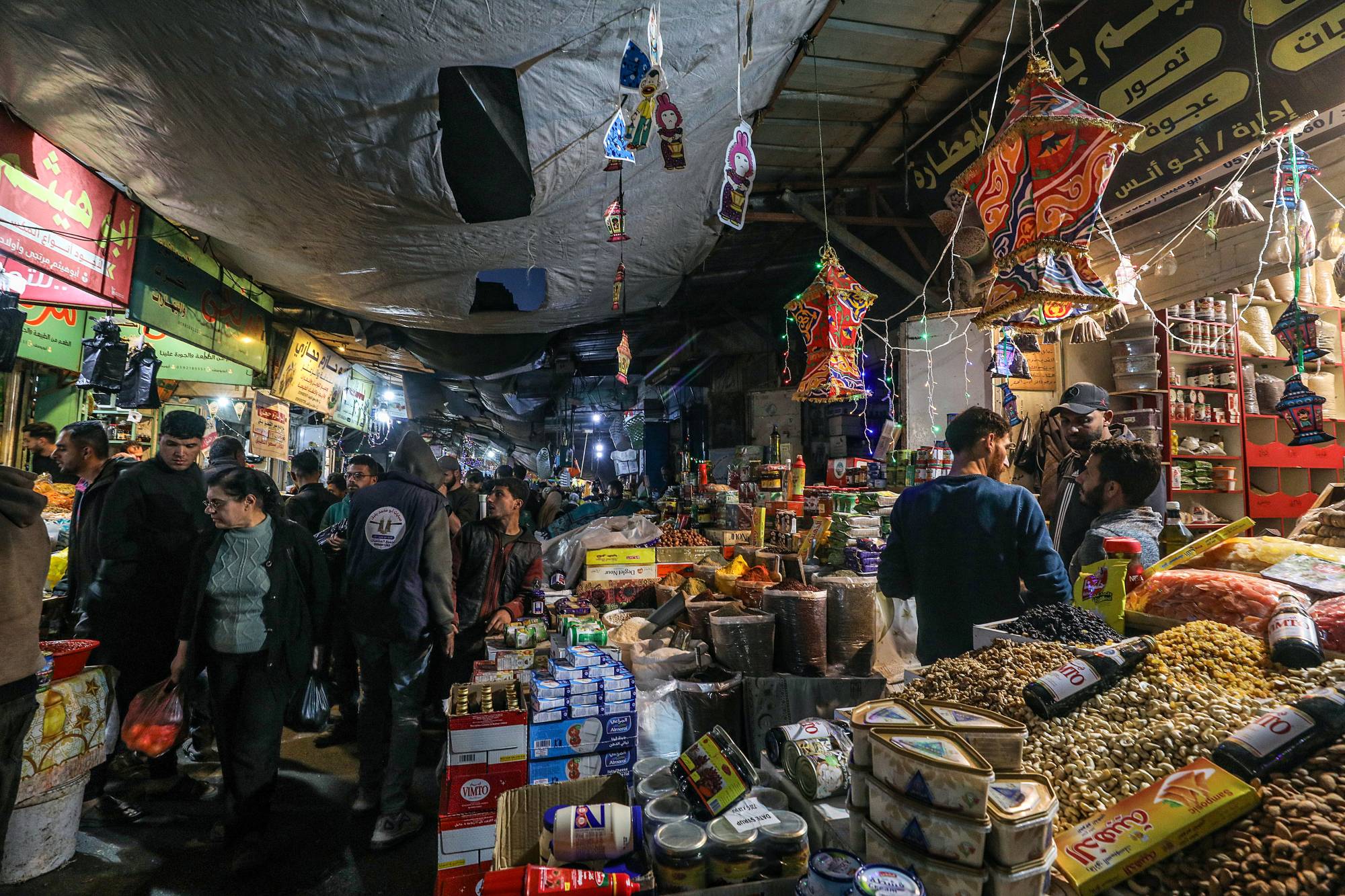
Little Ramadan lanterns and string lights appeared on streets lined with collapsed buildings and piles of rubble in Gaza City, bringing joy and respite as Islam's holiest month began -- the first since October's ceasefire.

In the Omari mosque, dozens of worshippers performed the first Ramadan morning prayer, fajr, bare feet on the carpet but donning heavy jackets to stave off the winter cold.

"Despite the occupation, the destruction of mosques and schools, and the demolition of our homes... we came in spite of these harsh conditions," Abu Adam, a resident of Gaza City who came to pray, told AFP.

"Even last night, when the area was targeted, we remained determined to head to the mosque to worship God," he said.

A security source in Gaza told AFP Wednesday that artillery shelling targeted the eastern parts of Gaza City that morning.

The source added that artillery shelling also targeted a refugee camp in central Gaza.

Israel does not allow international journalists to enter the Gaza Strip, preventing AFP and other news organizations from independently verifying casualty figures.

A Palestinian vendor sells food in a market ahead of the holy month of Ramadan in Gaza City, 17 February 2026. (EPA)

- 'Stifled joy' -

In Gaza's south, tens of thousands of people still live in tents and makeshift shelters as they wait for the territory's reconstruction after a US-brokered ceasefire took hold in October.

Nivin Ahmed, who lives in a tent in the area known as Al-Mawasi, told AFP this first Ramadan without war brought "mixed and varied feelings".

"The joy is stifled. We miss people who were martyred, are still missing, detained, or even travelled," he said.

"The Ramadan table used to be full of the most delicious dishes and bring together all our loved ones," the 50-year-old said.

"Today, I can barely prepare a main dish and a side dish. Everything is expensive. I can't invite anyone for Iftar or suhoor," he said, referring to the meals eaten before and after the daily fast of Ramadan.

Despite the ceasefire, shortages remain in Gaza, whose battered economy and material damage have rendered most residents at least partly dependent on humanitarian aid for their basic needs.

But with all entries into the tiny territory under Israeli control, not enough goods are able to enter to bring prices down, according to the United Nations and aid groups.

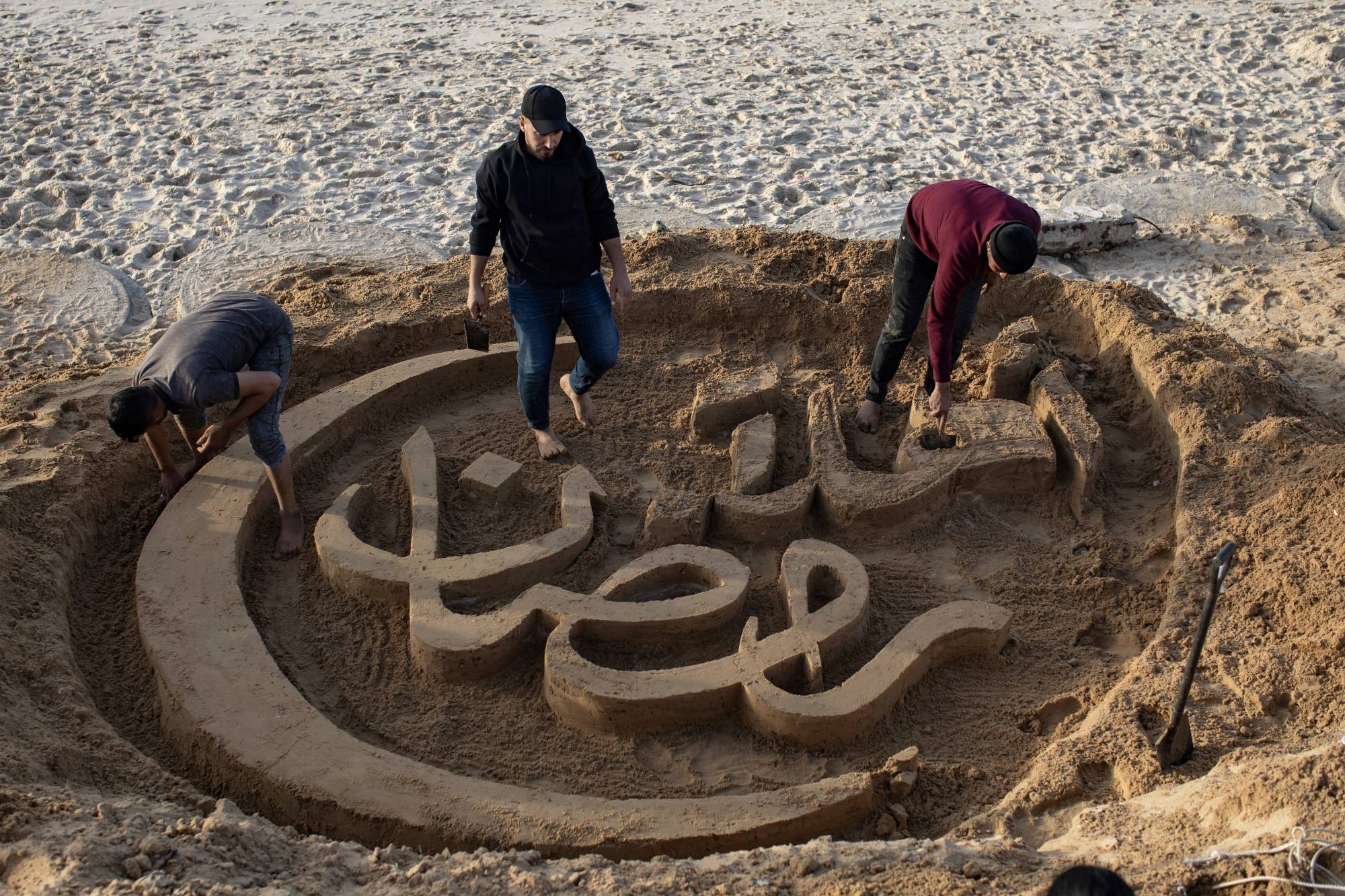
A sand sculpture bearing the phrase "Welcome, Ramadan," created by Palestinian artist Yazeed Abu Jarad, on a beach in Khan Younis, southern Gaza Strip, 17 February 2026, amid a ceasefire between Israel and Hamas. (EPA)

- 'Still special' -

Maha Fathi, 37, was displaced from Gaza City and lives in a tent west of the city.

"Despite all the destruction and suffering in Gaza, Ramadan is still special," she told AFP.

"People have begun to empathize with each other's suffering again after everyone was preoccupied with themselves during the war."

She said that her family and neighbors were able to share moments of joy as they prepared food for suhoor and set up Ramadan decorations.

"Everyone longs for the atmosphere of Ramadan. Seeing the decorations and the activity in the markets fills us with hope for a return to stability," she added.

On the beach at central Gaza's Deir al-Balah, Palestinian artist Yazeed Abu Jarad contributed to the holiday spirit with his art.

In the sand near the Mediterranean Sea, he sculpted "Welcome Ramadan" in ornate Arabic calligraphy, under the curious eye of children from a nearby tent camp.

Nearly all of Gaza's 2.2 million residents were displaced at least once during the more than two years of war between Israel and Hamas, sparked by the latter's unprecedented October 7 attack on Israel.

Mohammed al-Madhoun, 43, also lives in a tent west of Gaza City, and hoped for brighter days ahead.

"I hope this is the last Ramadan we spend in tents. I feel helpless in front of my children when they ask me to buy lanterns and dream of an Iftar table with all their favorite foods."

"We try to find joy despite everything", he said, describing his first Ramadan night out with the neighbors, eating the pre-fast meal and praying.