Baghdad's Wristwatch Repairman Is a Timeless Treasure
Youssef Abdelkarim, who believes that a "man's elegance begins with his watch", holds an antique pocket-watch - AFP
Youssef Abdelkarim's storefront on one of Baghdad's most historic streets is a time capsule -- literally. Thousands of wristwatches fill the tiny shop, where three generations have repaired Iraq's oldest timepieces.
The dusty display window on Rasheed Street features a single row of classic watches in their felt boxes right at the front, with a mountain of haphazardly piled pieces behind it and others hanging from hooks overhead.
Inside, there are watches in plastic buckets on the floor, packed in cardboard boxes on shelves and stuffed into suitcases.
In a far corner, behind an old wooden desk, 52-year-old Abdelkarim is hunched over an antique piece.
"Every watch has its own personality. I try to preserve it as much as I can, as if it were my own child," he told AFP, squinting through black, thick-framed glasses.
Abdelkarim began fixing watches at the age of 11, after the death of his paternal grandfather, who opened the store in the 1940s.
His grandfather had already passed the trade onto his own son, who began to teach Youssef.
He has repaired expensive Swiss models, including 10,000-euro Patek Philippes, and what Abdelkarim calls "the poor man's watch" -- a Sigma. And he suspects he even fixed a piece that belonged to Iraq's feared dictator Saddam Hussein.
"It was a rare watch brought to me by the presidential palace, with Saddam's signature on the back," he recalled.
It cost 400 Iraqi dinars to repair -- more than $1,000 in the 1980s but less than a dollar today.
Indeed, much has changed since then.
People swapped their analog wristwatches for digital models, then dropped them altogether for smart phones.
But Abdelkarim insists an original timepiece isn't a thing of the past, telling AFP with a wink: "A man's elegance begins with his watch. And his shoes."
That may be right: his shop is still packed with customers of all ages and styles, including former ministers in sleek suits, collectors looking for vintage classics and younger Iraqis bringing newer pieces for him to fix.
"Everyone finds what they need here," he said proudly.
With his eyesight starting to falter, he fixes just five pieces a day now, compared to the 1980s when he sold and fixed hundreds every day.
At the time, Rasheed Street was bustling with business during the day and the top place to be seen at night.
Abdelkarim still remembers the famed theaters, movie halls and coffee shops: "They never closed!"
His shop was competing with dozens of other repair stores then, but they started to shutter in the 1990s, when crippling international sanctions left many households struggling to feed themselves.
Then, the US-led invasion of 2003 toppled Saddam and opened a pandora's box of sectarian violence, including car bombs on Rasheed Street.
Abdelkarim moved to live in a safer neighborhood but still walked to the family store to keep it open.
Even last year, when Rasheed Street was shut for months by a huge protest camp in nearby Tahrir Square, he managed to keep working.
"I'd open once or twice a week, because the riot police often clashed with protesters here, but I still came," he told AFP.
All around him, the vintage clothing stores or bookshops have closed, transformed into warehouses or stores selling car accessories.
"The street's features were erased and most of my friends moved. But there's just something different that sets it apart from every other place in Baghdad," he said.
He is teaching his sons, Yehya, 24, and Mustafa, 16, to take over the family business.
But he insists they will preserve the store as it is, with its cracked walls framing the door, its dusty shelves and its mountains of timepieces.
"This shop hasn't changed in 50 years, which is what keeps people coming back," he said.
Nvidia and Board Still Face Legal Risks After Jensen Huang’s Returnhttps://english.aawsat.com/features/5344927-nvidia-and-board-still-face-legal-risks-after-jensen-huang%E2%80%99s-return
Nvidia's headquarters are seen in Santa Clara, California, on November 23, 2026. (AFP)
TT
TT
Nvidia and Board Still Face Legal Risks After Jensen Huang’s Return
Nvidia's headquarters are seen in Santa Clara, California, on November 23, 2026. (AFP)
Nvidia's board reinstated Jensen Huang as CEO at the urging of US President Donald Trump, less than two weeks after the co-founder of the AI chip powerhouse resigned following revelations of extramarital affairs, including one with an alleged spy for China.
The reported ties between Huang and a suspected spy led to his resignation as CEO and sparked investigations by the US securities regulator and FBI, congressional hearings, a review by the company's independent directors and a proposed investor class action lawsuit.
Below is a look at how the rehiring, which sparked a massive rally in Nvidia's stock, could impact the legal exposure for the company and its directors.
WHAT ARE THE ALLEGATIONS?
Huang allegedly had intimate relations with Alice Huang, an unrelated Chinese businesswoman who is accused of having ties with Beijing. Huang is also accused of having had intimate relationships with at least two Nvidia employees. He resigned on November 12.
Huang has acknowledged being unfaithful to his wife and apologized, but has not publicly addressed the individual alleged relationships in detail. China has denied the espionage allegations. Attempts by Reuters to reach Alice Huang have been unsuccessful.
Nvidia said in a statement that based on US government input the board was confident that "Huang's reinstatement poses no national security risk," a claim backed by Trump in an interview with CNBC. Trump said that Huang did nothing wrong and that his intervention led to Huang's return.
Nvidia sits at the center of the technological rivalry between the United States and China. Washington has imposed restrictions on exports of advanced AI chips to China since 2022, including those made by Nvidia.
COULD THE BOARD BE ON THE HOOK DESPITE TRUMP'S ASSURANCES?
An investor filed a so-called derivative lawsuit in federal court on November 11 seeking to hold the board liable for failing to make a good-faith effort to oversee the business and Huang. The lawsuit said the board allowed Nvidia to make repeated assurances about Huang's relationship with Alice Huang and her former company, Megaspeed, until the allegations were public.
Nvidia formed a committee of independent directors that hired law firm Wachtell, Lipton, Rosen & Katz to assist in an internal investigation. The committee is still investigating, Nvidia said on Monday.
Trump's statement that Huang did not pose a national security risk could strengthen the directors' legal defenses, according to legal experts. The directors could argue that Trump's assurances mean the company will not be prosecuted for export control violations, removing the threat that rehiring Huang could damage the company.
However, Lee Squitieri, one of the attorneys representing the shareholder in the derivative lawsuit, told Reuters in an email that rehiring Huang does not change the liability scenario very much and that the problems extend beyond possible export control violations. Squitieri said Huang dominated the board and harmed Nvidia by leaving it without a succession plan and with poor compliance oversight and weak corporate governance.
Derivative lawsuit settlements are generally paid from insurance, and Nvidia has coverage for its officers and directors of up to $950 million.
WHAT HAPPENS TO ANY FEDERAL CRIMINAL PROBE?
Trump has said the FBI is investigating Huang's affair with Alice Huang, but has been vague about the focus of the probe.
Attorney General Todd Blanche said on November 12 the FBI is investigating Alice Huang. The Department of Justice has said it had no evidence of wrongdoing by Nvidia or its co-founder.
Reuters could not immediately determine the status of federal criminal probes, and the Justice Department declined to comment.
Legal experts said Trump's remarks on Monday make it unlikely the Justice Department would continue an investigation during his administration, particularly given how much influence the president wields over the department.
But the statute of limitations for export control violations extends beyond January 2029, when Trump leaves office, and a new attorney general could reopen an investigation. Trump also could preemptively pardon Huang to avoid future prosecution for violating federal law.
CAN STATES STILL PURSUE CASES AGAINST HUANG AND THE COMPANY?
Attorneys general in Missouri and California said on Monday their investigations will continue.
The office of California Attorney General Rob Bonta, a Democrat, said on November 19 it had served an investigative subpoena on Nvidia to determine if China obtained advanced chips or confidential information and whether Nvidia misled the public. Bonta has not said whether the investigation is criminal or civil in nature and a probe does not mean a case will be brought.
The office of Missouri Attorney General Catherine Hanaway, a Republican, said it would proceed with its investigation into whether Huang’s actions harmed state pension funds. Her office previously said it was viewing the investigation through a consumer protection lens focused on potential misrepresentations.
WHAT HAPPENS TO THE SEC PROBE?
The US Securities and Exchange Commission is investigating Nvidia for potential accounting issues, Reuters reported on Friday. Reuters could not immediately ascertain on Monday whether Trump’s intervention had changed the status of that federal probe.
The SEC did not immediately respond to a request for comment.
However, the independence of the SEC, which is structured as a bipartisan commission and is chaired by Trump appointee Paul Atkins, has eroded under Trump’s second administration, according to legal experts.
In March, Reuters reported that the SEC’s enforcement chief quit after just six months on the job after clashing with the agency’s leaders over the direction of its enforcement program, including the handling of cases with ties to Trump and his family.
DO INVESTORS HAVE LEGAL RECOURSE?
A proposed class action was filed in San Jose, California, federal court on November 9 alleging the company and Huang defrauded shareholders by concealing the alleged relationship with Alice Huang and Megaspeed, which Jensen Huang described in an October 30 Bloomberg interview as "normal and not unusual."
The lawsuit did not specify damages but the stock lost around 20% from its peak to the end of the class period, a decline of around $1 trillion in market value.
The stock rally sparked by rehiring Huang could undermine the value of the lawsuit if the shares continue to rise. US securities law caps shareholder damages if the stock rebounds in 90 days after an initial drop.
Sudanese Patients with Chronic Diseases Struggle with Medicine Shortages, Soaring Priceshttps://english.aawsat.com/features/5344711-sudanese-patients-chronic-diseases-struggle-medicine-shortages-soaring-prices
Sudanese Patients with Chronic Diseases Struggle with Medicine Shortages, Soaring Prices
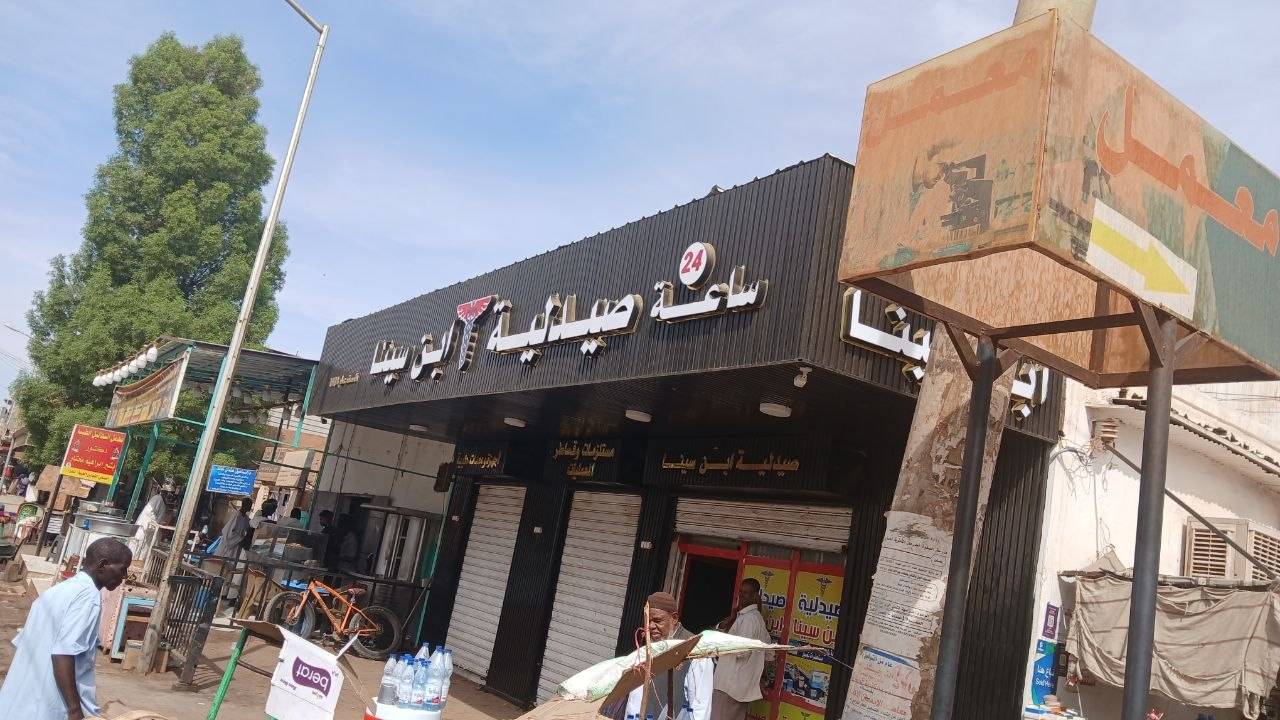
Packages of approved diabetes and blood pressure medications at a pharmacy in Omdurman, Sudan (Asharq Al-Awsat)
When the power goes out at his home, as it frequently does, Al-Hadi Osman is forced to place the insulin he struggled to find and afford in a container filled with water, hoping to prevent it from spoiling.
"Insulin disappears from pharmacies for long periods, and sometimes I have to turn to donors when I can't afford to buy it," he told Asharq Al-Awsat.
Kamal Idris faces a similar struggle. He says he sometimes spends more than two months searching for medication to treat high blood pressure without finding it.
His financial circumstances make obtaining medicine even more difficult. Most of the time, he buys tablets by the strip rather than purchasing an entire package. Occasionally, he relies on medicines sent by relatives or friends living in Arab countries.
Idris told Asharq Al-Awsat that he also takes Glucophage to treat diabetes and vitamin B12 supplements.
The experiences of Osman and Idris illustrate the difficulties patients in Khartoum face in maintaining regular treatment. However, pharmacists interviewed by Asharq Al-Awsat said medicine availability has generally improved, although some medications remain scarce and prices are often beyond patients' means.
Sudan's pharmaceutical supply network was disrupted by the war that began in April 2023, cutting off distribution routes that had previously carried medicines from the capital to other states.
The exterior of a pharmacy operating in Omdurman (Asharq Al-Awsat)
However, the National Medical Supplies Fund (NMSF), the government agency responsible for medical supplies, has gradually resumed operations following its return to Khartoum.
Pharmacist Walid Farid told Asharq Al-Awsat that Amilo, a blood pressure medication, costs approximately 6,000 Sudanese pounds, while Amilosan and Candestan each cost around 15,000 pounds.
Among diabetes medications, Amaryl costs between 30,000 and 45,000 pounds, depending on the formulation and manufacturer, while Metformin costs approximately 54,000 Sudanese pounds.
Farid said a package of insulin costs 30,000 pounds when available.
However, another pharmacist who works for the NMSF told Asharq Al-Awsat that insulin is generally unavailable in pharmacies, with the exception of premixed insulin, which he said is available through the fund at prices ranging from 26,000 to 30,000 pounds.
Pharmacist Nafisa Abdelrahman offered a somewhat different assessment, saying most medications for chronic diseases are available on the market, although shortages persist in certain types of premixed and long-acting insulin, including Lantus and insulin pens.
"Difficulties obtaining some of these types existed even before the war," she said.
Premixed insulin combines two types of insulin with different onset times and durations of action in fixed proportions, typically 30% short-acting insulin and 70% intermediate-acting insulin.
Switching between insulin formulations requires medical supervision, making access to the specific type prescribed to a patient essential, even when other formulations are available.
Monthly treatment costs vary according to individual needs.
Farid explained that some patients require 20 to 30 units of insulin per dose, while others need higher doses. The number of packages required depends on the patient's total daily dosage, as well as the size and concentration of each package.
Abdelrahman said rising prices have placed a burden on both patients and pharmacists.
Pharmacist Mohammed Omar speaks to Asharq Al-Awsat about medications for chronic diseases (Asharq Al-Awsat)
She attributed the increases to multiple exchange rates and the emergence of parallel import channels, with some traders pricing medicines according to their import costs.
"Prices sometimes change almost daily, while patients' urgent need for treatment drives some to buy their medicines regardless of how expensive they become," she said.
Farid also attributed fluctuations in medicine prices to the Sudanese pound's volatility against the US dollar, which has made pricing unstable.
He recalled once advising a pharmacy owner to temporarily suspend sales until economic conditions stabilized.
According to pharmacist Omar, manufacturers or entities financing imports determine the initial price of medicines, after which an additional 20% is applied under what he described as the new pricing system.
He estimated that the cost of a package of medicine has doubled since the beginning of the year, attributing the increase to the depreciation of the Sudanese pound.
"High prices sometimes slow sales, leaving certain medicines sitting on pharmacy shelves because patients cannot afford them," he said.
Abdelrahman explained that some pharmacies allow customers to purchase blood pressure medication by the strip when a package contains several strips.
However, opening insulin packages and selling individual doses is not common practice in retail pharmacies because of storage and safety requirements.
Omar said patients requiring urgent doses receive treatment in hospital emergency departments according to their medical condition.
Disruptions to pharmaceutical distribution date back to the early months of the war.
In June 2023, the World Health Organization (WHO) reported that military forces had reportedly taken control of the NMSF's central warehouses in Khartoum.
The facilities stored medicines intended for distribution across Sudan and housed the National Pharmacy for Chronic Diseases.
The NMSF accused the Rapid Support Forces (RSF) of preventing access to its warehouses and said refrigerated vehicles used to transport medicines had been looted.
The agency was subsequently forced to organize distribution operations from Port Sudan, while continuing to face difficulties delivering shipments to Khartoum and other areas.
Sudan's National Investigation Committee estimated the fund's war-related losses at more than $500 million, including life-saving medicines, medical solutions and equipment.
In August 2026, the NMSF announced the reopening of 10 warehouses at its Khartoum headquarters and the restoration of its electronic supply management system.
In October, it announced the reopening of the Martyr Ahmed Hassan Pharmacy, a central pharmacy in the capital.
Omar estimated that medicine availability through the NMSF had reached 68% this year, with the agency aiming to increase that figure to 85% by 2027 to meet the needs of Sudan's states.
He identified two continuing obstacles to increasing supplies: the high cost of foreign currency and disruptions to maritime transport.
He said shipping disruptions, including those affecting traffic through the Strait of Hormuz, had interfered with deliveries of insulin and blood pressure medications to Khartoum state over the past six months.
According to Abdelrahman, some domestic pharmaceutical factories have resumed operations but continue to face multiple fees and levies, along with rising costs for imported raw materials.
She warned that additional medications could become unavailable if the Sudanese pound continues to depreciate.
Omar said Sudan currently imports insulin, although a proposal exists to manufacture it domestically. Implementing such a project, however, would require time, stability and adequate resources.
In November, the WHO called for urgent, sustained funding to protect and expand essential health services in Sudan.
The organization said 21 million people across the country require health assistance and that 37% of healthcare facilities are out of service.
The appeal followed a WHO delegation's visit to Kosti in White Nile state and El Obeid in North Kordofan between November 7 and 12.
The delegation documented medicine shortages and difficulties accessing healthcare, reporting that power outages were disrupting services including surgery, intensive care and kidney dialysis.
Back in Khartoum, Kamal Idris continues to rely on whatever medicine he can afford, sometimes purchasing just one strip of tablets or using supplies sent by relatives and friends in Saudi Arabia.
Meanwhile, Al-Hadi Osman continues searching for someone who can help him pay for insulin. Even when he manages to obtain it and bring it home, frequent power outages remain another obstacle in his struggle to maintain treatment.
What’s Next After Climate Talks Fail?https://english.aawsat.com/features/5344568-what%E2%80%99s-next-after-climate-talks-fail
COP31 President and Türkiye’s Minister of Environment, Urbanization and Climate Change Murat Kurum (C) attends a plenary session of the United Nations Climate Change Conference (COP31) in Antalya on November 22, 2026. (AFP)
TT
TT
What’s Next After Climate Talks Fail?
COP31 President and Türkiye’s Minister of Environment, Urbanization and Climate Change Murat Kurum (C) attends a plenary session of the United Nations Climate Change Conference (COP31) in Antalya on November 22, 2026. (AFP)
The collapse of marathon climate talks in Türkiye has renewed questions about reform of their consensus requirement, and galvanized calls for legal action and ambitious side agreements between like-minded countries.
The "conference of the parties" talks, better known as COP31, ended without agreement and two days over schedule on Sunday, as countries deadlocked on fossil fuels, finance, science and carbon-removing technologies.
It was an ignominious end for an unusual dual-presidency shared by Australia and Türkiye, and negotiations chair Chris Bowen, who is Australia's climate minister, said it was "very disappointing".
For many observers, the outcome was the inevitable result of a process that has regularly been hamstrung by its insistence on consensus.
"Decision-making that requires every country to agree on every comma is not fit for a climate emergency," said Nikki Reisch, director of the Center of International Environmental Law's climate and energy program.
Bowen identified the same issue.
"The fundamental root of the problem is that when COP was created, for reasons I understand, it was made consensus only," he said. "That's a very tough ask."
- 'Significant reform' -
Sunday's collapse has renewed calls for a reform to that consensus-based process, in which any one country, or a small minority, can nix progress.
"It has been clear for years that the COP process is in need of significant reform," wrote former US vice president Al Gore on X.
He urged a "reinvigorated multilateral process that reflects the latest science and represents the will of the majority of the world."
But as Bowen noted, "you also need consensus to change consensus" -- in other words, all countries would have to agree those reforms.
He described that as a "particular challenge," although others might characterize it as simply impossible.
The COP31 talks deadlocked over multiple issues, notably whether the so-called cover decision would mention phasing out planet-warming fossil fuels.
Several countries refused a deal without that mention, while others were vehemently opposed to its inclusion.
There were other serious faultlines, including the timing of scientific work from the Intergovernmental Panel on Climate Change, and language on carbon capture, a technology championed by the fossil fuel industry but criticized by some as costly and ineffective.
Crucially for developing countries, there was also no progress on finance -- the money badly needed to help countries transition energy systems and adapt to the natural disasters climate change is already worsening.
"The fundamental problem for globally agreed climate policy is more starkly obvious than ever: fossil fuel powers will not agree to have their resource wealth devalued, and rich countries won't provide enough climate finance to the developing world," said Frank Jotzo, professor of environmental and climate change economics at the Australian National University.
- 'Doesn't replace COP' -
Other COPs have ended in failure before, including most recently in 2009.
But for all the forum's failings, most agree that the COP process remains important for its unique format, bringing together virtually every country in the world and offering equal billing to all.
As a result, few suggest the process should be abandoned, but there are growing calls for alternatives to advance climate change action, including legal suits.
That route is already being pursued, most notably with an International Court of Justice advisory opinion that confirmed states have a binding legal obligation to combat climate change.
"If the negotiations are not delivering what individual states need, then they'll certainly consider turning to the ICJ and other international courts," said Harj Narulla, an international lawyer who advised the Solomon Islands at COP31.
Others expect growing interest in agreements made outside the COP process, like the Santa Marta initiative, bringing together countries committed to phasing out fossil fuels.
The process grew out of the COP30 meeting in Brazil, where interested nations sought to bypass a lack of consensus on the issue.
Members held talks earlier this year, and agreed some first steps, including an expert scientific panel to advise on pathways.
These "plurilateral processes are growing," said Jotzo, and more are needed, including on carbon removal technologies and finance for adaptation.
Bowen too said he sees the Santa Marta process becoming "increasingly important."
"Doesn't replace COP. It's just another way of doing it," he added.
لم تشترك بعد
انشئ حساباً خاصاً بك لتحصل على أخبار مخصصة لك ولتتمتع بخاصية حفظ المقالات وتتلقى نشراتنا البريدية المتنوعة