



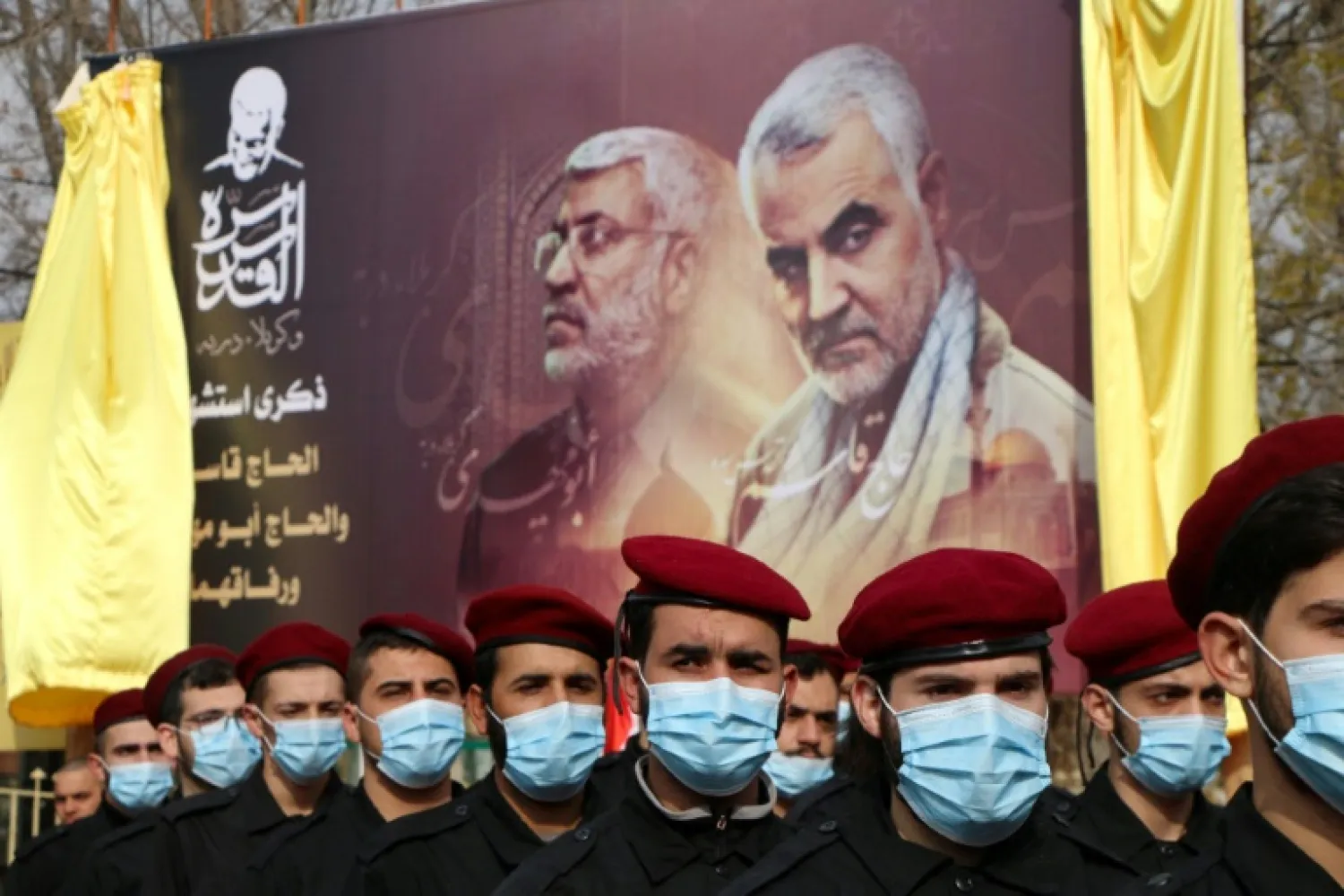

Thousands of Iraqi mourners Sunday condemned the "American occupiers", one year after a US drone strike killed Iran's revered commander Qasem Soleimani and his Iraqi lieutenant Abu Mahdi al-Muhandis.
The anniversary of their deaths in Baghdad -- which brought arch enemies the United States and Iran to the brink of war -- was also marked in Iran and by supporters in Syria, Lebanon, Yemen, and elsewhere.
The lead-up to the commemorations of the Shiite Muslim commanders has again heightened regional tensions in the weeks before US President Donald Trump, who ordered the killings, leaves the White House.
In Iraq, the powerful pro-Iranian Hashed al-Shaabi paramilitary network, otherwise known as Popular Mobilization Forces (PMF), which Muhandis commanded has led the somber and angry vigils for him and General Soleimani, who headed the foreign operations arm of Iran's Islamic Revolutionary Guard Corps.
Thousands of black-clad mourners Saturday night converged at the spot near Baghdad's international airport where the US hit the two vehicles and killed Soleimani, Muhandis, and eight other men.
By candlelight, they honored their "martyrs" and condemned the American "great Satan" at the site where nearby walls are still pockmarked by shrapnel.
The Hashed -- factions of which Washington has blamed for rocket strikes against its embassy and troops in Iraq -- has increasingly challenged Prime Minister Mustafa al-Kadhemi, whom it accuses of having helped plot the drone strikes.
This has brought to the boil once more tensions in the war-battered and politically fragile country which the United States invaded in 2003, and which is struggling with economic crisis amid low oil prices and the coronavirus pandemic.
Amid the tensions, Iraqis, and many in the wider region, are nervously watching for any signs of escalation before Trump leaves the White House on January 20.
Trump confronted decades-old foe Iran by withdrawing in 2018 from its nuclear deal with world powers and launching a "maximum pressure" campaign to further economically punish and isolate the country.
Trump recently tweeted that the US was hearing the "chatter of additional attacks against Americans in Iraq", and warned that "if one American is killed, I will hold Iran responsible. Think it over."
In recent days, US B-52 bombers have flown across the region for the second time in less than a month but, in what some read as a sign of de-escalation, Washington has also reportedly ordered its Nimitz aircraft carrier to leave the Gulf.
Iran's Revolutionary Guards chief Hossein Salami vowed Saturday to respond to any "action the enemy takes", as he visited a strategic Gulf island.
Iran and the United States -- bitter foes since the 1979 Iranian Islamic revolution and the US embassy hostage crisis in Tehran -- have twice come to the brink of war since June 2019, most recently after Soleimani's killing.
Iran's Foreign Minister Mohammad Javad Zarif on Thursday accused Trump of aiming to fabricate a "pretext for war", after the president blamed Tehran for a December 20 rocket strike on the US embassy in Baghdad.
In the war of words, Zarif on Saturday also claimed that, in Iraq, "Israeli agent-provocateurs are plotting attacks against Americans (to put) Trump in a bind with a fake casus belli".


