Algeria’s Tebboune Returns to Germany to be Treated for COVID-19 Complications

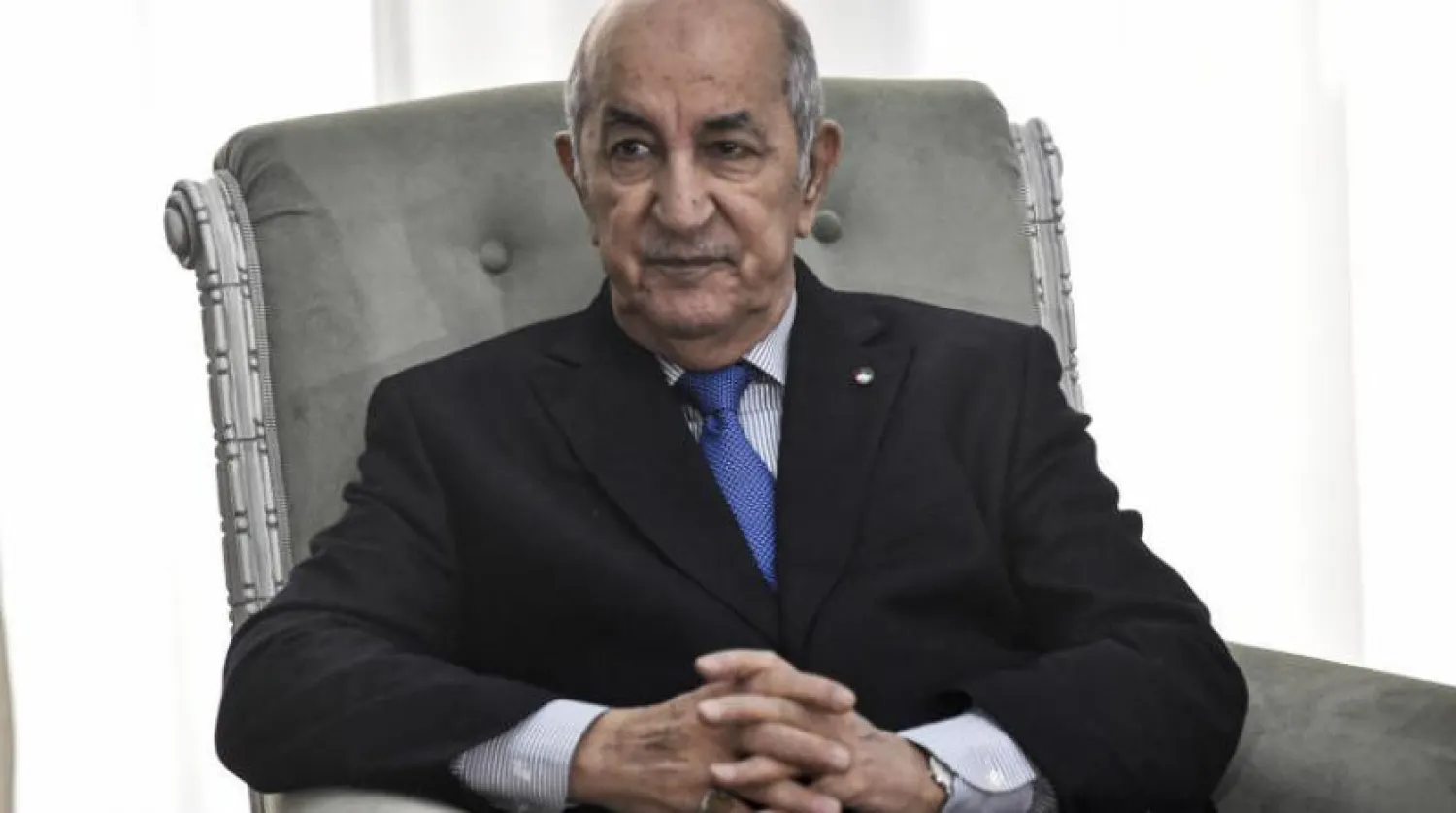
Algerian President Abdelmadjid Tebboune. AFP file photo
TT

Algeria’s Tebboune Returns to Germany to be Treated for COVID-19 Complications

Algerian President Abdelmadjid Tebboune. AFP file photo

Algerian President Abdelmadjid Tebboune flew back to Germany on Sunday for treatment in hospital of complications in his foot resulting from a coronavirus infection, the presidency said.

Tebboune, 75, had returned home two weeks ago from Germany after two months of treatment for COVID-19.

The treatment of the complications "was not medically urgent" and had been due to take place during Tebboune's last stay in Germany, the presidency said in a statement.

At the time, Tebboune decided to postpone the treatment because of some obligations that prompted him to return home on Dec. 29, it said.

A public hospital medic, speaking to Asharq Al-Awsat, has said that Tebboune’s habit of heavy smoking likely triggered a case of deep vein thrombosis in his leg.

As for why Tebboune had spent some 60 days abroad getting treated for the coronavirus, which is much longer than the average period for treating Covid-19 infections, the physician said that it was probably due to complications in the president’s lungs.

Since the leader’s return to the country on December 29, Algerian media have always shown Tebboune sitting on an armchair, raising questions about his state of health.


UN: Israeli Settlements in West Bank Growing at Highest Level Since 2017

Israeli settlements seen from Bethlehem in the West Bank. (AFP file)
TT

UN: Israeli Settlements in West Bank Growing at Highest Level Since 2017

Israeli settlements seen from Bethlehem in the West Bank. (AFP file)

The expansion of Israeli settlements in the occupied West Bank is at its highest level since at least 2017, when the United Nations began tracking such data, according to a report by the UN chief seen by AFP on Friday.

In 2025, "plans for nearly 47,390 housing units were advanced, approved, or tendered, compared with some 26,170 in 2024," the report said.

UN Secretary-General Antonio Guterres condemned the "relentless" expansion, saying it "continues to fuel tensions, impede access by Palestinians to their land and threaten the viability of a fully independent, democratic, contiguous and sovereign Palestinian State."

"These figures represent a sharp increase compared to previous years," he added, noting an average of 12,815 housing units were added annually between 2017 and 2022.

Excluding east Jerusalem, which was occupied and annexed by Israel in 1967, some 500,000 Israeli settlers live in the West Bank, along with about three million Palestinian residents.

"These developments are further entrenching the unlawful Israeli occupation and violating international law and undermining the right of the Palestinian people to self-determination," Gutteres said.

Guterres also condemned the "continued escalation of violence and tensions in the occupied West Bank," pointing out operations by the Israeli army in the northern West Bank that have killed a "high number" of people, displaced residents and destroyed homes and other infrastructure.

Violence in the West Bank has soared since Hamas's October 2023 attack on Israel triggered the Gaza war.

Israeli troops or settlers have killed at least 1,022 Palestinians in the West Bank -- both militants and civilians -- since the start of the conflict, according to an AFP tally based on Palestinian health ministry figures.

At least 44 Israelis have been killed in the West Bank from Palestinian attacks or Israeli military operations during the same period, according to Israeli data.


Egypt Maintaining Efforts to Avert New Israeli War on Lebanon

Lebanese President Joseph Aoun meets with Egyptian ’s Ambassador to Lebanon Alaa Moussa at the Baabda presidential palace on Friday. (Lebanese Presidency)
TT

Egypt Maintaining Efforts to Avert New Israeli War on Lebanon

Lebanese President Joseph Aoun meets with Egyptian ’s Ambassador to Lebanon Alaa Moussa at the Baabda presidential palace on Friday. (Lebanese Presidency)

Egypt continues to exert efforts to ease tensions and prevent a new Israeli war on Lebanon as part of an initiative kicked off by its foreign minister Badr Abdelatty during a visit to Beirut two weeks ago.

Egyptian Prime Minister Mostafa Madbouly is scheduled to visit Beirut next week.

Cairo’s Ambassador to Lebanon Alaa Moussa held talks with President Joseph Aoun on Friday on regional and international developments and their impact on Lebanon.

They tackled the role Egypt is playing to de-escalate the situation.

Madbouly’s visit, Moussa said, aims to send messages of support to Lebanon.

The ambassador told reporters at the Baabda presidential palace that he briefed Aoun on Egypt’s efforts to ease the tensions in southern Lebanon and search for a suitable outcome that averts an escalation.

Following his visit, Abdelatty contacted various regional and international parties, including the United States, to brief them on his trip to Beirut, he added.

“We received some encouraging responses and we are working accordingly,” he revealed.

“He said the signs are good, even if the road is still long,” he stressed.

“We have no choice but to work towards steering Lebanon clear of any development in the Israeli assaults against it,” Moussa remarked. “We must maintain work with regional and international partners.”

“It seems we are headed on the right path and we must forge ahead. We cannot guarantee anything, but we are working on easing the tensions ... this is the main goal,” he went on to say.


Islamic Jihad Denies Withholding Body of Last Israeli Hostage

An Islamic Jihad member looks on as workers dig in search of the corpses of hostages in northern Gaza. (AP file)
TT

Islamic Jihad Denies Withholding Body of Last Israeli Hostage

An Islamic Jihad member looks on as workers dig in search of the corpses of hostages in northern Gaza. (AP file)

Palestinian sources dismissed Israeli claims circulating over the past two days that the Islamic Jihad movement is refusing to cooperate with Hamas by handing over what Israel says is the last body of an Israeli hostage in Gaza, a step Israel has linked to moving into the second phase of the ceasefire.

Israel’s Maariv newspaper reported on Friday, citing Israeli security sources, that tensions had emerged between Hamas and Islamic Jihad over the latter’s alleged refusal to hand over the body of the last hostage, Ran Gvili.

Israel believes Islamic Jihad fighters were directly involved in abducting Gvili and holding him in Gaza.

The Al-Quds Brigades, the armed wing of Islamic Jihad, said days ago it had handed over all hostages in its possession and had fully complied with the ceasefire agreement, a claim confirmed by sources in the movement speaking to Asharq Al-Awsat.

According to those sources, Gvili’s body was not among the Israeli hostages held by Islamic Jihad and was instead in Hamas’ custody. They said coordination with Hamas was excellent and denied any disagreements or tensions, dismissing Israeli media reports as unfounded.

Sources from Hamas told Asharq Al-Awsat the body was believed to be located in three or four sites in the Shujaiya and Zeitoun neighborhoods east of Gaza City. Search operations were carried out at those locations but failed to locate it.

They said all field commanders and activists involved in the abduction and in guarding the body had been killed in a series of airstrikes and other operations, making it difficult to determine the exact location with certainty.

They added that the difficulty was compounded by heavy bombardment, widespread destruction and land leveling in those areas during Israeli ground incursions.

According to Israel’s Yedioth Ahronoth newspaper, Israel provided Hamas, via mediators, with information about individuals who might help identify the body’s location, as well as details on potential sites, accompanied by aerial photographs.

Hamas sources said there was ongoing communication with mediators on this issue and others.

New video raises doubts

These developments coincided with the Israeli Hostages and Missing Families Forum publishing video footage of six hostages whose bodies were found inside a tunnel in Rafah in August 2024.

The footage shows them sharing daily life, marking the Jewish holiday of Hanukkah, celebrating the start of 2024, talking among themselves, shaving and moving from one place to another inside the tunnel.

The videos raised questions about the Israeli army’s claim that they were killed two days before being found, allegedly shot by Hamas fighters. Hamas has denied that account, saying they were killed in an Israeli strike that hit the site.

Israeli journalist Miki Levin wrote in a report on Maariv’s website that the six could have returned home alive had an agreement been reached earlier, in April last year, as senior members of the negotiating team had said.

She criticized Israeli Prime Minister Benjamin Netanyahu and ministers Bezalel Smotrich and Itamar Ben-Gvir for insisting on the notion of “total victory,” which she described as empty and unattainable.

She said the six would have been freed under a deal rejected by the Israeli government, which ignored warnings that an incursion into Rafah would lead to the hostages’ deaths.

According to the Israeli Public Broadcasting Corporation, negotiations with mediators days before their deaths were on the verge of collapse due to the Israeli government’s insistence on controlling the Philadelphi corridor. Five of the hostages were due to be released had an agreement been signed at that time.

These circumstances, Hamas sources said, likely prompted Israel to claim they were killed by Hamas gunfire.

The sources again denied that version, saying the hostages were killed in artillery and air strikes that hit the area and also killed several of their captors. They noted that captors had instructions at the time to kill any hostage if Israeli forces approached and posed a direct threat.

The tunnel was located in the Tel al-Sultan neighborhood west of Rafah in southern Gaza. The Israeli army later acknowledged that investigations indicated the hostages were killed as a result of military pressure in the area.

In October 2024, Israel killed Yahya Sinwar, the former head of Hamas’ political bureau, in a house near the tunnel site in Tel al-Sultan, in what Israeli accounts described as a surprise encounter while he was with an armed group spotted moving inside the building.

Asharq Al-Awsat reported in November 2024, citing Hamas sources, that Ibrahim Sinwar, the son of Qassam Brigades commander Mohammed Sinwar, who was later killed in an Israeli strike, had been killed alongside his uncle in one of the Rafah tunnels.

The sources said Ibrahim Mohammed Sinwar was killed in an Israeli strike as he emerged from a tunnel opening to monitor Israeli troop movements, while accompanied by his uncle, in August that year in Rafah.

Assessments cited by Asharq Al-Awsat suggest the tunnel in question was the same one where the six hostages were held. Subsequent Israeli investigations said DNA evidence indicated Sinwar had been present there.

The hostages may in fact have been killed in the same strike that killed Ibrahim Sinwar, who had accompanied his uncle Yahya throughout the war, along with other armed fighters.

Hamas sources stressed that strict instructions had been in place regarding the treatment of Israeli hostages, including providing all necessary means to keep them alive and safeguard their lives.