


US Set to Approve Third Vaccine, but Fears Grow for Poorer Nations

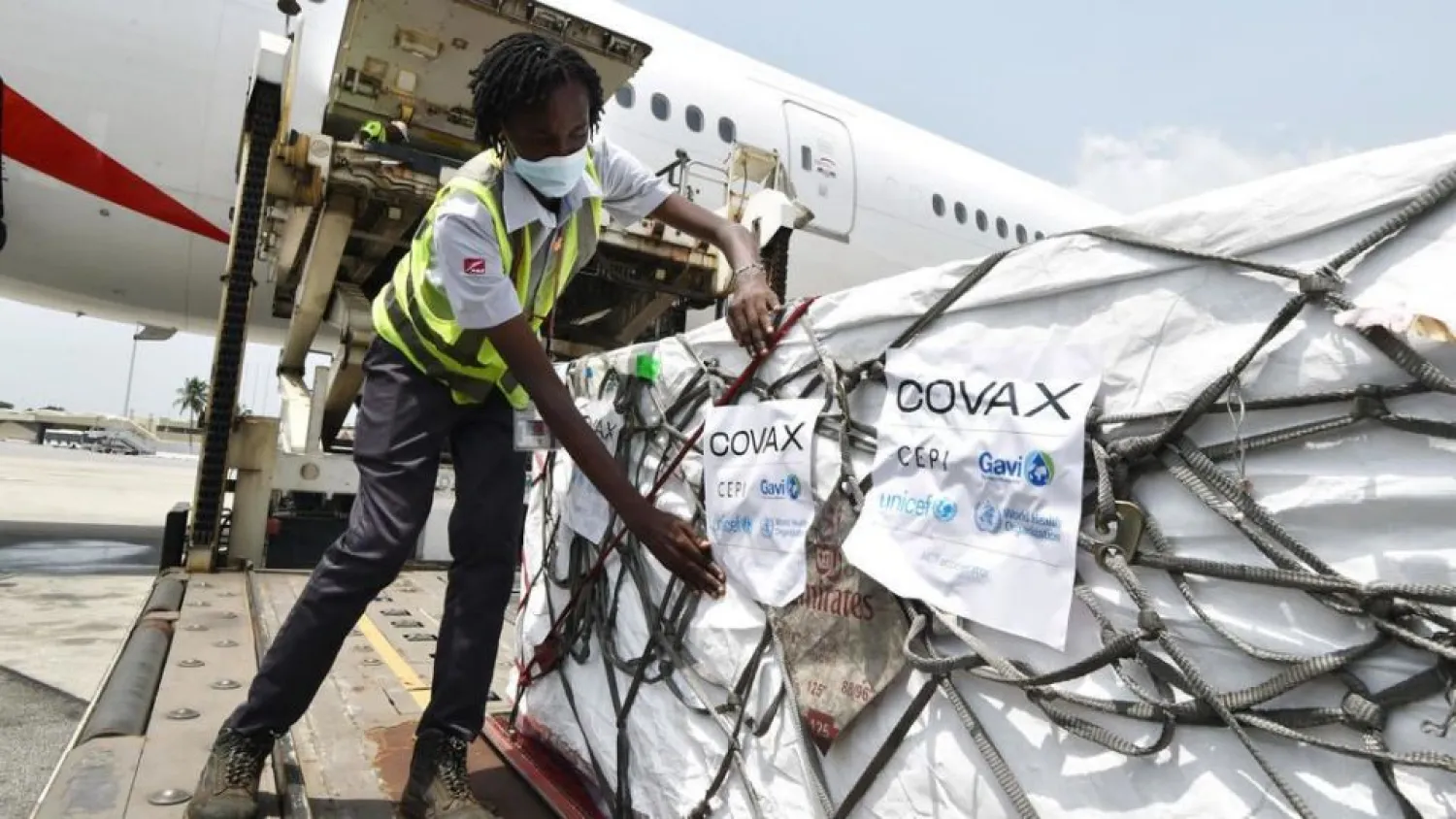
Workers unload a shipment of AstraZeneca Covid-19 vaccines from a plane in the Ivory Coast | AFP
TT

US Set to Approve Third Vaccine, but Fears Grow for Poorer Nations

Workers unload a shipment of AstraZeneca Covid-19 vaccines from a plane in the Ivory Coast | AFP

A US panel on Friday recommended Johnson & Johnson's one-dose Covid-19 shot for emergency approval, as some of the world's most powerful countries issued a unified call for better vaccine access for poorer nations.

The United States is the world's hardest-hit country, and its emergency use authorization -- which is now expected shortly -- of the J&J vaccine would follow those for the Pfizer and Moderna doses.

"We're going to use every conceivable way to expand manufacturing of the vaccine... and make even more rapid progress," said President Joe Biden as the country tries to finally get on top of the virus that has already claimed 510,000 US lives.

J&J stressed its vaccine was proven to work with a single shot, and could be stored long-term at standard fridge temperatures, which "offers logistical and practical advantages."

As inoculation campaigns ramp up in wealthier nations, there was unanimous support for a resolution at the UN Security Council calling for improved access to vaccines in conflict-hit and impoverished countries.

In a rare gesture, it was co-sponsored by all 15 members of the council, diplomats said, and required just a week of negotiations to draft.

"We are all facing the same threat, the same pandemic, and international cooperation and multilateral action is needed," one diplomat said.

But Tedros Adhanom Ghebreyesus, head of the World Health Organization, reacted by saying richer countries must waive intellectual property rights on vaccines so more manufacturers can start production.

The idea is fiercely opposed by many wealthy countries and the pharmaceutical industry.

- Hopes of economic recovery -

Another diplomatic gathering on Friday looked further ahead, with G20 countries discussing post-pandemic economic recovery in a video conference.

US Treasury Secretary Janet Yellen has signaled openness to new assistance to less developed countries through the International Monetary Fund.

Also in Washington, Democratic leaders expressed confidence that Biden's $1.9 trillion Covid relief package would pass the House of Representatives overnight Friday.

The bill -- which will still need to pass in the Senate -- is on track to be the second-largest US stimulus ever, after the $2 trillion package that Donald Trump signed into law last March to help the coronavirus-battered economy.

In Africa, Ivory Coast received its first jabs -- a consignment of half a million doses funded by the Covax initiative for poorer countries.

And just over half of the population of Israel has now had at least a first dose.

Russia and Austria have meanwhile agreed to talks over the delivery and joint production of Russia's Sputnik V vaccine.

But many poorer countries have struggled to secure supplies and launch inoculations, and there have been repeated warnings over the consequences.

The economic recovery will be "long and uncertain", IMF chief Kristalina Georgieva warned in an interview with Italy's La Stampa newspaper.

"The prospects for recovery are diverging dangerously across countries."

There were also reminders of the months ahead, with new virus cases increasing again globally after a month in which they had fallen by half.

The global death toll is now above 2.5 million out of a total of some 113 million cases.

- Brazil suffers -

In Brazil, several cities and states imposed a new round of curfews and restrictions in a bid to contain a surge of cases.

The country, whose death toll passed 250,000 Thursday, has had a piecemeal response to the crisis, with local authorities setting policies as far-right President Jair Bolsonaro dismisses restrictive measures and the use of face masks.

Many restrictions worldwide are unlikely to disappear soon, including in France, where a debate erupted over how to respond to infections in Paris.

Skepticism greeted a suggestion by Paris city hall for a three-week lockdown to help restore normality, with critics accusing mayor Anne Hidalgo of a PR stunt.

France has so far avoided a third lockdown but case numbers are starting to rise.

The danger of new variants also remained apparent as Belgian authorities said the more contagious British strain was now the dominant one in the country.

In Britain itself, an advisory group said the next phase of vaccines will be administered based on age rather than occupational risks, sparking anger from police and teachers who said they should be prioritized.

Britain has vaccinated 19 million people, 35 percent of all adults, with at least one dose and says it plans to reach the whole population by the end of July.

But Estonia was forced to ban church services and to close theatres and museums, while the Czech government said it would stop people from leaving their local districts and shut all schools and shops selling non-essential goods.



Satellite Images Show Iran Repairing and Fortifying Sites amid US Tensions

A satellite image shows tunnel entrances covered with soil at Isfahan nuclear complex, in Isfahan, Iran, February 10, 2026. Vantor/Handout via REUTERS
TT

Satellite Images Show Iran Repairing and Fortifying Sites amid US Tensions

A satellite image shows tunnel entrances covered with soil at Isfahan nuclear complex, in Isfahan, Iran, February 10, 2026. Vantor/Handout via REUTERS

Satellite images show that Iran has recently built a concrete shield over a new facility at a sensitive military site and covered it in soil, experts say, advancing work at a location reportedly bombed by Israel in 2024 amid tensions with the US.

Images also show that Iran has buried tunnel entrances at a nuclear site bombed by the US during Israel's 12-day war with Iran last year, fortified tunnel entrances near another, and has repaired missile bases struck in the conflict.

They offer a glimpse of Iranian activities at some of the sites at the center of tensions with Israel and the US, as Washington seeks to negotiate a deal with Tehran on its nuclear program while threatening military action if talks fail.

Some 30 km (20 miles) southeast of Tehran, the Parchin complex is one of Iran's most sensitive military sites. Western intelligence has suggested Tehran carried out tests relevant to nuclear bomb detonations there more than two decades ago.

Iran has always denied seeking atomic weapons. Israel reportedly struck Parchin in October 2024.

Satellite imagery taken before and after that attack shows extensive damage to a rectangular building at Parchin, and apparent reconstruction in images from November 6, 2024.

Imagery from October 12, 2025 shows development at the site, with the skeleton of a new structure visible and two smaller structures adjacent to it. Progress is apparent in imagery from November 14, with what appears to be a metallic roof covering the large structure.

But imagery from December 13 shows the facility partly covered. By February 16, it cannot be seen at all, hidden by what experts say is a concrete structure.

The Institute for Science and International Security (ISIS), in a January 22 analysis of satellite imagery, pointed to progress in the construction of a "concrete sarcophagus" around a newly built facility at the site, which it identified as Taleghan 2.

ISIS reported in November that imagery showed "ongoing construction and the presence of what appears to resemble a long, cylindrical chamber, maybe a high-explosives containment vessel, likely measuring approximately 36 meters long and 12 meters in diameter placed inside a building".

"High-explosive containment vessels are critical to the development of nuclear weapons," ISIS added, "but can also be used in many other conventional weapons development processes."

William Goodhind, a forensic imagery analyst with Contested Ground, said the roof had a similar hue to the surrounding area, adding: "It has most likely been covered with dirt to obscure the concrete color."

ISIS founder David Albright wrote on X: "Stalling the negotiations has its benefits: Over the last two to three weeks, Iran has been busy burying the new Taleghan 2 facility ... More soil is available and the facility may soon become a fully unrecognizable bunker, providing significant protection from aerial strikes."

TUNNEL ENTRANCES BURIED AT ISFAHAN NUCLEAR COMPLEX

The Isfahan complex is one of three Iranian uranium-enrichment plants bombed by the United States in June.

In addition to facilities that are part of the nuclear fuel cycle, Isfahan includes an underground area where diplomats say much of Iran's enriched uranium has been stored.

Satellite images taken in late January showed new efforts to bury two tunnel entrances at the complex, ISIS reported on January 29. In a February 9 update, ISIS said a third entrance had also been backfilled with soil, meaning all entrances to the tunnel complex were now "completely buried".

A February 10 image shows all three tunnels buried, Goodhind said.

ISIS reported on February 9 that "backfilling the tunnel entrances would help dampen any potential airstrike and also make ground access in a special forces raid to seize or destroy any highly enriched uranium that may be housed inside difficult".

TUNNEL ENTRANCES FORTIFIED AT COMPLEX NEAR NATANZ SITE

ISIS has reported that satellite images point to ongoing efforts since February 10 to "harden and defensively strengthen" two entrances to a tunnel complex under a mountain some 2 km (1.2 miles) from Natanz - the site that holds Iran's other two uranium enrichment plants.

Imagery shows "ongoing activity throughout the complex related to this effort, involving the movement of numerous vehicles, including dump trucks, cement mixers, and other heavy equipment", ISIS wrote.

Iran's plans for the facility, called Pickaxe Mountain, are unclear, ISIS said.

SHIRAZ SOUTH MISSILE BASE

About 10 km (6 miles) south of Shiraz in southern Iran, this is one of 25 primary bases capable of launching medium-range ballistic missiles, according to Alma Research and Education Center, an Israeli organization. Alma assessed the site had suffered light, above-ground damage in last year's war.

A comparison of images taken on July 3, 2025 and January 30 shows reconstruction and clearance efforts at the main logistics and likely command compound at the base, Goodhind said.

"The key takeaway is that the compound has yet to return to its full operational capacity from prior to the airstrikes."

QOM MISSILE BASE

Some 40 km north of the city of Qom, this base suffered moderate above-ground damage, according to Alma.

A comparison of images taken between July 16, 2025, and February 1 shows a new roof over a damaged building. The roof repairs appear to have begun on November 17 and were most likely complete 10 days later, Goodhind said.


Iranian Mourning Ceremonies Prompt New Crackdowns in Echo of 1979 Revolution

Iranians walk on a street in Tehran, Iran, 16 February 2026. (EPA)
TT

Iranian Mourning Ceremonies Prompt New Crackdowns in Echo of 1979 Revolution

Iranians walk on a street in Tehran, Iran, 16 February 2026. (EPA)

Iranians have returned to the streets this week to mourn those killed by security forces during last month's anti-government demonstrations, sparking some new crackdowns in an echo of the 1979 revolution that brought down the US-backed Shah.

The anti-Shah revolutionaries turned Shiite Muslim memorial processions 40 days after each death into new protests, which prompted renewed violence from the authorities and fresh "martyrs" for the cause.

The clerical establishment's opponents, deploying the same tactics after five decades, have yet to match the momentum of those times, but Iran's clerical rulers, threatened with military attack by US President Donald Trump over their nuclear and security policies, have demonstrated their concern.

They deployed security forces to some cemeteries and invited citizens to attend state-organized 40-day "Chehelom" ceremonies on Tuesday after apologizing to "all those affected" by violence they blamed on people described as "terrorists".

"They tried to prevent history repeating itself by holding these ceremonies in mosques across ‌the country. To ‌prevent any gatherings of angry families in cemeteries, but they failed," said one rights activist ‌in ⁠Iran who declined ⁠to be named for fear of retribution.

SECURITY FORCES CLASH WITH MOURNERS

Videos circulating on social media showed families holding their own memorials across Iran on Tuesday, 40 days after security forces began two days of widespread shooting that human rights groups say killed thousands of protesters.

Some of Tuesday's memorials turned into wider anti-government protests and some were met with deadly force.

In the Kurdish town of Abdanan in Ilam province, witnesses and activists said security forces opened fire on hundreds of mourners gathered at a cemetery.

Videos showed people scattering as gunfire rang out amid chants of "Death to the dictator", a reference to Iran's Supreme Leader Ali Khamenei.

Reuters journalists verified that ⁠the videos were filmed at the cemetery. They were unable to verify the date but ‌found no versions posted before Tuesday: eyewitnesses and activists said that was when ‌people gathered at the cemetery were fired upon.

Hengaw, a Kurdish Iranian rights group, said at least three people were injured and nine ‌arrested in Abdanan. Similar clashes were reported in Mashhad and Hamedan. Sources in Iran said internet access was heavily restricted ‌in those cities.

WEDNESDAY IS 40 DAYS SINCE HEIGHT OF JANUARY PROTESTS

More mourning ceremonies were expected to be taking place on Wednesday, 40 days since the deadliest two days of the January unrest, although communications restrictions meant that it was not immediately possible to tell how many or their outcome.

January's unrest grew from modest economic protests in December among traders in Tehran's Grand Bazaar into the gravest threat to ‌Iran's theocracy in nearly five decades, with protesters calling for ruling clerics to step down.

Authorities cut internet access, blaming "armed terrorists" linked to Israel and the United States ⁠for the violence, and have arrested ⁠journalists, lawyers, activists, human rights advocates and students, rights groups say.

Iranian officials have told Reuters the leadership is worried a US strike could erode its grip on power by fueling more protests. Repression, inequality, corruption and the sponsorship of proxies abroad are the main grievances.

"How long can they kill people to stay in power? People are angry, people are frustrated," said government employee Sara, 28, from the central city of Isfahan.

"The Islamic Republic has brought nothing but war, economic misery and death to my country".

Trump has deployed aircraft carriers, fighter jets, guided-missile destroyers and other capabilities to the Middle East for a possible attack if talks to limit Iran's nuclear program and weaken its foreign proxies do not yield results.

Even without a US attack, continued isolation from Western sanctions would likely fuel further public anger.

In 1979, the anti-Shah revolt in provincial towns and villages was amplified by oil workers whose strikes cut most of Iran's revenue, and bazaar merchants who funded the rebel clerics.

This time there have been no reports of either, but people have adopted some of the small-scale tactics, chanting “Allah is great” and “Death to the dictator”, often from rooftops, during nightly demonstrations, according to witnesses and social media posts.


Iran ‘Drafting Framework to Advance’ Future US Talks, Says FM

Iranian Foreign Minister Abbas Araghchi speaks during the Conference on Disarmament at the European headquarters of the United Nations in Geneva, Switzerland, 17 February 2026. (EPA)
TT

Iran ‘Drafting Framework to Advance’ Future US Talks, Says FM

Iranian Foreign Minister Abbas Araghchi speaks during the Conference on Disarmament at the European headquarters of the United Nations in Geneva, Switzerland, 17 February 2026. (EPA)

Iran's top diplomat Abbas Araghchi said on Wednesday that Tehran was "drafting" a framework for future talks with the United States, as the US energy secretary said Washington would stop Iran's nuclear ambitions "one way or another".

Diplomatic efforts are underway to avert the possibility of US military intervention in Iran, with Washington conducting a military build-up in the region.

Iran and the US held a second round of Oman-mediated negotiations on Tuesday in Geneva, after talks last year collapsed following Israel's attack on Iran in June, which started a 12-day war.

Araghchi said on Tuesday that Tehran had agreed with Washington on "guiding principles", but US Vice President JD Vance said Tehran had not yet acknowledged all of Washington's "red lines".

On Wednesday, Araghchi held a phone call with Rafael Grossi, the head of the UN nuclear watchdog, the International Atomic Energy Agency.

In the call, Araghchi "stressed Iran's focus on drafting an initial and coherent framework to advance future talks", according to a statement from the Iranian foreign ministry.

Also on Wednesday, US Energy Secretary Chris Wright warned that Washington would deter Tehran from acquiring nuclear weapons "one way or the other".

"They've been very clear about what they would do with nuclear weapons. It's entirely unacceptable," Wright told reporters in Paris on the sidelines of meetings of the International Energy Agency.

Earlier on Wednesday, Reza Najafi, Iran's permanent representative to the IAEA in Vienna, held a joint meeting with Grossi and the ambassadors of China and Russia "to exchange views" on the upcoming session of the agency's board of governors meetings and "developments related to Iran's nuclear program", Iran's mission in Vienna said on X.

Tehran has suspended some cooperation with the IAEA and restricted the watchdog's inspectors from accessing sites bombed by Israel and the United States, accusing the UN body of bias and of failing to condemn the strikes.

- Displays of military might -

The Omani-mediated talks were aimed at averting the possibility of US military action, while Tehran is demanding the lifting of US sanctions that are crippling its economy.

Iran has insisted that the discussions be limited to the nuclear issue, though Washington has previously pushed for Tehran's ballistic missiles program and support for armed groups in the region to be on the table.

US President Donald Trump has repeatedly threatened to intervene militarily against Iran, first over a deadly crackdown on protesters last month and then more recently over its nuclear program.

On Wednesday, Israeli President Isaac Herzog sent a message to Iranians, saying "I want to send the people of Iran best wishes for the month of Ramadan, and I truly hope and pray that this reign of terror will end and that we will see a different era in the Middle East," according to a statement from his office.

Washington has ordered two aircraft carriers to the region, with the first, the USS Abraham Lincoln with nearly 80 aircraft, positioned about 700 kilometers (435 miles) from the Iranian coast as of Sunday, satellite images showed.

Iran has also sought to display its own military might, with its Islamic Revolutionary Guard Corps beginning a series of war games on Monday in the Strait of Hormuz.

Iranian politicians have repeatedly threatened to block the strait, a major global conduit for oil and gas.

On Tuesday, state TV reported that Tehran would close parts of the waterway for safety measures during the drills.

Iran's supreme leader warned on Tuesday that the country had the ability to sink a US warship deployed to the region.