


Turkish Tourism Sector Suffers Huge Losses

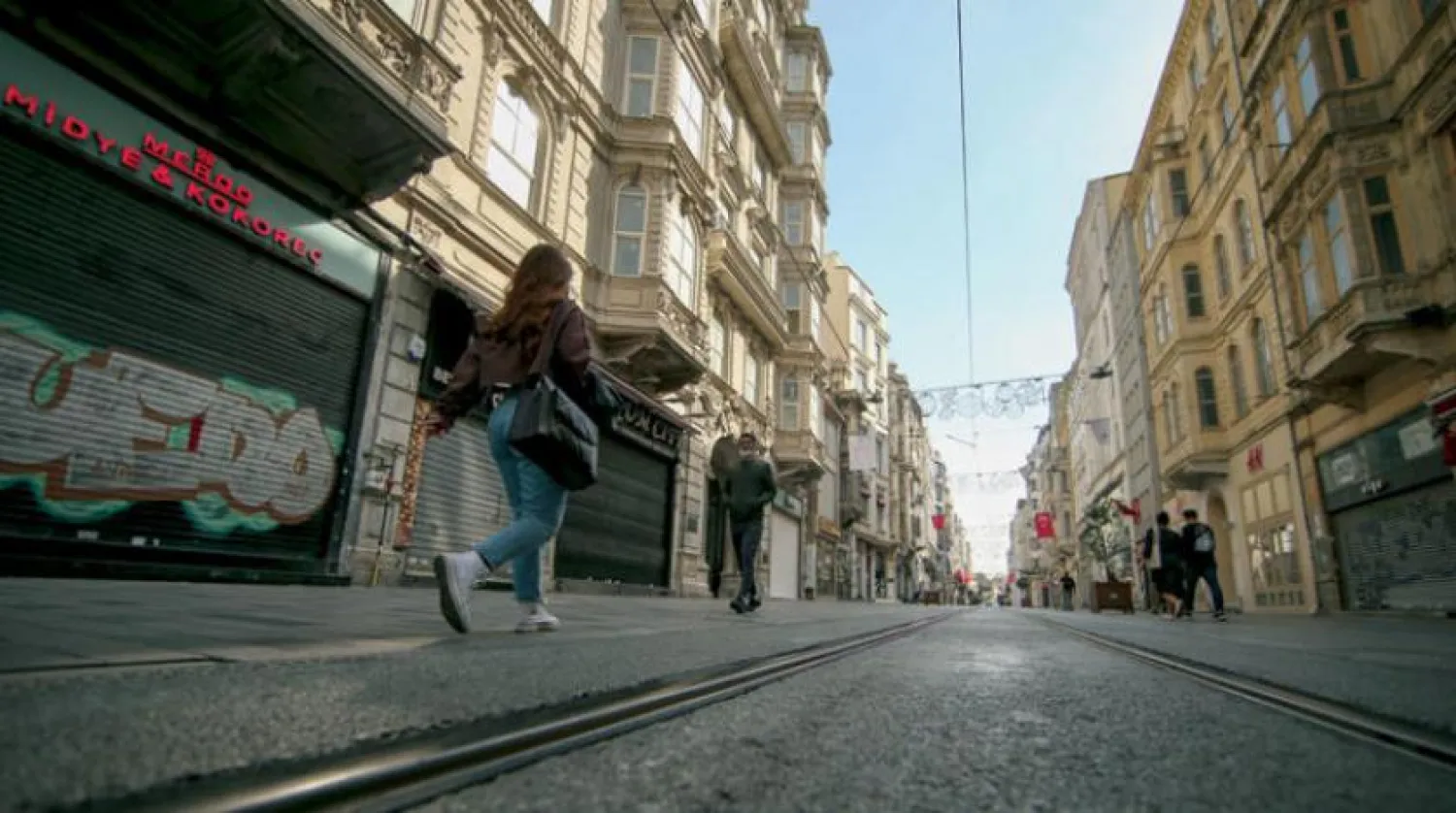
The most renowned Istiklal Street in Istanbul is almost deserted due to the low number of visitors and lockdown measures amid COVID-19 pandemic. AP
TT

Turkish Tourism Sector Suffers Huge Losses

The most renowned Istiklal Street in Istanbul is almost deserted due to the low number of visitors and lockdown measures amid COVID-19 pandemic. AP

Turkey’s tourism sector has incurred huge losses during Q1 2021, in light of the remarkable decline in foreign tourist arrivals and revenues, data showed on Friday.

Turkey’s tourism revenues fell 40.2 percent and foreign visitor arrivals dropped 53.9 percent during the period between January and March, Turkish Statistical Institute (TurkStat) said.

In the first quarter, revenues dropped to $2.45 billion, TurkStat noted.

In 2020, tourism revenues fell by 65 percent to $12.059 billion, which highlights the impact of the coronavirus-driven travel restrictions on the sector.

Meanwhile, the number of Turkish people who travelled abroad during the past tourism season also dropped during Q1 2021 by 84 percent.

The measures aimed at containing the pandemic in Turkey proved to have negative implications on tourism, which is crucial to foreign currency flows.

According to data published by the Organization for Economic Cooperation and Development (OECD), tourism directly accounted for 7.7 percent of total employment in 2018. “Total tourism income represented 3.8 percent of GDP,” it added.

Earlier this week, Turkey announced “full lockdown” to curb the COVID-19 spread.

“Turks will be required to stay mostly at home under a nationwide full lockdown starting on April 29 and lasting until May 17,” President Recep Tayyip Erdogan announced on Monday.

Under the restrictions, which span the holy Muslim month of Ramadan and the three-day Eid holiday, residents are banned from leaving their homes except to shop for groceries or to meet other essential needs. Intercity travel requires special permits.

However, millions of people were exempted from the stay-at-home order. In addition to health sector workers and law enforcement officers, they include factory and agriculture workers as well as supply chain and logistics company employees. Tourists were also exempted, while restaurants are allowed to deliver food.

The Confederation of Progressive Trade Unions of Turkey estimated that some 16 million workers in the country of 84 million would continue to be on the move during the lockdown.

The streets of Ankara and Istanbul were quieter than usual. Nevertheless, workers exempted from the bans filled subways and buses in Istanbul, broadcaster Halk TV reported.

Police patrolled the streets and set up checkpoints at main intersections to ensure that residents who were out and about had documents proving they are exempted from the stay-home order.

Gendarmerie police were, meanwhile, stopping vehicles to ensure passengers had the necessary permits for intercity travel, causing long lines of vehicles.

The lockdown is the first to be implemented nationwide and lasting nearly three weeks. Erdogan’s government had previously imposed partial, shorter-term lockdowns or weekend curfews in a bid to reduce the closures’ impact on the economy.



Dollar Set for Second Straight Weekly Fall despite US-Iran Clashes

US dollar banknotes (Reuters)
TT

Dollar Set for Second Straight Weekly Fall despite US-Iran Clashes

US dollar banknotes (Reuters)

The dollar was down and heading for a second straight weekly fall on Friday as investors stayed cautiously optimistic about a swift end to the Middle East conflict, after President Donald Trump said the ceasefire remained in place despite renewed US-Iran hostilities.

The two sides have occasionally exchanged fire since the ceasefire took effect on April 7, with Iran hitting targets in Gulf countries.

Analysts flagged that oil prices were modestly higher, a fragile ceasefire broadly held and reports indicated that US-Iran talks were continuing, according to Reuters.

They also noted that positioning has returned to historical averages and is no longer as supportive for the dollar as it was a few weeks ago.

“The hope for risk bulls is still that China is adding pressure on the US to reach some kind of deal in the Gulf before the 14-15 May Trump-Xi summit,” said Francesco Pesole, forex strategist at ING.

“The outlook is looking quite binary from here for the dollar, with the reaction in equities still likely to have a bigger bearing than oil volatility on the dollar,” he added.

Stocks were down in Europe but US stock index futures rose on Friday as a recovery in chipmakers helped offset worries about renewed US-Iran tensions.

The dollar index measured against key peers fell 0.28% at 97.96, after hitting 97.623 earlier this week, its lowest level since February 27, a day before the war started. It was set for a weekly drop of 0.22% after falling 0.31% the previous week.

Investors flocked to the safe-haven dollar and sold currencies of oil-dependent economies such as Japan and the euro area after oil prices surged following Iran’s effective closure of the Strait of Hormuz.

Markets are also bracing for the US non-farm payrolls report later on Friday, and it may take an outlier number, particularly a sufficiently weak one, to really move the dial on dollar volatility.

"An unchanged unemployment rate and labour force participation rate are also expected, so the report should not alter the outlook for the Fed," said Volkmar Baur, forex analyst at Commerzbank.

The euro was up 0.35% at $1.1765, poised to end the week a touch firmer.


FAO: World Food Prices Rise to More Than Three Year High in April

People buy food at Ningxia Night Market in Taipei, Taiwan May, 6, 2026. REUTERS/Ann Wang
TT

FAO: World Food Prices Rise to More Than Three Year High in April

People buy food at Ningxia Night Market in Taipei, Taiwan May, 6, 2026. REUTERS/Ann Wang

World food prices climbed in April to their highest in more than three years, with vegetable oils particularly elevated due to the Iran war and the effective closure of the Strait of Hormuz, the United Nations Food and Agriculture Organization (FAO) said on Friday.

FAO Chief Economist Máximo Torero said vegetable oil prices are being driven by elevated energy costs that are in turn raising demand for biofuels made using organic materials, such as oil-rich ⁠plants.

He added, however, ⁠that despite war-linked disruptions, agri-food systems were showing resilience, with cereal prices having increased only moderately thanks to adequate supplies from previous seasons.

The FAO Food Price Index, which measures changes in a basket of globally traded food commodities, rose for a third consecutive month in April to average 130.7 points, the UN agency said, up ⁠1.6% from its revised March level and the highest since February 2023.

The index hit a peak of 160.2 in March 2022 after the start of the Ukraine war, Reuters reported.

The FAO's April vegetable oil price index rose 5.9% month-on-month to its highest since July 2022 as a result of increased soy, sunflower, rapeseed oil and palm oil prices, the latter, notably, underpinned by biofuels policy incentives.

By contrast, April cereal prices rose just 0.8% from March and were up 0.4% from a year ago, reflecting modestly higher prices for ⁠the likes ⁠of wheat and maize linked to weather concerns, rising fertilizer costs and increased biofuels demand.

There are expectations for reduced 2026 wheat plantings, the UN agency said, as farmers shift to less fertilizer-intensive crops given prices for the inputs have surged.

Elsewhere, April meat prices rose 1.2% month-on-month to a record high amid limited slaughter-ready cattle in Brazil, the FAO said, while sugar dropped 4.7% thanks to forecasts for ample supply in Brazil, China and Thailand.

In a separate report, the FAO slightly raised its 2025 global cereal production estimate to a record 3.040 billion metric tons, 6% above levels seen in the prior year.


Gold Set for Weekly Gain as Markets Focus on US-Iran Peace Deal Prospects

FILE PHOTO: Gold ornaments are placed for polishing inside a Senco Gold & Diamonds jewelry workshop in Kolkata, India, January 29, 2026. REUTERS/Sahiba Chawdhary/File Photo
TT

Gold Set for Weekly Gain as Markets Focus on US-Iran Peace Deal Prospects

FILE PHOTO: Gold ornaments are placed for polishing inside a Senco Gold & Diamonds jewelry workshop in Kolkata, India, January 29, 2026. REUTERS/Sahiba Chawdhary/File Photo

Gold rose on Friday and was headed for a weekly gain on easing fears of inflation and higher interest rates, as investors remained optimistic about a US-Iran peace deal despite renewed hostilities.

Spot gold was up 0.85% at $4,709.06 per ounce, as of 0739 GMT. Bullion has gained 2% so far this week.

US gold ‌futures for June ‌delivery rose 0.1% to $4,716.50. The United States ‌and ⁠Iran exchanged fire ⁠on Thursday in the most serious test yet of their month-long ceasefire, but Iran said the situation returned to normal while the US said it did not want to escalate.

"The comments that we've had from the Trump administration this morning that the ceasefire is holding and that there's still lingering optimism that ⁠a deal will get done between the US ‌and Iran - that's kind of ‌supporting the gold market for now," said Kyle Rodda, a senior financial ‌market analyst at Capital.com.

Gold prices have fallen more than 10% ‌since the war began in late February, pressured by higher oil prices. Elevated crude oil prices can stoke inflation, increasing the likelihood of higher interest rates. While gold is seen as an inflation hedge, high ‌interest rates tend to weigh on the non-yielding asset.

"We just wait for the next ⁠headline about ⁠whether the US and Iran are getting close to agreeing on something. I think that there could be some choppy price action in the next 24 hours going into the end of the week," Rodda said.

Markets now await the monthly US employment report due later in the day to assess how the Federal Reserve will move forward with monetary policy this year. Nonfarm payrolls likely increased by 62,000 last month after rebounding by 178,000 in March, a Reuters survey of economists predicted.

Spot silver rose 1.5% to $79.68 per ounce, platinum gained 1.2% to $2,045.38, and palladium was up 1.4% at $1,500.91.