Israel Strikes Kill Senior Hamas Commander, Palestinians Fire Rockets

The remains of a building destroyed by Israeli airstrikes on Gaza City, Wednesday, May 12, 2021. (AP Photo)
TT

Israel Strikes Kill Senior Hamas Commander, Palestinians Fire Rockets

The remains of a building destroyed by Israeli airstrikes on Gaza City, Wednesday, May 12, 2021. (AP Photo)

Israel said it killed 16 members of the Hamas armed wing in Gaza in a barrage on Wednesday and Palestinian militants rained rockets into Israel as Washington said it would send an envoy to try to calm their most intense hostilities in years.

At least 56 people have been killed in Gaza since violence escalated on Monday, according to the enclave's health ministry. Six people have been killed in Israel, medical officials said.

Israeli Prime Minister Benjamin Netanyahu said the brigade commander for Gaza City was among senior members of the militant group who had been killed. "This is just the beginning. We'll hit them like they've never dreamed possible," he said.

Soon after the announcement, a new rocket barrage was fired at the Israeli city of Ashdod and Israeli media said the military was preparing for new salvoes on the Tel Aviv area.

Hamas confirmed the death of the commander and of "other leaders and holy warriors" in a statement. Its leader Ismail Haniyeh added: "The confrontation with the enemy is open-ended."

A Palestinian source said truce efforts by Egypt, Qatar and the United Nations had made no progress to end violence that flared this week after tension during the Muslim holy fasting month of Ramadan and clashes in East Jerusalem.

Describing the scenes of destruction as "harrowing", US Secretary of State Antony Blinken said a senior aide, Hady Amr, would be sent to urge Israelis and Palestinians to seek calm.

Pentagon chief Lloyd Austin reaffirmed "ironclad support for Israel's legitimate right to defend itself". Israeli Defense Minister Benny Gantz said Israel would continue to strike Hamas to restore long-term calm, according to a statement on their call.

The fighting is the heaviest between Israel and Hamas since a 2014 war in the Hamas-ruled enclave, and concern is growing that the situation could spiral out of control.

In Gaza, a multi-storey residential building and a tower housing Hamas and other media outlets collapsed after Israel warned occupants in advance to evacuate, and another structure was heavily damaged in the air strikes.

Other air strikes hit what Israel's military said were rocket launch sites, Hamas offices and homes of Hamas leaders.

"Israel has gone crazy," said a man on a Gaza street, where people ran out of their homes as explosions rocked buildings.

Twenty-four people were killed in Israeli air strikes on Gaza on Wednesday, Gaza's health ministry said. Witnesses and health officials in Gaza said one Israeli air strike killed three people, including a woman, in a car.

Many Israelis also spent a sleepless night as waves of rockets hit Israel's heartland.

"The children have escaped the coronavirus, and now a new trauma," an Israeli woman in the coastal city of Ashkelon told Channel 11 TV.

Israelis ran to shelters or lay on pavements in some communities far from Gaza.

"All of Israel is under attack. It's a very scary situation to be in," said Margo Aronovic, a 26-year-old student, in Tel Aviv.

Along the Gaza border, an Israeli soldier was killed by an anti-tank missile, the military said. Two people were killed by a rocket in Lod, near Tel Aviv.

Child casualties

US energy corporation Chevron said it had shut down the Tamar natural gas platform off the Israeli coast on the instructions of the Energy Ministry. Israel said its energy needs would continue to be met.

Hamas said it fired 210 rockets towards Beersheba in southern Israel and at Tel Aviv overnight in response to the strikes on a tower building in Gaza City.

"If they (Israel) want to escalate, the resistance is ready, if they want to stop, the resistance is ready," Haniyeh said.

For Israel, the targeting of Tel Aviv, its commercial capital, posed a new challenge in the confrontation with Hamas, regarded as a terrorist organization by Israel and the United States.

The violence followed weeks of tension during Ramadan, with clashes between Israeli police and Palestinian protesters near Al-Aqsa Mosque in East Jerusalem.

These escalated ahead of a court hearing - now postponed - that could lead to the eviction of Palestinian families from East Jerusalem homes claimed by Jewish settlers.

The conflict has led to the freezing of talks by Netanyahu's opponents on forming a governing coalition to unseat him after Israel's inconclusive March 23 election.

Violence has also flared in the occupied West Bank. Medical sources said a 16-year-old Palestinian was killed in clashes with Israeli forces on Wednesday. Gaza's health ministry said 14 of the people reported killed in the enclave were children. The Israeli military said 200 of more than 1,000 rockets fired by Gaza factions had fallen short, potentially causing some Palestinian civilian casualties.

Israel has dispatched infantry and armor to reinforce tanks already gathered on the border, evoking memories of its last ground incursion into Gaza to stop rocket attacks in 2014.

Although the latest problems in Jerusalem were the immediate trigger for hostilities, Palestinians have also been frustrated as their aspirations for an independent state have suffered setbacks in recent years.

These include Washington's recognition of disputed Jerusalem as Israel's capital, a US plan to end the conflict that they saw as favorable to Israel, and continued settlement building.
Israeli Ground Incursions in South Lebanon Shift Hezbollah’s Combat Priorities

Two Israeli tanks deployed along the border barrier with Lebanon during fighting with Hezbollah (EPA). 
TT

Israeli Ground Incursions in South Lebanon Shift Hezbollah’s Combat Priorities

Two Israeli tanks deployed along the border barrier with Lebanon during fighting with Hezbollah (EPA). 

Hezbollah has scaled back attacks deep inside Israel as it focuses on confronting expanding Israeli ground incursions into southern Lebanon, while Israel has widened its list of targets across Lebanese territory.

By Saturday afternoon, Hezbollah had issued 22 statements claiming attacks against Israeli forces. Most operations targeted Israeli military positions along the border, air-defense and surveillance systems, and northern Israeli settlements.

The group also said it struck Israeli soldiers and vehicles inside Lebanese territory, including near the municipality of Khiam, the town of Maroun al-Ras, and newly established Israeli positions at Blat and Nimr al-Jamal opposite the border town of Alma al-Shaab. Hezbollah also reported attacks around the Khiam detention center, west of Blida and near Khazzan Hill in Adaisseh.

Efforts to repel Israeli ground advances now appear to top Hezbollah’s battlefield priorities after the Israeli army launched incursions along at least four axes, according to sources in southern Lebanon. They said Hezbollah had mobilized forces since the start of the war in preparation for a possible ground confrontation.

Israeli forces have sought to prevent reinforcements of fighters and equipment from reaching Hezbollah units in the south. Airstrikes severed key routes by hitting two bridges and two crossings linking areas south of the Litani River with those to the north, as well as roads between villages.

Sources stressed that these steps broaden Israel’s target list. “Israel also appears to be trying to empty the area by targeting ambulances and civil defense units in the south,” one source said.

Lebanon’s National News Agency reported that Israeli warplanes launched two airstrikes shortly after midnight on the Khardali road and bridge linking Nabatieh and Marjayoun near a Lebanese army checkpoint. The strikes left a large crater and completely cut the road.

Medical Facilities Targeted

Israeli strikes on ambulance centers and medical facilities since the start of the war have killed 22 paramedics, according to Lebanese officials.

The deadliest attack occurred Friday when an Israeli strike hit a primary health care center run by Lebanon’s Ministry of Public Health in the town of Burj Qalaouiyeh, killing 12 doctors, paramedics and nurses. The Health Ministry described the strike as a “flagrant attack on the country’s official health care network.”

Another strike hit a gathering point for the Islamic Health Authority and the Al-Risala Scouts Association in the town of Souwaneh, killing two people.

The Israeli military said Hezbollah was using ambulances and medical facilities for military purposes and accused the group of transporting rockets and other weapons in civilian trucks along Lebanon’s coastal areas.

Heavy Strikes Across the South

Israeli airstrikes also intensified across southern Lebanon, targeting towns including Majdal Zoun, Yater, Taybeh, Sajd in the Iqlim al-Tuffah region and Zawtar al-Sharqiyah in the Nabatieh district, where a strike destroyed a house belonging to the Harb family.

Two heavy strikes hit the town of Khiam in the Marjayoun district, while Naqoura came under artillery fire and warplanes targeted Kharayeb.

In the Hasbaya district, Israeli artillery shelled the outskirts of Shebaa. Later, Israeli forces targeted Bint Jbeil, Ainata, Aitaroun and the outskirts of Maroun al-Ras as clashes intensified with Hezbollah fighters along several fronts. The Wadi al-Hujayr area also came under artillery fire.

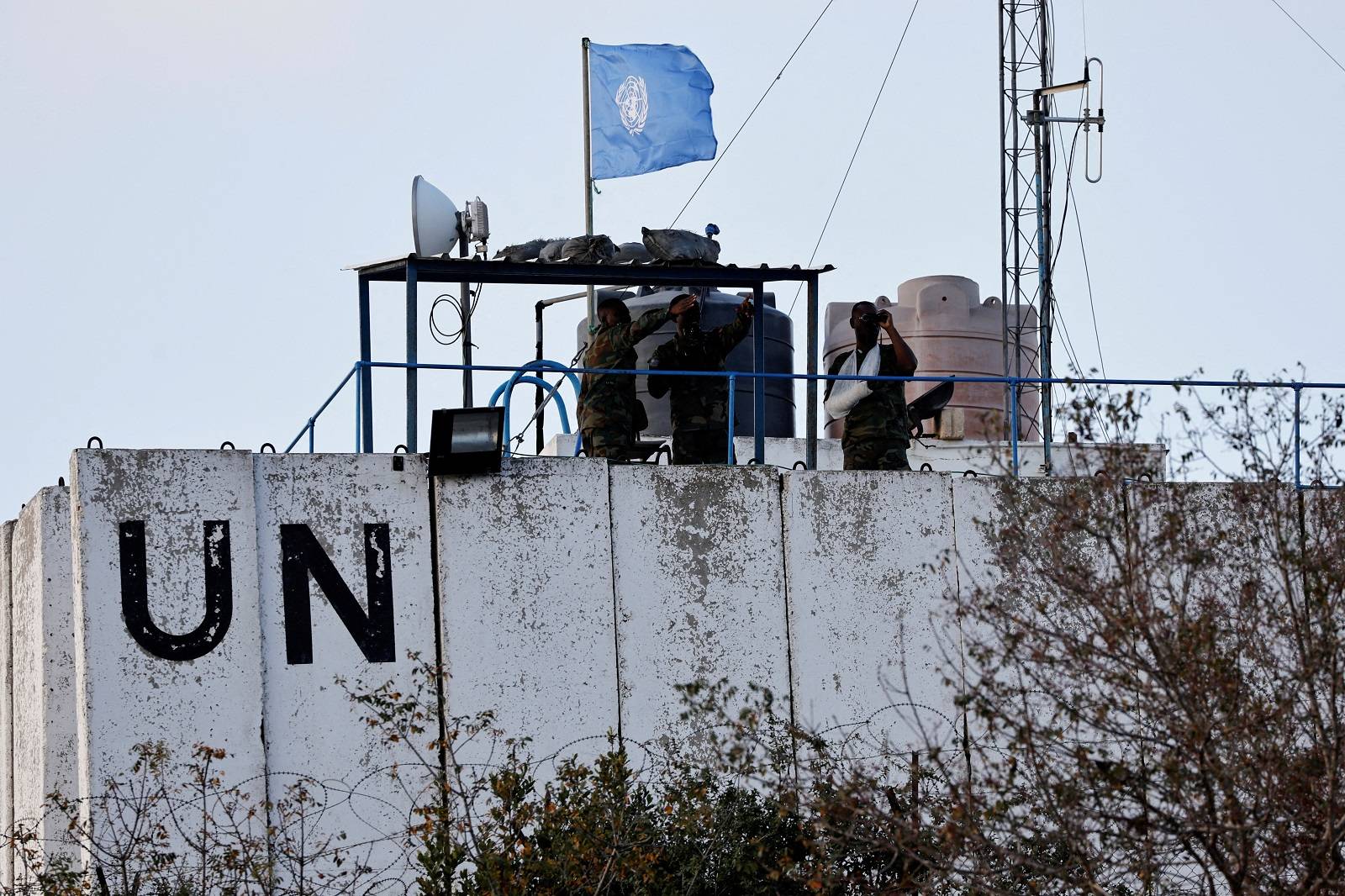
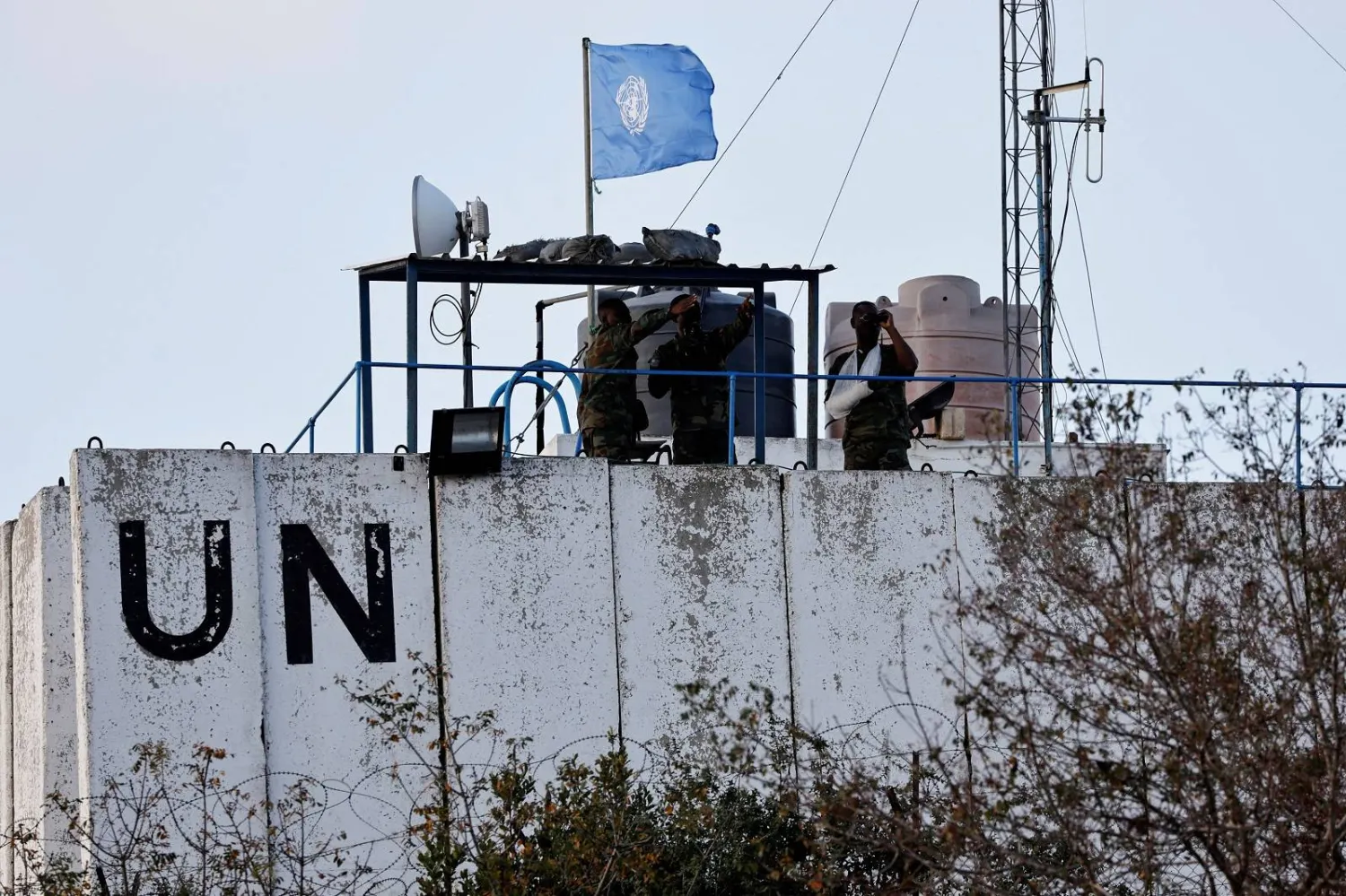
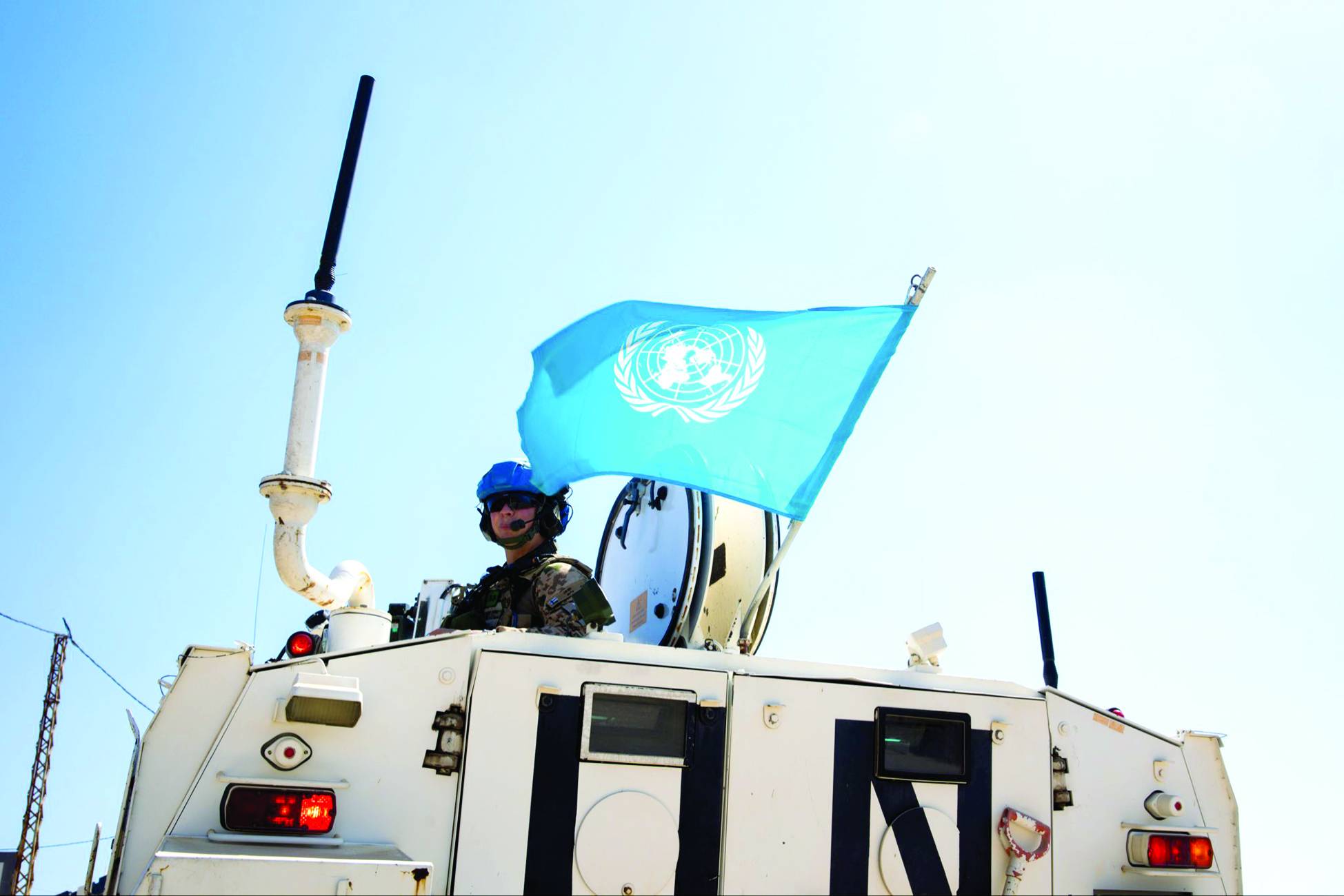
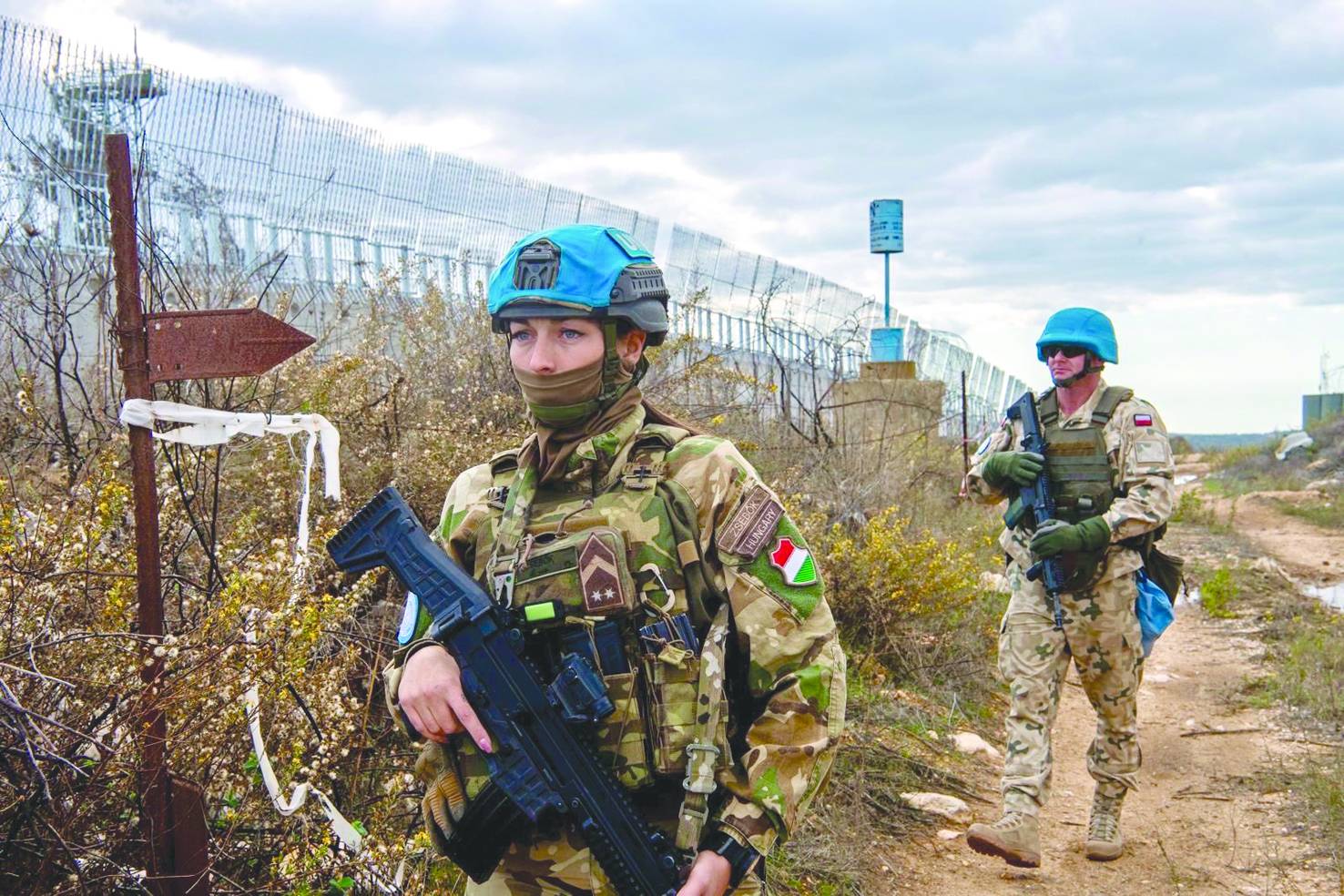
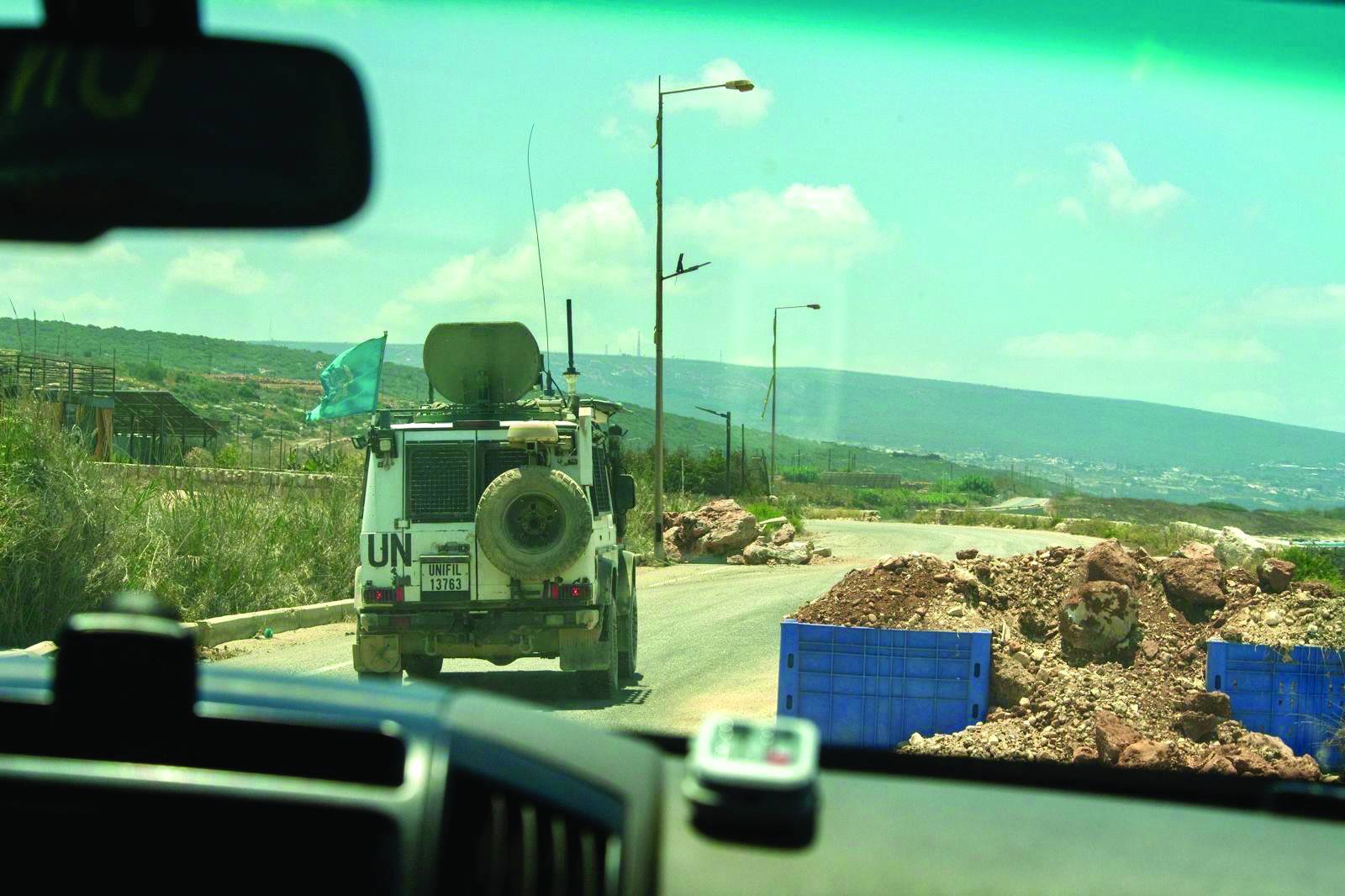
The escalation also affected UN peacekeepers. Kandice Ardiel, spokeswoman for the United Nations Interim Force in Lebanon, said a UN position near Mais al-Jabal was hit, likely by heavy machine-gun fire, sparking a fire at the site and slightly injuring a peacekeeper.

UNIFIL said it had opened an investigation and reminded all parties of their obligation to ensure the safety of peacekeepers at all times.


Syria Foils Weapons Smuggling Attempt Near Lebanese Border

A photo released by Syrian authorities shows weapons they said were intended to be smuggled across the border into Lebanon. (Rif Dimashq Media Directorate)
TT

Syria Foils Weapons Smuggling Attempt Near Lebanese Border

A photo released by Syrian authorities shows weapons they said were intended to be smuggled across the border into Lebanon. (Rif Dimashq Media Directorate)

Syrian authorities announced on Saturday the seizure of a shipment of weapons allegedly prepared for smuggling across the Syrian-Lebanese border, amid rising tensions along the frontier.

The Rif Dimashq Media Directorate said the weapons were confiscated in the al-Nabk area of the Qalamoun region, north of Damascus, but provided no details about the quantity or type of arms.

In a brief statement, the Internal Security Directorate said the shipment had been intended for smuggling into Lebanon.

Officials said the operation was part of ongoing efforts to combat organized crime and curb cross-border trafficking.

The seizure comes as concerns grow along the Syrian-Lebanese border following the Syrian army’s decision to reinforce its deployment along areas with both Lebanon and Iraq in a bid to tighten security and prevent the smuggling of weapons and narcotics.

Sources in Damascus told Asharq Al-Awsat that Syrian authorities are reviewing all options to address tensions with Hezbollah in border areas.

They said Damascus does not favor intervention, while emphasizing Syria’s support for Lebanon’s stability and the authority of the Lebanese state.

The sources added that Syria’s position remains aligned with that of Arab and regional countries supporting efforts to contain the current escalation.

Meanwhile, Hassan Abdul Ghani, spokesman for the Syrian Ministry of Defense, denied reports suggesting Syria intends to intervene militarily in Lebanon.

In an interview with a Lebanese television channel, he said the military buildup near the Lebanese border was a precautionary defensive measure rather than an offensive deployment.

Since the eruption of the US-Israel war on Iran and Israel intensified strikes against Hezbollah in Lebanon, Syrian President Ahmed al-Sharaa has reiterated Syria’s support for Lebanon’s stability and security, backing the Lebanese government’s efforts to restore sovereignty and strengthen state authority.

During a three-way phone call earlier this week with French President Emmanuel Macron and Lebanese President Joseph Aoun, al-Sharaa stressed the importance of opening a new chapter in Syrian-Lebanese relations based on cooperation and coordination between the two countries, reported the Syrian state news agency SANA.

Israel had previously destroyed many Hezbollah positions and weapons depots in Syria before the fall of Bashar al-Assad’s regime in 2024, including stockpiles in border areas of Homs and Damascus countryside.

Local sources say weapons were looted from former regime barracks and militia caches following the collapse of Assad’s rule.

While Syrian authorities continue campaigns to collect weapons and restrict them to state control, armed groups and criminal networks are reportedly picking up war remnants left behind in abandoned military sites.

The danger posed by such remnants has been underscored by recent incidents. Earlier this month, a missile left over from the former regime exploded in a metal workshop in the industrial zone of Sweida while it was being dismantled, killing five people and injuring three.

On Friday, two separate explosions linked to war remnants occurred in Homs and Aleppo. In Homs, more than 31 civilians were injured when a missile exploded inside an abandoned military barracks in the Abbasiya residential district.

In al-Atarib, in western Aleppo province, three civilians, including two children, were killed and eight others wounded when leftover munitions exploded inside a house.


Al-Hamidawi: Iran’s Elusive Man in Iraq

A photo believed to be al-Hamidawi wearing a mask, sunglasses and a head covering during his only public appearance on Nov. 6, 2021.
TT

Al-Hamidawi: Iran’s Elusive Man in Iraq

A photo believed to be al-Hamidawi wearing a mask, sunglasses and a head covering during his only public appearance on Nov. 6, 2021.

Conflicting reports have emerged about the fate of Kataib Hezbollah leader Abu Hussein al-Hamidawi after a strike early Saturday targeted a house linked to the group in Baghdad’s Karrada district.

Some reports said al-Hamidawi was killed in the attack, while others suggested he survived. A video circulated online later appeared to show a man believed to be al-Hamidawi with a head injury.

The incident has again drawn attention to the figure often described as “Iran’s mysterious man in Iraq.”

Despite the influence of Kataib Hezbollah — founded by Abu Mahdi al-Muhandis, the former deputy head of Iraq’s Popular Mobilization Forces (PMF) who was killed in a US strike near Baghdad International Airport in January 2020 — the group’s leadership has long remained shrouded in secrecy.

Although the faction plays a key military role within the PMF and has been linked to attacks targeting US interests in Iraq, its senior figures rarely appear in public and operate under strict security protocols that limit information about them.

Shadowy figure

The name Ahmad Mohsen Faraj al-Hamidawi, better known by the nom de guerre Abu Hussein al-Hamidawi, has been associated with several major developments in Iraq in recent years. Yet reliable details about him remain scarce. Apart from widely circulated images of his father, Mohsen al-Hamidawi, the commander himself has largely remained absent from public view.

Available information indicates al-Hamidawi was born in Baghdad in 1971. His family is believed to originate from the southern province of Maysan, likely moving to the capital in the 1950s or 1960s.

Some reports suggest he comes from a family with influence inside Kataib Hezbollah.

His son, Zaid al-Hamidawi, is widely believed to run the “Abu Ali al-Askari” account on X, which releases statements attributed to the group. His brothers are also said to hold senior roles within the faction.

Sources close to PMF factions say al-Hamidawi maintains strict security measures. He rarely uses mobile phones or electronic devices directly and communicates through trusted aides, with knowledge of his movements restricted to a very small circle.

Despite the secrecy surrounding him, al-Hamidawi has long been described as a key Iranian-aligned figure in Iraq. His role in Kataib Hezbollah has also placed him under US sanctions.

In February 2020, the US State Department designated him a Specially Designated Global Terrorist (SDGT) for leading the group, which Washington classified as a terrorist organization in 2009.

Kataib Hezbollah

Kataib Hezbollah and its leader have been accused by activists from Iraq’s 2019 protest movement of involvement in killings and assassinations of demonstrators.

The group is also widely believed to be responsible for multiple attacks targeting the US Embassy in Baghdad and locations hosting American forces across the country.

Some Shiite political circles regard it as the most powerful Iran-aligned armed faction in Iraq, closely linked to Iran’s Revolutionary Guard Corps.

In November 2023, the US Treasury imposed additional sanctions on leaders of Iraqi armed factions and reaffirmed restrictions on al-Hamidawi as the head of Kataib Hezbollah.

Further sanctions followed in January 2024 targeting members of the group, including his brother Awqad al-Hamidawi, on accusations of providing logistical support and facilitating the group’s financial and operational activities.