


US Tiptoes Through Sanctions Minefield Toward Iran Nuclear Deal

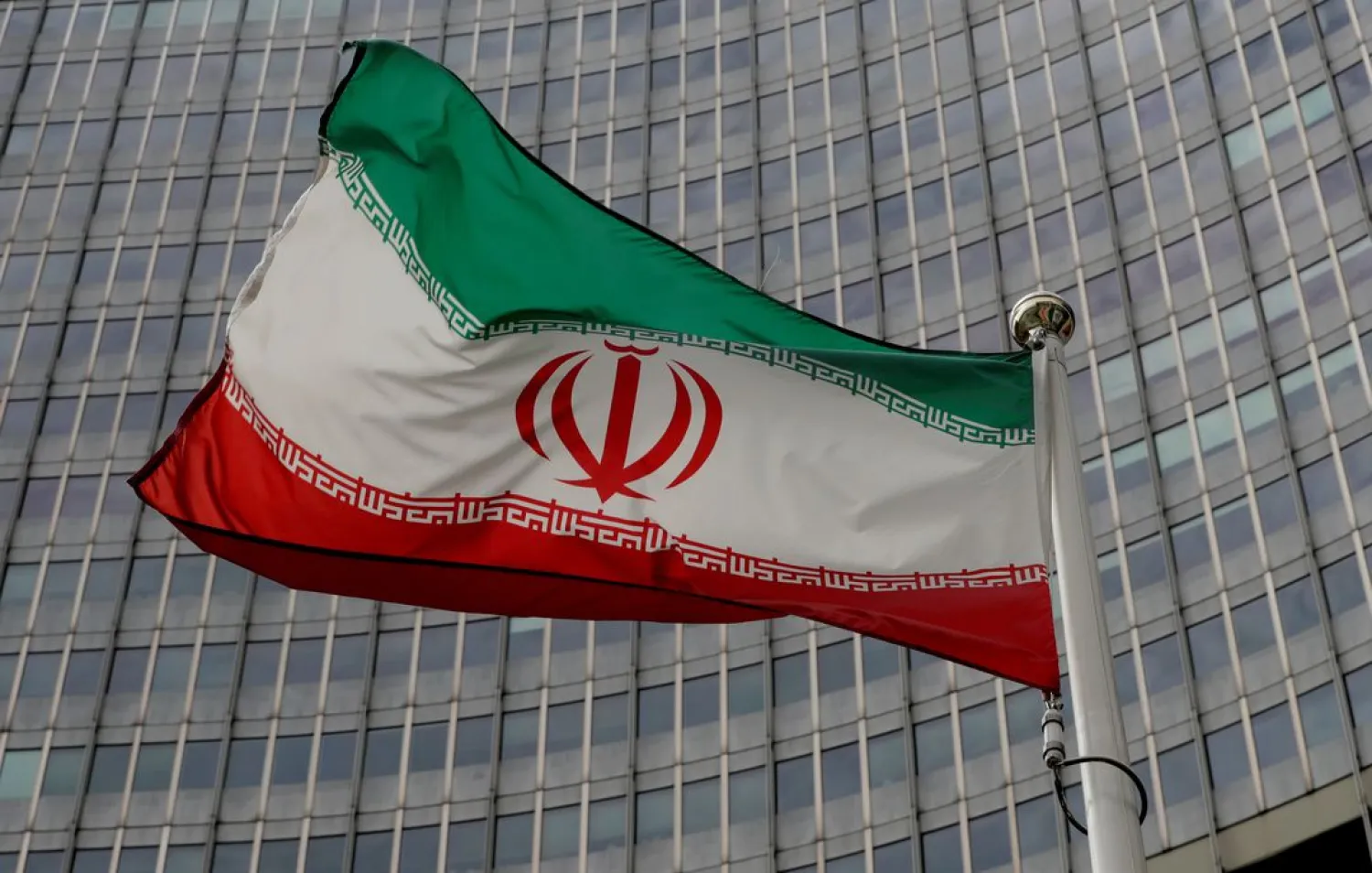
An Iranian flag flutters in front of the International Atomic Energy Agency (IAEA) headquarters in Vienna, Austria, September 9, 2019. (Reuters)
TT

US Tiptoes Through Sanctions Minefield Toward Iran Nuclear Deal

An Iranian flag flutters in front of the International Atomic Energy Agency (IAEA) headquarters in Vienna, Austria, September 9, 2019. (Reuters)

As the United States searches for a path back to the 2015 Iran nuclear deal, it is tiptoeing through a minefield laid by former US President Donald Trump.

The mines are Iran-related sanctions Trump imposed on more than 700 entities and people, according to a Reuters tally of US Treasury actions, after he abandoned the nuclear deal and restored all the sanctions it had removed.

Among these, Trump blacklisted about two dozen institutions vital to Iran's economy, including its central bank and national oil company, using US laws designed to punish foreign actors for supporting terrorism or weapons proliferation.

Removing many of those sanctions is inevitable if Iran is to export its oil, the biggest benefit it would receive for complying with the nuclear agreement and reining in its atomic program.

But dropping them leaves Democratic President Joe Biden open to accusations that he is soft on terrorism, a political punch that may be unavoidable if the deal is to be revived.

The possibility has already drawn fierce Republican criticism.

“It is immoral,” Trump's former Secretary of State Mike Pompeo said last month as he promoted legislation to make it harder for Biden to lift the sanctions on Iran.

John Smith, director of the Treasury's Office of Foreign Assets Control (OFAC) from 2015 to 2018, described Trump's wave of Iran sanctions as “unprecedented in scope in modern American history.”

Targeting Iranian institutions for supporting terrorism or for links to the Iranian Revolutionary Guard Corps (IRGC) has made reviving the deal much harder, said Smith, now a partner at law firm Morrison & Foerster.

“By adding global terrorism, IRGC or human rights abuses to any listing you make it incredibly difficult politically ... to remove those names from the list,” he said. “You can do it, but you face much more potential blowback if you do.”

A US official said Reuters' tally of sanctions imposed by Trump was close to the Biden administration's count, though judgment calls about what to include can yield slightly different totals.

Legitimate or contrived?
The restoration of US sanctions has blighted the Iranian economy, which shrank by 6% in 2018 and by 6.8% in 2019, according to International Monetary Fund data.

Trump, a Republican, withdrew from the deal in 2018, arguing it gave Iran excessive sanctions relief for inadequate nuclear curbs, and he imposed a “maximum pressure” campaign in a failed attempt to force Tehran to accept more stringent nuclear limits.

He also said the agreement had failed to curtail Iran's support for terrorism, backing for regional proxies in Syria, Iraq and Lebanon, and pursuit of ballistic missiles.

Biden wants to restore the pact's nuclear limits and, if possible, extend them while pushing back against what he has called Iran's other destabilizing activities.

US and Iranian officials have begun indirect talks in Vienna seeking a way to resume compliance with the agreement, which Iran, after waiting about a year following Trump's withdrawal, in 2019 began violating in retaliation.

Under the accord, Tehran limited its nuclear program to make it less capable of developing an atomic bomb - an ambition Iran denies - in return for relief from economic sanctions imposed by the United States, European Union and United Nations.

European diplomats are shuttling between the US and Iranian delegations because Tehran rejects direct talks. Officials are trying to strike a deal by May 21 but major obstacles remain. read more

Among these is what to do about sanctions on the Central Bank of Iran (CBI), which was sanctioned in 2012 to block its assets under US jurisdiction. Those sanctions were removed under the nuclear deal and resumed when Trump withdrew.

In September 2019, Trump went further by blacklisting the CBI, accusing it of giving financial support to terrorist groups, effectively barring foreigners from dealing with it.

He also targeted other parts of Iran's oil infrastructure for alleged support for terrorism, including the National Iranian Oil Company (NIOC), the National Iranian Tanker Company, and the National Petrochemical Company.

If Iran is to sell its oil abroad, sanctions lawyers say these companies must get sanctions relief, otherwise they will remain radioactive to foreign firms. US firms are already barred from dealing with them under different sanctions.

Presaging a likely Republican line of attack, Elliott Abrams, the Trump administration's last special envoy for Iran, argued that the sanctions were imposed on legitimate grounds.

“Those were legally and morally sufficient and justifiable designations,” he said. “They were not pulled out of thin air.”

Focus on central bank
A senior US State Department official said the Biden administration does not plan to challenge the “evidentiary basis” on which the Trump administration imposed the sanctions.

In effect, that means it will not argue that these entities did not provide support for terrorism.

Rather, he said, the Biden administration has concluded it is in the US national security interest to return to the nuclear deal, formally called the Joint Comprehensive Plan of Action (JCPOA), justifying the sanctions' removal.

Trump's April 2019 decision to blacklist the IRGC, and its Quds Force foreign paramilitary and espionage arm, as a Foreign Terrorist Organization (FTO) has also complicated matters.

The action marked the first time the United States had formally labeled another nation's military a terrorist group.

In September 2019, OFAC used counterterrorism authorities to target Iran's central bank, which it accused of having provided billions of dollars to the IRGC, the Quds Force and Lebanon's Hezbollah, which Washington has long deemed a terrorist group.

“What I would find particularly objectionable is any move that would change the sanctioning of the IRGC for terrorist activities because the IRGC engages in terrorist activities. It is a clear case,” said Abrams.

The Biden administration, however, does not need to strip the FTO designation from the IRGC in order to remove the related sanctions on the central bank.

The Treasury secretary can reverse any sanctions placed on the central bank under US executive orders, which give the president the ability to impose, or rescind, them at will, former US officials said.

The State Department has said only that if Tehran were to resume compliance with the deal it would remove those sanctions “inconsistent with the JCPOA” without giving details.

“The political heat is going to be, frankly, quite intense,” said Iran analyst Henry Rome of Eurasia Group. “Anything involving the 'T' word in this case is going to be a ready-made talking point to those who oppose a return” to the nuclear deal, he said, referring to “terrorism”.

“The political challenge here is to say, 'The designations may have been legitimate, but we have other foreign policy interests that dictate nevertheless removing them.' That's a tough needle to thread but it's one that they'll have to.”



Earthquake Off Indonesia Topples Buildings, Kills 1 Person and Sets Off Small Tsunami

A man inspects debris at the site of a damaged building following an earthquake in Manado, North Sulawesi province, Indonesia, April 2, 2026. REUTERS/Tonny Rarung
TT

Earthquake Off Indonesia Topples Buildings, Kills 1 Person and Sets Off Small Tsunami

A man inspects debris at the site of a damaged building following an earthquake in Manado, North Sulawesi province, Indonesia, April 2, 2026. REUTERS/Tonny Rarung

An undersea magnitude 7.4 earthquake toppled buildings in parts of northern Indonesia, sent people fleeing from their homes, killed at least one person and generated a small tsunami Thursday.

Strong shaking lasting 10 to 20 seconds was felt in Bitung in North Sulawesi province as well as in Ternate city in neighboring North Maluku province, according to the Disaster Management Agency. The provinces border the Molucca Sea, where the quake was centered.

Initial assessments showed light to severe damage in parts of Ternate, including a church and two houses. In Bitung, damage assessments were still underway, the agency said.

“We had just woken up and suddenly the earthquake hit... we all ran out of the house,” Bitung resident Marten Mandagi said. “The shaking was very strong,”

Indonesia's Search and Rescue Agency reported a 70-year-old woman died in a building collapse in North Sulawesi's Manado city and another resident was injured. At least three injured people were hospitalized in Ternate, The Associated Press said.

Videos released by the rescue agency showed damaged structures and flattened houses, while television stations broadcast scenes of people rushing outside and gathering in streets to avoid the risk of collapsing buildings.

Dozens of aftershocks followed, including one of 6.2 magnitude. Authorities are continuing to gather information on damage and possible victims from multiple areas, particularly remote villages, as they work to assess the scope of the disaster.

Tsunami waves up to 75 centimeters (30 inches) above normal tides were recorded at several monitoring stations around the Molucca Sea coast. Indonesia’s meteorological agency lifted its tsunami warning hours after the quake, and the Philippine Institute of Volcanology and Seismology said there was no destructive threat to the country, which is north of the quake’s epicenter.

Indonesia, a vast archipelago of more than 280 million people, sits on major seismic faults and is frequently hit by earthquakes and volcanic eruptions.


Australia PM Says Iran War Objectives Met, 'Not Clear' What More to Achieve

Australian Prime Minister Anthony Albanese warned the months ahead "may not be easy" because of the Middle East war. William WEST / AFP/File
TT

Australia PM Says Iran War Objectives Met, 'Not Clear' What More to Achieve

Australian Prime Minister Anthony Albanese warned the months ahead "may not be easy" because of the Middle East war. William WEST / AFP/File

Australian Prime Minister Anthony Albanese said on Thursday the original aims of the war in Iran had been met and it was not clear what more remained to be achieved.

Albanese called for de-escalation, noting that US-Israeli attacks had degraded Iran's air force, navy and military industrial base, reported AFP.

"Now those objectives have been realized it is not clear what more needs to be achieved or what the end point looks like," he said during a speech in the capital Canberra.

"What is clear is that the longer the war goes on the more significant the impact on the global economy will be."

Australia, reliant on imported fuel and holding roughly 37 days' supply of petrol, has sought to soften the impact of soaring prices by cutting petrol taxes and pledging $680 million in loans to businesses.

Albanese has previously said Australia is not a participant in the war.

Defense Minister Richard Marles said Thursday Canberra was in talks with Britain and France on how it can contribute to opening the Strait of Hormuz, through which one-fifth of the world's oil passes in peacetime.

Iran has effectively closed the vital strait since US-Israeli strikes on February 28 sparked a larger regional conflict, causing global oil and gas prices to soar.

"We have an interest in the Strait of Hormuz being open. It is a function of when conditions allow any of these steps to take place. And those conditions don't exist right now," Marles said in an interview with Sky News Australia.

Marles said Australia will attend a multi-nation meeting convened by Britain.

Albanese's comments Thursday came as US President Donald Trump gave a speech laying out his view of the war, vowing two to three more weeks of "extremely hard" strikes against Iran.

Trump said the United States was aiming to crush Iran's military, end the Iranian republic's support for regional armed groups and prevent it from obtaining a nuclear bomb.

"I'm pleased to say that these core strategic objectives are nearing completion," Trump said in a 19-minute televised speech.


Iran Fires Missiles at Israel after Trump Threatens Weeks of Strikes

US President Donald Trump arrives to speak at a televised address on the conflict in the Middle East from the Cross Hall of the White House in Washington, DC on April 1, 2026. (Photo by Alex Brandon / POOL / AFP)
TT

Iran Fires Missiles at Israel after Trump Threatens Weeks of Strikes

US President Donald Trump arrives to speak at a televised address on the conflict in the Middle East from the Cross Hall of the White House in Washington, DC on April 1, 2026. (Photo by Alex Brandon / POOL / AFP)

Israel said it came under Iranian missile fire on Thursday after US President Donald Trump threatened to bomb the Iranian republic into the "Stone Ages" with heavy strikes in the next two to three weeks.

In a speech from the White House, Trump sought to reassure war-weary Americans that the military campaign that began on February 28 was coming to an end, vowing "extremely hard" strikes against Iran.

"Thanks to the progress we've made, I can say tonight that we are on track to complete all of America's military objectives shortly, very shortly," Trump said.

The war's "core strategic objectives are nearing completion", he said, warning however that "over the next two to three weeks, we are going to bring them back to the Stone Ages, where they belong".

His address came as Britain was set to host a meeting Thursday with about 35 countries on how to reopen the strategic Strait of Hormuz that Iran has effectively blocked without a deal to end the war.

The US-Israeli strikes on Iran that started the war killed senior officials in the Iranian republic's military forces and government, including supreme leader Ali Khamenei, whose son has since replaced him.

Trump, whose approval rating is sinking over the war, indicated that talks may be possible with Iran's new leadership, which he described as "less radical and much more reasonable" than its predecessor.

He warned that if no agreement with Tehran was struck, Washington had "our eyes on key targets including the country's electric generating plants".

Despite Trump's threats, Israel's military said Iran twice fired missiles at the country after his address, part of four barrages detected within six hours on Thursday.

Iran has dismissed Washington's ceasefire overtures, describing US demands to end the conflict as "maximalist and irrational".

"Messages have been received through intermediaries, including Pakistan, but there is no direct negotiation with the US," said Iranian foreign ministry spokesman Esmaeil Baqaei, quoted by the ISNA news agency on Thursday.

Pro-government Iranians in the capital Tehran were also defiant at the funeral of a Revolutionary Guards naval commander who was killed in an Israeli strike.

"This war has lasted a month. However long it takes, we will continue," said Moussa Nowruzi, a 57-year-old pensioner.

"We will resist until the end."

- Gulf protection -

Trump also assured regional allies Israel and Gulf nations that Washington would protect them from Iranian retaliatory fire, as more attacks were reported across the region on Thursday.

He addressed Israel, Saudi Arabia, Qatar, the UAE, Kuwait and Bahrain -- all battered by Iranian drone and missile attacks -- that the United States "will not let them get hurt or fail in any way, shape or form".

As Israel prepared for the Passover holiday, which began at sunset Wednesday, air raid sirens sounded repeatedly in the Tel Aviv area.

On Thursday, the United Arab Emirates said its air defenses were again responding to missile and drone "threats".

The Revolutionary Guards also confirmed hitting an oil tanker in the Gulf they said belonged to Israel. A British maritime security agency said the vessel was struck off Qatar, reporting damage but no casualties.

In Lebanon, militant group Hezbollah said its fighters launched drones and rockets at northern Israel on Thursday, with the Israeli military's Home Front Command saying air raid sirens were activated across the border.

A day earlier, Israel killed a top Hezbollah commander, two sources told AFP, in a Beirut strike that the Lebanese health ministry said killed seven people.

Authorities in Lebanon say Israeli attacks have killed more than 1,300 people in the country since war erupted between Israel and Iran-backed Hezbollah on March 2.

- Hormuz 'courage' -

Hours before Trump's address, Iran's President Masoud Pezeshkian asked the American people whether the conflict was truly putting "America First", accusing Washington of war crimes and of being influenced by Israel.

Trump had claimed earlier Wednesday that Iran's president had sought a ceasefire, but said the Iranian republic must first reopen the Strait of Hormuz -- which he said in his address would happen "naturally" once the conflict ended.

In his speech he called for countries that receive oil through the Strait of Hormuz to show "courage" and seize the key waterway.

On Thursday, the British-led virtual meeting of dozens of nations will "assess all viable diplomatic and political measures that we can take to restore freedom of navigation" in the strait, Prime Minister Keir Starmer said.

But Trump's remarks did little to calm energy markets rocked by the waterway's de facto closure, with oil prices surging Thursday. Brent jumped more than four percent to more than $105, while West Texas Intermediate climbed three percent to hit around $103.

One-fifth of global oil normally passes through the Strait of Hormuz.

Iran's Revolutionary Guards vowed Wednesday to keep it shut to the country's "enemies".

After a wave of anti-government demonstrations that crested in Iran in January over economic grievances, some Iranians still privately long for political change, particularly after Trump himself had promised to come to their aid.

"He betrayed the Iranians," said one woman in her 30s, requesting anonymity for security reasons.

Sounding resigned, she added she no longer expects a change of government, but "if they could grant us more freedoms, we could live with that".