

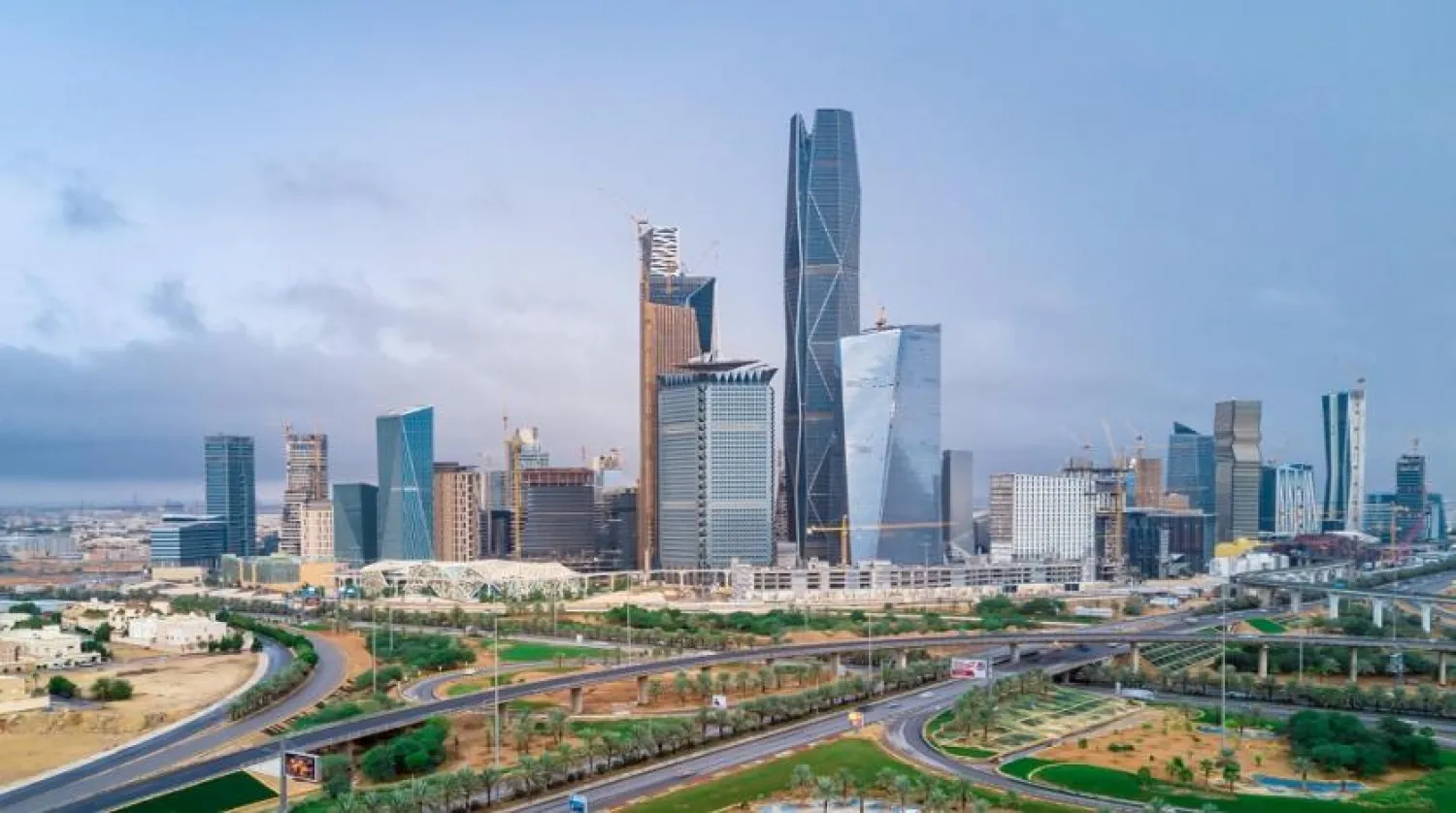

Saudi Arabia Tops Consumer Confidence in Local Economy Trends Index

A general view of Riyadh, Saudi Arabia. (SPA)
TT

Saudi Arabia Tops Consumer Confidence in Local Economy Trends Index

A general view of Riyadh, Saudi Arabia. (SPA)

Saudi Arabia topped the "Consumer Confidence in Local Economy Trends" index compared to the 23 countries, according to the Global Consumer Confidence Index: May 2021 issued by Ipsos.

The index includes consumers’ feedback on the current and future status of the local economy and their assessment of their personal financial conditions and investment.

Ipsos relies on various sectors including commerce, industry, retail, banks as well as governments, in general, to study the changes in this indicator while making economic and investment decisions, including the Kingdom’s National Center for Measuring the Performance of Public Institutions (ADAA).

The Kingdom also ranked second globally among 23 countries in the general index of "consumer confidence" for the same month, in addition to achieving second place in the results of the "personal financial capabilities" index, and second place in the "investment confidence" index.

In a statement issued Thursday, ADAA explained that the "Global Consumer Confidence Index" depends in its assessment on four main axes: consumer confidence in "personal financial capabilities, local economic trends, investment climate, and general job security."

The National Center for Measuring the Performance of Public Institutions monitors and follows up on those indicators that highlight the Kingdom’s progress at the international level and enable decision-makers to develop performance and global competitiveness, through international performance platforms.

This enables public agencies to follow up on the Kingdom’s performance as opposed to the performance of more than 217 countries in more than 700 global measurement indicators.

Last week, Saudi Arabia ranked first worldwide in the response of government as well as of entrepreneurs to the COVID-19 pandemic, while the Kingdom stood 7th in entrepreneurial progress worldwide, according to the Global Entrepreneurship Monitor (GEM) report for 2020/2021.

The report was issued in cooperation with Prince Mohammad bin Salman College of Business and Entrepreneurship (MBSC) and Babson Global Center for Entrepreneurial Leadership (BGCEL).

The Kingdom jumped to first place worldwide at the ease of starting-up business index from the 22nd position, according to the report, which reflects the essential reforms in the entrepreneurship environment to business start-up procedures.

The Kingdom also ranked first in terms of providing good opportunities to start a business, after ranking sixth earlier.



War in Iran Is Causing Biggest Energy Crisis in History, IEA Says

Commercial vessels are seen off the coast of Dubai on April 20, 2026. (AFP)
TT

War in Iran Is Causing Biggest Energy Crisis in History, IEA Says

Commercial vessels are seen off the coast of Dubai on April 20, 2026. (AFP)

The ‌conflict between Iran and the United States and Israel is creating the worst energy crisis ever faced by the world, the head of the International Energy Agency (IEA) said on Tuesday.

"This is indeed the biggest crisis in history," Birol told France Inter radio in ‌an interview ‌broadcast on Tuesday.

"The crisis ‌is ⁠already huge, if ⁠you combine the effects of the petrol crisis and the gas crisis with Russia," he added.

The war in the Middle East has choked up maritime ⁠traffic in the Strait of ‌Hormuz, which ‌is a conduit for a fifth ‌of global oil and liquefied natural ‌gas flows.

It has also come on top of the effects of Russia's war with Ukraine, which had already ‌severed Russian gas supplies to Europe.

Birol had said earlier ⁠this ⁠month that he viewed the current situation in global energy markets as worse than previous crises in 1973, 1979 and 2022 combined.

In March, the IEA agreed to release a record 400 million barrels of oil from strategic stockpiles to combat rising oil prices caused by the US-Israeli war with Iran.


Oil Falls on Expectations US-Iran Talks Likely to Proceed, Opening Supply

 A drone view shows oil tankers at Petrobras distribution terminal operated by Transpetro, a Petrobras subsidiary responsible for oil and gas transportation in Sao Sebastiao, in the state of Sao Paulo, Brazil, April 20, 2026. (Reuters)
A drone view shows oil tankers at Petrobras distribution terminal operated by Transpetro, a Petrobras subsidiary responsible for oil and gas transportation in Sao Sebastiao, in the state of Sao Paulo, Brazil, April 20, 2026. (Reuters)
TT

Oil Falls on Expectations US-Iran Talks Likely to Proceed, Opening Supply

 A drone view shows oil tankers at Petrobras distribution terminal operated by Transpetro, a Petrobras subsidiary responsible for oil and gas transportation in Sao Sebastiao, in the state of Sao Paulo, Brazil, April 20, 2026. (Reuters)
A drone view shows oil tankers at Petrobras distribution terminal operated by Transpetro, a Petrobras subsidiary responsible for oil and gas transportation in Sao Sebastiao, in the state of Sao Paulo, Brazil, April 20, 2026. (Reuters)

Oil prices fell over $1 on Tuesday, reversing gains in the previous session, on expectations peace talks between the US and Iran will take place this week and lead to more supply to flow from the key Middle East producing region.

Brent crude futures declined $1.04, or 1.1%, at $94.44 a barrel at 0600 GMT. US West Texas Intermediate (WTI) for May fell $1.66, or 1.9%, to $87.95. The May contract expires on Tuesday and the more-active June contract was down $1.24, or 1.4%, at $86.18.

Both benchmarks surged on Monday, with Brent up 5.6% and WTI up 6.9%, after Iran again ‌shut the ‌Strait of Hormuz, closing the key oil transport artery, and the ‌US ⁠seized an Iranian ⁠cargo ship as part of its blockade of the country's ports.

Still, investors are focusing on the likelihood talks this week will result in the extension of the existing ceasefire or a final agreement, though the chance of further conflict and disruptions to oil flows remains.

"While energy markets popped higher yesterday following Iran's decision to reverse its opening of the Strait of Hormuz, they're still trading in a manner which suggests optimism over US-Iran talks," said ING analysts in a note.

"But ⁠we believe markets are underpricing the ongoing supply disruption. Optimism appears ‌to be clouding the reality of the supply shock."

Iran ‌is weighing participation in peace talks in Pakistan, a senior Iranian official told Reuters on Monday, following Islamabad's ‌efforts to end the US blockade.

The blockade has posed a major hurdle to ‌Tehran rejoining peace efforts, with the current two-week ceasefire set to expire this week.

"We continue to lean toward an MOU being signed and/or the ceasefire being extended this week, potentially evolving into a broader agreement," Citi analysts said in a note. "That said, we remain prepared to pivot toward a more protracted disruption scenario ‌should negotiations falter this week."

Underscoring the uncertainty around the talks, the Iranian official stressed that no decision has been made to ⁠attend, as Iranian Foreign ⁠Minister Abbas Araqchi said "continued violations of the ceasefire" by the US is a hindrance to further negotiations.

Separately, Iran's top negotiator and Speaker of Parliament Mohammad Baqer Qalibaf reiterated that Tehran would not negotiate under threats.

Shipping activity through the Strait of Hormuz, a corridor for about one-fifth of the world's oil supply, remained limited on Monday.

If disruptions to the strait persist for another month, total losses could rise to about 1.3 billion barrels, with prices likely near $110 a barrel in the second quarter of 2026, Citi said.

The higher prices caused by the closure of the strait have cut oil demand by about 3% so far, analysts at Societe Generale said in a client note.

The risk is "skewed toward larger losses the longer normalization is delayed," it said, adding it expects "full normalization" to supply only by late 2026.


Iran War Fuel Hike Adds $100 to Long-Haul Flight Cost, Study Says

A man walks past parked Lufthansa aircraft at the airport as Lufthansa pilots are on a two-day strike, in Frankfurt, Germany, Thursday, March 12, 2026. (AP)
TT

Iran War Fuel Hike Adds $100 to Long-Haul Flight Cost, Study Says

A man walks past parked Lufthansa aircraft at the airport as Lufthansa pilots are on a two-day strike, in Frankfurt, Germany, Thursday, March 12, 2026. (AP)

Disruption to global oil supplies from the Iran war has added more than $100 to the price of long-haul flights from Europe, a cost likely to trigger higher ticket prices, campaign group Transport & Environment (T&E) said.

The rise in jet fuel prices has increased the average fuel cost by 88 euros ($104) for each passenger on long-haul flights leaving Europe and 29 euros on flights within Europe, T&E said.

Its analysis compared prices as of April 16, with those just before the US and Israeli war with Iran began on February 28.

Jet fuel ‌for a ‌flight from Barcelona to Berlin would be ‌26 euros ⁠more expensive per ⁠passenger, while a long-haul trip from Paris to New York would cost 129 euros more in fuel, T&E estimated in its analysis published on Tuesday.

European airlines are preparing for a challenging spring and summer, with jet fuel prices having risen to well over $100 a barrel since the Iran war began and concern growing that shortages could ⁠lead to flight cancellations. The European Union is set ‌to respond with guidelines on ‌managing limited jet fuel supply on Wednesday.

T&E calculated the average fuel burn ‌on all flight routes departing from Europe, and divided this by ‌the number of departing passengers, to calculate how much the fuel price spike would add to the cost per person.

Airline executives from carriers including Lufthansa, Ryanair and Air France-KLM said in March that they were likely ‌to pass on higher fuel costs to consumers if the Strait of Hormuz remained closed longer-term.

T&E ⁠said its ⁠calculations showed the extra costs from the fuel price spike were far bigger than the costs airlines face from complying with EU climate change policies.

"The Middle East crisis proves that our real vulnerability is a tank filled with foreign oil, not the laws designed to fix it," said Diane Vitry, director of aviation at T&E.

Airlines have called for a rollback of some EU climate policies, including a 2030 mandate to use synthetic green jet fuel as well as a review of upcoming carbon pricing rules.

As part of its package, the EU is set to push for energy independence through greater investments in green jet fuel.