

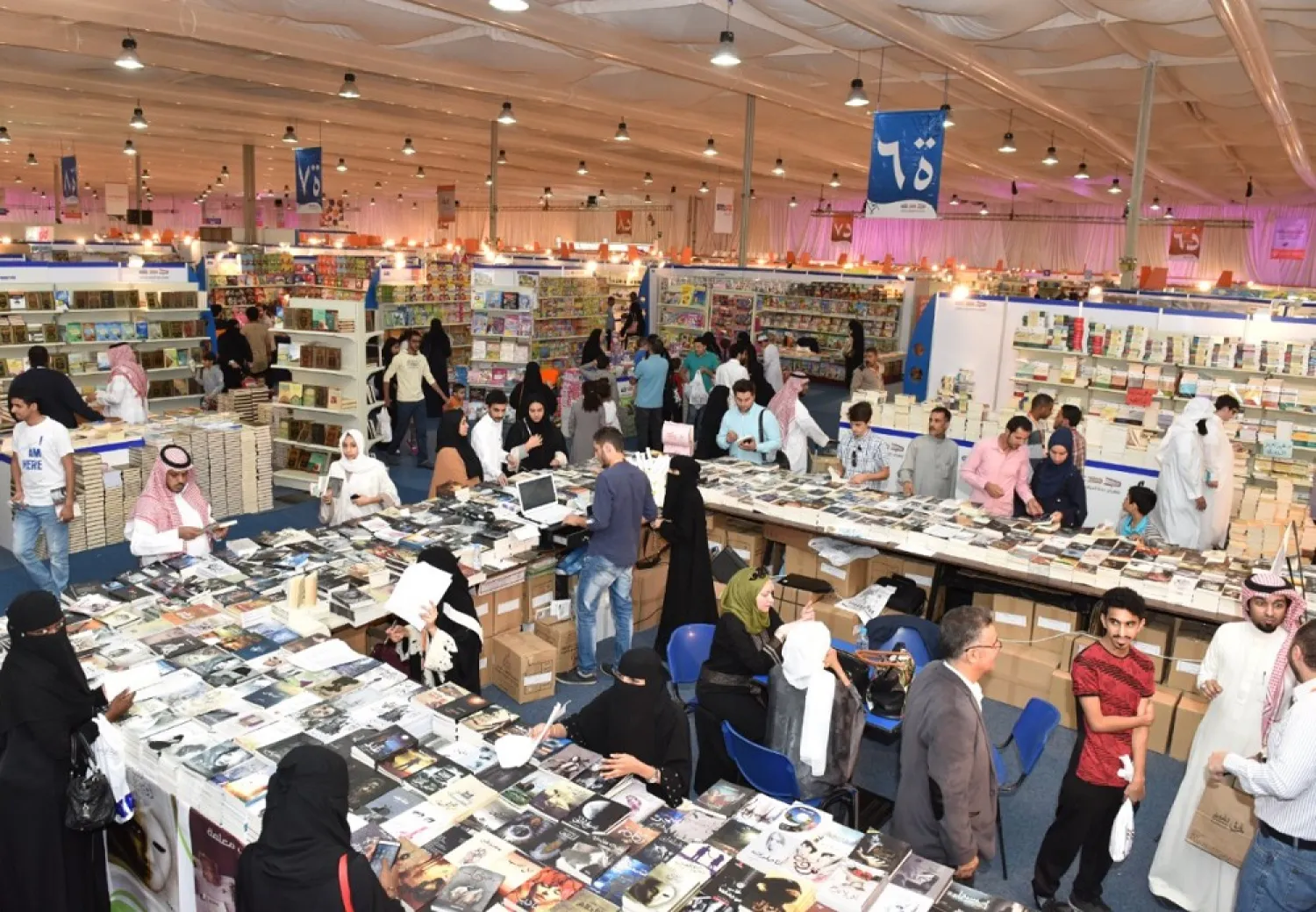

Publishers, Writers Hail Saudi Arabia's Decision to Loosen Censorship Restrictions

Saudi Arabia has ended the complex censorship on books. (SPA)
TT

Publishers, Writers Hail Saudi Arabia's Decision to Loosen Censorship Restrictions

Saudi Arabia has ended the complex censorship on books. (SPA)

Saudi Arabia has ended the complex censorship on books in response to many publishers, writers, and cultural enthusiasts who have requested and awaited this decision for decades. The Kingdom has launched the direct release service for the written content including books, e-books, and publications. The requests for the release services are estimated at 61 percent abroad, and 39 percent locally.

The General Commission for Audiovisual Media (GCAM) announced on June 19, that according to the new decision, all the books, publications and written content will be accessible in the country right after their issue.

GCAM said in its statement that “Saudi Arabia is among the first countries in the region to provide the direct release service for the written content in the private sector. The beneficiaries can apply for a direct release of a foreign publication via the commission's platform dedicated to electronic permissions, provided that they abide by the required terms and conditions. The new service covers the traditional and e-books.”

The commission expected the direct releases in the first year of the service launch to hit 300,000 titles, stressing that the speed of release will allow everyone to access the publications on time, once they are issued. It also suggested that the new amendments will positively affect the e-trade and publishing sectors, in addition to facilitating the release process for writers, publishers, and distributors, and shortening the waiting period. It will also encourage investors to engage in the writing, publishing, and distribution industry, as well as boosting the e-book trade sector, and enriching the Saudi distribution outlets with unique contents right after their release. The decision will provide a direct support for the Saudi publishing houses, which have long suffered from unequal competition, as well as putting an end to content hacking, fraud and infiltration of users to global stores.

Asharq Al-Awsat explored the opinions of some publishers, and writers inside and outside Saudi Arabia about the news. They hailed the new unprecedented decision, but also called for a new mechanism that unifies the concerned authorities and publishing permissions in order to facilitate the direct release procedures without bureaucracy, and multiple permission authorities, which usually complicate and prolong the release process.

Dr. Mohammed al-Mushawah, founder and manager of Al Thuluthia publishing house in Riyadh, said publishers and writers should be given the right to publish.

“The decision taken by the Ministry of Media to approve the direct release of e-books, and facilitate its procedures is a major step that we, as publishers, have awaited for years. It is known among readers, publishers, and writers that the publishing releases are the hardest step in many countries,” he added.

“The old publishing system that gave the ministry all the provisions to give the releases for books printed inside and outside the country, the tough restrictions, and long release process, have pushed many writers away from the industry despite the changes that took place in the past two years,” he stated.

“Today, we call the ministry to adopt new publishing mechanisms that meet the great technological developments in Saudi Arabia. It is also important to consider and apply the distant censorship, as long as the writer and publisher pledge to handle the consequences of their works,” he continued.

“The direct release permissions that were given to some publishers lately, according to the ministry, will contribute to alleviating responsibilities on censorship authorities. We know that the concerned censorship bodies including the ministry of media are linked to tens of other authorities like Dar al-Iftaa, the Health Ministry, and King Abdulaziz Foundation for Research and Archives, and each gives the permissions according to its specialty,” he noted.

“I believe that this structure should be reviewed, and the direct release for writers and publishers should be enabled, as long as they can handle their responsibilities.”

“It's also important to shed lights on another experience, the literary clubs, which are not subject to censorship, their books don't need the media ministry's permission, and can benefit from the so-called distant censorship of books,” al-Mushawah said.

“We believe this step would have a great effect on the Saudi publishing market, considered the biggest in the Arab world despite the obstacles. We hope the media ministry to consider further updates for the censorship system, and to reach a happy ending for the book censorship matter, whether for local or foreign publications, and for the traditional and e-books, so we can keep up with this huge developing industry. The distant censorship should be activated, accompanied with a legal accountability,” he stressed.

“We live in a state of institutions and law, and it's urgent to ease the responsibilities on some authorities, instead of having to present each new title to tens of authorities for review.”

Mohammad al-Farih, manager of Al Abikan House for publishing and translation, hailed the ministry’s decision as “very good news.”

“It is daring and advanced, and will definitely lead to significant leap when it comes to cutting the former long procedures. However, the decision is still incomplete, and does not fulfill the aspirations of Saudi publishers and distributors, especially regarding changing the current form and methods of release procedures, which take weeks sometimes, and could interfere with the provisions of other sectors, which increases the complexity and time of getting a release,” he remarked.

“I totally believe that the update, renewal, replacement of some traditional systems, and conveying advancement is no more a luxury, but a duty that must be accomplished in line with our accelerating time. There is no more room for the same old thinking that consumed the time and efforts of publishers, observers, and the media ministry's employees,” he added.

“Some publishers, distributors, and workers in the writing and publishing industry may agree with me when I say that carrying out a pyramidal change to the publishing system is the best and most efficient solution to meet this age's needs. The responsibility of censorship in this field should be attributed to publishers and the industry workers alone, while focusing the role of government institutions and decision makers on law making, legislation, and monitoring to keep up with the digital age.”

“We must have the necessary legislations for the management, permission, and publishing of all types of digital books, in addition to the content targeting people with special needs, like those with visual impairments,” he urged.

“These types of books have become widespread in our age, but still don't have clear permission terms in the ministry's system and regulations. We hope the recent decision, which is very important, to be followed by other decisions that support and boost the publishing, translation, writing, and distribution movement, which has long suffered between the hammer of piracy and the anvil of distribution.”

Researcher and historian Dr. Badr bin Saleh al-Wahiby, who boasts many documented writings, and had to live many permission battles to publish his works, saw that cancelling pre-censorship on books is not sufficient in light of the Saudi Vision 2030.

Release permissions should be attributed to publishing houses instead of the many authorities that handle this responsibility today, because it would help writers, and publishers, and avoid the lost and wasted opportunities, he explained. Such a measure would also boost the publishing market in Saudi Arabia, and book fairs.

Rabih Kesserwan, founder and general manager of “Al Maaref Forum” in Beirut, said the decision to update censorship on books could lead to a renaissance in the publishing industry in the Kingdom.

“Making the mission easier and more accessible will encourage writers towards more productions, as they won't be waiting long to see their works in the markets. In the past, Saudi writers had to publish their works outside the Kingdom, send them to Saudi Arabia through a foreign publisher, and then a local distributor present them for censorship and review, and walk a long legal path before the book reaches the Saudi reader.”

“The increases of local works in cooperation with Saudi publishers will definitely double the number of published books inside the Kingdom, and would have a bigger effect, as it would motivate more writers to engage. The more the publishing sector prospers, the more the writers work, and so on.”



Geisha Spectacle in Japan’s Kyoto Celebrates Arrival of Spring

 Maiko (apprentice geisha) take part in a press interview ahead a rehearsal for the annual "Miyako Odori" -- which means "capital city dance" in Japanese, at the Gion Kobu Kaburenjo in Kyoto on March 31, 2026. (AFP)
Maiko (apprentice geisha) take part in a press interview ahead a rehearsal for the annual "Miyako Odori" -- which means "capital city dance" in Japanese, at the Gion Kobu Kaburenjo in Kyoto on March 31, 2026. (AFP)
TT

Geisha Spectacle in Japan’s Kyoto Celebrates Arrival of Spring

 Maiko (apprentice geisha) take part in a press interview ahead a rehearsal for the annual "Miyako Odori" -- which means "capital city dance" in Japanese, at the Gion Kobu Kaburenjo in Kyoto on March 31, 2026. (AFP)
Maiko (apprentice geisha) take part in a press interview ahead a rehearsal for the annual "Miyako Odori" -- which means "capital city dance" in Japanese, at the Gion Kobu Kaburenjo in Kyoto on March 31, 2026. (AFP)

Against a backdrop of blooming cherry blossoms, a group of geishas elegantly shuffle onto a stage in Japan's Kyoto city to begin a centuries-old performance celebrating the arrival of spring.

Dressed in sky blue kimonos emblazoned with flowers, the dancers twist and twirl in unison in front of hundreds of spectators eager to see the annual "Miyako Odori" in the nation's spectacular ancient capital.

Geishas, known as geikos in Kyoto, and apprentices called maikos have been donning elaborate costumes and fluttering fans since the Miyako Odori -- or "capital city dance" -- first started in 1872.

"Just as cherry blossoms bloom when spring approaches, the Miyako Odori is a spring tradition in Kyoto," Kyoko Sugiura, head of the Yasaka Nyokoba Gakuen, a school for geishas in Kyoto's Gion district, told AFP.

In Japanese, the word geisha means "person of the arts", and can refer to a woman or man trained in traditional Japanese performing arts.

In the popular imagination geishas are often confused with courtesans but their work as trained masters of refined old artforms does not involve selling sex.

Their performances are usually small and private, and take place at high-class establishments which operate a no first-time customer policy.

"That's why it is often thought of as a very exclusive world," Sugiura said.

"But the Miyako Odori is a one-hour show in which geisha and maiko have the opportunity to showcase the arts they practise daily," she said.

"Anyone and everyone with a ticket can enjoy the show."

The Miyako Odori began soon after Kyoto hosted Japan's first national expo -- an effort to revitalize the western city following the relocation of the capital to Tokyo in 1869.

The format of the performance has not changed much, Sugiura explained, although the music and dance moves are sometimes switched up.

Maria Superata, a geisha expert who has worked with them as an interpreter, explained that the show "combines all of the traditional performing arts that you can see in Japan".

"For example, elements from kabuki (classical Japanese theatre), elements from traditional dance. So they have to act, they have to sing, they have to play the instruments, everything all in one," she said.

"That's why it's so special."

But the number of geishas, who once made a living through performing for Japan's wealthy elite, is in decline.

Superata said that fewer young Japanese want a life that demands huge discipline and comes with a strict practice schedule.

"Nowadays, young Japanese people... are not very interested that much in traditional art and in kimono."


Danish Warship Sunk by Nelson’s British Fleet Discovered After 225 Years

 Morten Johansen, head of maritime archaeology at Denmark's Viking Ship Museum, shows a metal insignia recovered from the wreck of Danish flagship "Dannebroge" that sank during the Battle of Copenhagen in 1801, in Copenhagen, Denmark, Tuesday, March 31, 2026. (AP)
Morten Johansen, head of maritime archaeology at Denmark's Viking Ship Museum, shows a metal insignia recovered from the wreck of Danish flagship "Dannebroge" that sank during the Battle of Copenhagen in 1801, in Copenhagen, Denmark, Tuesday, March 31, 2026. (AP)
TT

Danish Warship Sunk by Nelson’s British Fleet Discovered After 225 Years

 Morten Johansen, head of maritime archaeology at Denmark's Viking Ship Museum, shows a metal insignia recovered from the wreck of Danish flagship "Dannebroge" that sank during the Battle of Copenhagen in 1801, in Copenhagen, Denmark, Tuesday, March 31, 2026. (AP)
Morten Johansen, head of maritime archaeology at Denmark's Viking Ship Museum, shows a metal insignia recovered from the wreck of Danish flagship "Dannebroge" that sank during the Battle of Copenhagen in 1801, in Copenhagen, Denmark, Tuesday, March 31, 2026. (AP)

More than 200 years after being sunk by Adm. Horatio Nelson and the British fleet, a Danish warship has been discovered on the seabed of Copenhagen Harbor by marine archaeologists.

Working in thick sediment and almost zero visibility 15 meters (49 feet) beneath the waves, divers are in a race against time to unearth the 19th-century wreck of the "Dannebroge" before it becomes a construction site in a new housing district being built off the Danish coast.

Denmark’s Viking Ship Museum, which is leading the monthslong underwater excavations, announced its findings on Thursday, 225 years to the day since the Battle of Copenhagen in 1801.

“It’s a big part of the Danish national feeling,” said Morten Johansen, the museum’s head of maritime archaeology.

A great deal has been written about the battle “by very enthusiastic spectators, but we actually don’t know how it was to be onboard a ship being shot to pieces by English warships and some of that story we can probably learn from seeing the wreck,” Johansen said. The Associated Press was the only international outlet given access to the site.

In the Battle of Copenhagen, Nelson and the British fleet attacked and defeated Denmark’s navy as it formed a protective blockade outside the harbor.

Thousands were killed and wounded during the brutal hourslong naval clash, considered one of Nelson’s “great battles.” The intention was to force Denmark out of an alliance of Northern European powers, including Russia, Prussia and Sweden.

At the center of the fighting was the Danish flagship, the Dannebroge, commanded by Commodore Olfert Fischer.

The 48-meter (157-foot) Dannebroge was Nelson’s main target. Cannon fire tore through its upper deck before incendiary shells sparked a fire aboard.

“(It was) a nightmare to be on board one of these ships,” Johansen said. “When a cannonball hits a ship, it’s not the cannonball that does the most damage to the crew, it’s wooden splinters flying everywhere, very much like grenade debris.”

The battle also is believed to have inspired the phrase “to turn a blind eye.” After deciding to ignore a superior’s signal, Nelson, who had lost sight in his right eye, reportedly remarked: “I have only one eye, I have a right to be blind sometimes.”

Nelson eventually offered a truce and a ceasefire was later agreed with Denmark’s Crown Prince Frederik.

The stricken Dannebroge slowly drifted northward and exploded. Records say the sound created a deafening roar across Copenhagen.

Marine archaeologists have discovered two cannons, uniforms, insignia, shoes, bottles and even part of a sailor’s lower jaw, perhaps one of the 19 unaccounted-for crew members who likely lost their lives that day.

The dig site will soon be enveloped by construction work for Lynetteholm, a megaproject to build a new housing district in the middle of Copenhagen Harbor that is expected to be completed by 2070.

Marine archaeologists began surveying the area late last year, targeting a spot thought to match the flagship’s final position.

Experts say the sizes of the wooden parts found match old drawings. Dendrochronological dating, the method of using tree rings to establish the age of wood, match the year the ship was built. They also say the darkened dig site is full of cannonballs, a hazard for divers navigating waters darkened by clouds of silt stirred up from the seabed.

“Sometimes you can’t see anything, and then you really have to just feel your way, look with your fingers instead of with your eyes,” diver and maritime archaeologist Marie Jonsson said.

Chronicled in books and painted on canvases, the 1801 battle is deeply embedded in Denmark’s national story.

Archaeologists hope their discoveries may help reexamine the event that shaped the Scandinavian country and perhaps uncover personal stories of those who went into battle on that day 225 years ago.

“There are bottles, there are ceramics, and even pieces of basketry,” Jonsson said. “You get closer to the people onboard.”


Priceless Ancient Golden Helmet Stolen from Dutch Museum Is Recovered

A police officer stands by a stolen artifact from Romania, the 2,500-year-old Cotofenesti helmet, recovered in Netherlands, is shown during a press conference in Assen, Netherlands, Thursday, April 2, 2026. (AP Photo/Aleksandar Furtula)
TT

Priceless Ancient Golden Helmet Stolen from Dutch Museum Is Recovered

A police officer stands by a stolen artifact from Romania, the 2,500-year-old Cotofenesti helmet, recovered in Netherlands, is shown during a press conference in Assen, Netherlands, Thursday, April 2, 2026. (AP Photo/Aleksandar Furtula)

A priceless ancient golden helmet from Romania stolen last year from a museum in the Netherlands has been recovered, Dutch authorities announced Thursday.

Under the guard of heavily armed, balaclava-clad police, prosecutors unveiled the 2,500-year-old Cotofenesti helmet, one of Romania’s most revered national treasures from the Dacia civilization, during a news conference in the eastern Dutch city of Assen.

“We are incredibly pleased,” Corien Fahner of the prosecution service told reporters. “It has been a roller-coaster. Especially for Romania, but also for employees of the Drents Museum.”

The helmet was on display at the small museum in January 2025, the last weekend of a six-month-long exhibition, when thieves broke in and grabbed it, along with three golden wristbands.

There were fears the helmet may have been melted down because its fame and dramatic studded appearance made it virtually unsellable.

Two of three missing armbands were also recovered as part of a deal prosecutors reached with three men arrested for the heist shortly after it occurred. Their trial will begin later in April.

Fahner said the search for the remaining armband would continue.

The helmet did not return unscathed.

“The helmet is slightly dented, but there will be no permanent damage,” Drents Museum director Robert van Langh said during the news conference. “The armbands are in perfect condition.”

Thieves used a homemade firework bomb and sledgehammer to break into the museum. Grainy security video distributed by police after the raid appeared to show three people opening a museum door with a large crowbar, followed by an explosion.

The theft put a strain on relations between the Netherlands and Romania

Romanian Justice Minister Radu Marinescu last year called the incident a “crime against our state” and said recovering the artifacts “is an absolute priority.”