

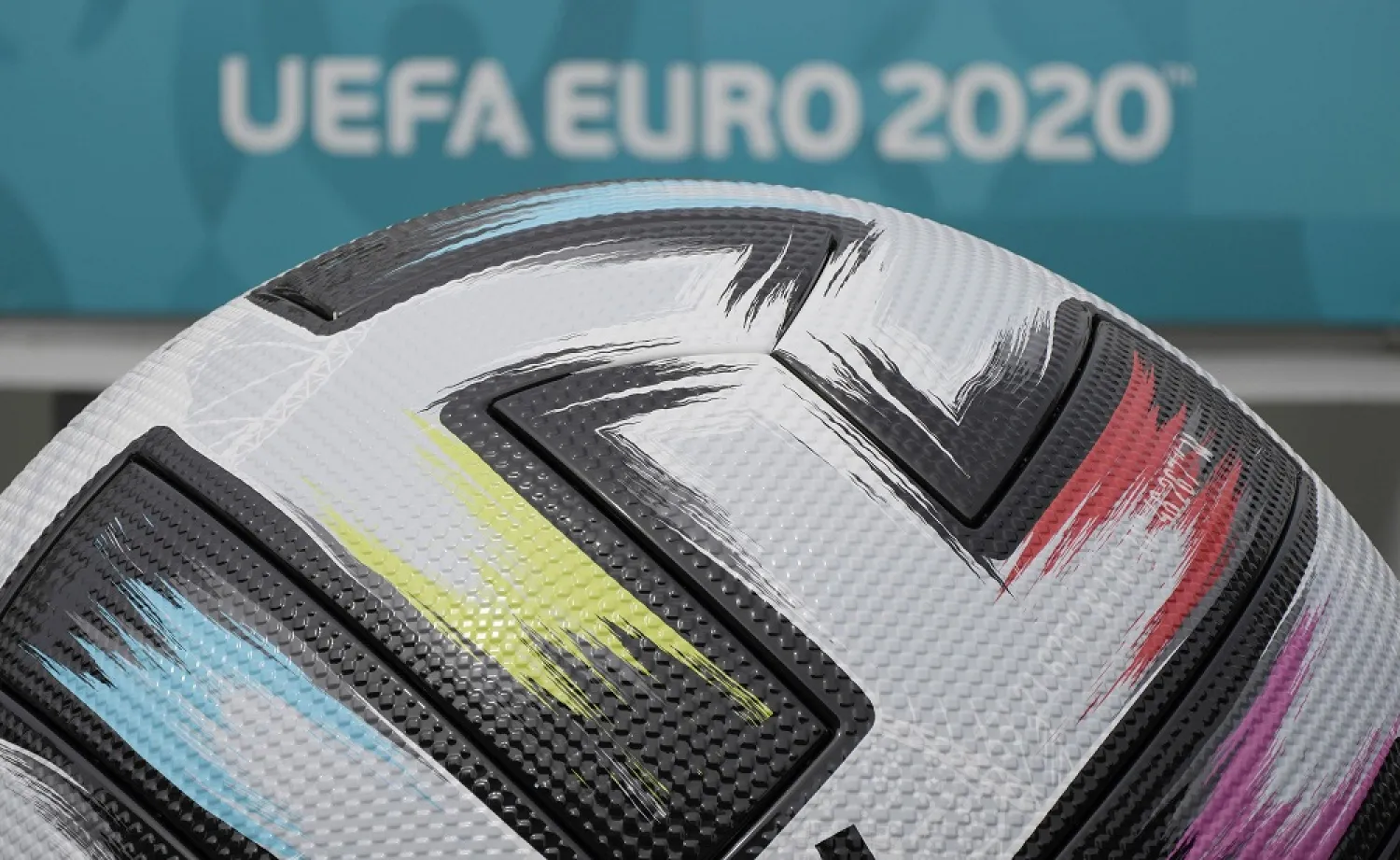

UEFA Explores Expanding European Championship to 32 Teams

A large football is seen outside of Wembley stadium in London, Friday, July 9, 2021. (AP)
TT

UEFA Explores Expanding European Championship to 32 Teams

A large football is seen outside of Wembley stadium in London, Friday, July 9, 2021. (AP)

Buoyed by the success of this year’s European Championship, UEFA is exploring whether to expand the event again to create a 32-team tournament.

The review of the format comes as the bidding process is being put in place for Euro 2028 with a decision on the hosting set to come by the end of 2023.

It was only in 2016 that the tournament jumped from 16 to 24 teams. But UEFA is starting to analyze the feasibility of 32 of its 55 member nations contesting the European Championship from 2028, people with knowledge of the process told The Associated Press. They spoke on condition of anonymity because they were not authorized to discuss private discussions.

There would be a knock-on effect for qualifying if UEFA went ahead with adding eight teams. The format would have to be overhauled or scrapped since more than half of the countries making the final cut would further diminish the value and interest in the existing structure where the continent’s teams are split into 10 groups.

Even with 24 teams now reaching the final tournament, the current pathway creates lopsided games that lack appeal to elite sides whose qualification would be a near-certainty and are less attractive commercially and to fans.

Euro 2020 finalist England scored 12 goals and conceded only one in two qualifiers against Montenegro. Italy, England’s opponent in Sunday’s final, played Liechtenstein in qualifying and won 6-0 and 5-0.

The option of pre-qualifying tournaments to weed out weaker nations has been floated, as is used in Asia and North America for their continental competitions.

UEFA could build on the early popularity of the new Nations League competition that splits teams into sections based on their rankings, ensuring more tightly-contested games that would be more appealing to broadcasters. Ultimately, it could replace the European Championship qualifying system while configured to ensure leading nations still have a clear route to the finals.

A reason to expand from 24 to 32 teams is also to smooth out the format at the final tournament.

With 16 teams from 1996-2012, the top two from the four groups advanced to the quarterfinals. The insertion of a round of 16 from Euro 2016 featured the top two from the six groups and the four best third-place teams. That has meant Switzerland, for example, having to wait around after its final group games at Euro 2016 to discover if it has advanced.

A 32-team European Championship would reduce that jeopardy further in the group stage. It would be unlikely France, Germany and Portugal would be drawn together like at Euro 2020 — they still all advanced.

Expanding the competition would see UEFA follow the path of FIFA, which is enlarging the World Cup from 32 to 48 teams from 2026. A review of the qualification process for tournaments comes as FIFA oversees the configuration of a new international match calendar for men’s football after 2024, featuring the slots when domestic clubs have to release players.

While there are sporting reasons to make tournaments bigger, it also helps the governing body leaders appeal to the nations who vote them into office and would see their chances of qualifying increase.

There is no clear timeline of when UEFA could decide on expanding the European Championship. Italy, which last hosted a major tournament in 1990 when the World Cup was there, has been considered a potential Euro 2028 bidder but its stadiums would require significant investment to be upgraded to cope with even a 24-team event.

Russia has the infrastructure in place after investing vast amounts ahead of hosting the 2018 World Cup. Turkey could return with another bid after missing out on 2012 and 2016, and proving accommodating with UEFA’s need to take the Champions League final away from Istanbul in 2020 and again this year because of the coronavirus pandemic.



Shakhtar Boss Pays Ukrainian Racer $200,000 After Games Disqualification

Ukrainian President Volodymyr Zelenskiy holds helmet as he meets with a Ukrainian skeleton racer Vladyslav Heraskevych , who was disqualified from the Olympic skeleton competition over his "helmet of remembrance" depicting athletes killed since Russia's invasion and his father and coach, Mykhailo Heraskevych, amid Russia's attack on Ukraine, in Munich, Germany February 13, 2026. (Ukrainian Presidential Press Service/Handout via Reuters)
TT

Shakhtar Boss Pays Ukrainian Racer $200,000 After Games Disqualification

Ukrainian President Volodymyr Zelenskiy holds helmet as he meets with a Ukrainian skeleton racer Vladyslav Heraskevych , who was disqualified from the Olympic skeleton competition over his "helmet of remembrance" depicting athletes killed since Russia's invasion and his father and coach, Mykhailo Heraskevych, amid Russia's attack on Ukraine, in Munich, Germany February 13, 2026. (Ukrainian Presidential Press Service/Handout via Reuters)

The owner of ‌Ukrainian football club Shakhtar Donetsk has donated more than $200,000 to skeleton racer Vladyslav Heraskevych after the athlete was disqualified from the Milano Cortina Winter Games before competing over the use of a helmet depicting Ukrainian athletes killed in the war with Russia, the club said on Tuesday.

The 27-year-old Heraskevych was disqualified last week when the International Bobsleigh and Skeleton Federation jury ruled that imagery on the helmet — depicting athletes killed since Russia invaded Ukraine in 2022 — breached rules on athletes' expression at ‌the Games.

He ‌then lost an appeal at the Court ‌of ⁠Arbitration for Sport hours ⁠before the final two runs of his competition, having missed the first two runs due to his disqualification.

Heraskevych had been allowed to train with the helmet that displayed the faces of 24 dead Ukrainian athletes for several days in Cortina d'Ampezzo where the sliding center is, but the International Olympic Committee then ⁠warned him a day before his competition ‌started that he could not wear ‌it there.

“Vlad Heraskevych was denied the opportunity to compete for victory ‌at the Olympic Games, yet he returns to Ukraine a ‌true winner," Shakhtar President Rinat Akhmetov said in a club statement.

"The respect and pride he has earned among Ukrainians through his actions are the highest reward. At the same time, I want him to ‌have enough energy and resources to continue his sporting career, as well as to fight ⁠for truth, freedom ⁠and the remembrance of those who gave their lives for Ukraine," he said.

The amount is equal to the prize money Ukraine pays athletes who win a gold medal at the Games.

The case dominated headlines early on at the Olympics, with IOC President Kirsty Coventry meeting Heraskevych on Thursday morning at the sliding venue in a failed last-minute attempt to broker a compromise.

The IOC suggested he wear a black armband and display the helmet before and after the race, but said using it in competition breached rules on keeping politics off fields of play. Heraskevych also earned praise from Ukraine President Volodymyr Zelenskiy.


Speed Skating-Italy Clinch Shock Men’s Team Pursuit Gold, Canada Successfully Defend Women’s Title

 Team Italy with Davide Ghiotto, Andrea Giovannini, Michele Malfatti, celebrate winning the gold medal on the podium of the men's team pursuit speed skating race at the 2026 Winter Olympics, in Milan, Italy, Tuesday, Feb. 17, 2026. (AP)
Team Italy with Davide Ghiotto, Andrea Giovannini, Michele Malfatti, celebrate winning the gold medal on the podium of the men's team pursuit speed skating race at the 2026 Winter Olympics, in Milan, Italy, Tuesday, Feb. 17, 2026. (AP)
TT

Speed Skating-Italy Clinch Shock Men’s Team Pursuit Gold, Canada Successfully Defend Women’s Title

 Team Italy with Davide Ghiotto, Andrea Giovannini, Michele Malfatti, celebrate winning the gold medal on the podium of the men's team pursuit speed skating race at the 2026 Winter Olympics, in Milan, Italy, Tuesday, Feb. 17, 2026. (AP)
Team Italy with Davide Ghiotto, Andrea Giovannini, Michele Malfatti, celebrate winning the gold medal on the podium of the men's team pursuit speed skating race at the 2026 Winter Olympics, in Milan, Italy, Tuesday, Feb. 17, 2026. (AP)

An inspired Italy delighted the home crowd with a stunning victory in the Olympic men's team pursuit final as

Canada's Ivanie Blondin, Valerie Maltais and Isabelle Weidemann delivered another seamless performance to beat the Netherlands in the women's event and retain their title ‌on Tuesday.

Italy's ‌men upset the US who ‌arrived ⁠at the Games ⁠as world champions and gold medal favorites.

Spurred on by double Olympic champion Francesca Lollobrigida, the Italian team of Davide Ghiotto, Andrea Giovannini and Michele Malfatti electrified a frenzied arena as they stormed ⁠to a time of three ‌minutes 39.20 seconds - ‌a commanding 4.51 seconds clear of the ‌Americans with China taking bronze.

The roar inside ‌the venue as Italy powered home was thunderous as the crowd rose to their feet, cheering the host nation to one ‌of their most special golds of a highly successful Games.

Canada's women ⁠crossed ⁠the line 0.96 seconds ahead of the Netherlands, stopping the clock at two minutes 55.81 seconds, and

Japan rounded out the women's podium by beating the US in the Final B.

It was only Canada's third gold medal of the Games, following Mikael Kingsbury's win in men's dual moguls and Megan Oldham's victory in women's freeski big air.


Lindsey Vonn Back in US Following Crash in Olympic Downhill 

Milano Cortina 2026 Olympics - Alpine Skiing - Women's Downhill 3rd Official Training - Tofane Alpine Skiing Centre, Belluno, Italy - February 07, 2026. Lindsey Vonn of United States in action during training. (Reuters)
TT

Lindsey Vonn Back in US Following Crash in Olympic Downhill 

Milano Cortina 2026 Olympics - Alpine Skiing - Women's Downhill 3rd Official Training - Tofane Alpine Skiing Centre, Belluno, Italy - February 07, 2026. Lindsey Vonn of United States in action during training. (Reuters)

Lindsey Vonn is back home in the US following a week of treatment at a hospital in Italy after breaking her left leg in the Olympic downhill at the Milan Cortina Games.

“Haven’t stood on my feet in over a week... been in a hospital bed immobile since my race. And although I’m not yet able to stand, being back on home soil feels amazing,” Vonn posted on X with an American flag emoji. “Huge thank you to everyone in Italy for taking good care of me.”

The 41-year-old Vonn suffered a complex tibia fracture that has already been operated on multiple times following her Feb. 8 crash. She has said she'll need more surgery in the US.

Nine days before her fall in Cortina d'Ampezzo, Italy, Vonn ruptured the ACL in her left knee in another crash in Switzerland.

Even before then, all eyes had been on her as the feel-good story heading into the Olympics for her comeback after nearly six years of retirement.