


Lebanon Can’t Handle Next COVID Wave

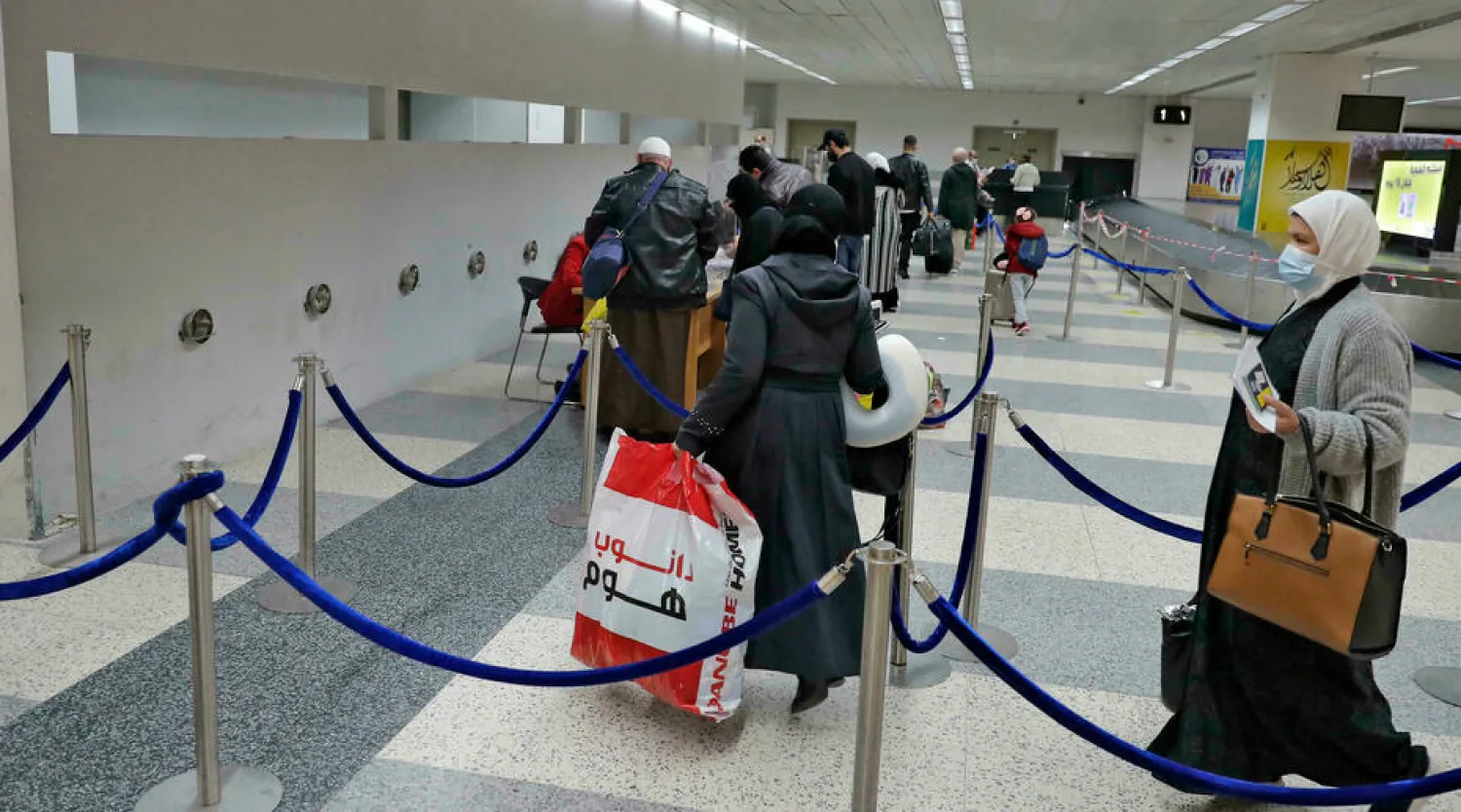
Arrivals queue to get tested for Covid at Beirut airport. A flood of Lebanese expats flying home for the summer has raised fears of a new wave of infection the crisis-hit country is simply unable to handle JOSEPH EID AFP/File
TT

Lebanon Can’t Handle Next COVID Wave

Arrivals queue to get tested for Covid at Beirut airport. A flood of Lebanese expats flying home for the summer has raised fears of a new wave of infection the crisis-hit country is simply unable to handle JOSEPH EID AFP/File

Lebanon’s deepening economic crisis has piled pressure on hospitals, leaving them ill-equipped to face any new wave of the coronavirus, a top hospital director has warned.

Already struggling with shortages of medicine and an exodus of staff abroad, the country’s health facilities are now also having to contend with almost round-the-clock power cuts.

“All hospitals... are now less prepared than they were during the wave at the start of the year,” said Firass Abiad, the manager of the largest public hospital in the country battling COVID-19.

“Medical and nursing staff have left, medicine that was once available has run out,” and ever lengthening cuts to the mains power supply have left hospitals under constant threat, AFP reported.

Even the Rafik Hariri University Hospital he runs has been struggling to cope.

“We only get two to three hours of mains electricity, and for the rest of the time it’s up to the generators,” Abiad said.

On top of worrying they could burn out, “we have the huge burden of having to constantly be on the hunt for fuel oil.”

Huge demand for the increasingly scarce commodity has driven up prices by more than 80 percent since June 17.

Even at the prestigious RHUH, some medicines are routinely running out.

“Some days it’s antibiotics, others it’s anaesthetics,” the hospital chief said.

Sometimes “we’re forced to ask the patients’ relatives to go and try to find the medicine from another hospital or a pharmacy.”

After dropping over the spring, COVID-19 cases are on the rise again as Lebanese expats flood home for the summer, and many gather with family and friends.

On Thursday alone, 98 people tested positive for COVID-19 on arrival at Beirut airport, the health ministry said.

“It could be catastrophic if this rise in coronavirus numbers leads to a spike like the one we saw at the start of the year,” Abiad said.

Abiad said the solution was better social distancing and more inoculations in a country where just 15 percent of the population have been fully vaccinated.

On Thursday, private hospitals warned of a looming “catastrophe” as some were only hours away from running out of fuel to power their generators.

The following day, pharmacies said they were going on indefinite strike over persistent shortages of medicines, just weeks after drug importers said the central bank owed millions of dollars to their suppliers abroad.

Pharmacies said importers are refusing to make deliveries as they are unhappy with the new prices for drugs that are no longer subsidized, and cannot get lines of credit for those that still are.

Around 1,300 doctors have emigrated since the economic crisis began in 2019, with the numbers picking up over the past 12 months, the doctors’ syndicate says.

Since February last year, Lebanon has recorded 553,615 cases of COVID-19, 7,890 of them fatal, according to health ministry figures.

Amnesty Accuses Israel of ‘Ethnic Cleansing’ of West Bank Bedouins

An aerial view shows the Bedouin hamlet of Khan al-Ahmar in the West Bank, Jan. 24, 2023. (AP)
TT

Amnesty Accuses Israel of ‘Ethnic Cleansing’ of West Bank Bedouins

An aerial view shows the Bedouin hamlet of Khan al-Ahmar in the West Bank, Jan. 24, 2023. (AP)

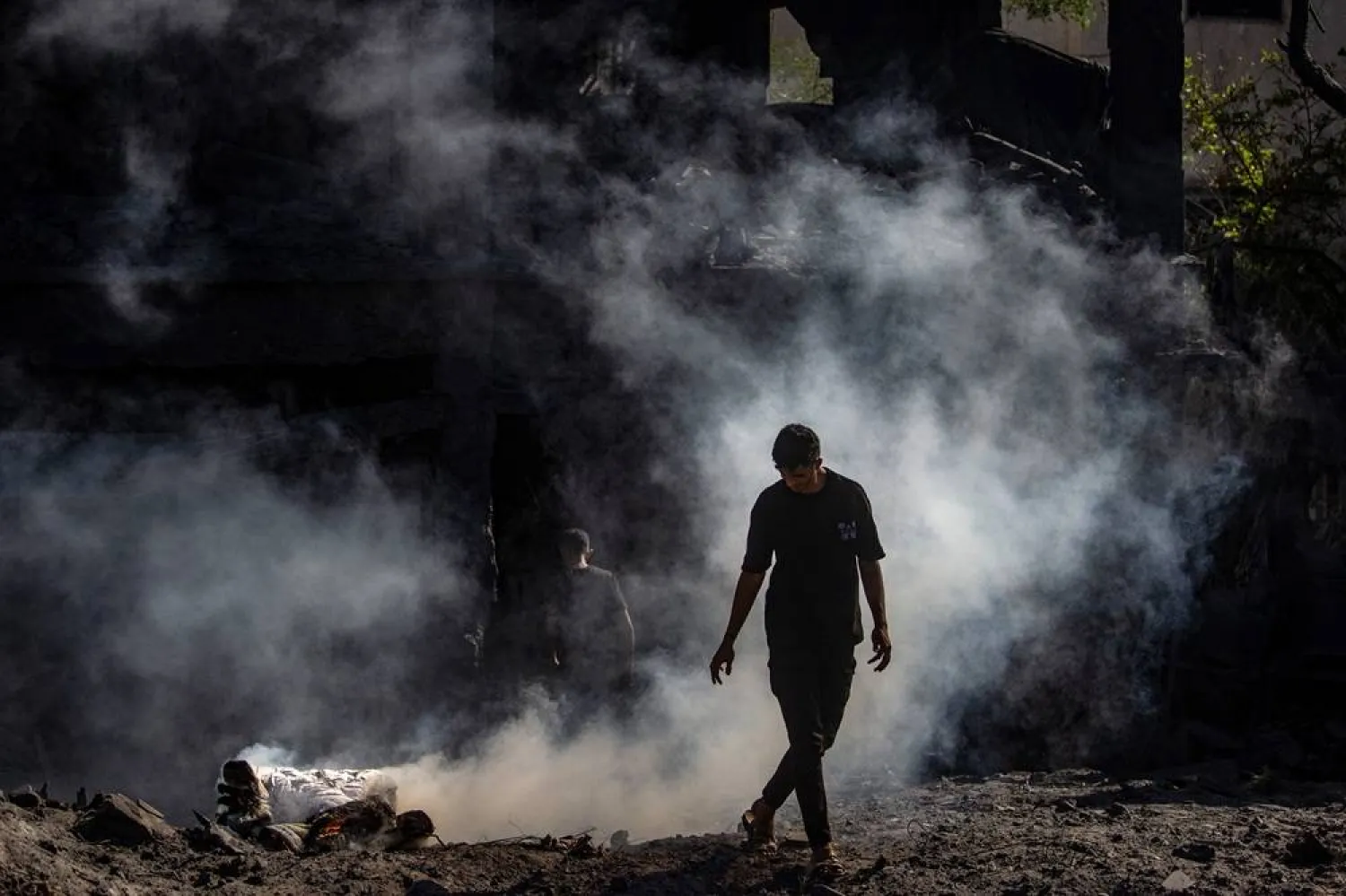
Amnesty International accused Israel on Wednesday of conducting an "ethnic cleansing" campaign against Bedouin and herding communities in the occupied West Bank, saying the measures were designed to accelerate the annexation of the Palestinian territory.

A new report by the rights group found that these rural Palestinian communities are bearing the brunt of Israeli settler violence and forced displacement.

"Israeli authorities are accelerating annexation through a state-driven campaign of ethnic cleansing targeting Palestinian Bedouin and herding communities" of the West Bank, said the report released on Wednesday.

Amnesty said its research showed that 27 Bedouin and herding communities comprising hundreds of Palestinians were forcibly displaced between 2023 and 2025 or were at risk of displacement in the West Bank's Area C, which encompasses 60 percent of the territory and is under Israeli control under the 1990s Oslo agreements.

In the report titled "Erasing anything Palestinian: Israel's ethnic cleansing of West Bank Bedouin and herding communities", Amnesty accused Prime Minister Benjamin Netanyahu's government, one of Israel's most right-wing to date, of catering to the settler movement's religious nationalist agenda.

"It has accelerated settlement expansion and land grabs, increased financial and logistical support to settlements, and it has armed settlers, thereby enabling a brutal state-sanctioned campaign of settler violence," the report said.

In an apparent effort to counter arguments by Israeli officials that settler violence is caused by bad actors in that community, Amnesty pointed to "explicit calls by Israeli officials for settlement expansion" and "measures aimed at minimizing Palestinian presence in Area C".

The "ethnic cleansing campaign is state-led, and state-sponsored, not driven by rogue settlers or so-called extremist ministers", the report concluded.

- 'Unlawful deportation' -

Far-right Finance Minister Bezalel Smotrich, who himself lives in a settlement, is a vocal proponent of West Bank's annexation and on Tuesday was banned from France for actively promoting it.

In May 2026, the UN rights office had also decried indications of "ethnic cleansing" in Gaza and the West Bank.

Amnesty pointed to Israel's legal responsibilities as an occupying power in the West Bank, and its violations of international humanitarian law.

"These violations include the war crime of unlawful deportation and transfer and the crime against humanity of deportation or forcible transfer of population," the report said.

Bedouin and herders' communities, often isolated and without security services, are particularly vulnerable to the threat of violence or displacement.

Since 2023, AFP reporters have witnessed the departure of several Bedouin communities of the West Bank under pressure from settler groups, including the community of Ras Ein al-Auja in early 2026.

"What is happening today is the complete collapse of the community as a result of the settlers' continuous and repeated attacks," Farhan Jahaleen, a Bedouin from the village, told AFP in January.

Since Netanyahu's government came to power in late 2022, it has greenlighted the creation of 102 settlements in the West Bank, according to settlement watchdog Peace Now.

Excluding east Jerusalem, more than 500,000 Israelis live in settlements in the West Bank, which Israel has occupied since 1967, among some three million Palestinians.

All Israeli settlements are considered illegal under international law.

Some settlers have engaged in arson, vandalism, theft of private property in Palestinian communities, as well as physical assaults and sometimes murder, according to rights groups.

The number of such incidents steadily increased after the start of the war in Gaza in 2023, reaching an average of six per day in the West Bank in 2026, according to the UN humanitarian agency OCHA.


Israeli Concerns over Egypt’s Jabbar 150 Drone

The Egyptian-made Jabbar 150 drone, produced by Amstone International Group, on display at the EDEX defense exhibition on Dec. 3, 2025 (Reuters)
TT

Israeli Concerns over Egypt’s Jabbar 150 Drone

The Egyptian-made Jabbar 150 drone, produced by Amstone International Group, on display at the EDEX defense exhibition on Dec. 3, 2025 (Reuters)

Israeli media has recently raised concern over the Jabbar 150 drone, the latest Egyptian weapons system, despite having been unveiled nearly six months ago.

Israeli news platform Natziv Net reported Tuesday that the unveiling of the domestically produced drone at the Egypt Defense Expo (EDEX) in Cairo in December 2025 has become a growing source of concern within Israel’s security establishment.

According to the report, Israeli concerns center on the drone’s operational capabilities rather than the origins of its technology.

The Jabbar 150 reportedly has a range of up to 1,500 kilometers, can carry a warhead weighing about 50 kilograms, and may be powered by either a piston or jet engine, giving Egypt a long-range strike capability.

The platform also highlighted the integration of real-time targeting systems in some variants through onboard cameras, allowing operators to identify and engage targets during flight rather than relying solely on satellite navigation.

Egyptian authorities have not officially commented on the reports. Egyptian media, however, previously described the Jabbar 150 as a high-performance attack drone capable of flying at speeds of up to 200 kilometers per hour and remaining airborne for nearly 10 hours. The aircraft is also said to be the first in a family of drones that will include the Jabbar 200 and Jabbar 250.

Retired Maj. Gen. Samir Farag, an Egyptian military and strategic affairs expert, said Egypt has every right to develop its armed forces and that its advanced military capabilities are intended to protect national security.

Ahmed Fouad Anwar, a member of the Egyptian Council for Foreign Affairs and an expert in Israeli affairs, said Egypt’s military strength has steadily grown since President Abdel Fattah el-Sisi has taken office in 2014.

“That is what concerns Israel,” Anwar said. “Egypt’s priority is its own security, and it will continue to maintain credible deterrent capabilities.”

Israeli scrutiny of Egypt’s military modernization has intensified since the outbreak of the Gaza war. Israeli newspaper Maariv recently claimed that US intelligence had detected signs of expanding military cooperation between Egypt and Türkiye that could affect regional power balances.

Farag expects such rhetoric to increase ahead of Israeli elections, arguing that some political figures, including Prime Minister Benjamin Netanyahu, may seek to portray Egypt as a potential threat for domestic political gain.

Anwar believes Israeli pressure campaigns will continue, particularly as Egypt hosts Gaza ceasefire negotiations, warning that such reports risk unnecessarily heightening tensions between the two countries.


Houthis Use ‘Espionage’ Charges against Relief Agencies to Cripple Humanitarian Aid in Yemen

A Houthi fighter stands guard during a sectarian rally in Sanaa, Yemen, 04 June 2026. (EPA)
TT

Houthis Use ‘Espionage’ Charges against Relief Agencies to Cripple Humanitarian Aid in Yemen

A Houthi fighter stands guard during a sectarian rally in Sanaa, Yemen, 04 June 2026. (EPA)

The Iran-backed Houthi group’s campaign against United Nations personnel and aid workers has become a major factor deepening Yemen’s humanitarian crisis and hindering relief efforts even as Houthi-controlled parts of the country edge toward catastrophic levels of hunger and millions rely on humanitarian assistance to survive.

After years of war and economic collapse, humanitarian operations in Houthi-held areas face mounting challenges. Increasing restrictions and persistent interference in the work of international and local organizations have culminated in a sweeping crackdown that has seen dozens of aid workers detained on alleged security-related charges, including espionage.

For years, humanitarian aid has served as a lifeline for millions of people in northern Yemen. Yet the arrests and restrictions have disrupted large segments of relief operations, worsening food insecurity in regions already burdened by poverty, collapsing livelihoods and growing humanitarian needs.

Before the latest escalation, three million people in Houthi-controlled areas were receiving regular food aid despite a sharp decline in international funding for Yemen. However, disputes over aid-distribution mechanisms and Houthi interference in humanitarian programs had already forced many organizations to scale back their activities.

The situation worsened following raids on UN offices and several international and local organizations in Sanaa and other areas under Houthi control. In response, many agencies reduced their operations or suspended them altogether, depriving millions of vulnerable Yemenis of life-saving help.

Humanitarian workers say the restrictions have made it increasingly difficult to reach the most vulnerable communities at a time when living conditions continue to deteriorate and food insecurity is spreading.

Aid workers under pressure

International human rights organizations, including Amnesty International, Human Rights Watch and the Cairo Institute for Human Rights Studies, said that the Houthis have weaponized espionage allegations to suppress humanitarian workers and justify the detention of more than 100 aid personnel over the past two years.

According to these groups, the continued detention of humanitarian staff has affected not only the detainees and their families but also the ability of aid agencies to deliver assistance and maintain essential programs, further exacerbating the crisis.

Only a handful of detainees have been released, while dozens of UN employees and humanitarian workers are still in custody amid growing concerns about their welfare and the future of aid operations in Houthi-held territories.

Rights groups have linked the arrest campaign to worsening food insecurity in northern Yemen, citing repeated warnings from UN agencies about rising levels of acute hunger.

Humanitarian organizations have reported pockets of famine-like conditions in some areas, while millions of families face mounting difficulties accessing food and basic services, raising the risk of more severe hunger and malnutrition.

Fears for detainees

Concerns over the fate of the detained aid workers have intensified given the Houthis’ record of human rights abuses against detainees, particularly after a World Food Program employee died in Houthi custody in February 2025.

Human rights organizations said many detainees have been subjected to prolonged enforced disappearance and held without due process. Some have been denied medical care and prevented from communicating with lawyers or family members.

The groups have called on the United Nations and the international community to take a firmer stance, pressing the Houthis to immediately release all detainees, ensure access to medical care and legal representation, and lift restrictions on humanitarian organizations so assistance can reach those in need.