


HRW Slams Iran for Suppressing ‘Water Uprising’

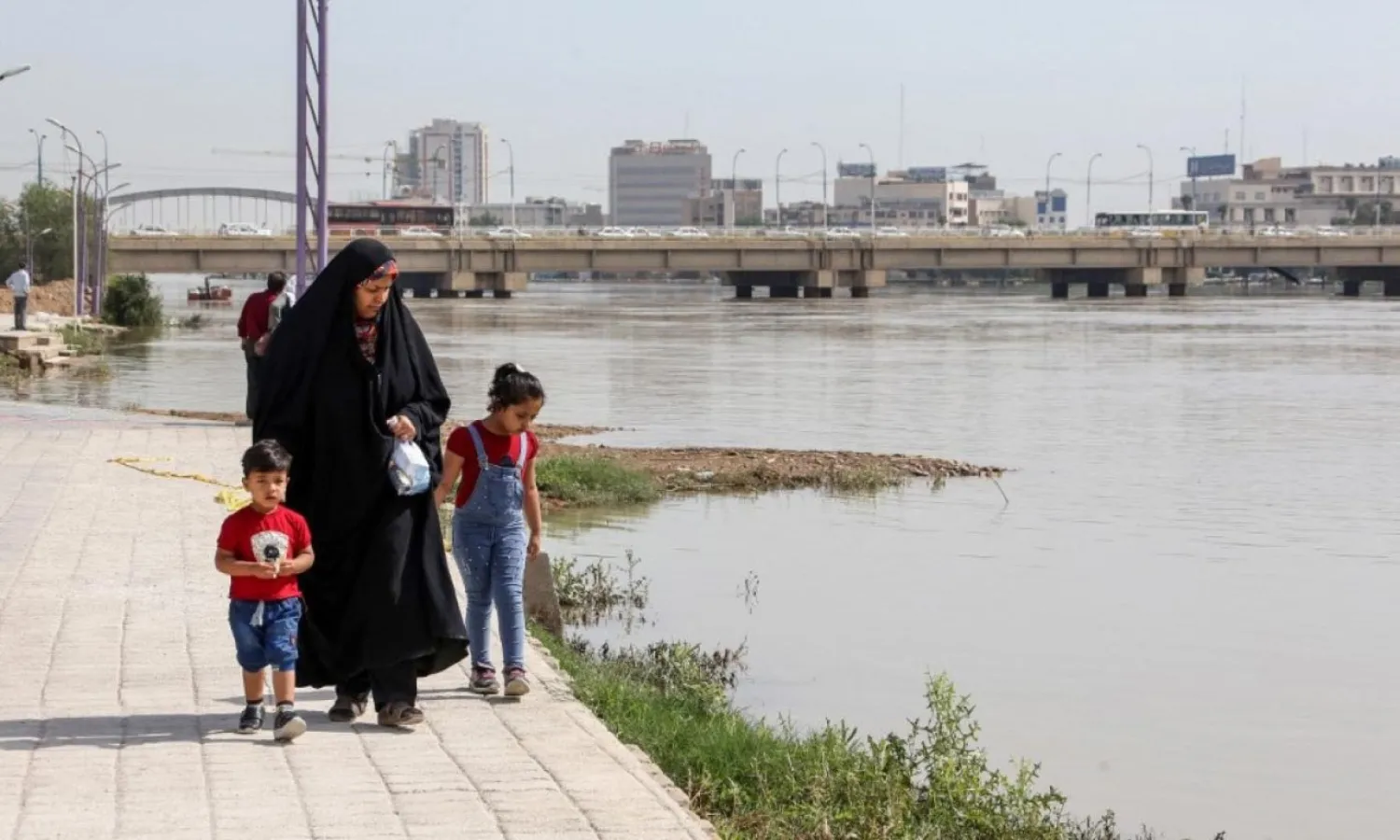
A woman walks with her children along the Karun River in Ahwaz, Khuzestan (File photo: AFP)
TT

HRW Slams Iran for Suppressing ‘Water Uprising’

A woman walks with her children along the Karun River in Ahwaz, Khuzestan (File photo: AFP)

The increasing death toll and mass arrests raise grave concerns about the Iranian authorities’ response to recent protests in Khuzestan, and other provinces, Human Rights Watch (HRW) said.

The international organization said that the authorities should immediately and unconditionally release peaceful protesters, provide information about deaths, and allow an independent international investigation into security agencies’ alleged use of lethal force.

"All those responsible for abuses should be held to account."

HRW extensively documented that Iran’s judiciary regularly uses vaguely defined national security charges to prosecute peaceful dissent and subject detainees to mistreatment, torture, and unfair trials.

It reiterated its previous calls on the UN Human Rights Council member countries to establish an UN-led inquiry into alleged serious rights violations during and in the aftermath of the widespread protests.

Tara Sepehri Far, Iran researcher at HRW, said that Iranian political leaders’ primary response to widespread demands for basic rights has been unchecked repression.

“Only a transparent investigation into the deaths of protesters, holding security forces accountable for wrongdoing, and a commitment to address long-term grievances can begin to address the local population’s loss of trust in the authorities.”

Since July 15, 2021, Iranians have protested deteriorating living conditions in Khuzestan and several other provinces.

As of July 28, human rights groups have verified the identities of at least nine people who were shot dead or died of injuries during the protests, including a 17-year-old boy.

Iranian government officials have announced the death of three protesters and a police officer during the protests. Videos shared on social media from the protests showed security officials shooting firearms and teargas toward protesters.

On July 15, people in dozens of towns and cities in Khuzestan province, a large ethnic Arab population, took to the streets for several nights to protest not having clean water for days.

Human Rights Activists News Agency (HRANA) identified six victims and said 171 people were arrested during the protests.

Unconfirmed reports indicate that the number of deaths and arrests may be higher.

Ali Shamkhani, the secretary of Iran’s national security council, wrote on his Twitter account that the authorities had ordered the release of those arrested during the protests in Khuzestan “who have not committed any criminal act.”

On July 25, Mizan News, the judiciary’s news agency, reported that the head of Iran’s judiciary, Gholamhossein Ejeyi, ordered the courts to release those arrested for protesting and called for a review of those convicted for the November 2019 protests, which began over gasoline prices and transformed into a broader expression of popular discontent with the government’s repression and perceived corruption.

Under the United Nations Basic Principles on the Use of Force and Firearms by Law Enforcement Officials, police may use force only when strictly necessary and to the extent required to achieve a legitimate policing objective.

The deliberate use of lethal force is permissible only when it is strictly necessary to protect life, and warnings should be given when possible, reiterated HRW.

The authorities should promptly report and investigate all incidents of law enforcement officials killing or wounding people with firearms through an independent administrative or prosecutorial process.

Over the past four years, Iranian authorities have responded to widespread protests with increasingly excessive and lethal force, mass arrests, and internet shutdowns.

In November 2019, in one of the most brutal crackdowns, security forces used excessive and unlawful lethal force against massive protests across the country.

Amnesty International reported that at least 304 people were killed.

Iranian authorities said that 230 people were killed but have failed to conduct any transparent investigation into serious allegations of unlawful use of force by security officials and instead prosecuted protesters in unfair trials.

Shadi Sadr, a lawyer and co-founder of London-based NGO Justice for Iran, tweeted that the hundreds of protesters and activists arrested are “mostly of Arab Ahwazi ethnicity.”

They have been arrested “in their homes and workplaces,” she added.

Sadr also indicated that a group of mothers whose children were killed by Iranian security forces gathered in Tehran’s Azadi Square, chanting, “we seek our rights hand in hand until the regime falls.”

Authorities responded by arresting and beating them as they exercised their right to assembly, but they have been all released later.



US Judge Blocks Deportation of Columbia University Palestinian Activist

Mohsen Mahdawi at a press conference in Vermont last year - Photo by Alex Driehaus/AP
TT

US Judge Blocks Deportation of Columbia University Palestinian Activist

Mohsen Mahdawi at a press conference in Vermont last year - Photo by Alex Driehaus/AP

A US immigration judge has blocked the deportation of a Palestinian graduate student who helped organize protests at Columbia University against Israel's war in Gaza, according to US media reports.

Mohsen Mahdawi was arrested by immigration agents last year as he was attending an interview to become a US citizen.

Mahdawi had been involved in a wave of demonstrations that gripped several major US university campuses since Israel began a massive military campaign in the Gaza Strip.

A Palestinian born in the occupied West Bank, Mahdawi has been a legal US permanent resident since 2015 and graduated from the prestigious New York university in May. He has been free from federal custody since April.

In an order made public on Tuesday, Judge Nina Froes said that President Donald Trump's administration did not provide sufficient evidence that Mahdawi could be legally removed from the United States, multiple media outlets reported.

Froes reportedly questioned the authenticity of a copy of a document purportedly signed by Secretary of State Marco Rubio that said Mahdawi's activism "could undermine the Middle East peace process by reinforcing antisemitic sentiment," according to the New York Times.

Rubio has argued that federal law grants him the authority to summarily revoke visas and deport migrants who pose threats to US foreign policy.

The Trump administration can still appeal the decision, which marked a setback in the Republican president's efforts to crack down on pro-Palestinian campus activists.

The administration has also attempted to deport Mahmoud Khalil, another student activist who co-founded a Palestinian student group at Columbia, alongside Mahdawi.

"I am grateful to the court for honoring the rule of law and holding the line against the government's attempts to trample on due process," Mahdawi said in a statement released by his attorneys and published Tuesday by several media outlets.

"This decision is an important step towards upholding what fear tried to destroy: the right to speak for peace and justice."


Fire Breaks out Near Iran's Capital Tehran, State Media Says

Smoke rises from a fire caused by an explosion in Tehran (File photo - Reuters)
TT

Fire Breaks out Near Iran's Capital Tehran, State Media Says

Smoke rises from a fire caused by an explosion in Tehran (File photo - Reuters)

A fire broke out in Iran's Parand near the capital city Tehran, state media reported on Wednesday, publishing videos of smoke rising over the area which is close to several military and strategic sites in the country's Tehran province, Reuters reported.

"The black smoke seen near the city of Parand is the result of a fire in the reeds around the Parand river bank... fire fighters are on site and the fire extinguishing operation is underway", state media cited the Parand fire department as saying.


Pakistan PM Sharif to Seek Clarity on Troops for Gaza in US Visit

US President Donald Trump looks at Pakistan's Prime Minister Shehbaz Sharif speaking following the official signing of the first phase of the Gaza ceasefire agreement between Israel and Hamas, during a world leaders' summit on ending the Gaza war, in Sharm El-Sheikh, Egypt, October 13, 2025. REUTERS/Evelyn Hockstein/File Photo
TT

Pakistan PM Sharif to Seek Clarity on Troops for Gaza in US Visit

US President Donald Trump looks at Pakistan's Prime Minister Shehbaz Sharif speaking following the official signing of the first phase of the Gaza ceasefire agreement between Israel and Hamas, during a world leaders' summit on ending the Gaza war, in Sharm El-Sheikh, Egypt, October 13, 2025. REUTERS/Evelyn Hockstein/File Photo

Before Pakistan commits to sending troops to Gaza as part of the International Stabilization Force it wants assurances from the United States that it will be a peacekeeping mission rather than tasked with disarming Hamas, three sources told Reuters.

Pakistan's Prime Minister Shehbaz Sharif is set to attend the first formal meeting of President Donald Trump's Board of Peace in Washington on Thursday, alongside delegations from at least 20 countries.

Trump, who will chair the meeting, is expected to announce a multi-billion dollar reconstruction plan for Gaza and detail plans for a UN-authorized stabilization force for the Palestinian enclave.

Three government sources said during the Washington visit Sharif wanted to better understand the goal of the ISF, what authority they were operating under and what the chain of command was before making a decision on deploying troops.

"We are ready to send troops. Let me make it clear that our troops could only be part of a peace mission in Gaza," said one of the sources, a close aide of Sharif.

"We will not be part of any other role, such as disarming Hamas. It is out of the question," he said.

Analysts say Pakistan would be an asset to the multinational force, with its experienced military that has gone to war with arch-rival India and tackled insurgencies.

"We can send initially a couple of thousand troops anytime, but we need to know what role they are going to play," the source added.

Two of the sources said it was likely Sharif, who has met Trump earlier this year in Davos and late last year at the White House, would either have an audience with him on the sidelines of the meeting or the following day at the White House.

Initially designed to cement Gaza's ceasefire, Trump sees the Board of Peace, launched in late January, taking a wider role in resolving global conflicts. Some countries have reacted cautiously, fearing it could become a rival to the United Nations.

While Pakistan has supported the establishment of the board, it has voiced concerns against the mission to demilitarize Gaza's militant group Hamas.