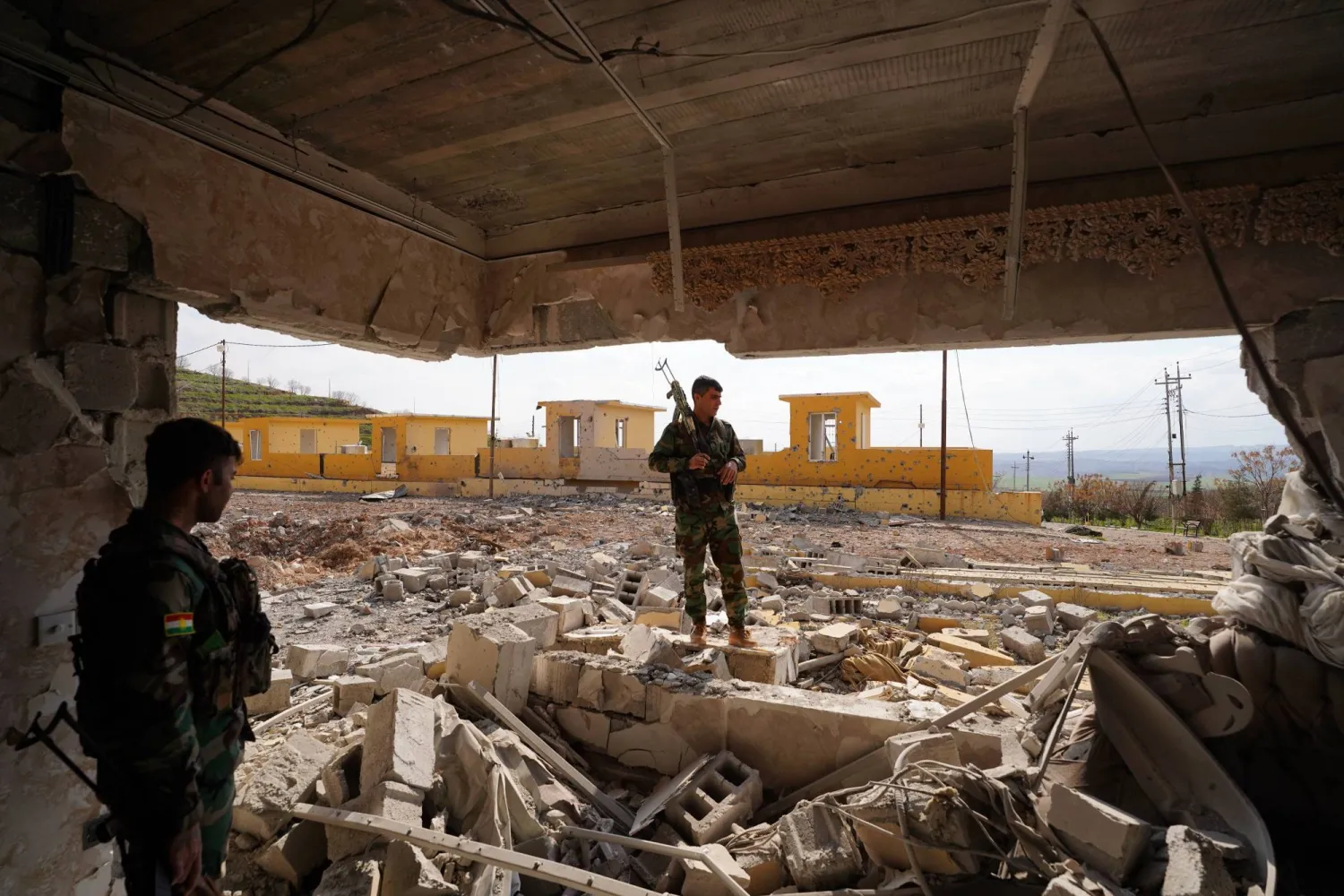
It is unreasonable to expect the Lebanese government to disarm Iran-backed Hezbollah while the country is being bombed by Israel, France's special envoy for Lebanon said on Wednesday.
Jean-Yves Le Drian said only negotiations would resolve the crisis, in which Lebanese authorities say over 900 people have been killed in Israeli attacks since Hezbollah entered the regional war in support of Tehran.
"Israel occupied Lebanon for a very long time and failed to eradicate Hezbollah's military capacity. Therefore, they cannot now ask the Lebanese government to do that job in three days under bombardment," he told France Info radio.
Israel has rebuffed an offer of direct talks from Beirut as too little, too late by a government that shares its goal of wanting Hezbollah disarmed but fears that acting against it could risk civil war, sources familiar with the situation said.
President Joseph Aoun has expressed a willingness to begin direct negotiations with Israel, which has carried out airstrikes in Lebanon since Hezbollah fired on Israel on March 2. Hezbollah has rejected the move and fought on.
FRANCE SEEKS MEDIATING ROLE
France has historical ties with Lebanon and, with the United States, has sought to mediate in the conflict.
"There is a process of negotiation and discussion that is possible, but all the parties must want it," Le Drian said.
France last week presented counter-proposals to US ideas to bring an end to the conflict, two diplomats said.
Three diplomats said the US had been lukewarm to the proposals, but discussions with Washington were continuing. Israel has rejected the proposals, they said.
According to an informal document seen by Reuters, France's position centers around a three-month period to end hostilities and move towards a comprehensive and permanent non-aggression pact between Lebanon and Israel.
It includes demarcation of the land border and deployment of troops from a coalition of volunteers mandated by the UN Security Council to verify disarmament in the rest of Lebanon.
It also sets out proposals ranging from an Israeli withdrawal from various points in Lebanon to reconstruction efforts and commitments to reform Lebanon's economy.
"Lebanon and Israel would declare that the state of war between them has come to an end and commit to refraining from any use of force against one another," the document says.
"Both sides would undertake to establish peaceful security arrangements along the border and to address disputes exclusively through diplomatic channels and agreed mechanisms."
Lebanon's inability to rein in Hezbollah following a 2024 ceasefire agreement brokered by the US and France to end an earlier conflict has raised questions about Beirut's credibility at negotiations.
France foreign minister, Jean-Noël Barrot, is expected to visit Lebanon soon, diplomatic sources said. Israeli Foreign Minister Gideon Saar said on Sunday Israel's government was not planning direct talks with Lebanon in coming days.