


Iran Executed Swedish Citizen, Says Sweden FM

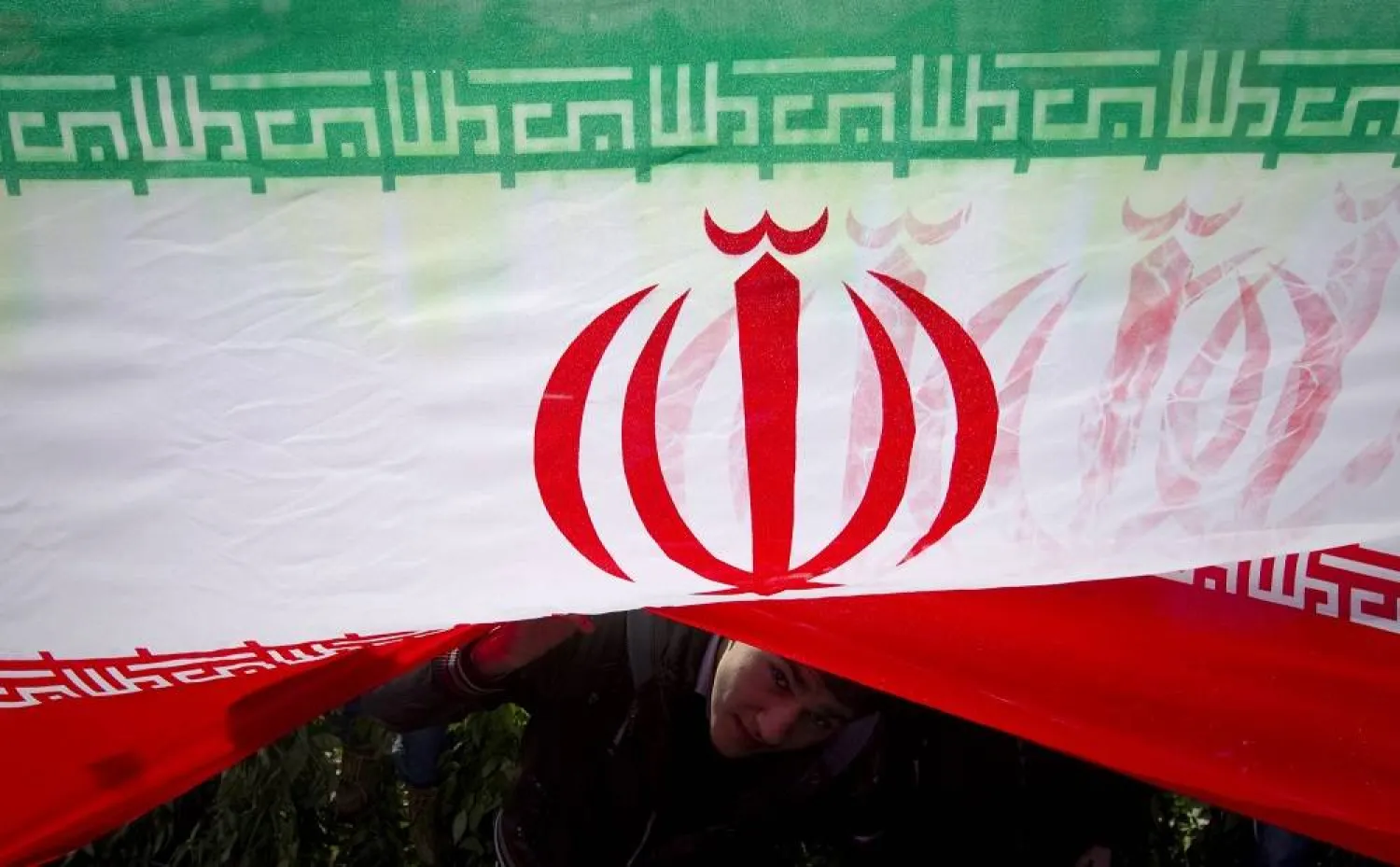
File photo of the Iranian flag (Reuters)
TT

Iran Executed Swedish Citizen, Says Sweden FM

File photo of the Iranian flag (Reuters)

Sweden's foreign minister on Wednesday said that Iran had executed a Swedish citizen, after Iranian authorities announced the first execution of a man convicted of spying since the start of its war against Israel and the United States. 

Maria Malmer Stenergard told AFP that she had learnt late Tuesday that the sentence was likely to be carried out. 

"We immediately contacted Tehran, of course, and I tried to arrange a meeting with my counterpart to ask him to immediately suspend the execution, but unfortunately, he was unavailable," she told AFP. 

She did not identify the citizen who was executed. 

Earlier, Iran's judiciary news agency Mizan Online said a man named Kouroush Keyvani was executed for spying for Israel, and that he was arrested during Iran's 12-day war with Israel in June last year. 

It listed details of alleged meetings with agents from Israel's Mossad spy agency and said he had received training in "six European countries and in Tel Aviv". 

This was the first public announcement of such an execution since Israel and the United States launched strikes on Iran on February 28, killing its supreme leader Ali Khamenei and triggering the war that has spread across the Middle East. 

The man had obtained Swedish citizenship in 2019. When asked about the reasons for his trip to Iran, Stenergard declined to comment. 

Since his arrest, "we have done everything in our power to try to change this situation. We have been in contact at various levels, both in Stockholm and in Tehran," she said. 

- Access denied - 

Sweden had made several requests for consular access. "But Iran does not consider this person a Swedish citizen and therefore did not grant this access," Stenergard said. 

"This has, of course, complicated our ability to obtain information," she added. 

In a separate statement, she said she had received the news that the execution had been carried out with "dismay". 

"It is obvious to us that the legal process which led to the execution of the Swedish citizen was not conducted in accordance with the rule of law," she added in that statement. 

According to the NGO Iran Human Rights (IHR), two more people were hanged in 2026 following convictions for espionage: Ali Ardestani on January 7 and Hamidreza Sabet Esmailpour on January 28. 

The NGO documented at least 13 similar executions in 2025. 

During the 12-day war last year, a significant number of people were arrested, accused of spying for Israel. 

Major questions remain about the fate of prisoners currently held in Iran. 

"Recent statements by the head of the judiciary ... have heightened concerns about the possible pronouncement and swift implementation of death sentences for espionage," IHR warned. 

Iran has arrested hundreds of people in recent days suspected of collaborating with Israel and the United States, according to local media reports. 

On Sunday, police chief Ahmad-Reza Radan spoke of the arrest of 500 people suspected of espionage and of "passing information to the enemy and anti-Iranian media". 

Another Swedish-Iranian, Ahmadreza Djalali, has been imprisoned in Iran for nearly 10 years. He was convicted in 2017 of collaborating with Mossad. 


Pakistan and Afghanistan Announce Eid ‘Pause’ in Hostilities

 A part of a drug rehabilitation center destroyed in what the Taliban said was a Pakistani air strike burns, in Kabul, Afghanistan, March 18, 2026. (Reuters)
A part of a drug rehabilitation center destroyed in what the Taliban said was a Pakistani air strike burns, in Kabul, Afghanistan, March 18, 2026. (Reuters)
TT

Pakistan and Afghanistan Announce Eid ‘Pause’ in Hostilities

 A part of a drug rehabilitation center destroyed in what the Taliban said was a Pakistani air strike burns, in Kabul, Afghanistan, March 18, 2026. (Reuters)
A part of a drug rehabilitation center destroyed in what the Taliban said was a Pakistani air strike burns, in Kabul, Afghanistan, March 18, 2026. (Reuters)

Pakistan and Afghanistan on Wednesday announced a halt in fighting during celebrations for the end of Ramadan, after the deadliest strike in their escalating conflict killed hundreds in Kabul earlier this week.

The governments in Islamabad and Kabul said in separate statements that Saudi Arabia, Qatar and Türkiye had requested a pause in fighting over Eid al-Fitr and both agreed.

Cross-border attacks have intensified since last month and Pakistan accuses the Taliban authorities of shielding extremists behind attacks on its territory. Afghanistan denies doing so.

On Monday night, Pakistani jets struck a drug rehabilitation center in the Afghan capital, prompting fresh calls for an immediate end to attacks and talks to end the bloodshed.

Pakistan's information minister, Attaullah Tarar, said the government agreed to a halt to its operations from Thursday to Monday "in good faith and in keeping with the Islamic norms".

Taliban government spokesman Zabiullah Mujahid said defending Afghanistan was "a national and religious obligation" and they would respond to any aggression or threat.

Tarar said: "In case of any cross-border attack, drone attack or any terrorist incident inside Pakistan, (operations) shall immediately resume with renewed intensity."

- Mass funeral -

The Taliban authorities have said that around 400 people were killed and more than 200 wounded in Monday's strike and a mass funeral was held for some of the victims on Wednesday.

Afghan Red Crescent Society volunteers carried dozens of simple wooden coffins from a fleet of ambulances to a mass grave in Kabul, dug in the rocky ground of a rainswept hillside by giant excavators.

At the graveside, Interior Minister Sirajuddin Haqqani said they were innocent victims targeted by "criminals", days before the end of the Muslim holy month.

"We will take revenge," he added and warned those behind Monday night's bombing: "We are not weak and helpless. You will see the consequences of your crimes."

But Haqqani, who until last year had a $10-million US bounty on his head, also suggested that talks were the government's preferred option to halt the fighting.

"We do not want war but the situation has come to this," he said. "So, we are trying to solve the problems through diplomacy."

Interior ministry spokesman Abdul Mateen Qani said the ceremony was for identified victims. Some had been sent back to their home provinces for burial.

Identification of other victims was still ongoing, he added.

Health ministry spokesperson Sharafat Zaman told AFP that 50 coffins had been brought to the Kabul site on Wednesday.

- Identification -

Obtaining immediate independent confirmation of exact death tolls is difficult in Afghanistan and Pakistan, with attacks often in hard-to-reach places and with conflicting information.

AFP journalists at the scene on Monday evening and Tuesday morning saw at least 95 bodies extracted from the rubble at the devastated center.

Jacopo Caridi, the Afghanistan country director for the Norwegian Refugee Council, a humanitarian NGO, said they also had teams on the ground.

"From what we saw and what we discussed with the others involved in the (emergency) response, we can say that there were hundreds of killed and wounded," he told AFP.

Recovery of bodies has proven difficult because of the debris and collapsed structures, and Caridi described the scene as "shocking", which would make identification more difficult.

"I saw a finger in one place, a foot in another place, a hand in one location. It was really horrific," said Caridi.

- Mediation stalled -

Afghanistan and Pakistan have faced calls for an immediate end to the conflict, with the overall civilian death toll mounting and concern about those displaced.

The UN said before Monday's strike that at least 76 Afghan civilians had been killed in the fighting since February 26, and that more than 115,000 people had been forced from their homes.

Mediation efforts, however, have so far proved fruitless.

China has sent a special envoy to mediate and pledged to play a "constructive role in de-escalating tensions".

Russia's special representative for Afghanistan, Zamir Kabulov, said Moscow "will be ready" to help broker talks if both sides request it.

"So far, this has not happened," he told pro-Kremlin outlet Izvestia.


NATO Allies in Talks on 'Best Way' to Re-open Hormuz Strait

FILE PHOTO: A map showing the Strait of Hormuz is seen in this illustration taken June 22, 2025. REUTERS/Dado Ruvic/Illustration/File Photo/File Photo
TT

NATO Allies in Talks on 'Best Way' to Re-open Hormuz Strait

FILE PHOTO: A map showing the Strait of Hormuz is seen in this illustration taken June 22, 2025. REUTERS/Dado Ruvic/Illustration/File Photo/File Photo

NATO chief Mark Rutte said Wednesday that allies of the military alliance were in discussions on the "best way" to open the Strait of Hormuz, through which a large chunk of the world's oil supply normally passes, AFP reported.

"I have been in contact with many allies. We all agree, of course, that strait has to open up again. And what I know is that allies are working together, discussing how to do that, what is the best way to do it," Rutte told a news conference during a visit to a NATO exercise in northern Norway.

US President Donald Trump has urged other global powers to send warships to escort convoys of tankers through the Strait of Hormuz, a vital waterway for the world's oil and liquefied natural gas supplies.


Iran President Confirms 'Assassination' of Intelligence Minister

US and Iran flags are seen in this illustration taken June 18, 2025. REUTERS/Dado Ruvic/Illustration/File Photo
TT

Iran President Confirms 'Assassination' of Intelligence Minister

US and Iran flags are seen in this illustration taken June 18, 2025. REUTERS/Dado Ruvic/Illustration/File Photo

Iran's President Masoud Pezeshkian confirmed on Wednesday that Intelligence Minister Esmail Khatib had been killed in the war with the US and Israel, blasting a "cowardly assassination".

In a post on X, Pezeshkian did not say who had carried out the attack but earlier Israel's defence minister announced that Khatib had been "eliminated, AFP reported.

"The cowardly assassination of my dear colleagues Esmail Khatib, Ali Larijani and Aziz Nasirzadeh, along with some of their family members and accompanying team, has left us in mourning," he said, referring to Iran's recently killed security chief and defense minister.

Israel’s defense minister said Wednesday that the military killed Iranian Intelligence Minister Esmail Khatib. Khatib’s killing follows Israel killing top Iranian security official Ali Larijani and the head of the paramilitary Revolutionary Guard’s all-volunteer Basij force.

Also on Wednesday, Iran launched strikes toward Israel and neighboring Gulf countries, with explosions heard in the United Arab Emirates and Qatar and interceptions reported in Saudi Arabia.
