


Houthis Besiege Thousands of Civilians South of Marib

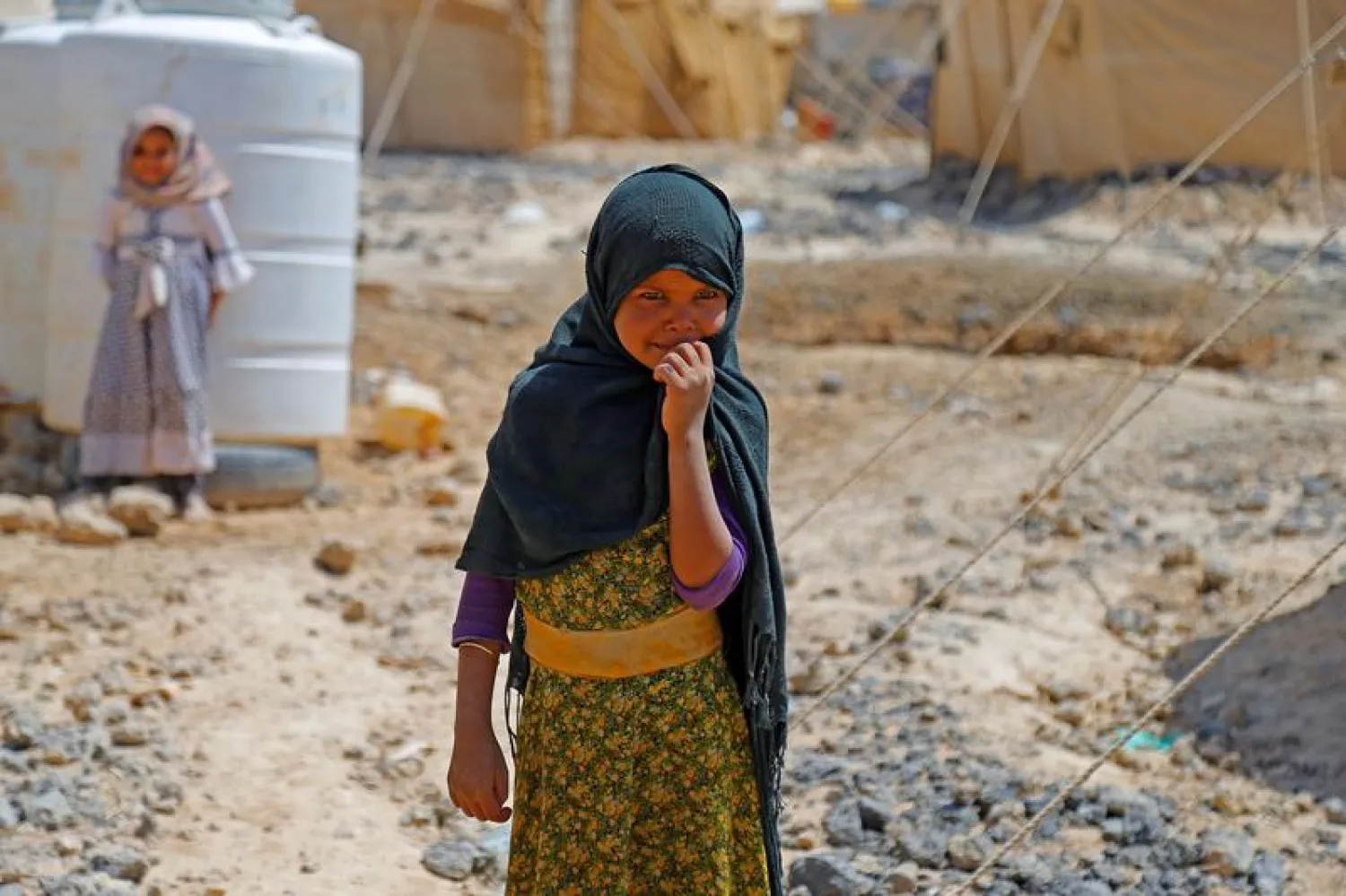
A girl pictured at a camp for internally displaced people (IDPs) in Marib, Yemen (Reuters)
TT

Houthis Besiege Thousands of Civilians South of Marib

A girl pictured at a camp for internally displaced people (IDPs) in Marib, Yemen (Reuters)

Houthi militias besieged thousands of civilians in the south of Marib, preventing food supplies, medicine, and fuel from entering the area, announced local and Yemeni human rights sources.

Clashes intensified between government forces and Houthi militias in the Harib district. The militias closed the roads leading to the al-Abdiya district after blocking all the streets from the al-Bayda governorate.

About 35,000 people live in tragic conditions and are unable to provide first aid.

Yemeni human rights advocates and the Executive Unit for the IDP Camps in Marib warned that the residents and shops had run out of wheat stocks due to the high demand.

They said that urgent intervention was required to save thousands of families after the militias isolated the district from the rest of the province.

The Executive Unit appealed to the Resident Coordinator of the UN, Humanitarian Coordinator William David Gresley and international organizations to open safe corridors for humanitarian aid to reach the displaced families in the al-Abdiya district.

It called on the UN and the international community to pressure the Houthi militia to stop its attacks on Marib and target the displaced.

It stressed the need for urgent action to provide relief and immediate aid to affected families.

Meanwhile, the International Organization for Migration (IOM) stated that about 3,800 individuals were displaced due to the clashes in Marib, Shabwa, and Abyan between September 19 and 25.

IOM said that 635 families were displaced at least once, and the largest number of displacement cases was recorded in Marib with 398 families, Shabwa with 85 families, and Abyan with 57 families.

According to the weekly update of the displacement movement, 12,000 families were displaced at least once, and 622 families were displaced two or three times due to the escalation of the conflict.

Yemeni Minister of Information, Culture and Tourism, Moammar el-Eryani, confirmed that the displaced in Maerib governorate amount to 7.5 percent of the country's total population.

Eryani warned of new waves of displacement of thousands of families, noting that families living in IDP camps in western Shabwa and southern Marib will be displaced for the second and third time.

The Yemeni minister pointed out that dozens of families were forced to flee the districts towards the overcrowded city of Marib, which includes more than two million displaced people, amounting to 60 percent of the total displaced people in various governorates and 7.5 percent of the total population of Yemen.

Estimates indicate that the displacement is the largest since the coup due to the continued Houthi escalation and the militia's indiscriminate bombing of populated areas and displacement camps.

He called on the international community, the UN, the US, international envoys, and human rights organizations to assume legal and humanitarian responsibilities.



Houthis Attack Aden’s International Airport

Houthi fighters ride in a pickup truck on a street, in Sanaa, Yemen, 07 October 2026. (EPA)
TT

Houthis Attack Aden’s International Airport

Houthi fighters ride in a pickup truck on a street, in Sanaa, Yemen, 07 October 2026. (EPA)

Yemen's terrorist Houthi militia attacked Aden's international airport with ballistic missiles and explosive-laden drones on Wednesday, the country's Transport Ministry said, as fighting between the Iran-aligned group and legitimate government forces intensified.

One missile landed near the runway minutes before a flight from Cairo was due to land, the ministry said. The airport is the main international gateway for parts of Yemen outside Houthi control.

Battles have focused in recent days on areas around the Bab al-Mandeb Strait, a shipping route that has become more crucial for energy exports since the conflict between the US and Iran restricted trade through the Strait of Hormuz.

This week, Yemeni government forces with Saudi-led coalition air support launched a counteroffensive to recapture strategic territory near the strait and around the town of Mokha that the Houthis had captured in September.

The fighting, a spillover from the wider US-Iran conflict, has revived a complex 12-year war ‌in Yemen that ‌led to one of the worst humanitarian crises globally and fragmented the Arab world's most impoverished country. The ‌number ⁠of people displaced since ⁠the latest round of fighting began has risen to more than 200,000, the International Organization for Migration said on Wednesday.

"People are running for their lives and finding nowhere safe to go," said IOM Director General Amy Pope, who called for more funding amid rising needs for food and shelter. Both sides allege that hundreds of people have been killed in fighting, without providing details. The UN says three in four families are going hungry in parts of Yemen.

The Houthis have repeatedly targeted infrastructure including airports, oil refineries and pipelines in Saudi Arabia.

One person was killed and eight wounded in an attack on King Khalid International Airport in the Saudi capital Riyadh, and two were killed and 28 wounded in an attack on facilities at Abha airport, ⁠Saudi civil aviation authorities said in a statement on Wednesday.

One of the attacks was on Wednesday ‌and the other on Tuesday, it said.

On ‌Wednesday, the Saudi-led coalition said it had intercepted and destroyed a Houthi ballistic missile north of the Saudi capital Riyadh. It said it was tracking the ‌launch platform over Houthi-controlled Sanaa and would destroy it.

Any Houthi stranglehold on the Strait could threaten shipping or global oil flows.

Fighting on the western front remains concentrated in the Dhubab district overlooking Bab al-Mandeb, with pro-government forces attempting an advance in the strategic hills to the east of that coastal plain, Yemeni military and government sources said.

On Monday the Yemeni government said it had reached Mokha, which sits at a junction with a supply route to the critical battleground of Taiz, but the claim had been premature, according to Yemeni military officials on the ground and analysts.


Condemnation in Sweida as Hijri Followers Rally for Israel on Oct. 7 Anniversary

A rally in Sweida’s al-Sayr Square, formerly al-Karama Square, in solidarity with Israel and Netanyahu on the anniversary of the Oct. 7 attacks. (Pro-Hijri websites)
TT

Condemnation in Sweida as Hijri Followers Rally for Israel on Oct. 7 Anniversary

A rally in Sweida’s al-Sayr Square, formerly al-Karama Square, in solidarity with Israel and Netanyahu on the anniversary of the Oct. 7 attacks. (Pro-Hijri websites)

Sources in Syria’s predominantly Druze province of Sweida condemned rallies held by followers of Druze spiritual leader Sheikh Hikmat al-Hijri on Wednesday in solidarity with Israel on the anniversary of the Oct. 7 attacks.

A Druze figure mediating between the Syrian government and the Druze told Asharq Al-Awsat that an alternative to Hijri’s movement had been formed.

Demonstrators and a car procession in Sweida city displayed Israeli flags and portraits of Israeli Prime Minister Benjamin Netanyahu and Hijri, whose affiliated “National Guard” controls much of the province, including the city. Hijri previously announced what he called the “State of Bashan.”

The rallies marked the anniversary of the Oct. 7, 2023, attacks that triggered the Gaza war.

Sources in Sweida city described participants as “Hijri’s thugs,” telling Asharq Al-Awsat the events were another way of throwing themselves into Israel’s arms. Solidarity, they said, would have been better directed toward the thousands of children Israel has killed in Gaza.

Separately, a Druze source mediating an end to Sweida’s crisis, which has persisted since the bloody events of July 2025, said an “Emergency Committee” had 15 members and a broad advisory body representing families, sheikhs, academics and cultural figures in the province.

The source requested anonymity to protect the mediation’s confidentiality at this stage and the safety of those involved.

The committee brings together Druze figures living in Sweida, elsewhere in Syria and abroad, the source said.

A Syrian-led solution

The government and Sweida residents share a tacit understanding that Hijri has become part of the problem and is no longer part of the solution, the source said.

Both sides agree in principle that “any solution must be Syrian-led. There will be no compromise on that.”

The source said Sweida residents knew the government had accepted almost all their demands before the July 2025 events and remained ready to offer more to safeguard their security and dignity.

Both sides share the same interests, the source said: preserving Syrian sovereignty over all its territory and ensuring the Druze have a voice in national decisions, particularly those affecting their areas.

But the source faulted the government for sidelining strong, patriotic Druze figures who disagreed with it on some aspects of how to resolve Sweida’s crisis.

“The Syrian government backed figures from the province whom the Druze see as unable to truly represent them and firmly demand their rights from Damascus,” the source said. “It therefore failed to engage with leaders who represent the community’s concerns, interests and fears.”

The government must correct that, the source said, and work with Druze figures who are “neither agents of foreign powers nor subservient to the government, and who firmly defend the interests of both the country and the community.”

“There is considerable hope of resolving Sweida’s crisis, but the problem lies with Israel,” the source said. “The two issues are closely linked. They must be separated, and Sweida’s crisis resolved through a Syrian-led solution.”

Mediation now centers on what the government will offer and what Sweida residents will accept. The government has responded positively to the demands, the source said.

The two sides broadly agree that their interests as Syrians are inseparable: what harms the Druze harms Syria, and what harms Syria harms the Druze.

But progress hinges on how to deal with those blocking any solution in the province — the leaders of the “Security Office,” run by Hijri’s son Salman, the source said.

The security obstacle

Many solutions are on the table, the source said. Agreement will come when mediation gives way to direct negotiations at the same table.

“The talks have shown that the political and social issues have been resolved, with understandings reached on many matters,” the source said. “The only remaining obstacle is purely a security one: who will deal with the ‘thugs,’ and how to support and strengthen that patriotic group with funding, equipment and media backing.”

For the committee to go public, the source said, the influence of those “the U.S. envoy and the international community have described as gangs” must end.

“That is the problem now being examined, and this is where the Israeli factor comes in.”

The source added, however, that “Israel has sent no financial support to Hijri since the beginning of 2026.”

The United States is putting enormous pressure on Israel over Syria as a whole, the source said, with Sweida only a small part of Syrian-US-Israeli relations.

The source repeatedly distinguished between those described as “gangs and thugs” and those whose hands were not stained by treason, direct collaboration with foreign powers or collusion against the country. The latter would have a place in Sweida and, in the future, in state institutions.

Rifts within the “National Guard”

Signs of growing divisions among “National Guard” factions emerged when Bassem Abu Fakhr, a leader of the Men of Dignity Movement, accused Hijri and his supporters of dragging Sweida’s residents into a “project of bloodshed,” without naming them.

The movement is one of Sweida’s largest local armed factions, with an estimated 8,000 fighters.

“They dragged people into a project of bloodshed and mobilized hundreds of accounts to provoke others, promote the vilest people and smear honorable ones, until they turned truth into falsehood and falsehood into truth in the minds of those they had misled,” Abu Fakhr wrote on Facebook.

Asharq Al-Awsat learned that families belonging to the Abu Fakhr clan were asked to disavow the statements made in their name in the post. Most refused.


Lebanon's Hezbollah Gets $200 million from Iran to Help Displaced

Supporters of Hezbollah wave flags of the group during a ceremony held to mark the second anniversary of the killing of leader Hassan Nasrallah in a strike by Israel, in Beirut's southern suburbs on September 27, 2026.  (Photo by Anwar AMRO / AFP) /
Supporters of Hezbollah wave flags of the group during a ceremony held to mark the second anniversary of the killing of leader Hassan Nasrallah in a strike by Israel, in Beirut's southern suburbs on September 27, 2026. (Photo by Anwar AMRO / AFP) /
TT

Lebanon's Hezbollah Gets $200 million from Iran to Help Displaced

Supporters of Hezbollah wave flags of the group during a ceremony held to mark the second anniversary of the killing of leader Hassan Nasrallah in a strike by Israel, in Beirut's southern suburbs on September 27, 2026.  (Photo by Anwar AMRO / AFP) /
Supporters of Hezbollah wave flags of the group during a ceremony held to mark the second anniversary of the killing of leader Hassan Nasrallah in a strike by Israel, in Beirut's southern suburbs on September 27, 2026. (Photo by Anwar AMRO / AFP) /

Hezbollah has received $200 million from Iran to help Lebanese displaced by this year’s war with Israel, two people with direct knowledge of the transfer said, the first significant aid from the group to supporters who bore the brunt of the conflict.

Hezbollah received the cash last month despite a tightening US economic chokehold on Iran and increasing difficulties in getting funds to Tehran's Lebanese ally, said the people.

Intermediaries who moved the money charged a 20% fee, reflecting the risks of dealing with the group, they said. One said this was four times the normal fee.

Asked for comment, a Hezbollah official said an amount had been secured and a plan for distributing it would be announced in the coming days, without elaborating on the source of the funds.