Musk Asks Twitter Followers Whether he Should Sell 10% of Tesla Stockhttps://english.aawsat.com/home/article/3290096/musk-asks-twitter-followers-whether-he-should-sell-10-tesla-stock
Musk Asks Twitter Followers Whether he Should Sell 10% of Tesla Stock
Tesla Inc Chief Executive Elon Musk. (Reuters)
Tesla Inc Chief Executive Elon Musk on Saturday asked his 62.5 million followers on Twitter in a poll if he should sell 10% of his Tesla stock.
The world's richest person had previously said he could face a "massive" tax bill this year as he has to exercise a large number of stock options coming due next year.
"Note, I do not take a cash salary or bonus from anywhere. I only have stock, thus the only way for me to pay taxes personally is to sell stock," Musk said on Twitter on Saturday.
"Much is made lately of unrealized gains being a means of tax avoidance, so I propose selling 10% of my Tesla stock," he said, referring to a "billionaires' tax" proposed by Democrats.
Musk has criticized the proposal, which would affect 700 billionaires and impose taxes for long-term capital gains on tradable assets, whether or not they have been sold.
Musk said that he will abide by the results of the poll, whichever way it goes.
The poll received near 2 million responses in seven hours after he posted it, with 55% of respondents approving the proposal to sell the shares. The poll is scheduled to end around 3 p.m. ET (2000 GMT) on Sunday.
Musk's shareholding in Tesla comes to about 170.5 million shares as of June 30 and selling 10% of his stock would amount close to $21 billion based on Friday's closing, according to Reuters calculations.
'Stocks go down'
Musk has an option to buy 22.86 million shares at $6.24 each, which expires on Aug. 13 next year, according to a Tesla filing. Tesla's closing price was $1,222.09 on Friday.
In September, Musk said he is likely to pay taxes of over half the gains he would make from exercising options. He also dismissed the possibility that he would take loans with his Tesla shares as collateral. "Stocks don't always go up. They go down," he said at the code conference.
Some Tesla board members, including his brother Kimbal Musk, offloaded large numbers of shares after Tesla stock hit a record high late October.
Musk recently said on Twitter he'd sell $6 billion in Tesla stock and donate it to the World Food Program (WFP), provided the organization disclosed more information about how it spent its money.
His tweet raised some eyebrows in the world of finance.
"We are witnessing the Twitter masses deciding the outcome of a $25B coin flip," Venture investor Chamath Palihapitiya wrote on Twitter.
"Looking forward to the day when the richest person in the world paying some tax does not depend on a Twitter poll," Berkeley economist Gabriel Zucman tweeted.
Musk got into trouble with a tweet about taking Tesla private in 2018.
Google, Meta, TikTok Hit by EU Consumer Complaints about Handling of Financial Scamshttps://english.aawsat.com/technology/5275768-google-meta-tiktok-hit-eu-consumer-complaints-about-handling-financial-scams
FILE PHOTO: The logo of Meta is seen during the Viva Technology conference dedicated to innovation and startups at Porte de Versailles exhibition center in Paris, France, June 12, 2025. REUTERS/Benoit Tessier/File Photo
Google, Meta, TikTok Hit by EU Consumer Complaints about Handling of Financial Scams
FILE PHOTO: The logo of Meta is seen during the Viva Technology conference dedicated to innovation and startups at Porte de Versailles exhibition center in Paris, France, June 12, 2025. REUTERS/Benoit Tessier/File Photo
Alphabet's Google, Meta Platforms and TikTok were hit with complaints from European Union consumer groups on Thursday for allegedly failing to protect users from financial scams on their platforms, putting them at risk of regulatory fines.
The move highlights growing pressure worldwide on Big Tech to do more to address the negative impacts of social media, particularly for children and vulnerable users.
The complaints, filed by the European Consumer Organisation (BEUC) and 29 of its members in 27 European countries, were submitted to the European Commission and national regulators under the Digital Services Act, which requires large online platforms to do more to tackle illegal and harmful content, Reuters reported.
"Meta, TikTok and Google not only fail to proactively remove fraudulent ads but also do little when being notified about such scams," BEUC Director General Agustin Reyna said in a statement.
"If they fail to address the financial scams circulating on their platforms, fraudsters will continue to reach millions of European consumers daily, leaving people at risk of losing hundreds to thousands of euros to fraud," he said. Google and Meta rejected the complaints and said they work proactively to protect their users.
A Google spokesperson said: "We strictly enforce our ad policies, blocking over 99% of violating ads before they ever run. Our teams constantly update these defences to stay ahead of scammers and protect people."
Meta said it found and removed over 159 million scam ads last year, 92% before anyone reported them. "We invest in advanced AI, tools, and partnerships to stop them," a spokesperson said.
TikTok said it takes action against violations, adding that scams are an industry-wide challenge while bad actors constantly adapt their tactics.
The consumer groups, meanwhile, said they reported nearly 900 ads suspected of breaching EU laws between December last year and March this year but the platforms only took down 27% of the ads and 52% of the reports were rejected or ignored.
The groups urged regulators to investigate whether the companies were complying with the rules and to impose fines for breaches.
DSA fines can reach as much as 6% of a company's global annual turnover.
SDAIA Outlines Comprehensive Data Quality Journey to Support National AI Initiativeshttps://english.aawsat.com/technology/5275751-sdaia-outlines-comprehensive-data-quality-journey-support-national-ai
SDAIA Outlines Comprehensive Data Quality Journey to Support National AI Initiatives
The Saudi Authority for Data and Artificial Intelligence (SDAIA)
The Saudi Data and Artificial Intelligence Authority (SDAIA) highlighted data quality as a critical foundation for enhancing information reliability, boosting performance, and enabling accurate business decisions, as part of its efforts during the Year of Artificial Intelligence 2026 to raise awareness about data importance.
The authority noted that high data quality serves as the cornerstone for sustainable national trust, integrated digital services, operational savings, entrepreneurship, and readiness for artificial intelligence applications, SPA reported.
SDAIA stated that the data quality journey spans five phases, beginning with a creation phase, where data is entered according to standardized criteria.
This is followed by a storage and organization phase to structure data and eliminate duplication, and an integration and sharing phase, which assesses quality before data is reused.
The journey continues through an analysis and use phase, where report accuracy is tied directly to source quality, and culminates in a continuous improvement phase, which utilizes analysis and user feedback to constantly refine data sets.
SDAIA called on organizations to adopt comprehensive data quality practices and strictly adhere to national regulations and standards. This includes integrated data quality planning, prioritizing initial assessments, developing data rules, and establishing clear performance indicators to measure improvement.
The authority also emphasized the importance of conducting periodic reviews and enabling users to report quality problems, which will ultimately maximize the efficiency of digital services and AI applications across the Kingdom.
Dell to Asharq Al-Awsat: AI in Saudi Arabia Enters Production, Not Experimentation Phasehttps://english.aawsat.com/technology/5275232-dell-asharq-al-awsat-ai-saudi-arabia-enters-production-not-experimentation-phase
Dell to Asharq Al-Awsat: AI in Saudi Arabia Enters Production, Not Experimentation Phase
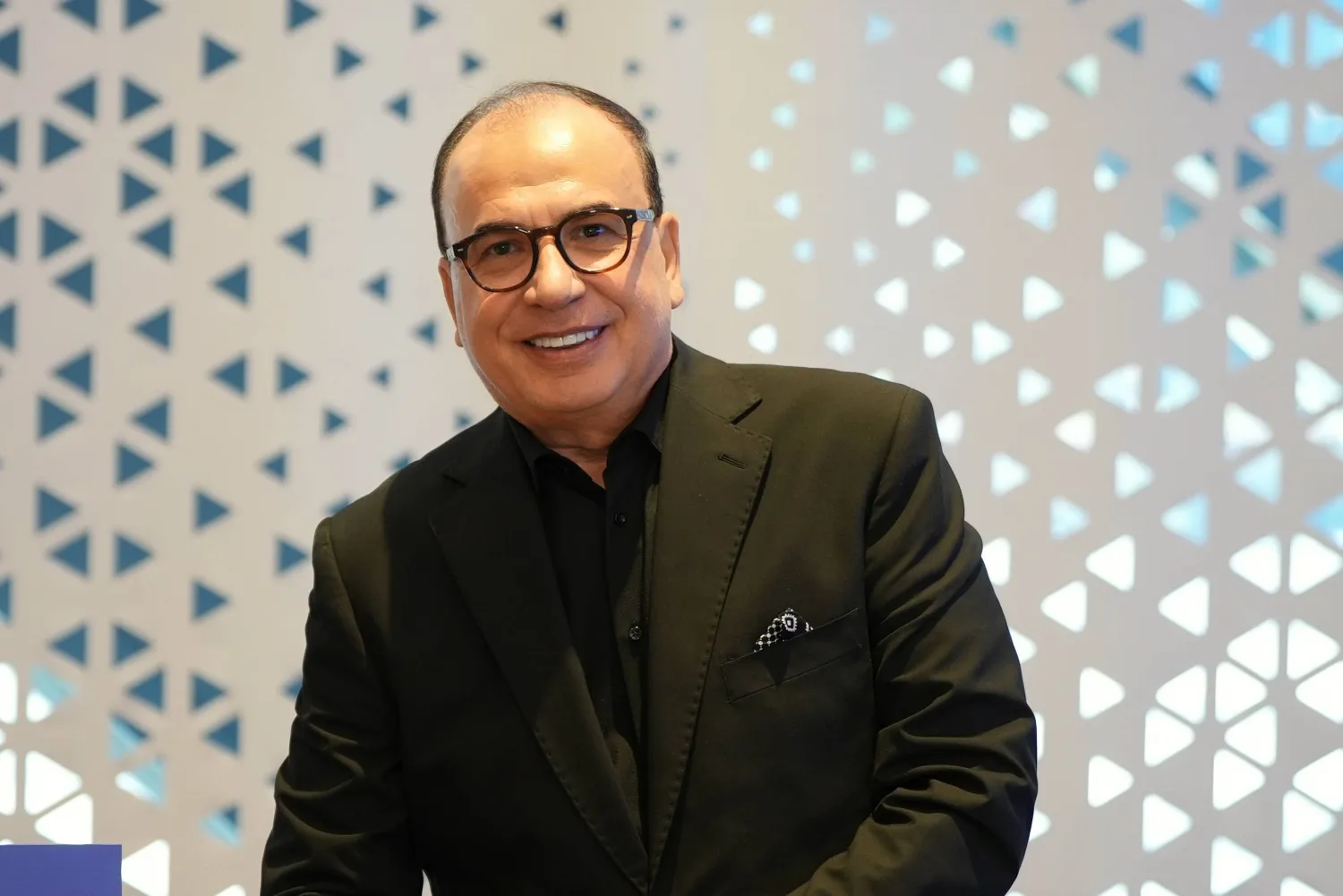
Mohammed Amin, Senior Vice President for Central Eastern Europe, Middle East, Türkiye and Africa at Dell Technologies
Saudi Arabia became a focal point of discussion in the “Dell Technologies World 2026” in Las Vegas this week about the next phase of artificial intelligence.
The question is no longer just about the size of investment in infrastructure or national capacity building, but about the difference the Kingdom can make in a global market transitioning from AI experimentation to its operational deployment within institutions.
In exclusive remarks to Asharq Al-Awsat, Michael Dell, Chairman and CEO of Dell Technologies, stated that what the company sees in Saudi Arabia is a “deep commitment to modernizing the Kingdom,” highlighting its significant energy resources and Dell's collaboration with Humain and other companies in the Kingdom, in addition to a regional facility through which the company works to “aggregate these capabilities and build infrastructure for customers in the region.”
He added that every country today is going through a phase of re-understanding what the transition towards AI means, and how citizens and industries can be empowered to drive the economy forward. In the same session, Dell described Saudi Vision 2030 as “highly ambitious,” and the ambition for AI under this vision as “impressive.”
The Operation Test
From this point, the real discussion about Saudi Arabia and artificial intelligence begins. The narrative is no longer solely about the volume of investments, the speed of data center construction, or the number of announced national projects.
The challenge of the next test relates to how this national capability can be transformed into operational value within government entities, banks, hospitals, energy and telecommunications companies, and smart cities. It's about how institutions move from AI experiments to systems that operate daily, on real data, within secure environments, and at a predictable cost.
Mohammed Amin, Senior Vice President for Central Eastern Europe, Middle East, Türkiye and Africa at Dell Technologies, places this transformation in a clear context.
In remarks to Asharq Al-Awsat on the sidelines of the conference, he states that the biggest barrier for institutions in Saudi Arabia and the Gulf as they transition from AI experimentation to production is not a single isolated factor, but an interconnected system encompassing infrastructure, governance, skills, cyber resilience, cost, and operating models.
However, he considers “data readiness” to be the primary obstacle. He adds: “Without a reliable and AI-ready data foundation, even the most advanced infrastructure is insufficient, and pilot projects falter before reaching production.”
Mohammed Amin, Senior Vice President for Central Eastern Europe, Middle East, Türkiye and Africa at Dell Technologies
Data Before the Model
This point appears fundamental to Dell's assessment of the Saudi phase, as the company indicates that 96 percent of Saudi institutions now view AI as a key part of their business strategy, according to its research on the state of innovation and AI.
However, this indicator, despite its importance, does not mean that the path to production has become easy. Many institutions still operate through outdated and fragmented systems, distributed data, inconsistent governance, and limited access to reliable real-time data.
According to Amin, the fastest-advancing institutions are those that treat AI “not as a standalone tool, but as a transformation of the entire operating model.”
Here lies the difference between ambition and operational infrastructure. An institution that wants to use AI for customer service, risk management, predictive maintenance, or patient data analysis not only needs a robust model but also requires its data to be discoverable, governed, reliable, and usable by AI systems in a timely manner.
Amin defines AI-ready data as data that is “discoverable, governed, reliable, and usable by AI systems in real-time.” This definition transforms the discussion from a narrow technical question to an institutional one: Does the institution know where its data is, who can use it, and can it be trusted when fed into a model or intelligent agent?
Data from Sensitive Sectors
In the Saudi banking sector, this could mean linking customer, transaction, and risk data across different environments while maintaining compliance and governance. In hospitals, it involves securely organizing clinical and imaging data so that AI can support diagnosis or improve operations without compromising patient privacy. For government entities, it means unifying citizen and operational data while preserving sovereignty and security controls. As for energy companies, it might involve combining operational, sensor, and geographic data to support predictive maintenance and improve performance.
Dell states that updates to its Dell AI Data Platform specifically target this point, by indexing billions of files and linking them into governed data pipelines. The platform includes capabilities such as GPU-accelerated SQL analytics, achieving up to six times faster performance, and vector indexing up to 12 times faster.
These details might seem technical, but they actually determine the speed at which an institution transitions from a limited experiment to a widely operational AI service. The slower data is accessed or the less organized it is, the more the data pipelines themselves become an operational bottleneck. Amin notes that these capabilities help reduce response time, improve accuracy, and expand AI services with higher efficiency.
Local Operating Economics
As AI transitions to more sensitive and continuous workloads, another question emerges: when does private or institution-controlled infrastructure become more suitable than the public cloud? Amin does not present this as a stark choice between cloud and private infrastructure; he believes the public cloud remains important for experimentation, flexibility, and quick access to AI services. However, he adds that there comes a stage where controlled infrastructure becomes “strategically better,” especially when workloads involve sensitive national or financial data, or when response time requirements are critical.
This aligns with what Dell presented at the conference regarding Deskside Agentic AI, a solution aimed at running some AI agents locally on high-performance workstations, rather than relying entirely on cloud programming interfaces.
The company states that this solution can, in some cases, reach a break-even point with the cost of cloud programming interfaces within three months, and reduce spending by up to 87 percent within two years. Amin interprets these figures from a broader perspective, stating that technology managers in Saudi Arabia must evaluate the economics of AI “over its full lifecycle, not just by focusing on initial infrastructure costs.” The cloud might appear attractive at the outset, but it can become more expensive when running continuous generative or agentic workloads at the scale of a large enterprise.
Processor Efficiency
For Saudi Arabia, this issue is also linked to sectors with regulatory and sensitive natures. Amin acknowledges that the most realistic use cases today are those that deliver clear productive and operational value while maintaining manageable governance.
He points out that private assistants within institutions and workflow in regulated sectors represent a compelling starting point in the Kingdom, due to the strong focus on data security and sovereignty. He also believes that programming assistants are rapidly gaining momentum because they offer direct benefits to development teams.
The transition to production requires not only data and architecture but also infrastructure capable of handling high workload density. In heavy AI environments, processing units are insufficient if data does not move quickly between computing, storage, and applications.
Amin notes that the network design in PowerRack includes a switching capacity exceeding 800 terabits per second per rack, explaining that the practical meaning of this capacity is to eliminate data traffic bottlenecks between GPUs, storage, and applications. The longer GPUs wait for data, the lower the efficiency of infrastructure investment. Conversely, when data moves with low latency, training and inference operations become faster and more effective.
Cooling as a Strategic Factor
This discussion cannot be separated from cooling and power, as AI increases rack density and power requirements within data centers, making cooling a strategic, not just operational, factor.
Amin notes that the ability of Dell PowerCool C7000 to support facility water temperatures up to 40 degrees Celsius means that data centers can operate with higher efficiency in hot climates, reducing reliance on energy-intensive cooling.
In Saudi Arabia, where the government and private sector are investing in sovereign AI infrastructure, he believes that cooling “is no longer merely an operational issue,” but has become linked to scalability, energy efficiency, and long-term viability.
Data and Model Security
Cyber resilience is part of AI readiness; an intelligent system is not reliable if its data is corruptible, its models are exploitable, or its infrastructure is not recoverable. Amin points out that an AI system “is only as reliable as the data and models it operates on,” and a cyberattack that corrupts data or harms a model can have significant consequences.
Therefore, he believes that the maturity of cyber resilience will directly impact the extent to which institutions trust expanding their adoption of AI. Here, Dell offers tools like Cyber Detect, which it claims can detect data corruption resulting from ransomware attacks and accurately identify the last known clean version.
Openness and Sovereignty
With Dell's expanded partnerships with Google, Hugging Face, OpenAI, Palantir, ServiceNow, and SpaceXAI, the company emphasizes that institutions do not want to tie their AI strategy to a single model, cloud platform, or infrastructure package.
This openness, in Amin's view, gives institutions a “choice” and reduces vendor lock-in risks, allowing them to develop their capabilities as technology evolves. This is crucial in a fast-moving market like Saudi Arabia, where integration and interoperability can become strategic advantages in themselves.
When Mohamed Amin was asked about the Saudi sectors that would first require AI-ready infrastructure, he placed government, energy, telecommunications, finance, and smart cities at the forefront, due to the volume of their data, their national importance, and the operational value that AI can unlock.
These sectors are also most closely linked to sovereignty, compliance, and security requirements. Therefore, building a secure and scalable AI infrastructure appears not merely a technical upgrade, but part of institutions' ability to transform the Vision's ambitions into measurable daily operations.
Between Michael Dell's response regarding Saudi Arabia and Mohamed Amin's vision for the region, the picture of the next phase becomes clear. The Kingdom is not entering the AI race merely from the perspective of consumption or experimentation, but from the perspective of building institutional capability.
However, true capability will not be measured solely by the number of data centers or the volume of investment, but by institutions' ability to prepare their data, choose where to run their workloads, manage costs, protect their models and data, and scale their use without losing control or governance.
لم تشترك بعد
انشئ حساباً خاصاً بك لتحصل على أخبار مخصصة لك ولتتمتع بخاصية حفظ المقالات وتتلقى نشراتنا البريدية المتنوعة