Riyadh Hosts 42nd GCC Summit to Face Challenges, Seize Opportunitieshttps://english.aawsat.com/home/article/3358256/riyadh-hosts-42nd-gcc-summit-face-challenges-seize-opportunities
Riyadh Hosts 42nd GCC Summit to Face Challenges, Seize Opportunities
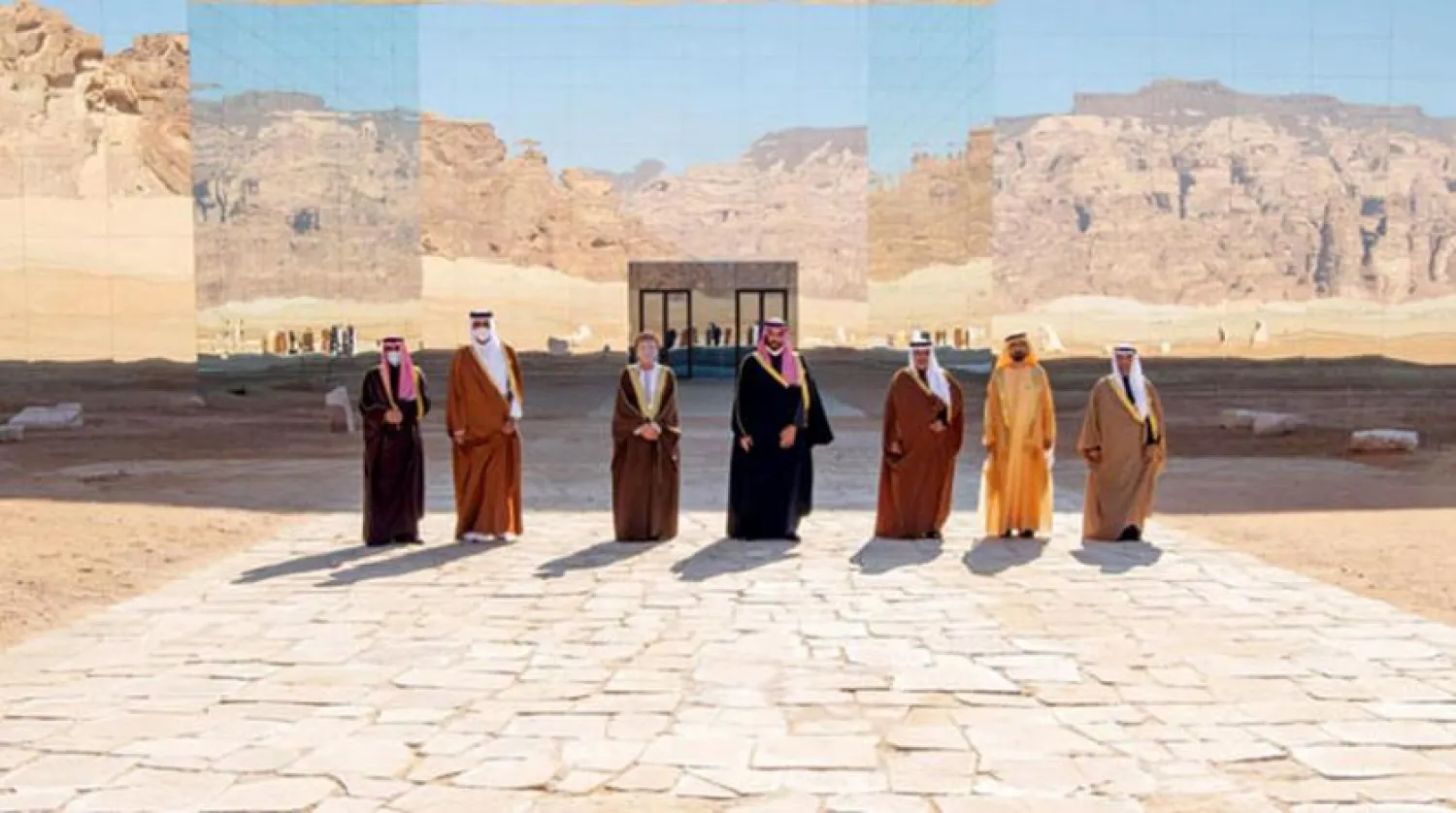
Leaders and heads of delegations of Gulf countries in a memorial photo before the launch of the Gulf Cooperation Council Summit (AlUla), which was held at the beginning of 2021 (SPA)
Riyadh Hosts 42nd GCC Summit to Face Challenges, Seize Opportunities
Leaders and heads of delegations of Gulf countries in a memorial photo before the launch of the Gulf Cooperation Council Summit (AlUla), which was held at the beginning of 2021 (SPA)
Riyadh is set to host the 42nd Gulf Cooperation Council (GCC) summit on Tuesday, with leaders from the six member states geared up to explore ways to boost cooperation and confront challenges.
Besides focusing on the outcomes of the AlUla Summit, the GCC conference will center around the full implementation of the vision set out by Saudi King Salman bin Abdulaziz and ratified by the GCC Supreme Council in 2015.
Accordingly, the summit will center around completing elements of economic integration and joint defense and security systems and developing a unified foreign policy among member states.
Saudi Crown Prince Mohammed bin Salman will head the Saudi delegation to the summit. The Bahraini delegation will be headed by King Hamad bin Isa Al Khalifa. The Qatari delegation will be headed by Emir Sheikh Tamim bin Hamad Al Thani.
On behalf of Sultan Haitham bin Tarik, Sheikh Fahd bin Mahmood Al Said will head the Sultanate of Oman’s delegation at the summit. UAE Prime Minister Sheikh Mohammed bin Rashid Al Maktoum will lead the UAE delegation.
Crown Prince Sheikh Mishal Al-Ahmad Al-Jaber Al-Sabah will head the Kuwaiti delegation to the summit.
The summit is being held at a sensitive time during which the region is facing many challenges, according to Saudi Foreign Minister Prince Faisal bin Farhan.
Despite the hardships, the top Saudi diplomat stressed that there are many opportunities present at the same time.
The foreign minister’s statement came at the end of a press conference in Riyadh after a meeting of the foreign ministers of the GCC countries in the presence of their Egyptian counterpart.
He affirmed that the leaders would discuss sensitive issues relating to regional security.
GCC Secretary-General Nayef al-Hajraf told reporters on Sunday that there are continuing consultations to enhance the stability of the region and the world.
King Salman: Saudi Arabia Was Established on Firm Foundations to Preserve the Faith, Justicehttps://english.aawsat.com/gulf/5321867-king-salman-saudi-arabia-was-established-firm-foundations-preserve-faith-justice
Custodian of the Two Holy Mosques King Salman bin Abdulaziz. (SPA)
TT
TT
King Salman: Saudi Arabia Was Established on Firm Foundations to Preserve the Faith, Justice
Custodian of the Two Holy Mosques King Salman bin Abdulaziz. (SPA)
Custodian of the Two Holy Mosques King Salman bin Abdulaziz stressed on Wednesday that Saudi Arabia's National Day was an occasion to recall the solid foundations upon which the Saudi state was established.
"By the grace of God, and then through the determination and leadership of the founder, King Abdulaziz bin Abdulrahman, alongside the citizens, the state was established to preserve the faith and establish justice," he said in a post on the X platform.
King Salman prayed to God to sustain Saudi Arabia's security, stability, and prosperity.
Saudi State Institutions: A Century Since the Basic Instructionshttps://english.aawsat.com/gulf/5321790-saudi-state-institutions-century-basic-instructions
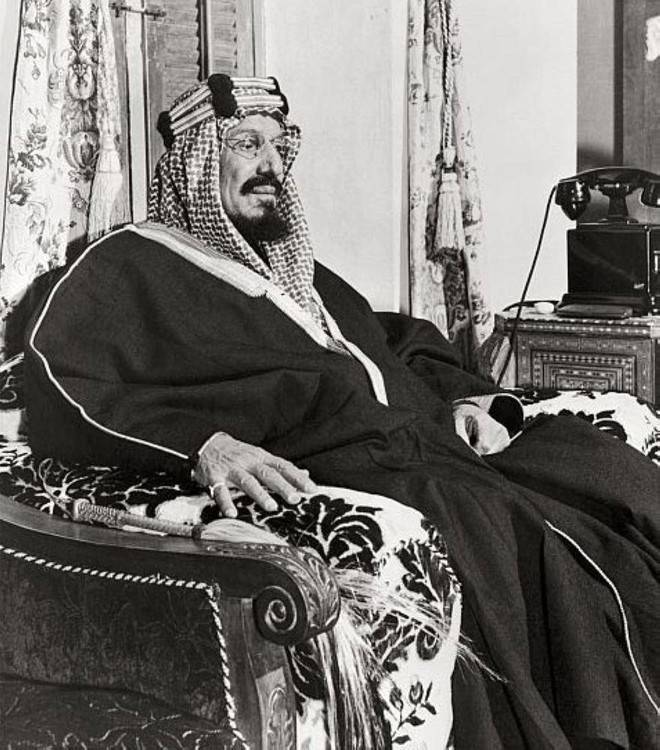
An early, rare photograph of King Abdulaziz in Makkah after he left the Grand Mosque (King Abdulaziz Foundation)
TT
TT
Saudi State Institutions: A Century Since the Basic Instructions
An early, rare photograph of King Abdulaziz in Makkah after he left the Grand Mosque (King Abdulaziz Foundation)
By Bandar Bin Abdulrahman Bin Moamar
Saudi Arabia was built neither on the ruins of another state nor on institutions left by a colonial power. Its founding three centuries ago was an achievement without precedent in the Arabian Peninsula.
King Abdulaziz, the founder of modern Saudi Arabia, inherited no unified state apparatus. Conditions and administrative arrangements varied across the regions. He drew on what existed, then brought those structures together and developed them as part of a growing institutional project.
After completing the annexation of the Hejaz in 1925, he laid new foundations for state institutions and administration, accelerating regional integration and strengthening national unity.
King Abdulaziz, the founder of modern Saudi Arabia
Saudi Arabia’s 96th National Day this year marks another anniversary: a century since the Basic Instructions were issued on Aug. 31, 1926. Dr. Abdulrahman Al-Shubaily called them “the first written constitutional document in the history of the modern Saudi state.”
The occasion also comes a decade after the launch of Saudi Vision 2030 in 2016, a decade of unprecedented achievements. Yet the institutional thinking that connects the 1920s with the 2020s has received too little study. It deserves a closer look.
A century since the first founding document
The Basic Instructions followed the pledge of allegiance to King Abdulaziz as king of the Hejaz in January 1926. They served as a first constitution, opening the phase that led to Saudi Arabia’s unification in 1932.
Across 79 articles, the document laid the legal foundations for government. It defined the powers of the king’s deputy in the Hejaz and set out the administrative structures, the Shura Council and six departments: Sharia affairs, interior, foreign affairs, finance, education and the army. Those departments became the seeds of a government system that today includes more than 20 ministries and over 300 institutions, authorities and agencies.
The document’s significance becomes clearer in its historical setting. King Abdulaziz tasked an elected committee of national figures from various fields with drafting it.
They included Abdulqader Al-Shaibi, Mohammed Sharaf Adnan, Mohammed Al-Marzouqi Abu Hussein, Saleh Shatta, Mohammed Hussein Nassif, Suleiman Qabel, Mahmoud Shalhoub, Hussein Basalama, Ali Kutbi, Mohammed Saeed Abu Al-Khair, Mohammed Majed Al-Kurdi, Abdullah Zainal, Hussein Adnan and Abdullah Al-Dahlawi.
Together, they helped draft a blueprint for a state built on institutions. It showed early political maturity in a region shaped by conquest and control.
One point is often overlooked: the Basic Instructions applied to the Kingdom of the Hejaz, even as their institutions influenced other regions. Najd and the Hejaz remained separate kingdoms under King Abdulaziz. Fuad Hamza noted that changing conditions required amendments to parts of the document while it was in force.
The instructions remained a constitution until the two kingdoms were unified. In retrospect, they were deliberately transitional: a founding document for a state still taking shape, not a fixed system. King Abdulaziz built institutions knowing that a larger, more comprehensive structure would follow.
The decades between the two documents
From 1926 to 1932, the Basic Instructions governed the work of state institutions under King Abdulaziz’s skilled leadership and close oversight. They framed the transition to a unified state. Vision 2030 also charts a transition, including the shift from a rentier economy to a diversified one and from a consuming state to a producing one.
The parallel goes beyond form. A century ago, the Basic Instructions brought the army, education, the judiciary, taxation and the Hajj under one document. Vision 2030 brings energy, technology, culture, tourism, industry and education into one national plan.
The circumstances, however, could hardly be more different. The 1926 document governed the institutions of a kingdom struggling to survive in a turbulent region. The 2016 document guides the ambitions of a state with the region’s largest economy, a seat in the Group of 20 major economies and a leading role in the Arab and Islamic worlds.
From domestic development to an international presence
Over the past century, Saudi Arabia has undergone sweeping change and development across all fields. Through complex regional and global upheaval, preserving stability while continuing to build has remained a constant concern.
Sovereignty and national unity have been non-negotiable throughout the Saudi state’s history. That resolve has come with careful calculation of the costs and consequences of confrontation.
Saudi Arabia has also shown restraint in managing conflicts: favoring diplomacy and mediation over open confrontation and avoiding unequal wars whenever possible. This practical approach has been a feature of its policy.
The distinction between enduring principles and changing circumstances helps explain the state’s institutional continuity over three centuries, despite repeated shifts in regional and international power. Studies of Saudi foreign policy trace these principles to King Abdulaziz’s reign and find a common thread in major decisions taken decades apart.
In recent years, Saudi Arabia has gradually changed how it handles regional issues, reshaping conventional views of its international role. Media and researchers have called the approach a policy of “zeroing out crises” or “zero problems.”
It has developed alongside Vision 2030, which links regional stability to economic diversification and attracting investment. Saudi Arabia has also expanded its engagement in international affairs and built strategic alliances and partnerships.
The tools and methods have changed; the underlying principles have endured. The ability to adapt while preserving those foundations remains a defining feature of Saudi policy.
Saudi political discourse stresses respect for the sovereignty of other states and noninterference in their internal affairs. King Abdulaziz sought to establish those same principles in his dealings with the British, from the Uqair talks in 1922 to the Treaty of Jeddah in 1927.
Why, then, have these principles and changes received so little institutional and academic attention?
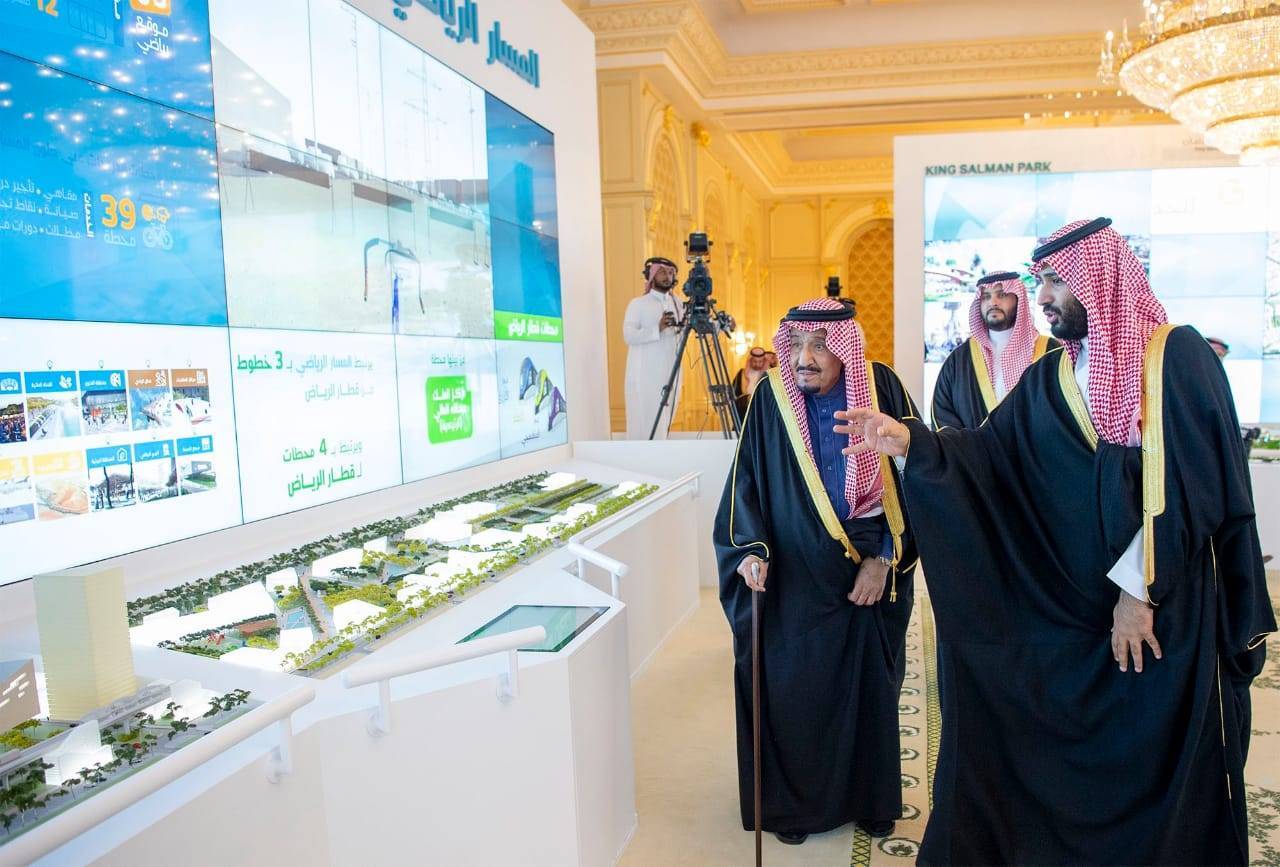
Custodian of the Two Holy Mosques King Salman bin Abdulaziz Al Saud and Prince Mohammed bin Salman bin Abdulaziz Al Saud, Saudi Crown Prince and Prime Minister. SPA
A state whose models are sought abroad
In 1926, King Abdulaziz produced a first constitutional document for a state short of resources and modern amenities. A century later, Saudi Arabia ranks first globally in the growth of its innovation and entrepreneurship ecosystem, according to StartupBlink’s 2025 report. Its approaches to economic transformation and political affairs are now studied elsewhere.
The contrast is stark. In December 1922, King Abdulaziz attended the Uqair conference to negotiate his state’s borders with the British. About a century later, Saudi Arabia won the right to host Expo 2030 with the highest share of votes in the event’s history. It was also awarded the 2034 World Cup without a rival bid. A state that once negotiated its borders with the great powers has been chosen to host two major global events.
The Basic Instructions were built to be superseded. Vision 2030, different in nature and purpose, also charts a stage to move beyond. Each document has framed what comes next while raising the level of ambition. That ambition began three centuries ago with the drive to bring divided communities together. It continues through successive achievements and the surpassing of targets.
The distinction between the documents matters. The Basic Instructions managed an institutional transition through legal rules for government and administration. Vision 2030 guides an institutional transformation through a national strategic framework. Their legal character is different. What connects them is their use of a comprehensive framework to manage change.
Saudi Arabia’s successive achievements keep opening new chapters in its history. They deserve sustained study and documentation — from researchers and historians, but also from public policy centers, universities and institutions that still treat the present as a given rather than a subject for serious inquiry.
Custodian of the Two Holy Mosques Directs Naming Mosque North of Riyadh After King Abdulazizhttps://english.aawsat.com/gulf/5321766-custodian-two-holy-mosques-directs-naming-mosque-north-riyadh-after-king-abdulaziz
Custodian of the Two Holy Mosques Directs Naming Mosque North of Riyadh After King Abdulaziz
Custodian of the Two Holy Mosques King Salman bin Abdulaziz Al Saud. SPA
Custodian of the Two Holy Mosques King Salman bin Abdulaziz Al Saud has directed, based on a proposal presented by Prince Mohammed bin Salman bin Abdulaziz Al Saud, Saudi Crown Prince and Prime Minister, that a mosque to be built north of Riyadh be named after King Abdulaziz.
The Custodian of the Two Holy Mosques also directed that an 88,000-square-meter plot of land along King Abdulaziz Road be allocated for the mosque's construction.
Naming the mosque after the late King Abdulaziz bin Abdulrahman Al Saud honors his national legacy and historic achievement in unifying the Kingdom, as well as his dedication to building mosques across Saudi Arabia.
لم تشترك بعد
انشئ حساباً خاصاً بك لتحصل على أخبار مخصصة لك ولتتمتع بخاصية حفظ المقالات وتتلقى نشراتنا البريدية المتنوعة