



Fashion House Chanel Hires Unilever Consumer Goods Veteran as CEO

The logo of fashion house Chanel is seen on a store in Paris, France, June 18, 2020. (Reuters)
TT

Fashion House Chanel Hires Unilever Consumer Goods Veteran as CEO

The logo of fashion house Chanel is seen on a store in Paris, France, June 18, 2020. (Reuters)

French fashion house Chanel named Leena Nair, an executive from Unilever, as its new global CEO on Tuesday, picking a consumer goods veteran to run one of the world's biggest luxury goods groups.

Nair's career at Unilever spanned 30 years, most recently as the chief of human resources and a member of the company's executive committee.

A British national, born in India, Nair is a rare outsider at the helm of the tightly controlled family fashion house, known for its tweed suits, quilted handbags and No. 5 perfume.

The 52-year-old follows US businesswoman Maureen Chiquet, who came from a fashion background and was CEO of Chanel for nine years until early 2016.

French billionaire Alain Wertheimer, a 73-year-old who owns Chanel with his brother Gerard Wertheimer and had originally taken on the CEO job on a temporary basis, will move to the role of global executive chairman.

Chanel was founded in 1910 by fashion legend Gabrielle "Coco" Chanel as a hat boutique on rue Cambon in Paris and grew to become a byword for French chic.

The group said Nair, who at Unilever oversaw 150,000 people, would join at the end of January and be based in London. It added that the new appointments would ensure its "long-term success as a private company."

The recruitment of Nair, who rose through the ranks of Unilever having started out as a trainee on the factory floor, comes as the fashion industry is under pressure to show a more inclusive approach.

Under her watch Unilever achieved gender parity across global management, according to a Harper's Bazaar profile published last month, which also highlighted her commitment to pay the living wage across the supply chain.

Nair serves as a non-executive board member at BT and has previously served as non-executive director of the British government's business, energy and industrial strategy department.

Chanel has fiercely defended its independence and only began publishing financial results in 2018. It said in July it expects to increase sales by double digits this year compared with their 2019, pre-pandemic level of $12.3 billion.

Bernstein luxury goods analyst Luca Solca said Chanel was following a trend of attracting top executives from the consumer packaged goods industry.

"Unilever and P&G stand tall as management reservoirs for the relatively young luxury goods industry," he said, pointing to Antonio Belloni, general manager of LVMH and a former president of Procter & Gamble in Europe, and Estee Lauder head Fabrizio Freda, also a P&G veteran.


Estee Lauder Beats Quarterly Sales Estimates, to Cut More Jobs

Estee Lauder beat Wall Street estimates for third-quarter sales on Friday. (Getty Images via AFP)
TT

Estee Lauder Beats Quarterly Sales Estimates, to Cut More Jobs

Estee Lauder beat Wall Street estimates for third-quarter sales on Friday. (Getty Images via AFP)

Cosmetics maker Estee Lauder beat Wall Street estimates for third-quarter sales on Friday, driven by improving sales in China ‌and Europe ‌as CEO ‌Stephane ⁠de La Faverie's turnaround ⁠plan takes hold, sending its shares up 16% premarket.

The company, which has ⁠been in talks ‌to ‌merge with Jean ‌Paul Gaultier-owner Puig, posted ‌quarterly sales of $3.71 billion, compared with analysts' estimates of $3.69 billion, according to ‌data compiled by LSEG.

The company ⁠also ⁠revised its job cut target to a range of 9,000 to 10,000 from the previously estimated range of 5,800 to 7,000.


Armani 2025 Revenue Fell 2.8%, CEO Hasn't Met Potential Buyers

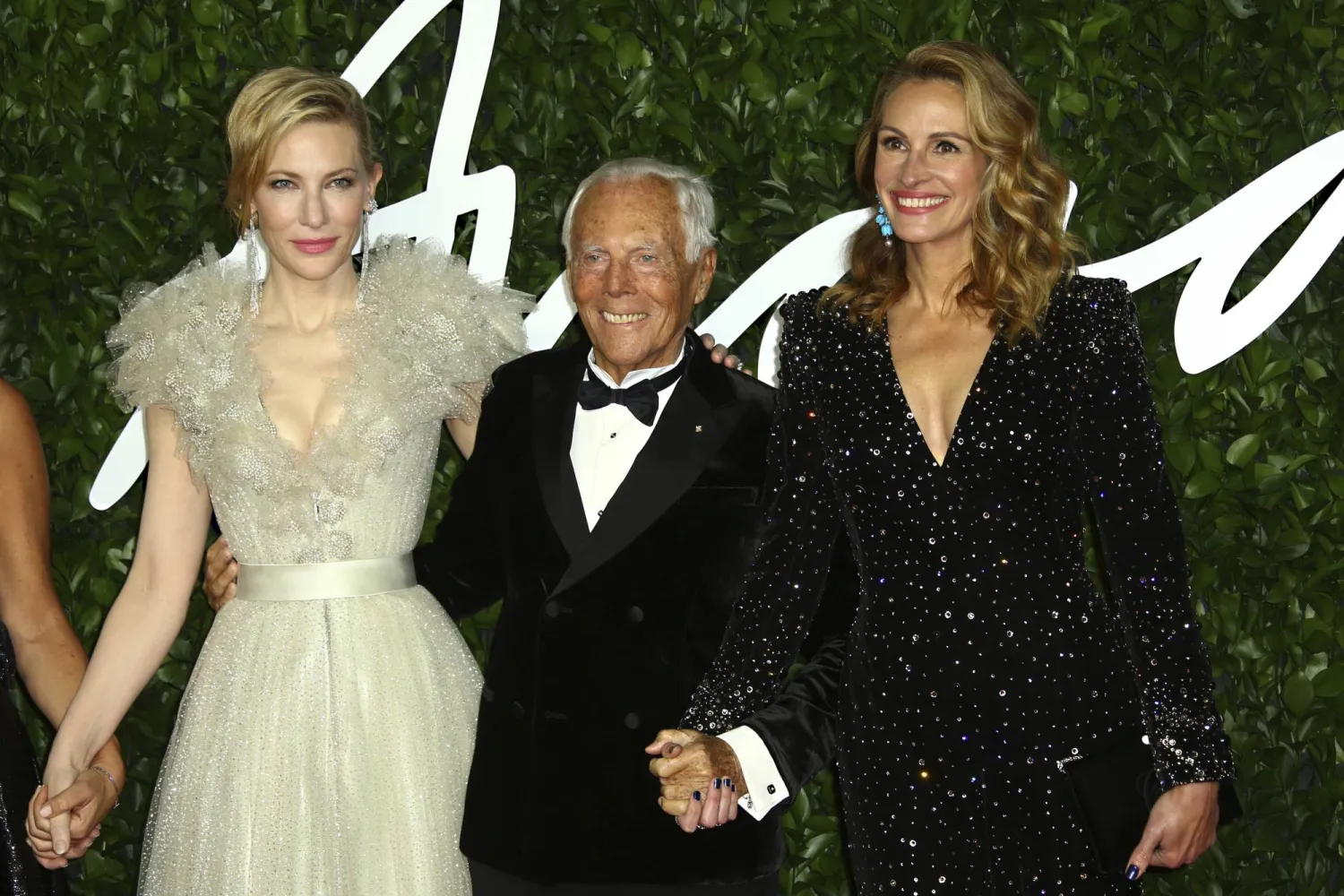
FILE - Actress Cate Blanchett, from left, designer Giorgio Armani, and actress Julia Roberts pose for photographers upon arrival at the British Fashion Awards in central London, Dec. 2, 2019. (Photo by Joel C Ryan/Invision/AP)
TT

Armani 2025 Revenue Fell 2.8%, CEO Hasn't Met Potential Buyers

FILE - Actress Cate Blanchett, from left, designer Giorgio Armani, and actress Julia Roberts pose for photographers upon arrival at the British Fashion Awards in central London, Dec. 2, 2019. (Photo by Joel C Ryan/Invision/AP)

Italian fashion group Armani said on Wednesday its revenue fell 2.8% at constant exchange rates last year, weighed by a weak performance of its wholesale channel.

In 2025, the company's revenue totaled 2.2 billion euros ($2.57 billion), while total turnover, including direct licensee sales, was 4 billion euros.

"We face a possible structural change in the approach to luxury and fashion ⁠by current consumers ⁠and potential, which must be taken into account," Reuters quoted Armani group CEO Giuseppe Marsocci as saying in a statement.

Earnings before interest, taxes, depreciation and amortization (EBITDA) rose 3.2% year-on-year to 152.7 million euros, while operating ⁠profit increased 2% to 52.6 million euros.

Trends in the first months of 2026 were in line with the previous year, with unfavorable currency movements weighing on performance.

Giorgio Armani, the group's founder who died last September, instructed his heirs to sell an initial stake in the company to players such as L'Oreal, EssilorLuxottica and French ⁠luxury ⁠giant LVMH.

In an interview with Italy's Sole 24 Ore published on Wednesday, Marsocci said there was no update on the group's shareholding structure, adding that interest in the Armani group remained strong.

"We have not started meetings with the three potential buyers, and there are no tensions among the family members," Marsocci said in a separate interview with WWD magazine.


Ferragamo Expands Leather Mapping Efforts as EU Sustainability Rules Take Shape

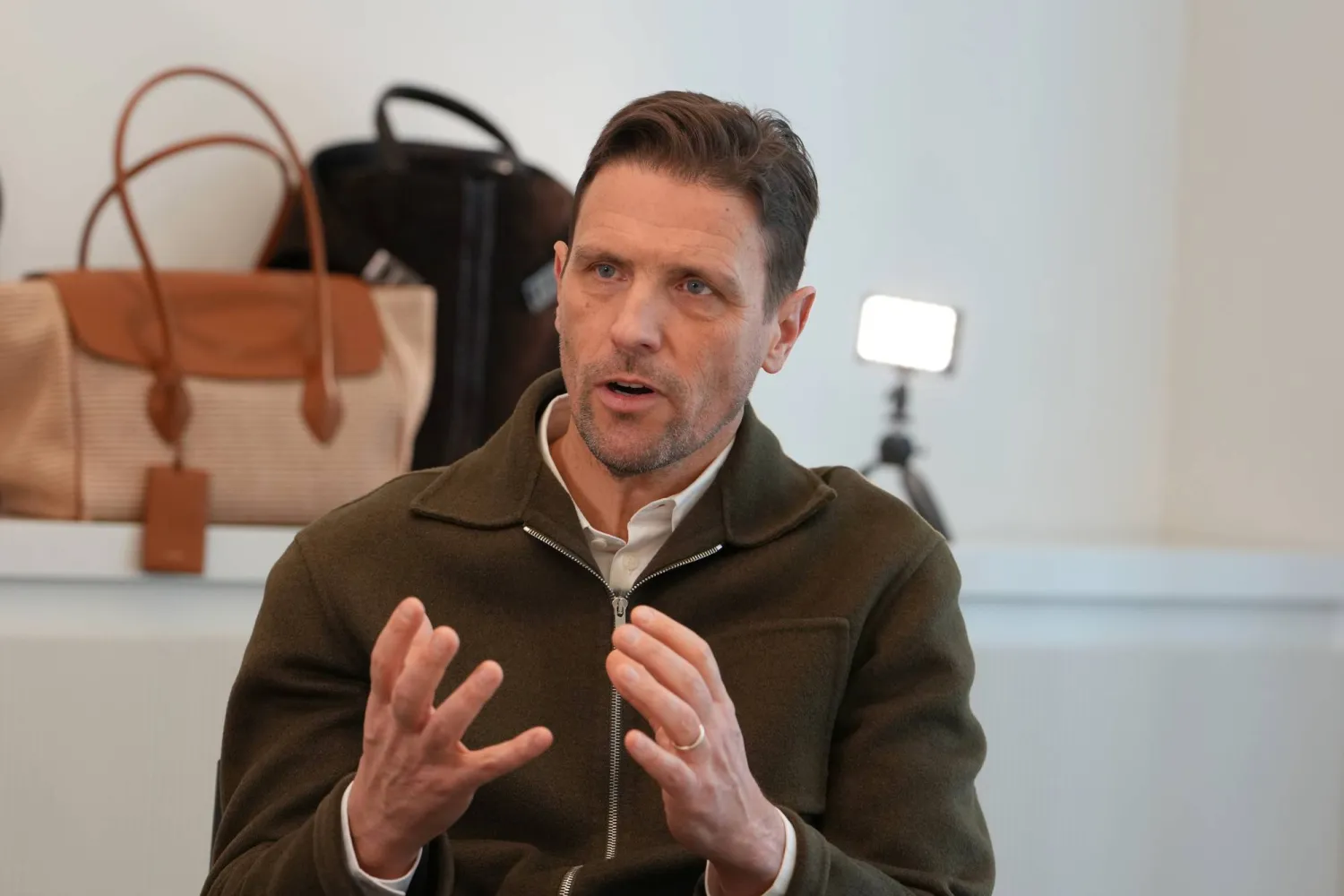
James Ferragamo, a chief product officer for the Salvatore Ferragamo group, talks with journalists during an interview with the Associated Press, in Milan, Italy, Wednesday, April 22, 2026. (AP Photo/Antonio Calanni)
TT

Ferragamo Expands Leather Mapping Efforts as EU Sustainability Rules Take Shape

James Ferragamo, a chief product officer for the Salvatore Ferragamo group, talks with journalists during an interview with the Associated Press, in Milan, Italy, Wednesday, April 22, 2026. (AP Photo/Antonio Calanni)

Italian luxury brand Ferragamo said it can map the country of origin for much of the leather used to make its coveted footwear and handbags, a first step in traceability according to experts.

The announcement comes during a wave of European Union sustainability rules that are increasing pressure on fashion brands to account for materials in their supply chains.

The family-run and publicly traded fashion house has been issuing sustainability reports for over a decade, but the 2025 report released March 31 is the first that contains figures on material traceability — notably for leather, which experts say is harder to trace than textile fibers such as cotton.

“We have been using leather in a more sustainable way,’’ James Ferragamo, the brand’s chief product officer and grandson of founder Salvatore Ferragamo, told The Associated Press in an interview last week. “I think it is one of the more sustainable materials in my point of view.”

Most of the tanneries working with the brand “control their water, have fair treatment of the workforce, monitor their supply chain ensuring that they’re buying leather from those who are not deforesting, and taking the right approach also in terms of breeding and animal welfare,” he said.

Traceability in fashion sustainability Traceability of materials is considered a first and necessary step for the fashion industry, which is facing a new EU framework that will require brands and their suppliers to ensure the items they produce are sustainable from the drawing board to end-of-life disposal. Precise terms are still being defined and compliance will be phased in over the coming years.

“Traceability is an essential factor, but it’s not sufficient,’’ said Francesca Romana Rinaldi, a sustainability expert and director of the Monitor for Circular Fashion at SDA Bocconi School of Management. “It enables the implementation of sustainability and circularity.”

She said that any company that is not tracing their materials “doesn’t know their supply chain” and “could be also criticized for greenwashing.”

EU regulations and directives are moving toward full circularity of materials to include measures extending the life cycle of garments, accessories and footwear through repairs and end-of-life management, including recycling and upcycling, she said.

The EU is also phasing in restrictions on destroying unsold apparel, accessories and footwear produced by companies with more than 250 employees and more than 40 million euros ($46.8 million) in annual revenues.

From breeding to assembly The family-run fashion house was founded in 1927 by Salvatore Ferragamo in Florence, after his return from Hollywood, where he had established himself as shoemaker to the stars with clients including Marilyn Monroe and Judy Garland. Material scarcity during World War II pushed Ferragamo to experiment with alternatives, substituting wicker for leather and using cork for soles, the younger Ferragamo said.

In keeping with its origins, Ferragamo remains primarily a footwear and leather goods maker. Together, they comprised 86% of 2025 sales of 976.5 million euros ($1.1 billion).

Ferragamo launched its initiative on leather traceability with the calf leather used for its Fiamma bag, tracing it from breeding to assembly, the group announced in its 2024 annual report.

In 2025, Ferragamo enlisted tanneries supplying 80% of the hides it buys in a project to identify the country of origin of raw materials through supplier declarations. When including textiles such as cotton, silk and nylon, the company says 81% of its materials are certified under third-party sustainability standards.

“Today there is not one single solution, one single technological solution to trace the leather to the birth farm of the cows,’’ said Davide Triacca, Ferragamo’s sustainability director. “We got to that result through a very dedicated and consistent approach and today we are able to trace more than 80% of the entire leather that we supply and the vast majority of which comes from Europe.”

The EU does not require leather to be traceable. Sustainability experts underscore that approaches based on country-level mapping and supplier declarations do not establish a full chain of custody and instead reflect an early stage of traceability.

Ferragamo previously included a capsule collection with silky textiles made from orange fibers in 2017, one of its first research investments. More recently it used nylon from castor oil instead of fossil oil for a men’s tote bag, and its Back to Earth collection featured the brand’s trademark Hug handbag treated with vegetable dyes.

“Research keeps on going. It’s something that we’re doing all the time,'' Ferragamo said.

“We’re trying to find different ways of creating different materials. And sometimes the materials that we produce are not ready for market. But it doesn’t mean that we don’t experiment.”