


Israel Sets COVID-19 Record amid Zigzag Policy and 4th Jab

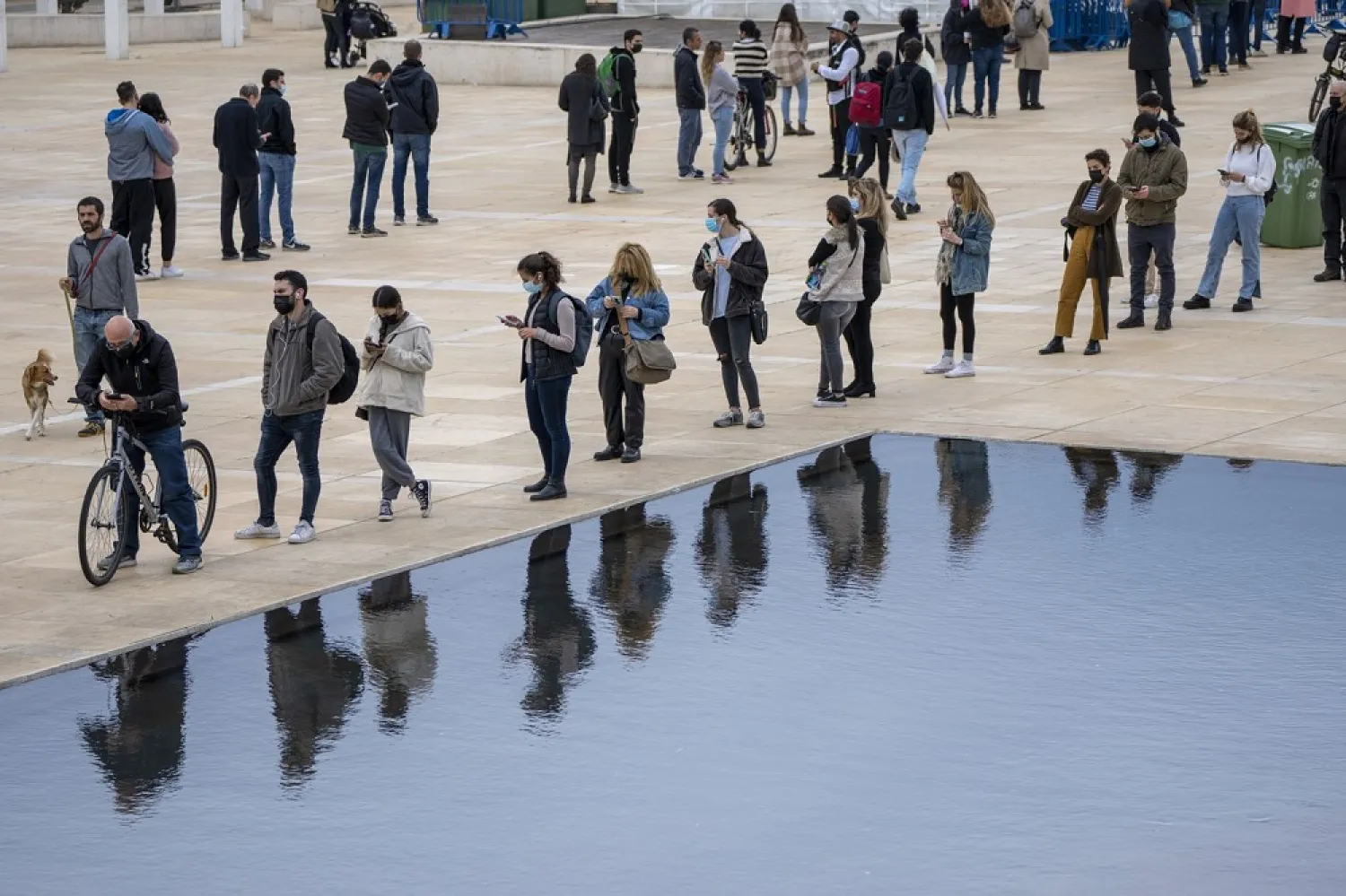
People, some wearing protective face masks, line up for PCR and Rapid Antigen COVID-19 coronavirus tests in Tel Aviv, Israel, Tuesday, Jan. 4, 2022. (AP)
TT

Israel Sets COVID-19 Record amid Zigzag Policy and 4th Jab

People, some wearing protective face masks, line up for PCR and Rapid Antigen COVID-19 coronavirus tests in Tel Aviv, Israel, Tuesday, Jan. 4, 2022. (AP)

Israel opened to tourists for the first time in nearly two years. After just a month, it slammed shut. Now the omicron variant has set a widely-expected record for new infections in the country, which will once again crack open on Sunday — but only to travelers from certain nations.

The back-and-forth has created whiplash for many Israelis. Even in the relatively small, wealthy Mideast nation - an early global leader against the coronavirus pandemic - the omicron variant is outpacing the government's ability to make and execute clear pandemic public policy. What once was a straightforward regimen of vaccines, testing, contact tracing and distancing for the nation of 9.4 million has splintered into a zigzag of rules that seem to change every few days.

The confusion here, on everything from tourism to testing, quarantines, masks and school policy, offers a glimpse of the pandemic puzzle facing governments worldwide as the omicron variant burns through the population. Someday, the World Heath Organization will declare the pandemic over. But in the meantime, leaders are weighing how much illness, isolation and death people are willing to risk.

In Israel as elsewhere, what's clear is that the ultra-contagious omicron variant has pushed the fight against COVID-19 into a messier phase of rules governed by a key assumption: Large portions of the public will contract the omicron version, which is more contagious but appears to cause less severe illness and death, especially among vaccinated people. But vaccinated people are catching the variant too, driving a surge fed in part by gatherings over the winter holidays.

On Wednesday, the government reported a record for the pandemic in Israel, with 11,978 new infections a day earlier. That beats the previous high of 11,345 infections in a single day set on Sept. 2 during the delta variant wave.

“There is no control of the omicron wave,” said Sharon Alroy-Preis, the Health Ministry’s top public health official on Israel’s Channel 13 this week.

“Probably no one is protected from infection,” said Jonathan Halevy, president of Shaare Zedek Medical Center in Jerusalem on Tuesday.

The new goal is to protect society's most vulnerable people without another national lockdown — the red line Prime Minister Naftali Bennett and the country's seven-month-old government are laboring to avoid.

“It’s a different ballgame altogether,” Bennett said during a press conference Sunday as he warned that the number of daily infections is expected to soar to new records in the coming weeks.

“We must keep our eye on the ball if we want to continue engaging and working with an open country as much as possible,” he added.

In everyday life, that's meant a morass of confusion as Bennett and the coalition government he leads struggle to agree on rules and communicate their decisions to the public.

“Education Ministry Leaves Principals to Contend With COVID-19 Chaos Alone,” blared a headline in the Haaretz daily Tuesday. A lack of national guidance, the story said, is forcing some school principals to decide on their own whether to hold classes in person, remotely or some combination.

Bennett at the press conference argued the government was staying agile in the face of the more challenging variant. This included a government decision, after some back-and-forth, to give a fourth vaccination to the immuno-compromised and people at least age 60. Israel is believed to be the first country in the world to offer segments of its population a second booster shot.

On Tuesday, Bennett announced that a preliminary study at Sheba Medical Center found the fourth jab produced a five-fold increase in antibodies in the blood. Israel also is on the cusp of making available drugs that could help people in at-risk groups avoid severe infections.

"Most ministries are working together now better than they were under the old government," led by divisive former Prime Minister Benjamin Netanyahu, said Dr. Nadav Davidovich, who heads Ben-Gurion University's school of public health and sits on the national advisory committee on coronavirus.

So the government's decision, for example, to shutter Israel's borders in late November bought time to raise the country's vaccination rates, which rose toward the middle and end of the month. It also allowed hospitals to prepare for a likely wave of illness.

The vaccinated population has been steadily on the rise, but is limited in part by ultra-Orthodox Jews and some Arabs who have been slow to roll up their sleeves. About 63% of people in Israel have been vaccinated twice, while around 46% have received three jabs.

Our World in Data ranks Israel 17th in the world for vaccination rates, behind other wealthy nations like the United Arab Emirates and the United States — and just ahead of archrival Iran. Back in June, Israel was No. 1 on the list.

But it's been clear for days that a new wave has arrived. Government data showed new infections in Israel spiking to 10,815 on Monday, some 7,000 more than a week earlier. Severe illnesses have stayed mostly constant for several months and daily deaths from coronavirus have not exceeded two since Dec. 13, government records show.

Still, the process remains messy and confusing given the variant's fast-moving spread.

Quarantines that two weeks ago were required of anyone who might have been exposed to the virus are being scaled back in order to prevent the economy from grinding to a halt.

Contact tracing has become more complicated given the shortage of tests. The government also plans on tightening requirements for testing to ease the burden on overloaded testing stations, where people have been forced to wait for hours to be checked. New rules are expected soon that will focus testing requirements on high-risk groups, such as older people.

Israel's list of countries whose tourists are banned has been scaled back, with the Health Ministry on Monday recommending that Canada, France, South Africa, Hungary, Nigeria, Spain and Portugal be removed.

Travel to and from the United States and United Kingdom remains forbidden.

There's been considerable hand-wringing over any suggestion of “herd immunity” — when enough people have either been vaccinated or recovered from a past infection to stop the virus' uncontrolled spread.

Israel's health chief, Nachman Ash, said the fourth shot could be offered to more Israelis, but it's not certain whether it could be rolled out quickly enough.

“The price of herd immunity is very many infections, and that may end up happening,” Ash told Radio 103FM on Sunday. “But we don’t want to reach it by means of infections.”

Challenged at Sunday's press conference over charges of flip-flopping, Bennett said he understands the frustration and confusion, but suggested the virus offers limited choices.

“We could have opted for the strategy that other countries chose, and that’s to impose a lockdown ... that's what happened last year, with enormous damage,” he replied. Or, “We could have gone with it and done nothing.”

Instead, he said, “We are deciding to take responsibility, to make decisions, even if they’re hard."



Türkiye: Ocalan Announces ‘Integration Phase’

Members of the Kurdish community take part in a protest calling for the release of convicted Kurdistan Worker's Party (PKK) leader Abdullah Ocalan in Diyarbakir on February 15, 2026. (Photo by Ilyas AKENGIN / AFP)
TT

Türkiye: Ocalan Announces ‘Integration Phase’

Members of the Kurdish community take part in a protest calling for the release of convicted Kurdistan Worker's Party (PKK) leader Abdullah Ocalan in Diyarbakir on February 15, 2026. (Photo by Ilyas AKENGIN / AFP)

The jailed leader of the Kurdistan Workers Party, Abdullah Ocalan, has said that the Ankara-PKK peace process has entered its “second phase,” as the Turkish parliament sets the stage to vote on a draft report proposing legal reforms tied to peace efforts.

A delegation from the pro-Kurdish Peoples' Equality and Democracy Party (DEM Party), including lawmakers Pervin Buldan, Mithat Sancar, and Ocalan’s lawyer Ozgur Faik, met with the jailed PKK leader on Monday on the secluded Imrali island.

Sancar said that the second phase will be focused on democratic integration into
Türkiye’s political system.

According to the lawmaker, the PKK leader considered the first phase the “negative dimension” concerned with ending the decades-old conflict between the armed group and Ankara.

“Now we are facing the positive phase,” Ocalan said, “the integration phase is the positive phase; it is the phase of construction.”

For the second phase to be implemented, Ocalan called on Turkish authorities to provide conditions that would allow him to put his “theoretical and practical capacity” to work.

The 60-page draft report on peace with the PKK was completed by a five-member writing team, which is chaired by Parliament Speaker Numan Kurtulmuş, and is scheduled for a vote on Wednesday.

The report is organized into seven sections.

In July last year, Ocalan said the group's armed struggle against Türkiye has ended and called for a full shift to democratic politics.


Iranians Chant Slogans Against Supreme Leader at Memorials for Slain Protesters

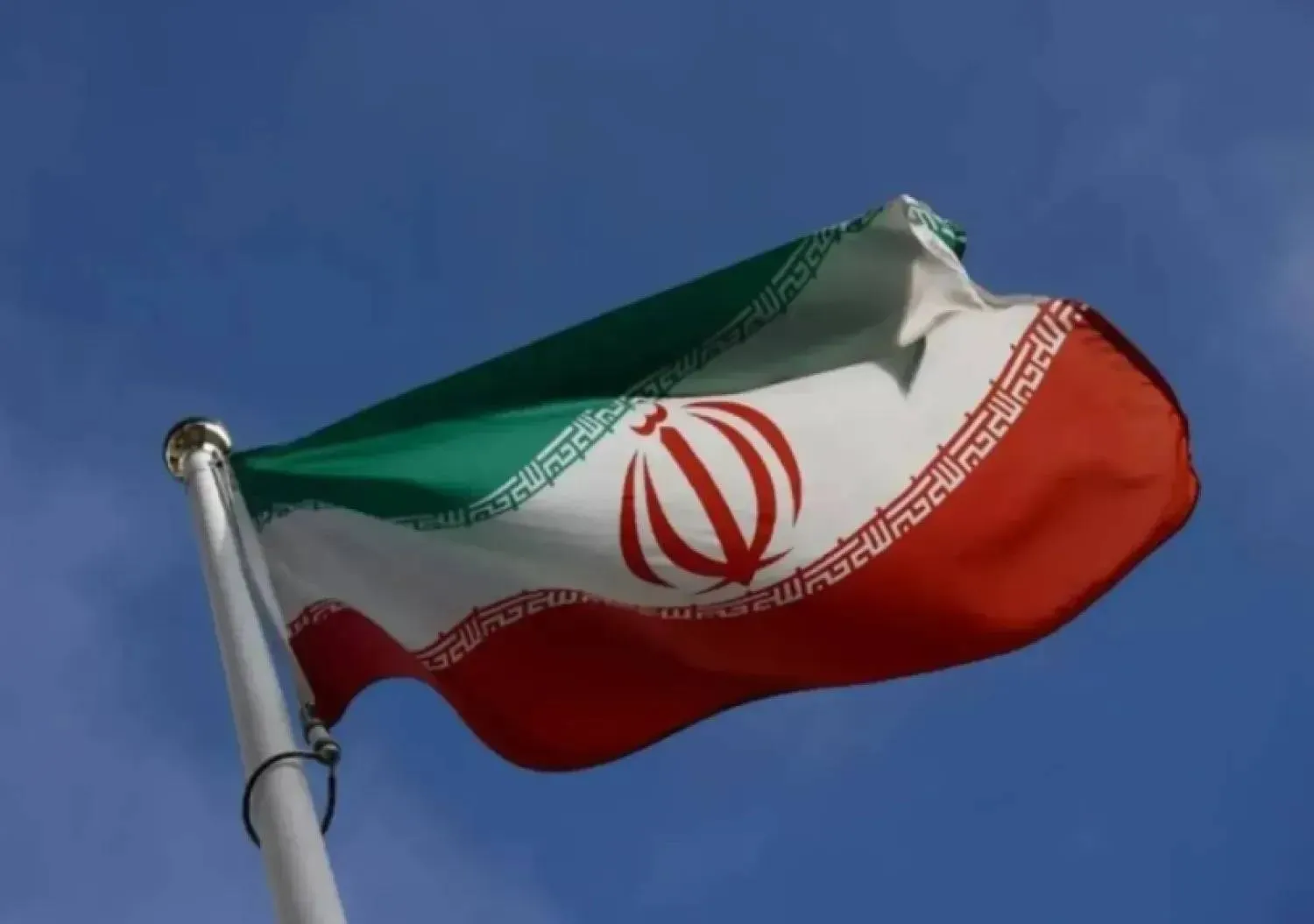
An Iranian man holds the Iranian national flag during a memorial ceremony for those killed in anti-government protests earlier last month, at the Mosalla mosque in Tehran, Iran, 17 February 2026. (EPA)
TT

Iranians Chant Slogans Against Supreme Leader at Memorials for Slain Protesters

An Iranian man holds the Iranian national flag during a memorial ceremony for those killed in anti-government protests earlier last month, at the Mosalla mosque in Tehran, Iran, 17 February 2026. (EPA)

Iranians shouted slogans against Supreme Leader Ali Khamenei on Tuesday as they gathered to commemorate protesters killed in a crackdown on nationwide demonstrations that rights groups said left thousands dead, according to videos verified by AFP.

The country's clerical authorities also staged a commemoration in the capital Tehran to mark the 40th day since the deaths at the peak of the protests on January 8 and 9.

Officials acknowledge more than 3,000 people died during the unrest, but attribute the violence to "terrorist acts", while rights groups say many more thousands of people were killed, shot dead by security forces in a violent crackdown.

The protests, sparked by anger over the rising cost of living before exploding in size and anti-government fervor, subsided after the crackdown, but in recent days Iranians have chanted slogans from the relative safety of homes and rooftops at night.

On Tuesday, videos verified by AFP showed crowds gathering at memorials for some of those killed again shouting slogans against the theocratic government in place since the 1979 revolution.

In videos geolocated by AFP shared on social media, a crowd in Abadan in western Iran holds up flowers and commemorative photos of a young man as they shout "death to Khamenei" and "long live the shah", in support of the ousted monarchy.

Another video from the same city shows people running in panic from the sounds of shots, though it wasn't immediately clear if they were from live fire.

In the northeastern city of Mashhad a crowd in the street chanted, "One person killed, thousands have his back", another verified video showed.

Gatherings also took place in other parts of the country, according to videos shared by rights groups.

- Official commemorations -

At the government-organized memorial in Tehran crowds carried Iranian flags and portraits of those killed as nationalist songs played and chants of "Death to America" and "Death to Israel" echoed through the Khomeini Grand Mosalla mosque.

Iranian President Masoud Pezeshkian attended a similar event at the Imam Reza shrine in Mashhad.

Authorities have accused sworn enemies the United States and Israel of fueling "foreign-instigated riots", saying they hijacked peaceful protests with killings and vandalism.

Senior officials, including First Vice President Mohammad Reza Aref and Revolutionary Guards commander Esmail Qaani, attended the ceremony.

"Those who supported rioters and terrorists are criminals and will face the consequences," Qaani said, according to Tasnim news agency.

International organizations have said evidence shows Iranian security forces targeted protesters with live fire under the cover of an internet blackout.

The US-based Human Rights Activists News Agency (HRANA) has recorded more than 7,000 killings in the crackdown, the vast majority protesters, though rights groups warn the toll is likely far higher.

More than 53,500 people have been arrested in the ongoing crackdown, HRANA added, with rights groups warning protesters could face execution.

Tuesday's gatherings coincided with a second round of nuclear negotiations between Iran and the United States in Geneva, amid heightened tensions after Washington deployed an aircraft carrier group to the Middle East following Iran's crackdown on the protests.


Independent UN Body Condemns ‘Vicious Attacks’ on UN Expert on Palestinian Rights

United Nations (UN) Special Rapporteur on the occupied Palestinian territories Francesca Albanese looks on at the end of a press conference on the human rights situation in Gaza in Geneva on September 15, 2025. (AFP)
TT

Independent UN Body Condemns ‘Vicious Attacks’ on UN Expert on Palestinian Rights

United Nations (UN) Special Rapporteur on the occupied Palestinian territories Francesca Albanese looks on at the end of a press conference on the human rights situation in Gaza in Geneva on September 15, 2025. (AFP)

An ‌independent United Nations body on Tuesday condemned what it described as vicious attacks based on disinformation by several European ministers against the organization's special rapporteur for Palestine, Francesca Albanese.

In the past week several European countries, including Germany, France and Italy, called for Albanese’s resignation over her alleged criticism of Israel. Albanese, an Italian lawyer, denies making the remarks.

On Friday, the Czech Republic's Foreign Minister Petr Macinka quoted Albanese on X as having called Israel a "common enemy of humanity", and he ‌also called for ‌her resignation.

A transcript of Albanese's remarks ‌made ⁠in Doha on ⁠February 7 seen by Reuters did not characterize Israel in this way, although she has consistently criticized the country in the past over the Gaza conflict.

The UN Coordination Committee - a body of six independent experts which coordinates and facilitates the work of Special Rapporteurs - accused European ministers of relying on "manufactured ⁠facts".

"Instead of demanding Ms. Albanese's resignation ‌for performing her mandate...these government representatives ‌should join forces to hold accountable, including before the International Criminal Court, ‌leaders and officials accused of committing war crimes and ‌crimes against humanity in Gaza," the Committee said.

It said the pressure exerted on Albanese was part of an increasing trend of politically motivated and malicious attacks against independent human rights experts, UN officials ‌and judges of international courts.

US President Donald Trump's administration imposed sanctions on Albanese after she wrote ⁠letters ⁠to US companies accusing them of contributing to gross human rights violations by Israel in Gaza and the West Bank.

UN experts are commissioned by the Geneva-based Human Rights Council to monitor and document specific human rights crises but are independent of the organization itself.

There is no precedent for removing a special rapporteur during their term, although diplomats said that states on the 47-member council could in theory propose a motion to do so.

However, they said strong support for Palestinian rights within the body means that such a motion was unlikely to pass.