


Israeli Firm Develops Body Cams with Facial Recognition

Dany Tirza, a former Israeli army colonel, says his company Yozmot Ltd aims to produce a body-worn camera enabling police to scan crowds and detect suspects in real time, even if their faces are obscured. (AFP)
TT

Israeli Firm Develops Body Cams with Facial Recognition

Dany Tirza, a former Israeli army colonel, says his company Yozmot Ltd aims to produce a body-worn camera enabling police to scan crowds and detect suspects in real time, even if their faces are obscured. (AFP)

Twenty years after he planned the controversial barrier between Israel and Palestinians, Dany Tirza is developing a security tool that requires no cement: body cameras with facial recognition technology.

Tirza, a former Israeli army colonel, says his company Yozmot Ltd aims to produce a body-worn camera enabling police to scan crowds and detect suspects in real time, even if their faces are obscured.

Facial recognition in law enforcement has sparked global criticism, with US tech giants backing away from providing the technology to police, citing privacy risks.

Proponents including Tirza, however, tout its ability to track down criminals or missing persons.

"The policeman will know who he is facing," he said.

'It's easy'

Tirza, 63, spoke to AFP from his home in Kfar Adumim, a Jewish settlement in the occupied West Bank.

He said he partnered with Tel Aviv-based Corsight AI to develop a body-worn police camera that could instantly identify people in a crowd, even if they wear masks, make-up or camouflage, and could match them to photographs dating back decades.

Corsight CEO Rob Watts did not confirm the collaboration but said his company was working with some 230 "integrators" worldwide who incorporated facial recognition software into cameras.

The technology allows clients to build databases, whether of company employees allowed into a building, ticket holders permitted into a stadium, or suspects wanted by the police, Watts said.

He said Australian and British police were already piloting the technology.

The facial recognition industry was worth about $3.7 billion in 2020, according to market research firm Mordor Intelligence, which projected growth to $11.6 billion by 2026.

Facebook, Microsoft, Amazon and IBM have all declared temporary or permanent freezes on selling facial recognition programs to law enforcement.

France last month ordered the US-based Clearview AI to delete data on its citizens, saying the company violated privacy when it built a facial recognition database using images "scraped" from the internet.

Watts called Clearview's actions "abhorrent" and said Corsight AI did not sell to China, Russia or Myanmar because of "human rights and ethics".

"What we want to do is promote facial recognition as a force for good," he said.

He said Corsight had hired Tony Porter, the United Kingdom's former surveillance camera commissioner, as chief privacy officer, and that the software would blur or delete faces deemed not of interest within seconds.

Corsight AI was valued at about $55 million in a recent funding round, Watts said, estimating this would grow to $250 million by year's end and noting the technology's potential.

"Why do I need a credit card? I don't, I've got a face," he said. "The consumer will very, very quickly and readily adopt facial recognition because it's easy."

Controversial history
Surveillance technology developed in Israel has a chequered history.

The NSO Group, founded by Israeli military intelligence veterans, makes the Pegasus software that can spy on mobile phones.

US authorities blacklisted NSO in November, and Facebook and Apple have sued the company after the spyware was discovered on devices belonging to dissidents and journalists.

NSO says Pegasus meets the Israeli defense ministry's export rules.

Israeli facial recognition software, too, has encountered criticism.

In November, former Israeli soldiers revealed they had photographed thousands of Palestinians to build a database for a sweeping facial recognition surveillance program in the West Bank city of Hebron.

In 2020, Microsoft divested from Israeli facial recognition firm AnyVision, now renamed Oosto, over the company's alleged involvement in surveilling Palestinians.

Oosto works with law enforcement agencies and private companies worldwide, and its software is used at checkpoints where Palestinian laborers cross into Israel.

Corsight CEO Watts said his company has "a number of contracts in Israel -- governmental contracts and agencies", but declined to elaborate, citing non-disclosure agreements.

'Control'
Palestinian digital rights activist Nadim Nashif said the use of facial recognition technology entrenched Israel's "control" over Palestinians and added to a "domination" of physical spaces.

But Tirza praised its use at checkpoints, saying the main aim was to reduce "friction" between soldiers and residents.

Tirza was a colonel in the Israeli military in 2002 when he was tasked with designing a barrier in response to attacks during the second Palestinian intifada, or uprising.

Part towering concrete slabs, part fence, it now snakes for more than 500 kilometers (310 miles) along the Israel-West Bank border.

Palestinians say the barrier's construction grabbed nearly 10 percent of the West Bank, and the International Court of Justice ruled it illegal.

But Tirza said it also reshaped the conflict.

Until it was built, "a lot of people thought you cannot separate" Israelis and Palestinians, he said.

Tirza said he expected to have the body camera finished within a year, and hopes to market it to US and Mexican law enforcement -- though he acknowledged some reluctance.

"They were very interested, but everyone says we have to check the laws" to see whether it goes too far, he said.

"But I believe it is not too far."
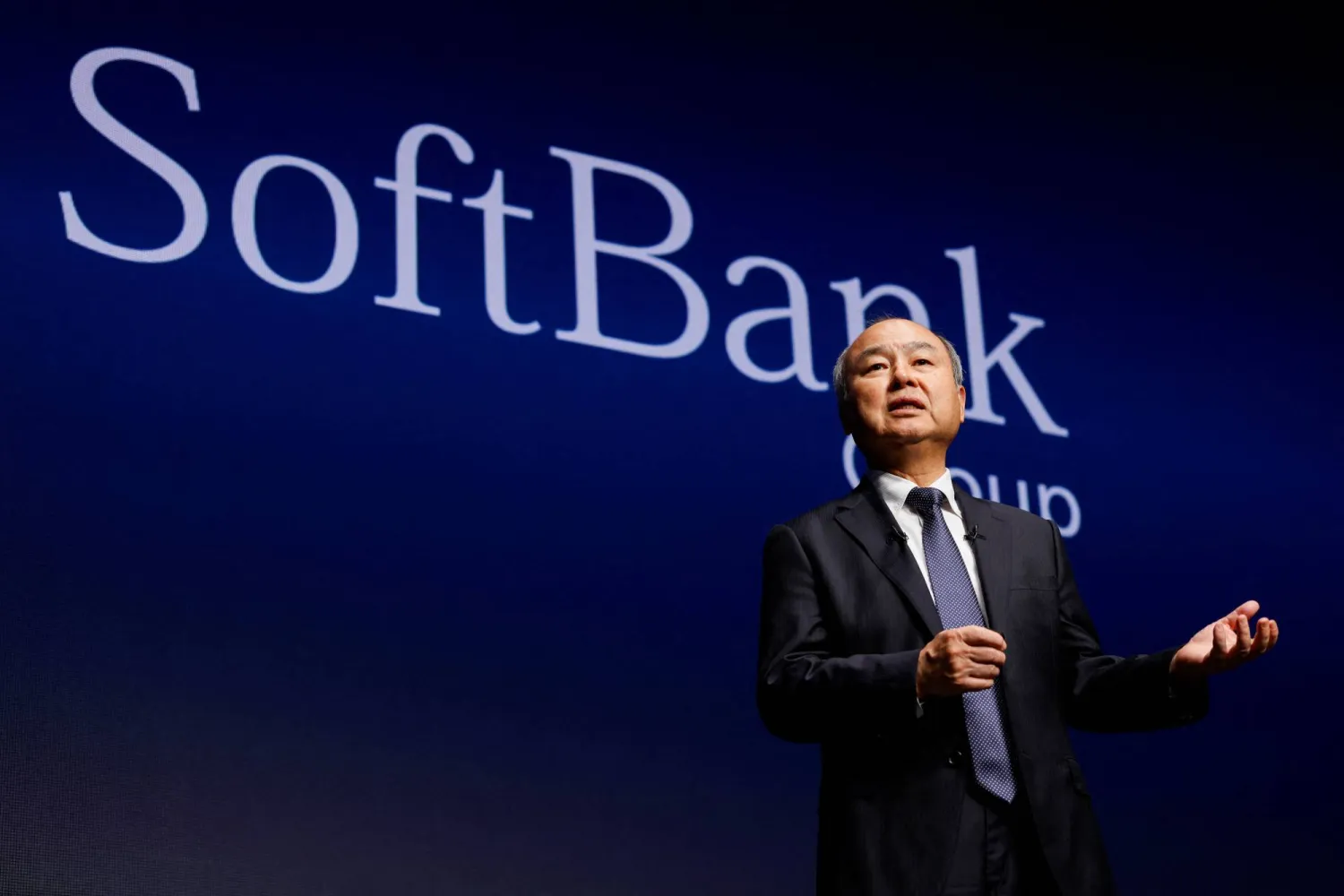


Japan's Tech Business SoftBank Rolls Out OpenAI 'Patches' Against Cyberattacks

SoftBank Chairman and CEO Masayoshi Son speaks during an event to pitch AI for businesses, in Tokyo, Japan June 16, 2026. REUTERS/Manami Yamada
TT

Japan's Tech Business SoftBank Rolls Out OpenAI 'Patches' Against Cyberattacks

SoftBank Chairman and CEO Masayoshi Son speaks during an event to pitch AI for businesses, in Tokyo, Japan June 16, 2026. REUTERS/Manami Yamada

Japanese technology giant SoftBank Group Corp. is launching a service using OpenAI technology to protect against the looming threat of cyberattacks, both companies said Tuesday.

Chief Executive Masayoshi Son called Japan’ s vulnerability to cyberattacks “a crisis,” comparing it to a potential assault by machine guns instead of the rifle shots of the past.

SoftBank will offer “a patching service,” targeting the nation’s top 3,000 companies behind crucial infrastructure like airports, power systems and transportation, The Associated Press quoted Son as saying.

“I feel it is our duty,” Son said, repeatedly referring to the criminal attackers as “the bad guys.”

The service involves first diagnosing any weaknesses to attacks, and then analyzing what needs to be done to patch up such “holes," Son said.

Sam Altman, chief of OpenAI, was scheduled to attend the launch, but instead appeared only in a short video. He said he couldn’t make it because his baby daughter was born earlier than expected. Mark Chen, OpenAI’s chief researcher, was present in his place.

SoftBank and OpenAI, behind the popular chatbot ChatGPT, set up a 50:50 joint venture named SB OAI Japan last year to develop and exclusively market an AI service for the Japanese market.

Tuesday’s announcement was a key update, highlighting the rollout. No monetary value was announced. But SoftBank said everyone who came to the presentation in Tokyo Tuesday can apply for a free diagnosis.

The use of AI has caused the number of attacks to balloon exponentially and grow more complex, meaning defenses have had to become more AI-savvy and versatile.


France to Invest €655 Mln in AI, Set Up Common Chatbot for All State Services

France's Prime Minister Sebastien Lecornu gestures as he speaks during a press conference. (Photo by STEPHANE DE SAKUTIN / AFP)
TT

France to Invest €655 Mln in AI, Set Up Common Chatbot for All State Services

France's Prime Minister Sebastien Lecornu gestures as he speaks during a press conference. (Photo by STEPHANE DE SAKUTIN / AFP)

French Prime Minister Sebastien Lecornu said on Tuesday the government will invest €655 million ($758.29 million) in artificial intelligence and will set up a common chatbot for all the state services.

The French government will create a public ⁠health chatbot for state-owned ⁠health insurance Ameli agency.

"We can either be ⁠subjected to this (Artificial intelligence) revolution, or we can lead it," he said in a post on X.

"The question is not whether the state will use the artificial intelligence anymore, but the question is how fast will it ⁠transform," ⁠Lecornu said.

"We cannot rely on tools developed by foreign powers. France must have its own tools," he said.

He made the announcement as the "Viva Tech" conference was set to start in Paris.


AI-referred US Shoppers Browse Longer, Spend More per Visit, Data Shows

 The ChatGPT logo is displayed on a mobile phone in Liverpool, Britain, 09 June 2026. (EPA)
The ChatGPT logo is displayed on a mobile phone in Liverpool, Britain, 09 June 2026. (EPA)
TT

AI-referred US Shoppers Browse Longer, Spend More per Visit, Data Shows

 The ChatGPT logo is displayed on a mobile phone in Liverpool, Britain, 09 June 2026. (EPA)
The ChatGPT logo is displayed on a mobile phone in Liverpool, Britain, 09 June 2026. (EPA)

US shoppers who use large language models, including Google's Gemini or OpenAI's ChatGPT, for purchase recommendations are lingering more on retailers' websites and are more likely to spend, according to May data from Adobe Analytics.

Consumers who are referred to retail websites from LLMs generated ‌53% more ‌revenue per visit than ‌shoppers ⁠from non-AI sources, the ⁠data firm said, emphasizing the need for brands to invest in AI-readable webpages.

Retailers whose products show up in LLM suggestions are able to "drive more personalization" to ⁠shoppers who leave the platforms to ‌complete their ‌purchases on the native websites, Vivek Pandya, ‌director of digital insights at ‌Adobe, said.

AI traffic to retail websites increased 138% in May from last year, the highest share of ‌total retail visits since Adobe Analytics began tracking in October 2024.

⁠Retail ⁠website visitors recommended by AI converted at a rate 54% higher than online shoppers from non-AI sources did in May.

Shoppers referred to e-commerce websites spent 53% more time on the sites than visitors from other sources.

AI-referred shoppers also visit more retail webpages than non-AI referred visitors.
