

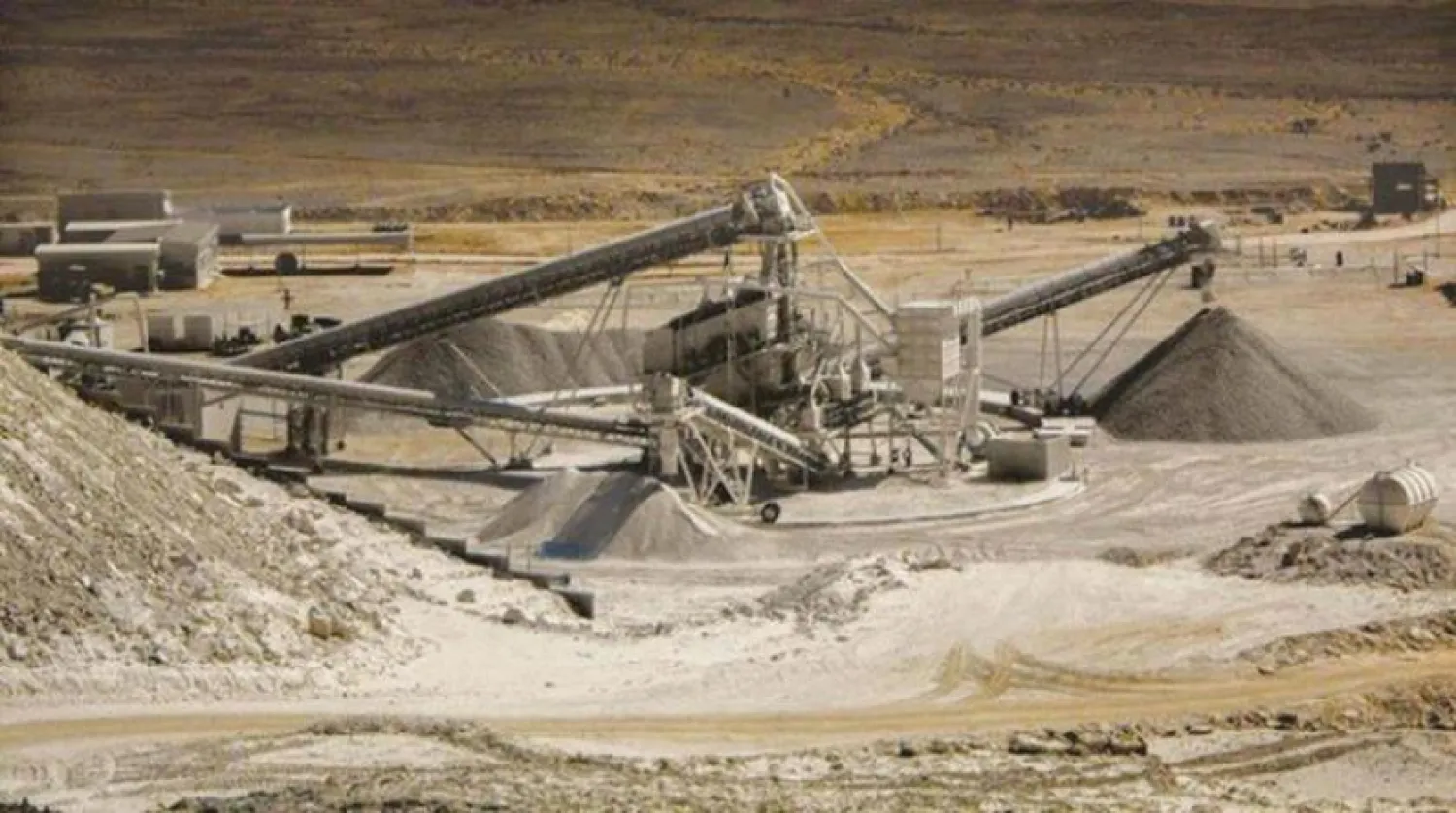

Saudi Arabia Says Has $1.3 Trillion Worth of Untapped Mineral Deposits

The Ministry of Industry and Mineral Resources seeks to maximize the value achieved from the mining sector following the objectives of Vision 2030 (Asharq Al-Awsat)
TT

Saudi Arabia Says Has $1.3 Trillion Worth of Untapped Mineral Deposits

The Ministry of Industry and Mineral Resources seeks to maximize the value achieved from the mining sector following the objectives of Vision 2030 (Asharq Al-Awsat)

Saudi Arabia has over 5,300 mining sites, valued at about $1.3 trillion, containing a number of the most abundant minerals, such as gold, silver, copper, zinc, phosphate, bauxite, limestone, and others, according to a report by the Ministry of Industry and Mineral Resources (MIRM).

The report stressed that the growth opportunities identified by the comprehensive strategy for the mining sector would contribute to providing essential investment opportunities.

Saudi Arabia is qualified to be one of the most important metal-producing countries in the world by 2030.

Mining value chains

The report indicated that Saudi Arabia produces many minerals and mineral products essential in developing value chains for metallic minerals, such as iron, aluminum, copper, zinc, and gold. It also produces non-metallic products such as phosphate fertilizers, cement, glass, and ceramics.

The country's bauxite production is about 4.9 million tons per year, which is processed to produce about one million tons of aluminum.

According to the report, about 409,000 ounces of gold are produced from the mines in Saudi Arabia in the Arabian Shield.

The Kingdom produces about 68,000 tons of copper and zinc concentrates yearly and 24.6 million tons of phosphate ore, which is processed to produce about 5.26 million tons of phosphate fertilizers annually.

Saudi Arabia is among the top five producers of phosphate fertilizers and has also developed several other mineral industries.

The comprehensive strategy

The report explained that the main objectives set by the comprehensive strategy for the mining and metal industries sector focus on the optimal use of these minerals through the development of industrial value chains that will have a significant economic impact.

It will generate job opportunities and transfer development to the different regions where these mineral ores are found.

The report indicated it would positively impact the development of local communities, achieve sustainability in the mining sector, and protect the environment.

The strategy for the mining sector aims to increase the production of gold, copper, and primary metals tenfold compared to the current situation.

It also seeks to expand the phosphate fertilizer industry, placing Saudi Arabia among the three largest producing countries globally and the top ten countries in the world in aluminum production.

In addition, it intends to double the production of iron and glass to meet the expected growing demand, achieve self-sufficiency, and develop into new value chains such as rare earth elements, tantalum, and niobium.

Geological survey

The Ministry seeks to maximize the value achieved from the mining sector following Vision 2030.

It started implementing several initiatives and programs to achieve the objectives, including the Regional Geological Survey Program.

The Program will focus on surveying and mapping the mineral-rich Arabian Shield area in western Saudi Arabia to understand better the existence and distribution of mineral resources in that area and provide a valuable database of geological knowledge to future mining investors and operators.

According to the report, Saudi Arabia launched an initiative to accelerate explorations increase spending on exploration that targets dozens of mineral deposits in the Kingdom with encouraging economic indicators.



Saudi Arabia Ranks Second Globally in Data Center Market Attractiveness

A view of the Riyadh skyline, the Saudi capital (Royal Commission for Riyadh City)
TT

Saudi Arabia Ranks Second Globally in Data Center Market Attractiveness

A view of the Riyadh skyline, the Saudi capital (Royal Commission for Riyadh City)

Saudi Arabia has ranked second globally, after the United States, among the most attractive markets for data centers—an achievement that reflects the Kingdom’s growing position in digital infrastructure and its rapid expansion in a market increasingly driven by artificial intelligence and cloud computing.

According to a Bloomberg analysis, Saudi Arabia secured second place globally in data center market attractiveness. The analysis also indicated that power availability and land enablement together account for 58% of market attractiveness for data center projects. At the same time, 22.8 gigawatts of new capacity are currently under development worldwide and are expected to come online within the next three years, increasing the value of markets capable of absorbing this growth at scale and with speed, SPA reported.

This progress builds on the rapid expansion of the data center sector in the Kingdom, where operational capacity increased from 68 megawatts in 2021 to 440 megawatts in 2025—representing nearly sixfold growth over four years. This reflects the accelerated development of digital infrastructure and the growing attractiveness of the Saudi market in this critical sector.

The sector continued its growth in the first quarter of 2026, with capacity rising to 467 megawatts—an increase of more than 6% since the beginning of the year—highlighting the sustained expansion of a market that has become a key driver of digital infrastructure and the data-driven economy powered by cloud computing and artificial intelligence.

According to SPA, today, Saudi Arabia hosts more than 60 data centers across multiple regions, reflecting the expansion of the market, the strengthening of its operational base, and its ability to meet the growing demand for digital services, cloud computing, and AI applications. This growth is further supported by the Kingdom’s geographic depth, which provides developers and operators with greater flexibility in site distribution and phased expansion, in addition to its strategic location linking Asia, Europe, and Africa—enabling access to broad markets from a single hub.

Commenting on this progress, head of the Artificial Intelligence Enablement Office at the Ministry of Communications and Information Technology Eng. Bassam Al-Bassam stated: “This reflects the Kingdom’s growing position in the data center sector and confirms that the progress achieved in digital infrastructure, power availability, development speed, and operational readiness has positioned Saudi Arabia among the most capable markets in attracting high-quality investments in this sector.”

He added that this progress strengthens the confidence of global investors in the Saudi market and supports the Kingdom’s positioning as a global hub for digital infrastructure and artificial intelligence.

This achievement gains further significance as Saudi Arabia ranked first globally in the Digital Readiness Framework 2025, scoring 94 out of 100 in the “very high” category, ahead of Finland, Germany, the United Kingdom, Norway, and France. This reflects the maturity of the regulatory environment, digital governance, and institutional efficiency—factors that are increasingly critical in a sector that depends on regulatory clarity, operational reliability, and speed of execution.

This position is further reinforced by an advanced digital ecosystem, including 99% internet penetration, fiber coverage reaching 5.8 million homes, and a technology market exceeding SAR199 billion in 2025. In addition, local internet traffic through the Saudi Internet Exchange surpassed 2.462 terabits per second in the same year, enhancing the readiness and reliability of the digital environment supporting data center operations.

This achievement underscores that Saudi Arabia is not only keeping pace with growing demand for digital infrastructure but is also advancing in building the foundational capabilities required for the next phase of the digital economy. As global pressures on power and land intensify in traditional markets, Saudi Arabia is emerging as a destination that combines capacity, readiness, flexibility, and scalability—further strengthening its position as a rising global hub in the data center race.


China Rejects US Sanctions on Five Oil Refineries

Independent small Chinese refineries purchase 90% of Iranian oil shipments (Reuters).
TT

China Rejects US Sanctions on Five Oil Refineries

Independent small Chinese refineries purchase 90% of Iranian oil shipments (Reuters).

China will not comply with US sanctions against five firms targeted for purchasing Iranian oil, Beijing's commerce ministry said on Saturday.

China is a key customer for Iranian oil, mainly through independent "teapot" refineries that rely on discounted crude from Iran.

The United States, seeking to choke off revenue to Tehran, has ramped up sanctions on such refineries.

The commerce ministry's injunction, relating to sanctions announced separately since last year, states that the US measures "shall not be recognized, implemented, or complied with".

The sanctions "improperly prohibit or restrict Chinese enterprises from conducting normal economic, trade and related activities with third countries... and violate international law and the basic norms governing international relations," the ministry said in a statement.

"The Chinese government has consistently opposed unilateral sanctions lacking UN authorization and a basis in international law."

The injunction applies to three companies in Shandong province -- Shandong Jincheng Petrochemical Group, Shandong Shouguang Luqing Petrochemical and Shandong Shengxing Chemical -- and two others based elsewhere in China, Hengli Petrochemical (Dalian) Refinery and Hebei Xinhai Chemical Group.

Washington imposed on Friday sanctions on yet another Chinese firm which it said had imported "tens of millions of barrels" of Iranian crude oil, generating billions of dollars in revenue for Tehran.

The firm, Qingdao Haiye Oil Terminal Co., Ltd., was not mentioned in the commerce ministry's injunction.


Spirit Airlines Shuts Down, Industry’s First Iran War Casualty

A Spirit Airlines self bag-drop counter at Orlando International Airport, as the airline announced it was ceasing operations early Saturday morning following an impasse in talks with some creditors on a $500 million government bailout plan, in Orlando, Florida, US, May 2, 2026. (Reuters)
TT

Spirit Airlines Shuts Down, Industry’s First Iran War Casualty

A Spirit Airlines self bag-drop counter at Orlando International Airport, as the airline announced it was ceasing operations early Saturday morning following an impasse in talks with some creditors on a $500 million government bailout plan, in Orlando, Florida, US, May 2, 2026. (Reuters)

Bankrupt discount carrier Spirit Airlines ceased operations on Saturday, the industry's first casualty linked to the Iran war, after failing to secure creditor support for a US government bailout plan.

The collapse of the first carrier due to a doubling in jet fuel prices during the two-month-old Iran war will cost thousands of jobs. It is a blow to President Donald Trump, who had proposed $500 million to save Spirit despite opposition from some of his closest advisers and many Republicans in Congress.

No US carrier of Spirit's size - it accounted for 5% of US flights at one point - has liquidated in two decades. Spirit helped keep fares lower in markets where it competed against major carriers.

ALL FLIGHTS CANCELED, RIVALS TO BENEFIT

A Spirit board meeting had ended without an agreement to rescue the company, a person close to the discussions told Reuters late on Friday.

"Unfortunately, despite the Company's ‌efforts, the recent material ‌increase in oil prices and other pressures on the business have significantly impacted Spirit's financial outlook," Spirit ‌said ⁠in a statement ⁠announcing "an orderly wind-down of operations."

All flights have been canceled, the statement said, asking passengers not to go to the airport.

Spirit had 4,119 domestic flights scheduled between May 1 and May 15, offering 809,638 seats, according to data from aviation analytics firm Cirium.

A spokesperson said Spirit had notified the Federal Aviation Administration before halting operations, declining to comment further.

Global carriers are contending with surging jet fuel prices after the US-Israeli strikes on Iran disrupted traffic through the Strait of Hormuz. Spirit was already struggling to turn a profit before the fuel shock.

Spirit built its brand around affordable fares for budget-conscious travelers ready to eschew add-ons like checked bags and seat assignments.

That demand tapered off quickly after the COVID-19 pandemic, as passengers preferred to opt for comfort and experience-based travel, leaving ⁠ultra-low-cost carriers struggling to adapt.

Spirit's shutdown will benefit its rivals like JetBlue Airways and Frontier Airlines, ‌who themselves are reeling from the cost shock. Spirit's volatile over-the-counter stock plunged 25% on Friday, ‌while Frontier rose 10% and JetBlue gained 4%.

Trump said on Friday that the White House had given Spirit and its creditors a final rescue proposal, ‌after talks hit an impasse over a $500 million financing package that would have helped the airline keep operating through bankruptcy.

"If we can help ‌them, we will, but we have to come first," Trump told reporters. "If we could do it, we'd do it, but only if it's a good deal."

FUEL-PRICE SHOCK THREATENS WEAKER AIRLINES

The collapse shows how the Iran war's fuel-price shock has exposed weaker airlines.

Spirit's restructuring plan assumed jet fuel costs of about $2.24 a gallon in 2026 and $2.14 in 2027, but prices had climbed to around $4.51 a gallon by the end of April, leaving the carrier unable to survive without fresh ‌financing.

Transportation Secretary Sean Duffy told Reuters he had tried to get many airlines to buy Spirit but found no takers. "What would someone buy?" Duffy asked. "If no one else wants to buy them, ⁠why would we buy them?"

A ⁠creditor close to the deal said, "The Trump administration made an extraordinary effort to try and save Spirit, but you can’t breathe life into a corpse. Given that, the company should make its intentions clear for the sake of its customers and employees."

Spirit had reached a deal with its lenders that would have helped it emerge from its second bankruptcy by late spring or early summer. But those plans derailed after the war triggered a spike in jet fuel prices, upending Spirit's cost projections and complicating its bankruptcy exit.

The airline flew around 1.7 million US domestic passengers in February, with a 3.9% market share, down from 5.1% last year, Cirium data showed.

After Spirit's announcement, major US carriers rolled out rescue-fare options for affected passengers. Frontier announced systemwide discounts and plans to add summer routes, JetBlue offered $99 fares through Wednesday, Southwest introduced special fares, United capped prices on one-way tickets and American added rescue fares while reviewing options to boost capacity on key routes.

Last month Trump said his administration was looking to buy the embattled carrier at the "right price."

Sources said that the administration had proposed $500 million in financing in exchange for warrants equivalent to 90% of Spirit's equity.

There had been disagreements inside the Trump administration over whether and how to fund the bailout, the Wall Street Journal reported, citing people familiar with the matter.