


Arab Coalition Refutes Houthi Allegations Regarding Saada Prison

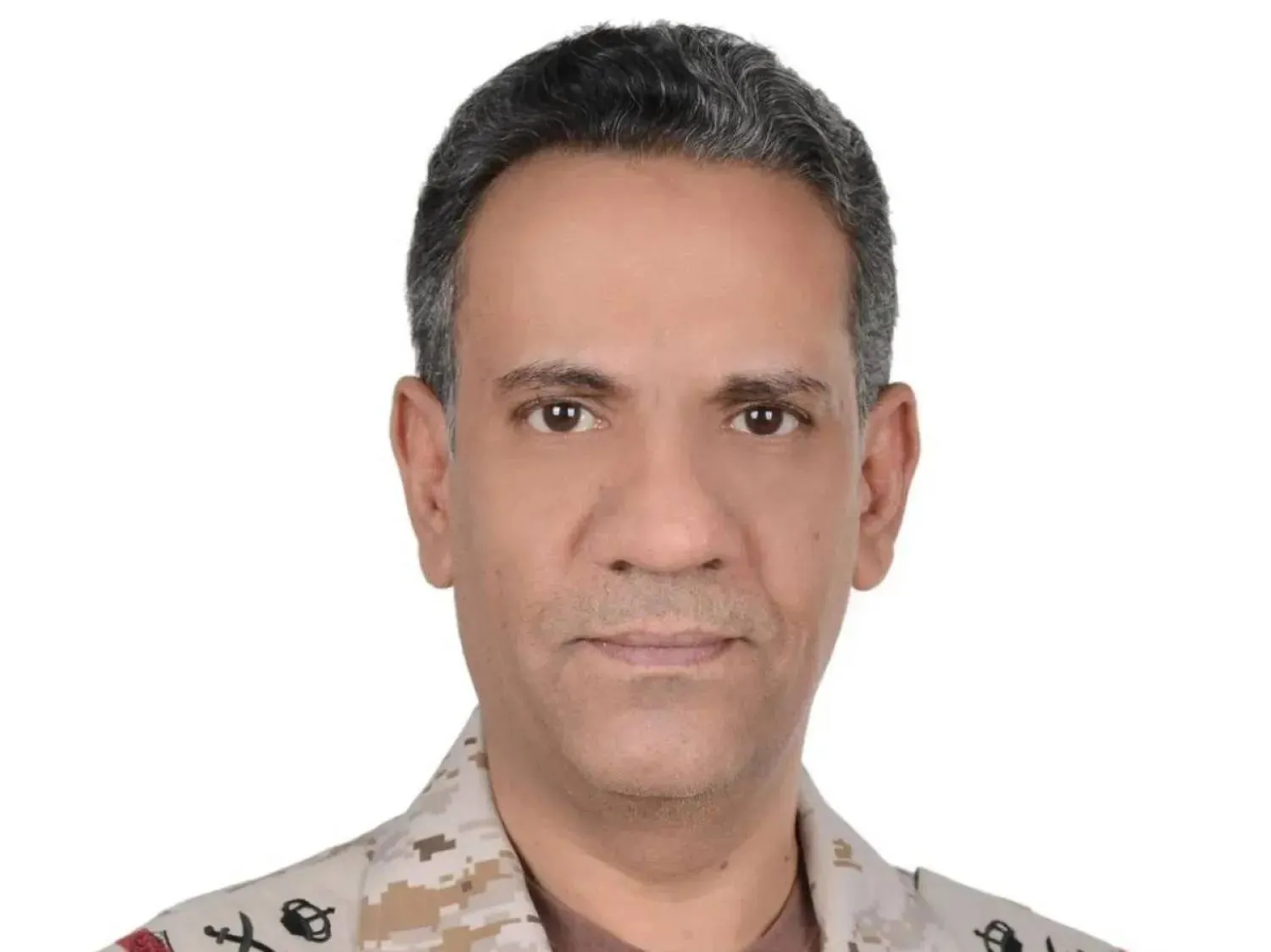
Brigadier General Turki al-Malki, Asharq Al-Awsat
TT

Arab Coalition Refutes Houthi Allegations Regarding Saada Prison

Brigadier General Turki al-Malki, Asharq Al-Awsat

The Saudi-led Arab Coalition will meet on Tuesday with the UN and Red Cross to examine Houthi claims that it targeted a detention center in the Yemeni province of Saada with air strikes.

The Coalition clarified that it had officially invited both the UN Office for the Coordination of Humanitarian Affairs in Yemen and the International Committee of the Red Cross to visit it.

It also reaffirmed its commitment to the principles of international humanitarian law and its customary rules in military operations.

Earlier, Coalition spokesperson Brigadier General Turki al-Malki had confirmed that no prison was targeted in Saada and pointed out that the allegations spread by Houthis were misleading and aimed to chiefly garner the sympathy of UN organizations and international NGOs.

“The Coalition will inform the Office for the Coordination of Humanitarian Affairs in Yemen (OCHA) and the International Committee of the Red Cross (ICRC) on the facts and details,” said al-Malki.

There are four reported locations identified as prisons in the Joint Forces Command’s No Strike List (NSL) in Saada city. These are being used by the “terrorist Houthi militia,” to launch cross-border attacks to target civilians and civilian installations, SPA reported.

“The closest prison is located 1.8 kilometers away from the alleged location,” clarified al-Malki in the statement, adding that the reports shared by the Iran-backed Houthis are part of a “blatant attempt to mislead the public opinion regarding the true nature of the location in an attempt to garner sympathy from UN organizations and INGOs.”

An investigation launched by the Joint Incidents Assessment Team (JIAT) on the alleged targeted prison strike by the Coalition has revealed the location to be a “Special Security Camp in Saada, which is a legitimate military target.”


Hadhramaut Figures: Saudi Arabia's Historic Stance Paves Way for New Phase of Stability

Sheikh Essam Al-Kathiri, Secretary-General of the Hadhramaut National Council. (Asharq Al-Awsat)
TT

Hadhramaut Figures: Saudi Arabia's Historic Stance Paves Way for New Phase of Stability

Sheikh Essam Al-Kathiri, Secretary-General of the Hadhramaut National Council. (Asharq Al-Awsat)

Several prominent figures from Yemen's Hadhramaut praised on Monday's Saudi Arabia's stance on the governorate that prevented it from sliding towards deeper unrest and instability.

The figures told Asharq Al-Awsat that the Kingdom's position was not limited to tackling the current crisis, but paves the way for a new phase of stability and development as parties prepare for a Riyadh conference on the southern issue.

The conference will mark a turning point in "rearranging" the political scene in the South, they remarked.

Hadhramaut is at a pivotal moment that demands united ranks that will come up with a unified vision that preserves the governorate's interests and allows it to play an effective role in any future political process, they added

Sheikh Essam Al-Kathiri, Secretary-General of the Hadhramaut National Council, told Asharq Al-Awsat that the Saudi Arabia's "historic" stance and determination over the December 3 developments prevented the governorate from slipping into chaos.

Hadhramaut may have escaped the crisis, but it has embarked on a new path towards progress and development, he stated.

The call for intra-south dialogue is a sign that a secure and stable future is on the horizon, he noted.

"We are already seeing these signs with Saudi Arabia's brotherly support," he remarked.

Another member of the council, Al-Hakam Abdullah al-Nahdi, told Asharq Al-Awsat that the support offered by Saudi Arabia, led by Custodian of the Two Holy Mosques King Salman bin Abdulaziz, Prince Mohammed bin Salman, Crown Prince and Prime Minister, and Defense Minister Prince Khalid bin Salman, will be "etched in Hadhramaut's memory and relayed to generations to come."

"Hadhramaut represents a natural strategic depth to the Kingdom and its security is indivisible from Saudi Arabia's," he added.

"Were it not for Saudi Arabia's stance, we would have been mired in chaos," he went on to say.

He said he was optimistic about the future as long as Saudi Arabia was by Hadhramaut's side, calling on the people to "seize this opportunity by rallying together and shunning division."


Somalia Cancels All UAE Deals

A meeting of the Somali government. (Somali National News Agency)
TT

Somalia Cancels All UAE Deals

A meeting of the Somali government. (Somali National News Agency)

Somalia's government said on Monday that it was annulling all agreements with the United Arab Emirates, including port deals and defense and ‌security cooperation, ‌citing ‌evidence ⁠the UAE had ‌undermined its national sovereignty. 

"The Council of Ministers has annulled all agreements concluded with the United Arab Emirates, ⁠including those involving federal governmental ‌institutions, affiliated entities, and ‍regional administrations ‍operating within the territory ‍of the Federal Republic of Somalia," a statement from Somalia's Council of Ministers said. 

"This decision applies to all agreements ⁠and partnerships relating to the ports of Berbera, Bosaso, and Kismayo ... (and) bilateral security and defense cooperation agreements," the statement added. 


Somali Foreign Minister: Any Unilateral Recognition of Breakaway Regions Is Unviable

Somali Foreign Minister Abdisalam Abdi Ali (Somali Foreign Ministry)
TT

Somali Foreign Minister: Any Unilateral Recognition of Breakaway Regions Is Unviable

Somali Foreign Minister Abdisalam Abdi Ali (Somali Foreign Ministry)

At a highly sensitive regional juncture, Somali Foreign Minister Abdisalam Abdi Ali issued a clear warning against any unilateral recognition of breakaway regions, describing such moves as unviable and politically irresponsible, with negative repercussions for bilateral relations and regional stability.

In an interview with Asharq Al-Awsat, Ali stressed the alignment between Mogadishu and Riyadh on the need to shield the Red Sea and the Gulf of Aden from militarization, illicit activities and geopolitical rivalries.

He said his second visit to Saudi Arabia within two weeks reflects the depth of coordination with the Kingdom amid rapidly evolving regional developments, particularly those related to maritime security and the Horn of Africa.

Objectives of the Saudi visit

Ali said the primary aim of his visit was close consultation with Saudi Arabia on accelerating regional developments, notably those affecting the Red Sea, the Horn of Africa and maritime navigation security.

He added that discussions also focused on strengthening bilateral cooperation across political, economic, security and development fields, while ensuring full coordination on issues touching on Somalia’s sovereignty, unity and stability.

He noted that the visit — his second to Riyadh in less than two weeks — underscored the intensity of engagement with the Kingdom at a delicate moment, saying that his previous meeting with Saudi Foreign Minister Prince Faisal bin Farhan featured frank and constructive talks aimed at preventing escalation, maintaining regional balance and upholding international law.

Ali also highlighted the convening of an emergency meeting of foreign ministers of the Organization of Islamic Cooperation (OIC) to address what he described as the “illegal violation of Somalia’s sovereignty, unity and territorial integrity,” calling it further evidence of Saudi Arabia’s pivotal role in supporting regional stability.

Historic relations

The foreign minister described relations between Somalia and Saudi Arabia as “strong, historic and strategic,” grounded in shared faith, longstanding people-to-people ties and converging regional interests.

He said Somalia views the Kingdom as a key partner in national recovery, security-sector reform, economic stabilization and regional diplomacy, adding that current discussions are focused on translating this partnership into tangible outcomes that benefit both countries and reinforce wider regional stability.

Firm rejection of recognition of “Somaliland”

Ali stressed that the Somali federal government “categorically rejects” any declaration or action aimed at recognizing any part of Somalia as a separate entity. Such steps, he said, lack any legal basis, violate Somalia’s sovereignty and territorial integrity, and contravene international law, the UN Charter, the OIC charter and African Union principles.

He expressed Somalia’s appreciation for Saudi Arabia’s principled stance in support of Somali unity, as well as for regional and international partners that have voiced solidarity with Mogadishu.

He warned that unilateral recognition would not merely be a political position but a “destabilizing precedent” threatening the regional order. He added that Somalia is addressing the issue through balanced diplomacy and close coordination with regional and international partners.

A pivotal and constructive Saudi role

Ali said Saudi Arabia plays a “pivotal and constructive” role in promoting stability and security in the Arab world, the Red Sea region and the Horn of Africa, noting that its leadership in diplomacy, de-escalation and maritime security is widely recognized and appreciated.

Potential repercussions

The foreign minister warned that any unilateral recognition of Somaliland would be “legally and practically null and void,” further exacerbating fragility in a region already facing serious security, humanitarian and climate challenges. He said that such moves encourage fragmentation, fuel proxy conflicts and open the door to external interference, undermining the security of the Horn of Africa and international maritime navigation.

Militarization of the Red Sea

Ali said Mogadishu and Riyadh share a vital interest in protecting one of the world’s most strategic maritime corridors, stressing the need to keep the Red Sea and the Gulf of Aden free from militarization and illegal activities.

“We agree on the necessity of keeping the Red Sea and the Gulf of Aden away from militarization, illicit activities and geopolitical brinkmanship,” he underlined.