Arab Coalition Destroys Armed Drone Communication System in Yemenhttps://english.aawsat.com/home/article/3473741/arab-coalition-destroys-armed-drone-communication-system-yemen
Arab Coalition Destroys Armed Drone Communication System in Yemen
Coalition spokesman Brigadier General Turki al-Malki. (Asharq Al-Awsat)
The Saudi-led Arab coalition accused on Monday the Iran-backed Houthi militias in Yemen of using government ministry buildings to launch military attacks.
"We have destroyed a communication system used to operate drone control stations," the coalition was quoted as saying by the official Saudi news agency SPA.
"The Houthis are using the Ministry of Telecommunications and Information Technology in Sanaa for hostile operations," it added.
The coalition said the raids were in response to a drone attack Thursday on Saudi Arabia's Abha International Airport near the border which left 12 injured by falling debris after the Saudi military blew up the bomb-laden projectile.
The coalition had warned it would strike positions from which the Houthis launch drones in Sanaa and asked civilians to leave civilian areas used for military purposes.
"The Houthis are using state ministries to launch hostile operations," the coalition said.
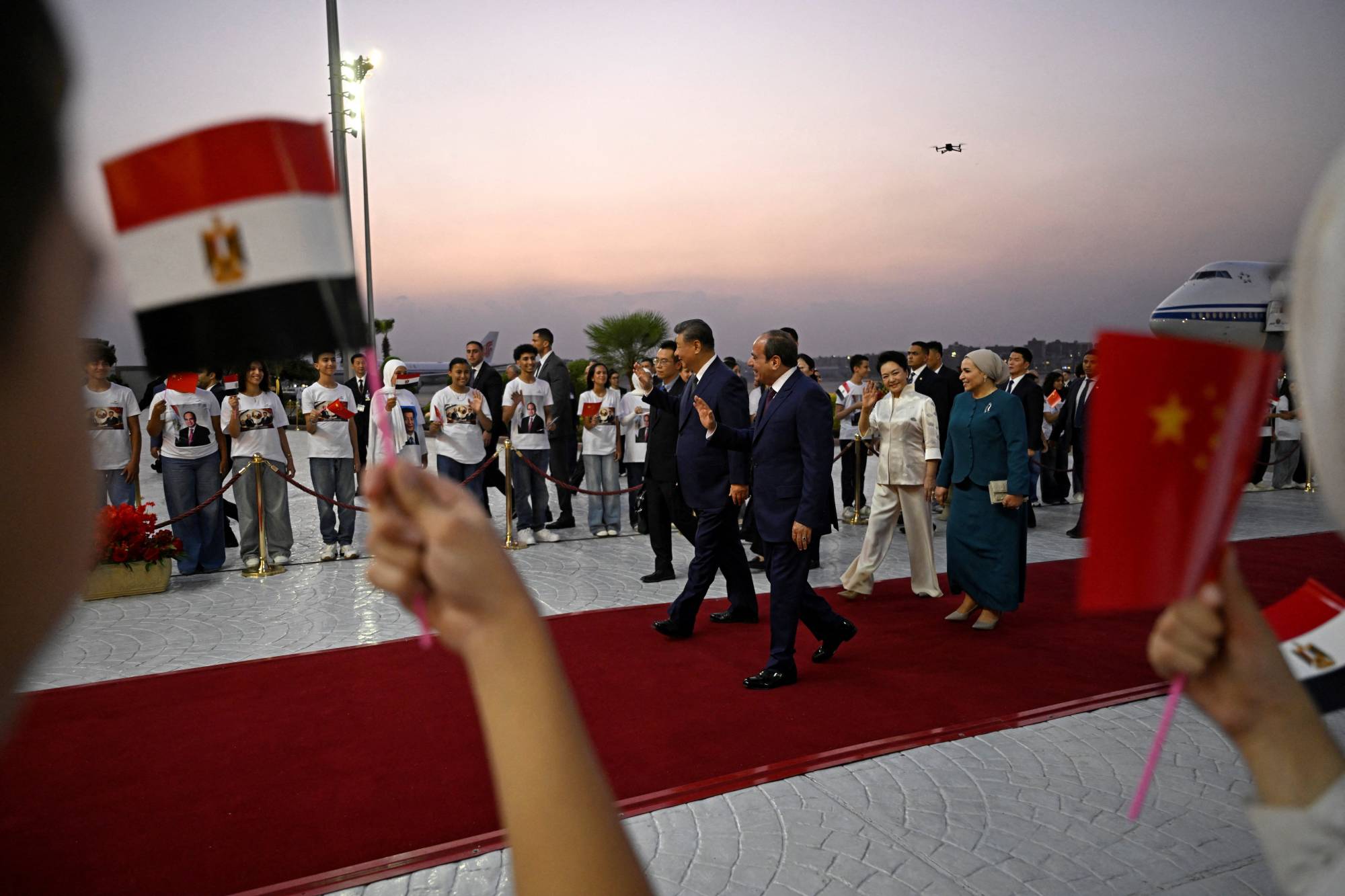
Chinese President Xi Jinping, with his wife First Lady Peng Liyuan, is welcomed by Egyptian President Abdel Fattah al-Sisi and his wife First Lady Entissar Amer upon their arrival at Cairo International Airport for an official visit to Egypt, which is his first state visit to the country in 10 years, in Cairo on September 1, 2026. (AFP)
TT
TT
China's Xi Arrives in Egypt
Chinese President Xi Jinping, with his wife First Lady Peng Liyuan, is welcomed by Egyptian President Abdel Fattah al-Sisi and his wife First Lady Entissar Amer upon their arrival at Cairo International Airport for an official visit to Egypt, which is his first state visit to the country in 10 years, in Cairo on September 1, 2026. (AFP)
Chinese President Xi Jinping arrived in Egypt on Tuesday on a rare trip to the Middle East amid the regional conflict with Iran.
Xi and his wife were greeted on the tarmac by Egyptian President Abdel Fattah al-Sisi and the first lady, as well as a performance by an Egyptian folk dance troupe.
The two-day visit comes as both countries seek to manage the fallout of the months-long Middle East war, which began when the United States and Israel launched strikes against Iran on February 28, throwing the crucial trade region into crisis.
Washington vowed last month to destabilize Iran economically, warning of expanded sanctions against Tehran's backers and partners that could hit Chinese banks, among others.
Xi's visit "comes at a time when China's economic interests are directly exposed to the US-Iran war", said Gamal Salama, political science professor at Egypt's Suez University.
China, a major buyer of Iranian oil, has presented itself as a neutral party in the Middle East conflict, repeatedly calling for a lasting ceasefire.
Egypt, a long-time recipient of US military aid, warned against regional escalation after a drone strike hit one of its ports in July.
China is "clearly seeking Egypt's cooperation in managing and shaping regional affairs", said Liu Jia, a research fellow at the Singapore-based Middle East Institute.
Beijing works closely with regional actors such as Egypt, which mediates between Israel and Palestinian groups, Liu added.
Both China and Egypt support an independent Palestinian state as part of a two-state solution.
"China sees Cairo as a strategic power broker," said Salama.
Egypt's "relations with both Washington and regional actors give Beijing both political access and diplomatic leverage across a region where China wants a much greater say," he added.
China's President Xi Jinping walks with his Egyptian counterpart Abdel Fattah al-Sisi followed by their wives Peng Liyuan and Entissar Amer upon their arrival at the Cairo International Airport, Egypt, September 1, 2026. (Reuters)
- 'Renewing the friendship' -
As part of its economic pressure campaign targeting Iran, Washington last week said it would cut off the operations of Egypt's Banque Misr in the UAE from the US financial system.
China, in response to the US measures and threats, has vowed to safeguard its interests.
Beijing has also sought to shore up ties with US-friendly regional nations ahead of a meeting between Xi and US President Donald Trump expected this month.
The Chinese and Egyptian militaries carried out joint air combat exercises in August that featured Beijing's powerful J-16 fighter jet.
Xi's meeting with his Egyptian counterpart Sisi, scheduled for Wednesday, follows a visit to Beijing by Jordan's King Abdullah II, whose country has also been caught up in the US war with Iran.
Xi and Sisi are expected to discuss issues including the Gaza war, Iran, and shipping in the Red Sea and the Strait of Hormuz, according to Egyptian media.
"I look forward to renewing the friendship and working together with President Sisi to... map out a new blueprint for deepening the China-Egypt comprehensive strategic partnership," Xi wrote in an editorial published in Egyptian media on Tuesday.
The Chinese leader's first visit to Egypt in a decade comes as the two nations mark 70 years of diplomatic ties.
China is a major exporter to Egypt, with its trade surplus reaching $12 billion in the first seven months of 2026, according to Chinese customs data.
The leaders are expected to sign agreements on artificial intelligence, transport, energy and investment in the Suez Canal Economic Zone, Egyptian media reported.
The meeting with Xi sets Cairo up to land Chinese investments in its local AI and electronics industries, political scientist Salama said.
"What Egypt is seeking is strategic autonomy: not breaking with Washington, not aligning completely with Beijing, but creating enough room to pursue its own national interests," he added.
UK to Unveil ‘Comprehensive’ Response to Israeli West Bank Settlement Plans in Coming Weekshttps://english.aawsat.com/arab-world/5313533-uk-unveil-%E2%80%98comprehensive%E2%80%99-response-israeli-west-bank-settlement-plans-coming
The new Israeli settlement “Dotan Valley”, as seen from Arraba whilst Israeli bulldozers uproots olive trees from Palestinian farms in Araba village near the west bank city of Jenin, 01 September 2026. (EPA)
TT
TT
UK to Unveil ‘Comprehensive’ Response to Israeli West Bank Settlement Plans in Coming Weeks
The new Israeli settlement “Dotan Valley”, as seen from Arraba whilst Israeli bulldozers uproots olive trees from Palestinian farms in Araba village near the west bank city of Jenin, 01 September 2026. (EPA)
Britain will set out a "comprehensive" package of measures on Israeli settlements in the occupied West Bank in the coming weeks, Foreign Secretary Ed Miliband said on Tuesday.
Miliband told lawmakers that Israel's E1 settlement project would cut across land which the Palestinians seek for a state and "risks making a Palestinian state unviable".
"This government will not acquiesce in the destruction of the two-state solution," he said. "We will act and I will set out a comprehensive set of measures in the coming weeks."
Britain and other European nations have criticized Israel's plans, while Prime Minister Andy Burnham said before taking office that he was "looking at measures to ban trade in goods with illegal settlements".
The Times reported on Monday that US President Donald Trump's administration is "closely" tracking any plans to introduce a trade ban.
More Than 10 EU Countries Eager to Contribute to Lebanon Mission, EU Foreign Policy Chief Sayshttps://english.aawsat.com/arab-world/5313507-more-10-eu-countries-eager-contribute-lebanon-mission-eu-foreign-policy-chief
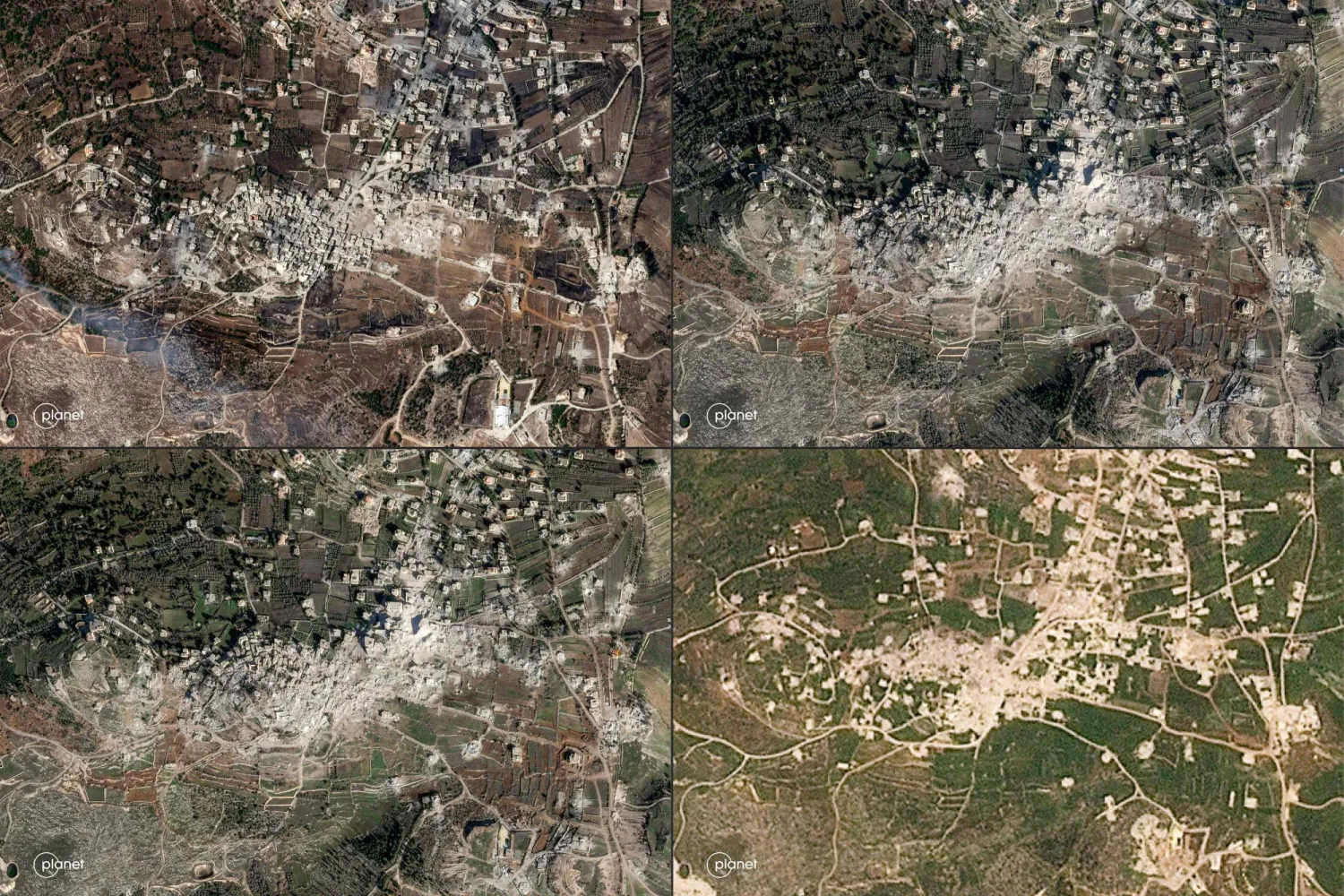
(COMBO) This combination of handout satellite images taken by Planet Labs PBC shows views of the village of Yaroun in southern Lebanon close to the border with Israel on (top L to R followed by bottom L to R) October 5, 2024; January 10, 2025; January 30, 2025; and on May 2, 2026. (Photo by 2026 Planet Labs PBC / AFP)
More Than 10 EU Countries Eager to Contribute to Lebanon Mission, EU Foreign Policy Chief Says
(COMBO) This combination of handout satellite images taken by Planet Labs PBC shows views of the village of Yaroun in southern Lebanon close to the border with Israel on (top L to R followed by bottom L to R) October 5, 2024; January 10, 2025; January 30, 2025; and on May 2, 2026. (Photo by 2026 Planet Labs PBC / AFP)
More than 10 European Union members are willing to contribute resources and people to a planned mission to advise and train Lebanon's armed forces, EU foreign policy chief Kaja Kallas said on Tuesday.
The proposed mission stems from the EU studying ways to strengthen Lebanese forces to help free up the Lebanese army to focus on disarming the armed group Hezbollah.
Western countries have long called for Lebanon to disarm the Iran-backed group, and doing so is a central component of a ceasefire between Lebanon and Israel aimed at ending a war that has run in parallel with the US-Israeli war against Iran.
The mandate of a UN force in Lebanon, UNIFIL, is set to expire at the end of 2026, and it is expected to begin a year-long drawdown and withdrawal.
"The EU is not seeking to replace UNIFIL," Kallas told reporters in Ireland following a gathering of European defense ministers.
"Our objective is to strengthen the Lebanese armed forces and the ability of the Lebanese state to provide security across its territory," she said, adding that planning is progressing well.
An EU official told Reuters that the bloc's aim is to establish the mission in mid-October and then deploy personnel in late 2026 or early 2027.
Kallas did not provide detail on which EU countries would be involved.
France has been trying for several months to organize an international conference that would aim to strengthen the Lebanese armed forces, and also proposed creating an international force as part of efforts to replace UNIFIL.
A senior Western diplomat told Reuters on Tuesday there was limited prospect for major decisions on Lebanon's future before Israel's election in late October. The diplomat also said there was little chance of progress without any clear strengthening of the Lebanese armed forces that would enable them to move into areas previously controlled by Hezbollah.
لم تشترك بعد
انشئ حساباً خاصاً بك لتحصل على أخبار مخصصة لك ولتتمتع بخاصية حفظ المقالات وتتلقى نشراتنا البريدية المتنوعة