


The World Still Has a Job to Finish

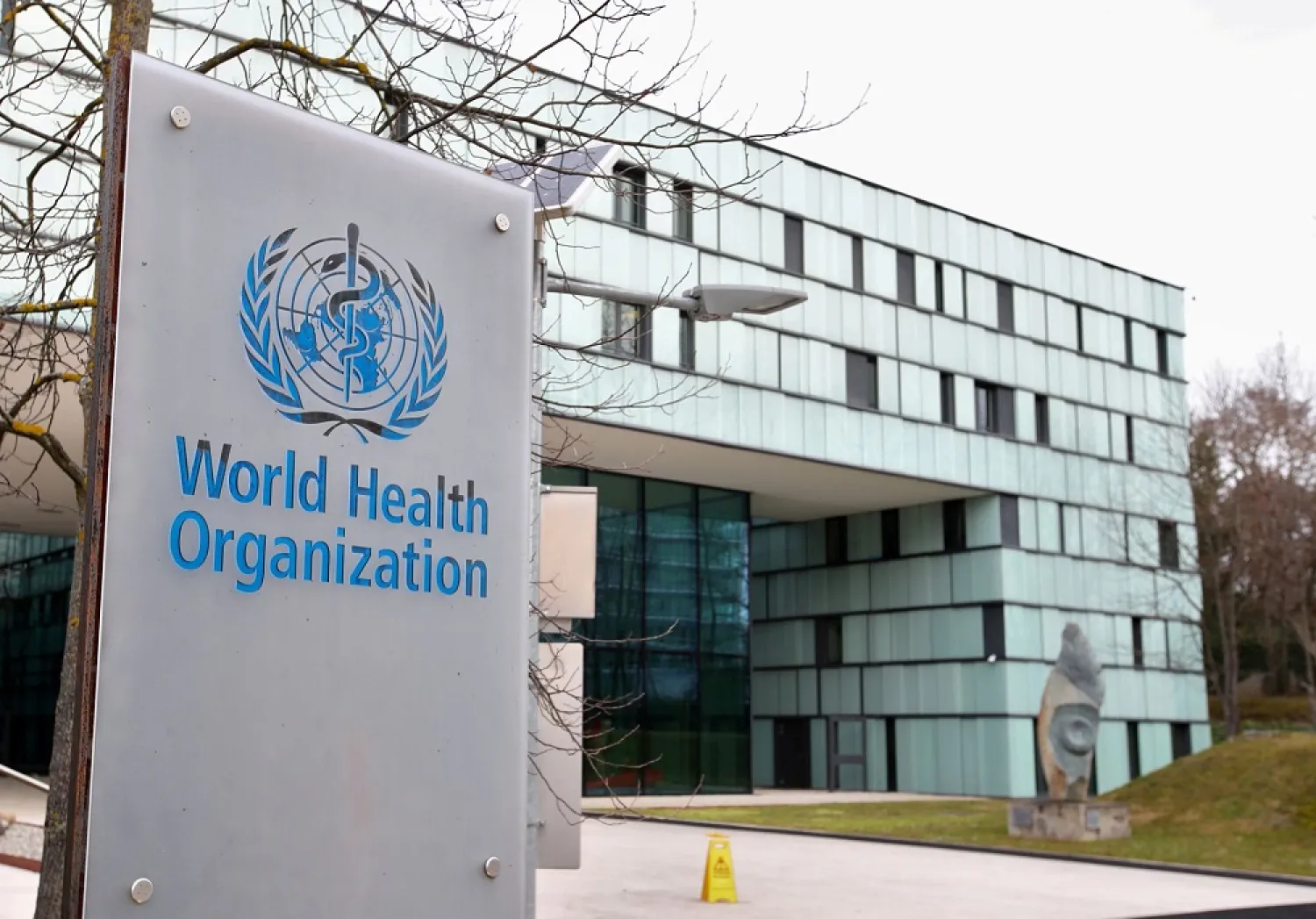
A logo is pictured outside a building of the World Health Organization (WHO) during an executive board meeting on update on the coronavirus outbreak, in Geneva, Switzerland, February 6, 2020. (Reuters)
TT

The World Still Has a Job to Finish

A logo is pictured outside a building of the World Health Organization (WHO) during an executive board meeting on update on the coronavirus outbreak, in Geneva, Switzerland, February 6, 2020. (Reuters)

The 150th session of the WHO Executive Board, which ended on January 29, clearly showed that the vast majority of Member States support WHO’s efforts to create a strong, effective empowered, efficient, accountable, transparent and sustainably financed WHO, as the leading and directing authority on global health, echoing Director-General Dr. Tedros’s closing remarks.

For us as Special Envoys, and for most Member States, the benefits of an empowered and sustainably financed WHO, able to effectively lead and direct global health actions across the world, are obvious.

To date, and despite WHO’s endless efforts with Member States to deliver lifesaving COVID-19 vaccines to the world’s least-developed countries, through COVAX, particularly, as well as other facilities, there are still 83 Member States which did not reach the target of vaccinating 40% of their populations by the end of 2021.

As Dr. Tedros’s Special Envoys for COIVD-19, we have repeatedly called on the world’s leaders to address this issue.

Yet, we have seen a persistent lack of solidarity accentuating the inequities and unfairness. And this means that even more countries are likely to fall short of the goal of vaccinating 70% of their population by mid-2022. This situation increases the divide between richer and poorer countries, the former having delivered third and even fourth doses of the vaccines and having coverage above 80%.

A WHO with more authority to direct medical supplies and resources to where they are most needed, to conduct preparation and response operations in every country in an equal manner, one with the sustained financial resources and capacity to approach outbreak/novel pathogen control in a holistic, sustained matter, would find the world in a safer place than it is today.

We are currently mired in a two-track pandemic: one for richer countries, where large portions of the population have been vaccinated and hospitalizations and, above all, deaths have been reduced, and a second track for poorer countries, some of which have been able to vaccinate less than 5% of their populations, and where death and severe disease continue to ravage social and health care systems.

The 34 WHO Member States of the Executive Board last week had the chance to put this right, by clearly signaling that they supported a strong and sustainably-financed WHO.

Still, they could not do so. There was no agreement on better financing for WHO in the future. Instead, the question was sent back to a working group – and there was no agreement on how WHO should be strengthened. Member States have asked the Director-General to provide new proposals on strengthening the global health architecture to address global inequities and ensure the world is better prepared for and able to respond to the emergence of the next major disease threat.

Now is the time for reaching a consensus. It is an opportunity to make use of these working groups to come together around bold and ambitious measures to change and improve the world’s ability to stand up for humanity and to protect itself against emergent disease threats.

Failing at this means putting the world and its people at unnecessary risk. We need to put aside individual and particular doubts in favor of the common good. We, the Director-General’s Special Envoys, call on the citizens and leaders of every country – as every country in the world will be represented at the World Health Assembly in May – to reach agreement on what is both good and morally right for the world and its people.

Together, we have the power to lead and make the needed change in solidarity, to improve the livelihoods of each and every one of us, for a safe place and better world. If we fail to come together to support the construction of a more efficient and effective global health architecture, the pandemic’s ravages will continue unabated. The choice is ours. The choice is now.

WHO Director-General’s Special Envoys for COVID-19:

· Dr Palitha Abeykoon, former Director, Health Systems Development, WHO South-East Asia Regional Office, Senior Advisor Sri Lankan Ministry of Health;

· Professor Dr. Maha El Rabbat, former Minister of Health and Population of Egypt and Professor of Public Health;

· Dr. David Nabarro, former Special Adviser to the United Nations Secretary-General on the 2030 Agenda for Sustainable Development and Climate Change;

· Dr. John Nkengasong, Director of the African Centers for Disease Control and Prevention;

· Dr. Mirta Roses, former Director of the WHO Region of the Americas;

· Professor Samba Sow, Director-General of the Center for Vaccine Development in Mali.


Netanyahu Coalition Pushes Contentious Oct. 7 Attack Probe, Families Call for Justice

The bereaved families of the 7 October attack hold pictures of their loved ones and shout slogans towards Knesset members during a debate on the bill for a state commission of inquiry into the events of 7 October at the Knesset, the Israeli parliament, in Jerusalem, 24 December 2025. (EPA)
TT

Netanyahu Coalition Pushes Contentious Oct. 7 Attack Probe, Families Call for Justice

The bereaved families of the 7 October attack hold pictures of their loved ones and shout slogans towards Knesset members during a debate on the bill for a state commission of inquiry into the events of 7 October at the Knesset, the Israeli parliament, in Jerusalem, 24 December 2025. (EPA)

Israel's parliament gave the initial go-ahead on Wednesday for a government-empowered inquiry into the surprise October 7, 2023 attack by Hamas on southern Israel rather than the expected independent investigation demanded by families of the victims.

Prime Minister Benjamin Netanyahu has resisted calls to establish a state commission to investigate Israel's failures in the run-up to its deadliest day and has taken no responsibility for the attack that sparked the two-year Gaza war.

His ruling coalition voted on Wednesday to advance a bill which grants parliament members the authority to pick panel members for an inquiry and gives Netanyahu's cabinet the power to set its mandate.

Critics ‌say the move ‌circumvents Israel's 1968 Commissions of Inquiry Law, under which ‌the ⁠president of ‌the Supreme Court appoints an independent panel to investigate major state failures such as those which preceded the 1973 Yom Kippur war.

Survivors and relatives of those hurt in the Hamas attack have launched a campaign against the proposed probe, saying only a state commission can bring those accountable to justice.

"This is a day of disaster for us all," said Eyal Eshel, who lost his daughter when Hamas fighters overran the army base where she served. "Justice ⁠must be done and justice will be done," he said at the Knesset, before the vote.

Surveys have shown ‌wide public support for the establishment of a state ‍commission into the country's biggest security ‍lapse in decades.

Netanyahu said on Monday that a panel appointed in line with the ‍new bill, by elected officials from both the opposition and the coalition, would be independent and win broad public trust.

But Israel's opposition has already said it will not cooperate with what it describes as an attempt by Netanyahu's coalition to cover up the truth rather than reveal it, arguing that the investigation would ultimately be controlled by Netanyahu and his coalition.

The new bill says that if the politicians fail to ⁠agree on the panel, its make-up will be decided by the head of parliament, who is allied with Netanyahu and is a member of his Likud party.

Jon Polin, whose son Hersh Goldberg-Polin was taken hostage and found slain by his captors with five other hostages in a Hamas tunnel in August 2024, said only a trusted commission could restore security and unite a nation still traumatized.

"I support a state commission, not to see anyone punished and not because it will bring back my only son, no. I support a state commission so that nothing like what happened to my son, can ever happen to your son, or your daughter, or your parents," Polin said on Sunday at a news ‌conference with other families.

Hersh Goldberg-Polin was among dozens of hostages taken in the 2023 attack from the site of the Nova music festival.


Search Teams in Türkiye Recover Recorders after Plane Crash that Killed Libyan Military Officials

Turkish army soldiers stand guard as rescue teams search for the remains of a private jet carrying Libya's military chief and four others that crashed after taking off from Ankara, killing everyone on board, in Ankara, Turkey, early Wednesday, Dec. 24, 2025. (AP Photo/Efekan Akyuz)
TT

Search Teams in Türkiye Recover Recorders after Plane Crash that Killed Libyan Military Officials

Turkish army soldiers stand guard as rescue teams search for the remains of a private jet carrying Libya's military chief and four others that crashed after taking off from Ankara, killing everyone on board, in Ankara, Turkey, early Wednesday, Dec. 24, 2025. (AP Photo/Efekan Akyuz)

Search teams in Türkiye on Wednesday recovered the cockpit voice and flight data recorders from a jet crash that killed eight people, including western Libya’s military chief, while efforts to retrieve the victims' remains were still underway, Türkiye's interior minister said.

The private jet carrying Gen. Muhammad Ali Ahmad al-Haddad, four other military officials and three crew members crashed on Tuesday, after taking off from Türkiye's capital, Ankara, killing everyone on board. Libyan officials said that the cause of the crash was a technical malfunction on the plane.

The high-level Libyan delegation was on its way back to Tripoli after holding defense talks in Ankara aimed at boosting military cooperation between the two countries.

Turkish Interior Minister Ali Yerlikaya told journalists at the site of the crash that wreckage was scattered across an area covering three square kilometers (more than a square mile), complicating recovery efforts. Authorities from the Turkish forensic medicine authority were working to recover and identify the remains, he said.

A 22-person delegation — including five family members — arrived from Libya early on Wednesday to assist in the investigation, he said.

Tripoli-based Libyan Prime Minister Abdul-Hamid Dbeibah confirmed the deaths on Tuesday, describing the crash on Facebook as a “tragic accident” and a “great loss” for Libya.

Turkish President Recep Tayyip Erdogan held a telephone call with Dbeibah, during which he conveyed his condolences and expressed his sorrow over the deaths, his office said.

The Turkish leader later also offered his condolences during a televised speech, voicing solidarity with Libya.

"An investigation has been launched into this tragic incident that has deeply saddened us, and our ministries will provide information about its progress,” Erdogan said.

Al-Hadad was the top military commander in western Libya and played a crucial role in the ongoing, UN-brokered efforts to unify Libya’s military, which has split, much like the nation's other institutions.

The four other military officials who died in the crash were Gen. Al-Fitouri Ghraibil, the head of Libya’s ground forces, Brig. Gen. Mahmoud Al-Qatawi, who led the military manufacturing authority, Mohammed Al-Asawi Diab, adviser to the chief of staff, and Mohammed Omar Ahmed Mahjoub, a military photographer with the chief of staff’s office.

The identities of the three crew members weren't immediately released.

Turkish officials said that the Falcon 50-type business jet took off from Ankara’s Esenboga airport at 8:30 p.m. and that contact was lost around 40 minutes later. The plane notified air traffic control of an electrical fault and requested an emergency landing. The aircraft was redirected back to Esenboga, where preparations for its landing began.

The plane, however, disappeared from radar while descending for the emergency landing, the Turkish presidential communications office said.

The Libyan government declared a three-day period of national mourning. Flags would be flown half-staff at all state institutions, according to the government’s announcement on Facebook.

The wreckage was found near the village of Kesikkavak, in Haymana, a district about 70 kilometers (45 miles) south of Ankara.

At the crash site, search and recovery teams intensified their operations on Wednesday after a night of heavy rain and fog, the state-run Anadolu Agency reported. Gendarmerie police sealed off the area while the Turkish disaster management agency, AFAD, set up a mobile coordination center. Specialized vehicles, such as tracked ambulances, were deployed because of the muddy terrain.

Türkiye has assigned four prosecutors to lead the investigation, and Yerlikaya that said the Turkish search and recovery teams included 408 personnel.

While in Ankara, al-Haddad had met with Turkish Defense Minister Yasar Guler and other officials.


Netanyahu: Israel to Spend $110 billion to Develop Independent Arms Industry in Next Decade

Two Israeli soldiers inside Gaza (AFP)
TT

Netanyahu: Israel to Spend $110 billion to Develop Independent Arms Industry in Next Decade

Two Israeli soldiers inside Gaza (AFP)

Israeli Prime Minister Benjamin Netanyahu said ​on Wednesday Israel would spend 350 billion shekels ($110 billion) on developing an independent arms to reduce ‌dependency on other ‌countries, AFP reported.

"We ‌will ⁠continue ​to ‌acquire essential supplies while independently arming ourselves," Netanyahu said at a ceremony for new pilots.

"I ⁠don't know if ‌a country can ‍be ‍completely independent but we ‍will strive ... to ensure our arms are produced as ​much as possible in Israel," he said.

"Our ⁠goal is to build an independent arms industry for the State of Israel and reduce the dependency on any party, including allies."
