

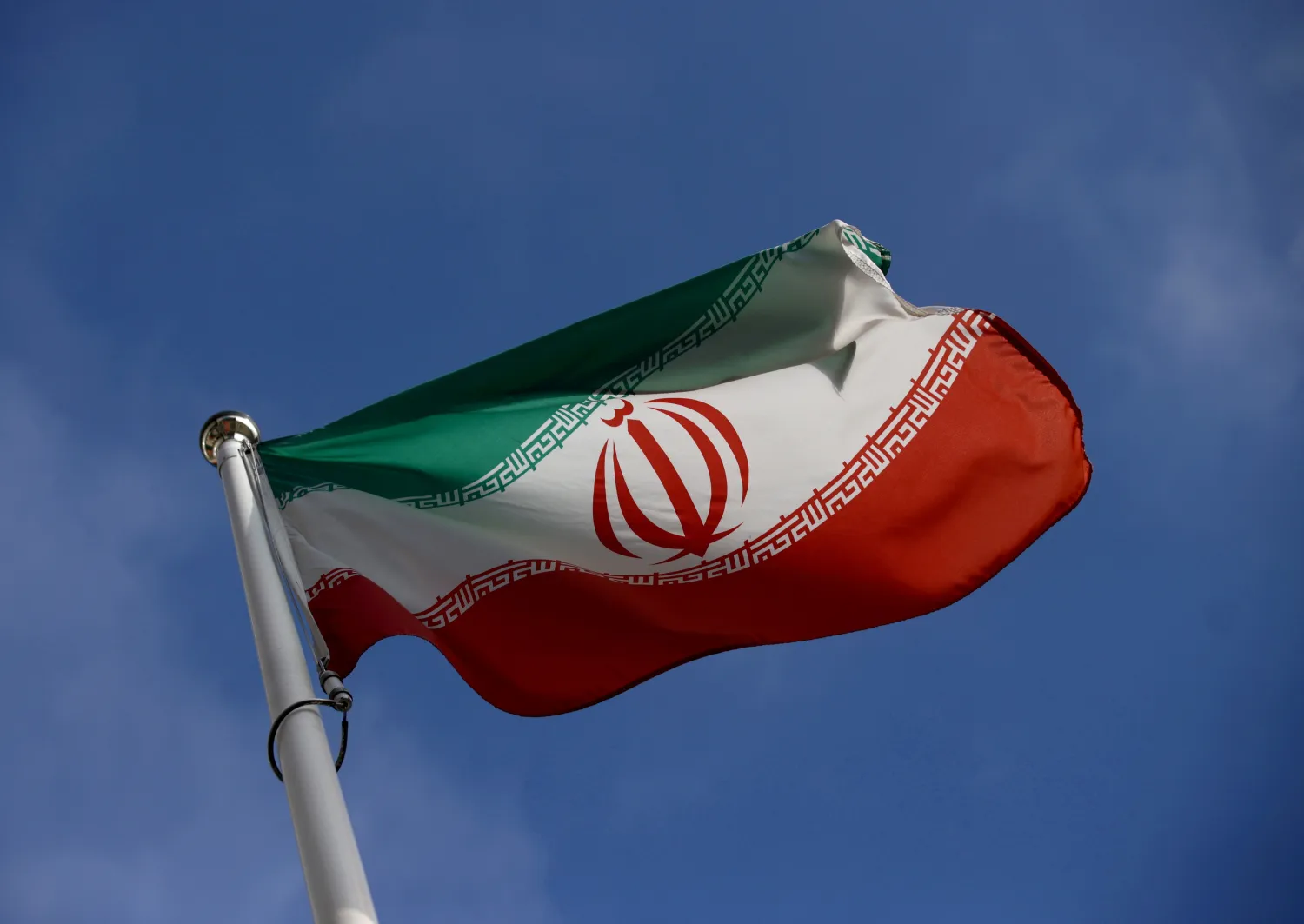

Impending Iran Nuclear Deal Alarms Israel

The Iranian flag waves in front of the International Atomic Energy Agency (IAEA) headquarters, before the beginning of a board of governors meeting, in Vienna, Austria, March 1, 2021. REUTERS/Lisi Niesner
TT

Impending Iran Nuclear Deal Alarms Israel

The Iranian flag waves in front of the International Atomic Energy Agency (IAEA) headquarters, before the beginning of a board of governors meeting, in Vienna, Austria, March 1, 2021. REUTERS/Lisi Niesner

While the world’s attention has been focused on Ukraine, the Biden administration also has been racing with world powers toward restoring the 2015 international nuclear deal with Iran.

After months of negotiations in Vienna, the various sides have indicated a new deal is close, perhaps in the coming days. But instead of the “longer, stronger” agreement originally promised by the US, the deal is expected to do little more than reinstate the original pact, whose key restrictions on Iranian nuclear activity expire in a few years.

This modest accomplishment appears to be the best the Biden administration can hope for at a time when it is restrained by Congress at home, and overwhelmed abroad with the Ukraine crisis and longer-term challenges such as China and climate change. But it is setting off alarm bells in Israel, whose leaders have grown increasingly vocal in their condemnations of a deal they fear will not prevent Iran from developing nuclear weapons, The Associated Press reported.

“The emerging deal, as it seems, is highly likely to create a more violent, more volatile Middle East,” Israeli Prime Minister Naftali Bennett said this week, repeating his threat that Israel is not bound by the deal and is prepared to attack Iran if needed.

Here is a closer look at the agreement and what lies ahead:

HOW WE GOT HERE

The 2015 agreement, spearheaded by former President Barack Obama, aimed to prevent Iran from being able to build a nuclear bomb. It offered Iran relief from harsh economic sanctions in exchange for curbs of 10 to 15 years on its nuclear activities. Iran says its nuclear activities are peaceful.

Critics, led by then-Israeli Prime Minister Benjamin Netanyahu, complained the restrictions were temporary, not airtight and gave Iran a pathway to developing atomic weapons capability. They also argued that the deal, known as the Joint Comprehensive Plan of Action or JCPOA, did not address Iran’s non-nuclear activity, including its support for regional proxies and its development of long-range missiles capable of delivering a bomb.

At Netanyahu’s urging, President Donald Trump withdrew from the agreement in 2018, promising a campaign of “maximum pressure” on the Iranians. Despite tougher sanctions, that strategy appears to have backfired. The Iranian government, now under a more hard-line leader who was elected last year, remains firmly in power, and with the deal unraveling, Iran has raced ahead with uranium enrichment and other research far beyond the boundaries of the original agreement.

WHY NOT NEGOTIATE A NEW DEAL?

Iran has shown little interest in seeking a longer-term agreement. Even if one could be reached, Biden would face a tough time implementing it.

Under a 2015 US law, any new agreement granting Iran relief from sanctions would require congressional approval, a process that would be slow and uncertain. Instead, the White House has signaled it plans to argue that any deal emerging from the Vienna talks would be simply “re-entering” the initial JCPOA.

That could avert a battle with Congress but means that key aspects of the original deal, such as limits on uranium enrichment, would expire in 2025. The administration appears to have concluded that a flawed short-term deal is better than nothing at all.

WHY ISRAEL IS UPSET

Israeli leaders fear the brief remaining lifespan of the JCPOA will do little to halt Iran in the long run, especially after the technological gains Iran has made in recent years. It remains unclear whether Iran will even have to give up its stockpile of enriched uranium.

But they also fear that with sanctions eased and billions of dollars in now-frozen assets to be released, Iran would spend more on arming and funding its proxies across the region. These include Lebanon’s Hezbollah and the Hamas and Islamic Jihad groups in the Gaza Strip.

“Iran is going to be more able and confident to do things it has already been doing, with more resources and confidence, and perhaps immunity because it signed a very important agreement,” said Yoel Guzansky, an expert on Iran at Israel’s Institute for National Security Studies, a Tel Aviv think tank.

WHAT IRAN IS SAYING

Iran has long insisted on a complete lifting of US sanctions imposed under the Trump administration as its economy buckles under the pressure of inflation and a currency crash. Tehran has signaled it is willing to return to the agreement's nuclear enrichment red lines but it wants access to $7 billion in frozen assets and the ability to sell its oil exports unhindered.

Iran also insists it has every right to pursue peaceful nuclear energy. Israel is widely believed to have its own nuclear arsenal, though it has never acknowledged it.

The Biden administration has issued only limited sanctions waivers and says these moves are aimed at helping facilitate discussions so that Iran returns to full compliance of the accord.

Iranian media frequently lambasts Israel for working to derail the talks in Vienna and says Israel has tried to pursue maximum pressure on Iran by normalizing ties with the United Arab Emirates and Bahrain, as well as through attacks and acts of sabotage against Iran. Israel, in turn has accused Iran of attacking Israeli-linked cargo ships passing through the region.

The International Crisis Group, an organization once headed by the top US negotiator, says any success in current talks still “hinges on the political willingness, mostly in the US and Iran, to accept compromises on remaining areas of disagreement, which is by no means assured.”

“After weeks of intensive talks, we are closer than ever to an agreement. Nothing is agreed until everything is agreed, though,” Iran’s top nuclear negotiator Ali Bagheri Kani was quoted in Iranian media as recently saying.

WHAT ISRAEL CAN DO

Guzansky, the Israeli expert on Iran, says the upside of an agreement is that it “buys time.”

He said Israel should use the coming years to beef up its military capabilities in case it has to take action against Iran. “We need to flex our muscles and get this option ready to use,” he said.



Netanyahu Coalition Pushes Contentious Oct. 7 Attack Probe, Families Call for Justice

The bereaved families of the 7 October attack hold pictures of their loved ones and shout slogans towards Knesset members during a debate on the bill for a state commission of inquiry into the events of 7 October at the Knesset, the Israeli parliament, in Jerusalem, 24 December 2025. (EPA)
TT

Netanyahu Coalition Pushes Contentious Oct. 7 Attack Probe, Families Call for Justice

The bereaved families of the 7 October attack hold pictures of their loved ones and shout slogans towards Knesset members during a debate on the bill for a state commission of inquiry into the events of 7 October at the Knesset, the Israeli parliament, in Jerusalem, 24 December 2025. (EPA)

Israel's parliament gave the initial go-ahead on Wednesday for a government-empowered inquiry into the surprise October 7, 2023 attack by Hamas on southern Israel rather than the expected independent investigation demanded by families of the victims.

Prime Minister Benjamin Netanyahu has resisted calls to establish a state commission to investigate Israel's failures in the run-up to its deadliest day and has taken no responsibility for the attack that sparked the two-year Gaza war.

His ruling coalition voted on Wednesday to advance a bill which grants parliament members the authority to pick panel members for an inquiry and gives Netanyahu's cabinet the power to set its mandate.

Critics ‌say the move ‌circumvents Israel's 1968 Commissions of Inquiry Law, under which ‌the ⁠president of ‌the Supreme Court appoints an independent panel to investigate major state failures such as those which preceded the 1973 Yom Kippur war.

Survivors and relatives of those hurt in the Hamas attack have launched a campaign against the proposed probe, saying only a state commission can bring those accountable to justice.

"This is a day of disaster for us all," said Eyal Eshel, who lost his daughter when Hamas fighters overran the army base where she served. "Justice ⁠must be done and justice will be done," he said at the Knesset, before the vote.

Surveys have shown ‌wide public support for the establishment of a state ‍commission into the country's biggest security ‍lapse in decades.

Netanyahu said on Monday that a panel appointed in line with the ‍new bill, by elected officials from both the opposition and the coalition, would be independent and win broad public trust.

But Israel's opposition has already said it will not cooperate with what it describes as an attempt by Netanyahu's coalition to cover up the truth rather than reveal it, arguing that the investigation would ultimately be controlled by Netanyahu and his coalition.

The new bill says that if the politicians fail to ⁠agree on the panel, its make-up will be decided by the head of parliament, who is allied with Netanyahu and is a member of his Likud party.

Jon Polin, whose son Hersh Goldberg-Polin was taken hostage and found slain by his captors with five other hostages in a Hamas tunnel in August 2024, said only a trusted commission could restore security and unite a nation still traumatized.

"I support a state commission, not to see anyone punished and not because it will bring back my only son, no. I support a state commission so that nothing like what happened to my son, can ever happen to your son, or your daughter, or your parents," Polin said on Sunday at a news ‌conference with other families.

Hersh Goldberg-Polin was among dozens of hostages taken in the 2023 attack from the site of the Nova music festival.


Search Teams in Türkiye Recover Recorders after Plane Crash that Killed Libyan Military Officials

Turkish army soldiers stand guard as rescue teams search for the remains of a private jet carrying Libya's military chief and four others that crashed after taking off from Ankara, killing everyone on board, in Ankara, Turkey, early Wednesday, Dec. 24, 2025. (AP Photo/Efekan Akyuz)
TT

Search Teams in Türkiye Recover Recorders after Plane Crash that Killed Libyan Military Officials

Turkish army soldiers stand guard as rescue teams search for the remains of a private jet carrying Libya's military chief and four others that crashed after taking off from Ankara, killing everyone on board, in Ankara, Turkey, early Wednesday, Dec. 24, 2025. (AP Photo/Efekan Akyuz)

Search teams in Türkiye on Wednesday recovered the cockpit voice and flight data recorders from a jet crash that killed eight people, including western Libya’s military chief, while efforts to retrieve the victims' remains were still underway, Türkiye's interior minister said.

The private jet carrying Gen. Muhammad Ali Ahmad al-Haddad, four other military officials and three crew members crashed on Tuesday, after taking off from Türkiye's capital, Ankara, killing everyone on board. Libyan officials said that the cause of the crash was a technical malfunction on the plane.

The high-level Libyan delegation was on its way back to Tripoli after holding defense talks in Ankara aimed at boosting military cooperation between the two countries.

Turkish Interior Minister Ali Yerlikaya told journalists at the site of the crash that wreckage was scattered across an area covering three square kilometers (more than a square mile), complicating recovery efforts. Authorities from the Turkish forensic medicine authority were working to recover and identify the remains, he said.

A 22-person delegation — including five family members — arrived from Libya early on Wednesday to assist in the investigation, he said.

Tripoli-based Libyan Prime Minister Abdul-Hamid Dbeibah confirmed the deaths on Tuesday, describing the crash on Facebook as a “tragic accident” and a “great loss” for Libya.

Turkish President Recep Tayyip Erdogan held a telephone call with Dbeibah, during which he conveyed his condolences and expressed his sorrow over the deaths, his office said.

The Turkish leader later also offered his condolences during a televised speech, voicing solidarity with Libya.

"An investigation has been launched into this tragic incident that has deeply saddened us, and our ministries will provide information about its progress,” Erdogan said.

Al-Hadad was the top military commander in western Libya and played a crucial role in the ongoing, UN-brokered efforts to unify Libya’s military, which has split, much like the nation's other institutions.

The four other military officials who died in the crash were Gen. Al-Fitouri Ghraibil, the head of Libya’s ground forces, Brig. Gen. Mahmoud Al-Qatawi, who led the military manufacturing authority, Mohammed Al-Asawi Diab, adviser to the chief of staff, and Mohammed Omar Ahmed Mahjoub, a military photographer with the chief of staff’s office.

The identities of the three crew members weren't immediately released.

Turkish officials said that the Falcon 50-type business jet took off from Ankara’s Esenboga airport at 8:30 p.m. and that contact was lost around 40 minutes later. The plane notified air traffic control of an electrical fault and requested an emergency landing. The aircraft was redirected back to Esenboga, where preparations for its landing began.

The plane, however, disappeared from radar while descending for the emergency landing, the Turkish presidential communications office said.

The Libyan government declared a three-day period of national mourning. Flags would be flown half-staff at all state institutions, according to the government’s announcement on Facebook.

The wreckage was found near the village of Kesikkavak, in Haymana, a district about 70 kilometers (45 miles) south of Ankara.

At the crash site, search and recovery teams intensified their operations on Wednesday after a night of heavy rain and fog, the state-run Anadolu Agency reported. Gendarmerie police sealed off the area while the Turkish disaster management agency, AFAD, set up a mobile coordination center. Specialized vehicles, such as tracked ambulances, were deployed because of the muddy terrain.

Türkiye has assigned four prosecutors to lead the investigation, and Yerlikaya that said the Turkish search and recovery teams included 408 personnel.

While in Ankara, al-Haddad had met with Turkish Defense Minister Yasar Guler and other officials.


Netanyahu: Israel to Spend $110 billion to Develop Independent Arms Industry in Next Decade

Two Israeli soldiers inside Gaza (AFP)
TT

Netanyahu: Israel to Spend $110 billion to Develop Independent Arms Industry in Next Decade

Two Israeli soldiers inside Gaza (AFP)

Israeli Prime Minister Benjamin Netanyahu said ​on Wednesday Israel would spend 350 billion shekels ($110 billion) on developing an independent arms to reduce ‌dependency on other ‌countries, AFP reported.

"We ‌will ⁠continue ​to ‌acquire essential supplies while independently arming ourselves," Netanyahu said at a ceremony for new pilots.

"I ⁠don't know if ‌a country can ‍be ‍completely independent but we ‍will strive ... to ensure our arms are produced as ​much as possible in Israel," he said.

"Our ⁠goal is to build an independent arms industry for the State of Israel and reduce the dependency on any party, including allies."