


Oil Breaks $100, Havens Rally, Equities Drop as Russia Enters Ukraine

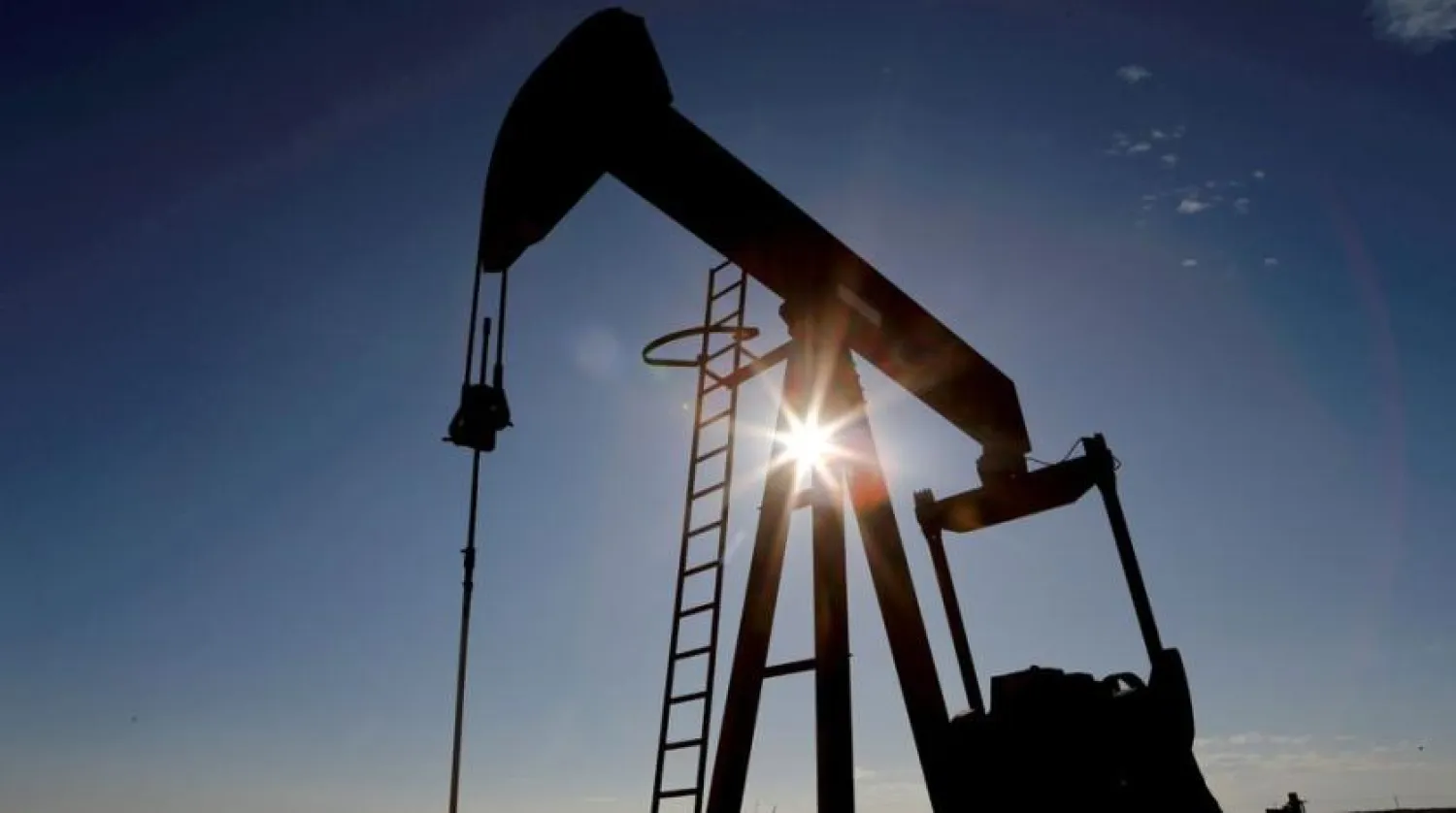
The sun is seen behind a crude oil pump jack in the Permian Basin in Loving County, Texas, US, November 22, 2019. REUTERS/Angus Mordant/File Photo
TT

Oil Breaks $100, Havens Rally, Equities Drop as Russia Enters Ukraine

The sun is seen behind a crude oil pump jack in the Permian Basin in Loving County, Texas, US, November 22, 2019. REUTERS/Angus Mordant/File Photo

Oil prices broke past $100 and safe havens surged while equities tumbled Thursday after Russian President Vladimir Putin announced a "military operation" in Ukraine, accelerating fears of a major war.

Markets have been hammered this week after the Kremlin recognized two breakaway regions in eastern Ukraine and said it would provide "peacekeepers" to the regions, leading to warnings of a conflagration, AFP said.

The Russian president said in a surprise statement on television: "I have made the decision of a military operation."

He also vowed retaliation against anyone who interfered and called on the Ukraine military to lay down its arms.

There were later reports of explosions in Kyiv as well as the eastern Ukrainian front.

Russia is said to have up to 200,000 soldiers massed on the border with Ukraine, and Washington has warned for weeks that Putin was planning an incursion.

Oil prices rocketed with Brent moving within spitting distance of the $100 not seen since September 2014, while gold and the Japanese yen -- safe havens in times of crisis and turmoil -- also jumped.

The dollar was up more than six percent against the ruble, which has been battered in recent weeks on worries about the impact of sanctions on the Russian economy.

On equity markets, Hong Kong, Sydney, Mumbai and Seoul all fell more than three percent while Tokyo, Singapore, Taipei and Wellington dropped more than two percent. There were also big losses in Shanghai, Manila, Jakarta and Bangkok.

World leaders had been trying to work for a de-escalation but failed, while Ukrainian President Volodymyr Zelensky said he had tried to call Putin but there was "no answer, only silence".

He added that Russia could start "a major war in Europe" in the coming days.

US President Joe Biden deplored the Russian operation as an "unprovoked and unjustified" attack, adding that it would cause "catastrophic loss of life and human suffering".

Earlier, the United Nations was told a full-scale Russian invasion would have a devastating global impact that would likely spark a new "refugee crisis".

The threat of a conflagration has sent markets spiralling, with traders fretting over supplies of key commodities including wheat and metals.

"Russia/Ukraine tensions bring both a possible demand shock (for Europe), and more importantly a much larger supply shock for the rest of the world given the importance of Russia and Ukraine to energy, hard commodities and soft commodities," said National Australia Bank's Tapas Strickland.

The crisis comes as governments struggle to contain runaway inflation fuelled by demand as life returns after recent Covid-19 lockdowns, with many fearing the fragile global economic recovery from the pandemic could be knocked off course.

After staging a slight bounce Wednesday in reaction to what were considered light sanctions against Moscow, Asian markets were back in the red after a hefty drop on Wall Street.

- 'Policy mistakes' -
The stand-off in Europe has provided central banks with a further headache as they move to lift pandemic-era financial support and tighten monetary policy.

Attention is on every utterance from Federal Reserve officials as they prepare to hike interest rates next month, with speculation over how fast and hard it will move.

Commentators said bets are on six increases this year, down from previous forecasts for up to seven, and they said the stakes are rising further.

"Policy mistakes at this point in time are almost guaranteed," Shana Sissel of Banrion Capital Management told Bloomberg Television.

"The question isn't, 'Is there going to be a policy mistake?', but, 'How bad will it be? Will the Fed hike too much too fast, will they front-load everything?'"

And with uncertainty reigning supreme, warnings abound of worse to come, with BNY Mellon Investment Management's Lale Akoner saying: "Expect volatility to really persist in the next few months."

Geopolitical risks were flaring at a "very inopportune time", she added, as traders try to navigate central bank tightening.

- Key figures around 0400 GMT -
West Texas Intermediate: UP 3.6 percent at $95.44 per barrel

Brent North Sea Crude: UP 3.3 percent at $100.04 per barrel

Tokyo - Nikkei 225: DOWN 1.8 percent at 25,980.32

Hong Kong - Hang Seng Index: DOWN 3.1 percent at 22,925.60 (break)

Shanghai - Composite: DOWN 0.9 percent at 3,458.12 (break)

Euro/dollar: DOWN at $1.1245 from $1.1308 late Wednesday

Pound/dollar: DOWN at $1.3517 from $1.3545

Euro/pound: DOWN at 83.19 pence from 83.41 pence

Dollar/yen: UP at 114.79 yen from 114.96 yen

New York - Dow: DOWN 1.4 percent at 33,131.76 (close)

London - FTSE 100: UP 0.1 percent at 7,498.18 (close)


Microsoft Arabia: Saudi Arabia Accelerates AI Adoption, Turns It Into Competitive Edge

A Microsoft logo is seen a day after Microsoft Corp's $26.2 billion purchase of LinkedIn Corp, in Los Angeles, California, US, June 14, 2016. REUTERS/Lucy Nicholson
TT

Microsoft Arabia: Saudi Arabia Accelerates AI Adoption, Turns It Into Competitive Edge

A Microsoft logo is seen a day after Microsoft Corp's $26.2 billion purchase of LinkedIn Corp, in Los Angeles, California, US, June 14, 2016. REUTERS/Lucy Nicholson

Saudi Arabia has cemented its global standing in artificial intelligence after pouring significant investments into the sector in 2025, accelerating digital transformation and expanding real-world applications across government and the wider economy.

From education and manufacturing to energy and public services, AI is being deployed to advance the diversification goals of Saudi Vision 2030.

Turki Badhris, president of Microsoft Arabia, said the kingdom is experiencing unprecedented momentum in adopting AI as a strategic lever to raise competitiveness and improve performance across vital sectors.

Artificial intelligence has become central to the national transformation journey, he told Asharq Al-Awsat.

Linking transformation

Saudi Arabia’s overhaul spans digital government modernization, the construction of megacities and large-scale projects, industrial development, and the creation of new economic sectors, Badhris said.

AI, he added, is the connective tissue binding these efforts together by enabling smarter infrastructure and more efficient public services.

In 2025, Microsoft expanded cooperation with government and regulatory bodies, as well as major companies, to accelerate the adoption of AI and cloud computing across education, industry, financial services, and government operations.

Turning point year

Badhris described 2025 as a watershed for AI in the kingdom, marked by a shift to broad, sector-wide deployment.

In digital government, training programs implemented with the Digital Government Authority aim to equip more than 100,000 public sector employees with cloud and AI skills, enhancing service delivery and user experience.

In education, AI literacy initiatives have been scaled up in partnership with the Ministry of Education and the Ministry of Communications and Information Technology, alongside the rollout of generative AI tools and digital learning technologies in schools.

Manufacturers have adopted AI-driven predictive maintenance and real-time operational data analysis, cutting downtime and improving efficiency and reliability.

In energy and sustainability, AI solutions are being used to optimize water and energy asset management, including predictive maintenance and intelligent process control, delivering operational savings while supporting emissions reduction and sustainability targets.

Sovereign cloud push

Badhris said the launch of Microsoft’s cloud region in Saudi Arabia, planned for 2026, will mark a qualitative leap by allowing government entities and regulated sectors to run critical workloads in a secure local environment, ensuring data sovereignty and enabling low-latency innovation.

He added that regulatory frameworks developed by relevant authorities have bolstered trust in AI adoption by balancing individual protection with incentives for innovation.

From tools to partners

Looking ahead, Badhris said 2026 will see AI evolve from support tools into “work partners” capable of collaboration and initiative in complex tasks.

The shift will be felt across government services, industry, megaprojects such as Qiddiya and The Red Sea Project, and healthcare.

Advanced AI systems, he said, will sharpen operational efficiency, lift productivity, and enhance service quality, while moving from reactive oversight to proactive governance frameworks that ensure safe and responsible use.

Saudi Arabia, Badhris said, is not simply adopting AI but helping shape its future, investing in sovereign infrastructure, building national capabilities, and embedding responsible-use principles to drive sustainable economic growth and entrench its position as a global technology power.


Lockheed Martin: Saudi Arabia Is Strategic Choice for Global Defense Hub

Lockheed Martin took part in the recent World Defense Show in Riyadh. (Asharq Al-Awsat)
TT

Lockheed Martin: Saudi Arabia Is Strategic Choice for Global Defense Hub

Lockheed Martin took part in the recent World Defense Show in Riyadh. (Asharq Al-Awsat)

Saudi Arabia’s push to localize half of its defense spending under Vision 2030 is drawing deeper commitments from US defense giant Lockheed Martin, which says it will expand local manufacturing, transfer advanced technologies, and further integrate the Kingdom into its global aerospace and defense supply chains.

Building Saudi partnerships

Steve Sheehy, vice president for international business development at Lockheed Martin’s aeronautics division, said the company is stepping up efforts to partner with both established and emerging Saudi aerospace firms.

Lockheed Martin is looking to build partnerships across maintenance, repair and overhaul, as well as component manufacturing and repair, particularly in advanced avionics, Sheehy told Asharq Al-Awsat.

Speaking after the company’s participation in the World Defense Show in Riyadh, he said Lockheed Martin is also targeting emerging fields such as additive manufacturing, from plastics to metals, and advanced composite materials.

The goal, he said, is twofold: plug gaps in the company’s global supply chain while transferring know-how and strengthening local capabilities in a mutually beneficial model.

Sheehy described the Saudi aerospace sector as established and growing. He also noted that it has a solid base in maintenance and manufacturing, as well as a clear shift toward advanced technologies, creating room for deeper collaboration between national firms and global industry leaders.

Alignment with Vision 2030

Retired Brigadier General Joseph Rank, chief executive of Lockheed Martin in Saudi Arabia and Africa, said the company’s strategy in the Kingdom is rooted in a long-term partnership aligned with Vision 2030, especially the target of localizing 50 percent of defense spending.

Lockheed Martin, he said, is focused on transferring knowledge and advanced technologies, developing local industrial capabilities and building an integrated defense ecosystem that positions Saudi Arabia firmly within global supply chains.

Rank said the company is working closely with government entities and national companies to strengthen local manufacturing, empower Saudi talent and establish a sustainable industrial base that supports innovation and creates high-quality jobs.

Lockheed Martin is advancing manufacturing and repair work on defense equipment, including components of the THAAD air defense system, missile launch platforms, and interceptor missile canisters, in cooperation with Saudi partners, Rank said.

The company has also opened a maintenance center in Riyadh for the Sniper Advanced Targeting Pod system, the first of its kind in the Middle East, to enhance maintenance and technical support capabilities.

Beyond hardware, Lockheed Martin is investing in transferring and localizing advanced technologies in air defense, command and control, and digital manufacturing. It is also supporting science, technology, engineering and mathematics programs and hands-on training in cooperation with national universities.

Broad local network

Rank said the company relies on a wide network of partners in the Kingdom. At the forefront are the General Authority for Military Industries, the main government partner in localization agreements, and Saudi Arabian Military Industries, a key manufacturing and technology transfer partner.

Other collaborators include the Advanced Electronics Company for advanced systems maintenance, the Middle East Propulsion Company and AIC Steel for producing THAAD components and platforms, and the National Company for Mechanical Systems for advanced manufacturing technologies.

Academic partnerships extend to King Abdullah University of Science and Technology, King Saud University, King Fahd University of Petroleum and Minerals, and Princess Nourah bint Abdulrahman University, supporting research and developing national talent.

Localizing aerospace manufacturing

Rank said localizing aerospace manufacturing is a strategic priority. Lockheed Martin has launched projects to produce interceptor missile launch platforms and canisters inside the Kingdom and awarded contracts for key components to Saudi companies, qualifying them to join its global supply network beyond the US.

The company is evaluating and qualifying hundreds of Saudi firms to produce defense equipment to international standards, focusing on technology transfer and building local expertise as a step toward manufacturing more integrated systems in the future.

Company officials said the approach goes beyond supplying systems. It centers on technology transfer, digital manufacturing, and command-and-control systems, laying the groundwork for the production of integrated systems in the Kingdom and strengthening Saudi Arabia’s position as a regional hub for aerospace and defense.


Türkiye TPAO, Shell Sign Deal to Carry out Exploration Work offshore Bulgaria

A Shell logo is seen at a gas station in Buenos Aires, Argentina, March 12, 2018. (Reuters)
TT

Türkiye TPAO, Shell Sign Deal to Carry out Exploration Work offshore Bulgaria

A Shell logo is seen at a gas station in Buenos Aires, Argentina, March 12, 2018. (Reuters)

Türkiye Petrolleri (TPAO) has signed a partnership agreement with Shell to carry out exploration work in Bulgaria's maritime zone, the Turkish energy ministry and British oil major said on Wednesday.

European Union member Bulgaria, which had been totally dependent on Russian gas until 2022, has been seeking to diversify its gas supplies and find cheaper sources, Reuters reported.

TPAO and Shell will jointly explore the Khan Tervel block, located near Türkiye's Sakarya gas field, and will hold a five-year licence in Bulgaria's exclusive economic zone, Minister Alparslan Bayraktar said.

Shell will continue as operator of the block, while TPAO will take a 33% interest in the licence, a Shell spokesperson said.

Since the start of this year, TPAO has signed energy cooperation agreements with ExxonMobil, Chevron and BP for possible exploration work in the Black Sea and the Mediterranean.

In April, Shell signed a contract with Bulgaria's government to allow the oil major to explore 4,000 square metres in the block.
