


Saudi Newspaper 'Umm Al-Qura' Celebrates its 100th Anniversary

King Salman bin Abdulaziz, Asharq Al-Awsat
TT

Saudi Newspaper 'Umm Al-Qura' Celebrates its 100th Anniversary

King Salman bin Abdulaziz, Asharq Al-Awsat

Umm Al-Qura, the first Arabic language Saudi daily newspaper based in Makkah, is celebrating its centennial under the patronage of King Salman bin Abdulaziz and in the presence of Makkah Region Governor Prince Khalid bin Faisal and a group of princes, ministers, literature experts and intellectuals.

Invitations to the celebratory event were sent out by the Saudi Media Ministry. At the commemoration, newspaper representatives will recall some of their institutional history, especially about how the daily was founded by direct orders from King Abdulaziz in 1924.

Umm Al-Qura has withstood the test of time by keeping its strategic stock of information up to date while saving its memory before transformation and changes.

Despite its humble and traditional beginnings that were limited to reports and some local news, a few government and civil announcements, and a summary of the health symptoms prevalent at the time, Umm Al-Qura quickly developed its publishing mechanism and started publishing local and some international news, a few poems, publishing regulations, decisions, agreements and international treaties, job advertisements and data on imports and exports.

In its 655 issue 87 years ago, the newspaper mentioned the principles and duties of the press and what must be dealt with within the Fourth Authority in a distinct manner. It highlighted its pioneering role as the nucleus of media and journalism in the Kingdom and the region, strengthening its position among its peers.

The newspaper kept developing its content to include many cultural materials, scientific and literary research, and poems, as well as commercial advertisements.

However, it went through a stage described as the real transformation in 1942, when newspapers stopped publishing due to the paper crisis that swept the world due to World War II.

Umm Al-Qura succeeded in reporting local and international events despite reducing its pages and the newspaper’s general size, with the support of the Saudi government.

In 2012, the newspaper switched to completely colored editions but maintained its coverage of vital content.

Umm Al-Qura took a distinct form on its front page, showcasing an editorial on the right and news or excerpts from several news spread on the rest of the page.

The daily recorded a qualitative movement and multiple technical movements in 2008, when its digital infrastructure was updated. This stage included launching a website that went through several updates until 2021.

Former Minister of Culture and Information Abdulaziz Khoja told Asharq Al-Awsat that Umm Al-Qura, over the years, has served as a viable source for news and reports.

According to Khoja, the newspaper was not limited to publishing royal orders and decisions issued by the Council of Ministers and the Shura Council, but rather formed the cultural and literary taste in the Kingdom by presenting many topics that were popular.

“Umm Al-Qura, for its first three decades before the publication of “Sawt Al-Hijaz,” took the throne of media in the Kingdom, and was the only source of cultural and literary movement in Saudi Arabia,” said Khoja.

Since its inception 100 years ago, Umm Al-Qura worked as a small record of the history of a great nation from the era of King Abdulaziz until today during the reign of King Salman, added the former minister.

The newspaper monitored the renaissance that was achieved in Saudi Arabia in its smallest details and served as an important reference and source for researchers and specialists to explore information or decisions issued at different times.

“We were working at an accelerated and strong pace to catch up with the changes on the ground, the most prominent of which was the change in the general shape until we reached the current colorful form,” said Khoja about Umm Al-Qura’s transformation journey.

“I am happy that this transformation occurred when I was minister,” he added, stressing that it was essential for the newspaper to keep evolving.

Fahd Al-Khuraiji, professor of political media at King Saud University, told Asharq Al-Awsat that Umm Al-Qura is dear to all who follow the reality of the media in Saudi Arabia.

Confirming that the daily is a great source for official state decisions and royal orders, Al-Khuraiji said that Umm Al-Qura is a good addition to the Saudi press.

“I believe that it can lead the local press by giving a model for the national discreet press,” he said.
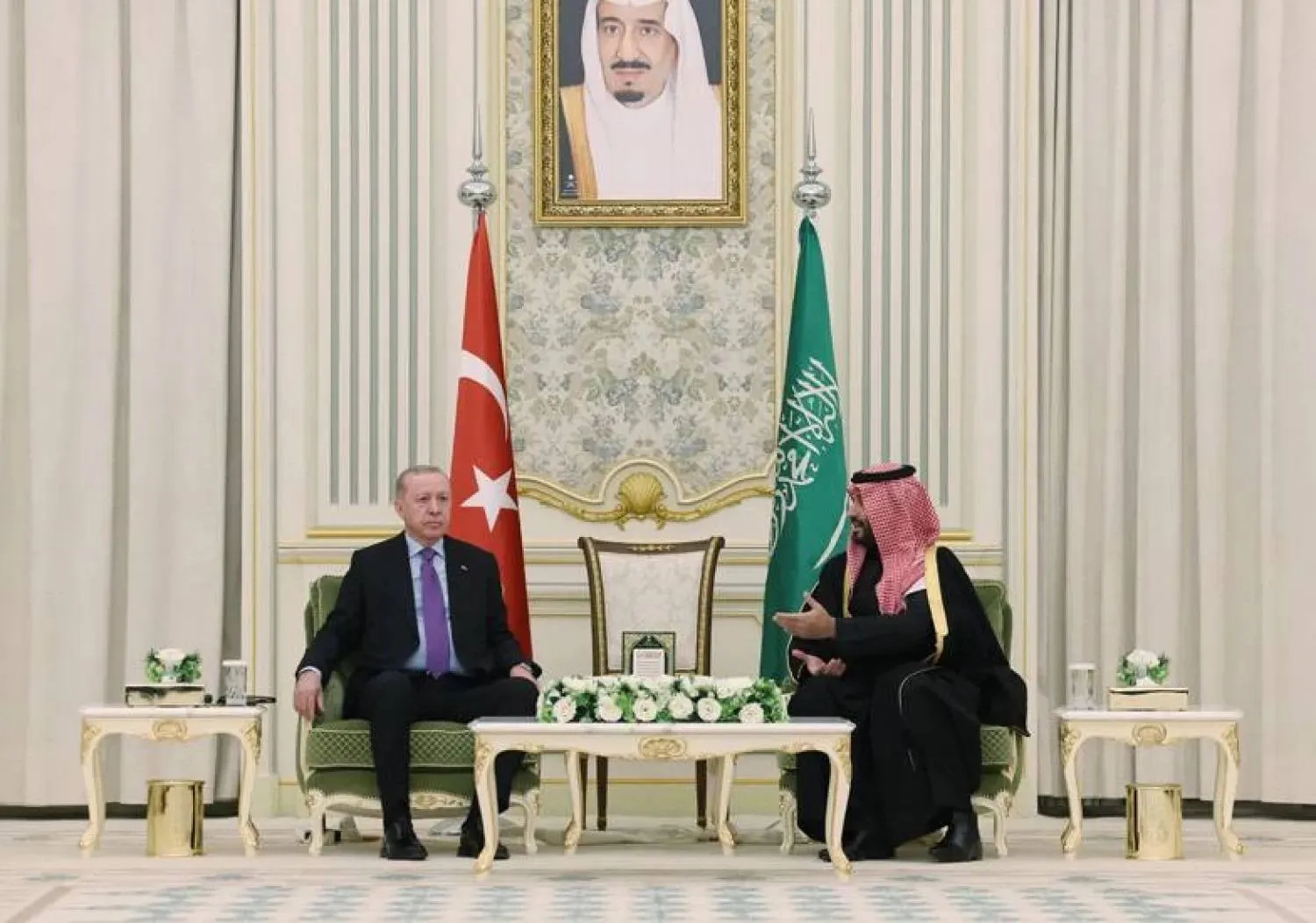


Erdogan: Saudi Arabia, Türkiye Eye Joint Investment in KAAN Fighter Jet

Saudi Crown Prince Mohammed bin Salman met Turkish President Recep Tayyip Erdogan in Riyadh (Turkish Presidency). 
TT

Erdogan: Saudi Arabia, Türkiye Eye Joint Investment in KAAN Fighter Jet

Saudi Crown Prince Mohammed bin Salman met Turkish President Recep Tayyip Erdogan in Riyadh (Turkish Presidency). 

Turkish President Recep Tayyip Erdogan said work has begun on a defense cooperation agreement between Türkiye and Saudi Arabia that includes joint investment in the production of the fifth-generation KAAN fighter jet.

Erdogan said Türkiye’s progress in defense industries is being closely followed by Saudi Arabia, as well as by other countries, adding that Ankara is preparing to conclude significant agreements with Riyadh in this field.

Speaking to a group of Turkish journalists on his return from a regional tour that included Saudi Arabia and Egypt, with his remarks published on Thursday, Erdogan said: “We have received many positive comments on the Turkish fighter KAAN, and discussions are under way on joint investment with Saudi Arabia in this regard.”

He stressed that KAAN is not merely a combat aircraft but a symbol of Türkiye’s engineering capabilities and its determination to maintain an independent defense posture. He added that cooperation with Saudi Arabia in this area is likely to expand, including through joint investments.

In February 2024, Türkiye announced the successful first flight of its domestically produced fifth-generation fighter jet, KAAN, manufactured by Turkish Aerospace Industries. With this milestone, Türkiye became one of only five countries capable of producing fifth-generation fighter aircraft and aims to export the jet.

KAAN is designed to carry out air-to-air combat missions and conduct precision strikes from internal weapons bays at supersonic speed.

Erdogan said he held “highly productive” talks with Saudi Crown Prince Mohammed bin Salman during his visit to Riyadh on Tuesday, noting that Saudi Arabia holds a special place for Türkiye in defense industries, transport, healthcare, investment, and construction services. Bilateral trade reached $8 billion in 2025, while Turkish contractors have completed more than 400 projects in the Kingdom worth a total of $30 billion.

He added that Saudi Arabia and Türkiye share aligned views on regional issues, stressing that both countries oppose any new war in the region and favor peace, stability, and calm, which he said would benefit all parties.


Saudi Crown Prince Receives Letter from Maldives President

Saudi Crown Prince Mohammed bin Salman bin Abdulaziz (SPA)
TT

Saudi Crown Prince Receives Letter from Maldives President

Saudi Crown Prince Mohammed bin Salman bin Abdulaziz (SPA)

Prince Mohammed bin Salman bin Abdulaziz Al Saud, Saudi Crown Prince and Prime Minister, received a letter from Maldives President Dr. Mohamed Muizzu on bilateral relations between their countries.

Vice Minister of Foreign Affairs Waleed Elkhereiji received the letter on Thursday during a meeting with Maldives Ambassador to Saudi Arabia Ahmed Sareer at the ministry’s headquarters in Riyadh.

Discussions during the meeting addressed bilateral relations and topics of mutual interest.


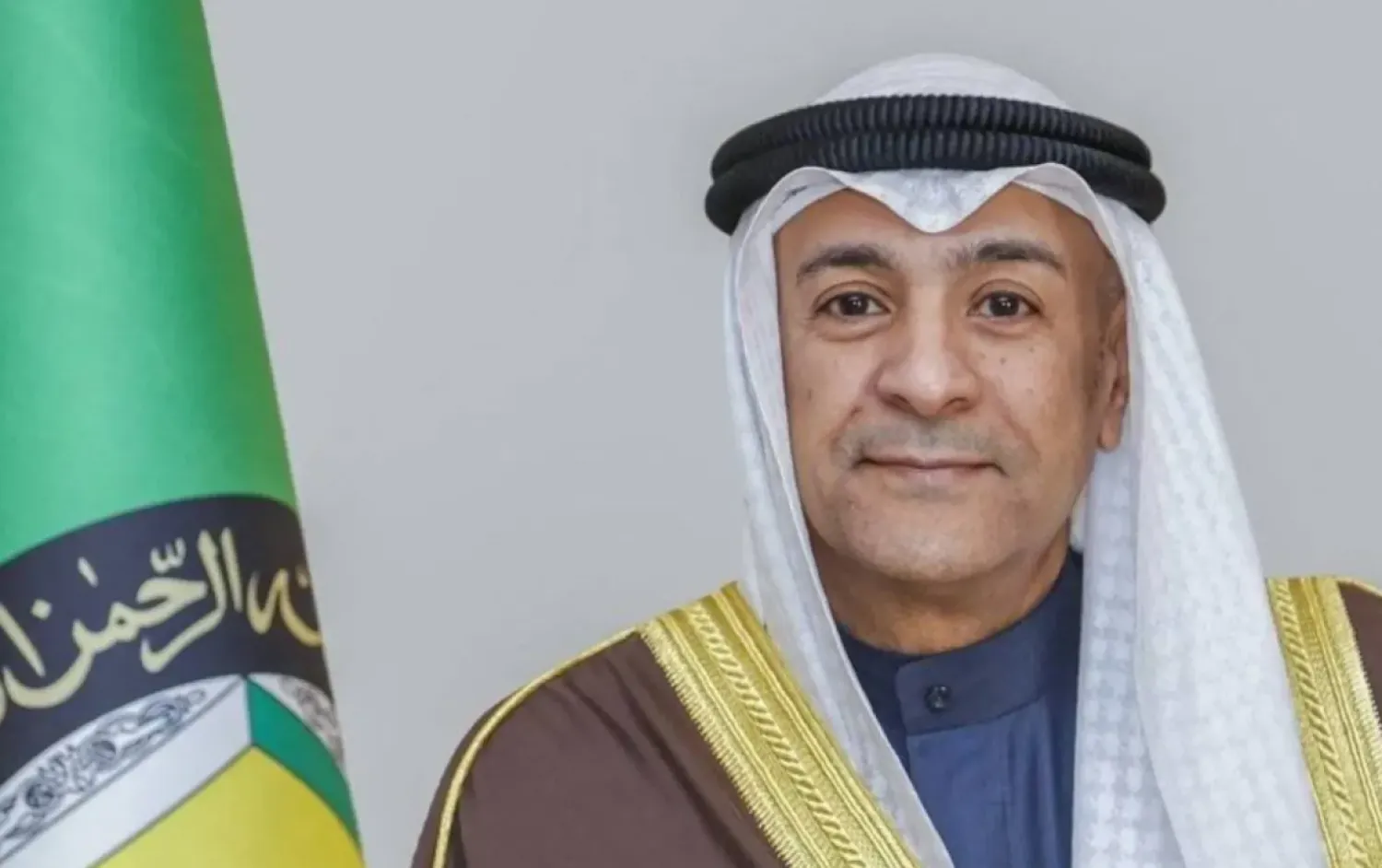
Albudaiwi: 'Arabian Gulf Security 4' Exercise Enhances GCC Security Integration

Secretary General of the Gulf Cooperation Council Jasem Mohamed Albudaiwi. GCC
TT

Albudaiwi: 'Arabian Gulf Security 4' Exercise Enhances GCC Security Integration

Secretary General of the Gulf Cooperation Council Jasem Mohamed Albudaiwi. GCC

Gulf Cooperation Council (GCC) Secretary-General Jasem Mohamed Albudaiwi affirmed that the "Arabian Gulf Security 4" tactical exercise serves to bolster Gulf security integration and embodies the unity and shared destiny of member states.

The statement was made Wednesday during Albudaiwi’s participation in the closing day of the exercise, held in Qatar. The event was attended by Qatari Interior Minister Shaikh Khalifa bin Hamad bin Khalifa Al Thani along with the GCC Ministers of Interior.

"This fourth edition of the drill, conducted by the GCC Ministries of Interior with the participation of specialized units from the friendly United States of America, is of paramount importance in supporting the collective Gulf security framework," the secretary-general said.

He stressed its role in enhancing coordination and integration among the respective ministries and elevating joint readiness and response to security challenges, thereby contributing to the consolidation of security and stability across the GCC.

He further highlighted that the "Arabian Gulf Security 4" exercise reflects a mutual commitment to advancing security operational mechanisms, exchanging expertise and best practices, as well as unifying efforts to counter transnational risks and threats. He pointed out that such maneuvers constitute a fundamental pillar for strengthening institutional integration and security cooperation pathways among member states.

The secretary-general expressed his appreciation for the efforts of the Ministry of Interior of Qatar in hosting and organizing the exercise, noting that the extensive resources and capabilities provided were instrumental to its success.

Closing his remarks, he voiced his aspiration that the exercise achieves its strategic objectives, fulfilling the visions of leaders of the GCC states, and ensuring sustained security and stability for the peoples of the GCC.