


Met Gala Returns: A Guide to Fashion’s Big Night

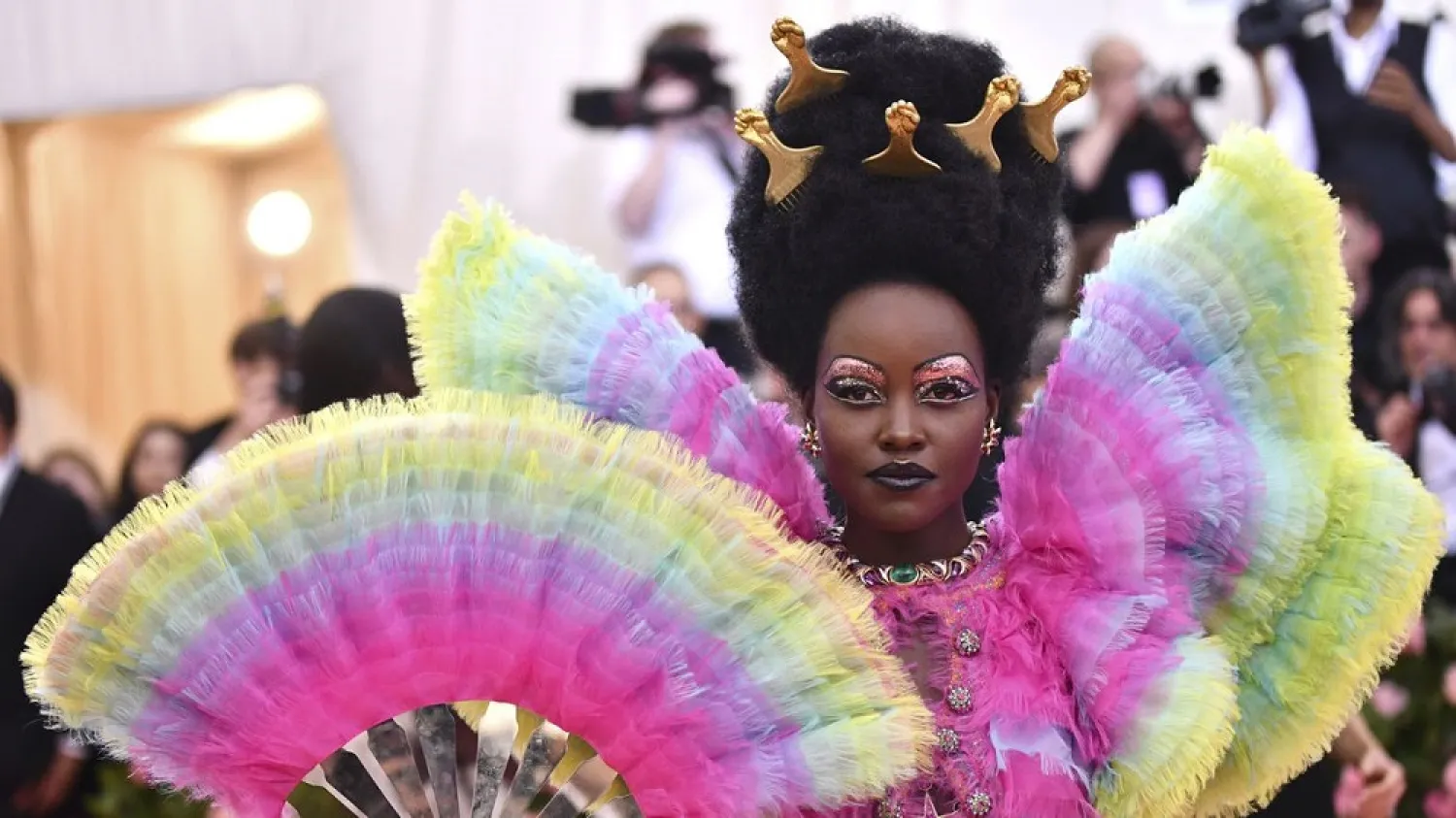
Lupita Nyong'o attends The Metropolitan Museum of Art's Costume Institute benefit gala celebrating the opening of the "Camp: Notes on Fashion" exhibition on Monday, May 6, 2019, in New York. (AP)
TT

Met Gala Returns: A Guide to Fashion’s Big Night

Lupita Nyong'o attends The Metropolitan Museum of Art's Costume Institute benefit gala celebrating the opening of the "Camp: Notes on Fashion" exhibition on Monday, May 6, 2019, in New York. (AP)

It started in 1948 as a society midnight supper, and it wasn’t even at the Met.

Fast forward 70-plus years, and the Met Gala is something totally different, one of the most photographed events in the world for its head-spinning red carpet — though the famous carpeted steps of the Metropolitan Museum of Art aren’t always red. We’re talking Rihanna as a bejeweled pope. Zendaya as Cinderella with a light-up gown. Katy Perry as a chandelier morphing into a hamburger. Also: Beyoncé in her “naked dress.” Kim Kardashian in a face-covering bodysuit. Billy Porter as an Egyptian sun god. And Lady Gaga’s 16-minute striptease.

Not to forget, the Met Gala is still a fundraiser — last year the evening earned more than a whopping $16.4 million for the Met’s Costume Institute. Let’s also not forget that it launches the annual spring fashion exhibit that brings hundreds of thousands of visitors to the museum.

But it’s the Met Gala carpet itself (now watchable for everyone, on livestream) that draws the world’s eyes, with the guest list strategically withheld until the last minute — a collection of stars from movies, music, fashion, sports, politics and elsewhere that probably makes for the highest celebrity wattage-per square foot of any party in the world.

Herewith, a primer for the 2022 Met gala, which is on May 2:

Again, already?

Yes, we just did this in the fall. The annual fundraiser for the Met’s Costume Institute is traditionally held the first Monday in May, but because of the pandemic, a postponed gala was held in September.

Who’s hosting the 2022 Met Gala?

This year’s hosts are Regina King, power couple Blake Lively and Ryan Reynolds, and Lin-Manuel Miranda.

September’s slate of hosts included Timothée Chalamet, Billie Eilish, Amanda Gorman and Naomi Osaka.

Of course, Vogue’s Anna Wintour is supervising the whole shebang as she has since the ’90s. Her fellow honorary co-chairs are designer Tom Ford and Instagram head Adam Mosseri.

Is there a theme for the Met Gala?

Of course. The Met Gala theme for this year is “Gilded glamour, white-tie,” guests have been told.

As usual, the sartorial theme comes from the exhibit the gala launches: “In America: An Anthology of Fashion,” which is the second of star curator Andrew Bolton’s two-part show exploring the roots of American style.

This one will showcase some lesser-known designers, and also some top film directors, including Sofia Coppola, Martin Scorsese, host King, and last year’s Oscar winner Chloé Zhao. Their work will be displayed in the period rooms of the American Wing, so expect some grand fashion, like those gowns from HBO’s “The Gilded Age.” Artfully ripped jeans, this time? Not so much.

Does everyone follow the Met Gala theme?

Not really. Some eschew it and just go for big and crazy. But expect some guests to have carefully researched the theme and to come in perfect sync with the exhibit. It was hard to beat the carpet, for example, when the theme was “Catholic imagination” and Rihanna came as the pope, Zendaya channeled Joan of Arc, and Perry navigated the crowd with a set of enormous angel wings.

How much do I have to pay for a Met Gala ticket?

Wrong question. You cannot just “buy” a ticket. The right question is, IF I were famous or powerful and got invited, how much would it cost?

If I got invited to the Met Gala, how much would it cost?

Well, you might not pay yourself. Generally companies buy tables. A fashion label — Michael Kors, for example — would then host its desired celebrities, or fashion muses. But each paid seat reportedly costs around $35,000, though some guests are invited for free.

So who gets invited to the Met Gala?

This year, there will be 400 guests — similar to the September gala, and lower than pre-pandemic highs of 500-600. Trying to predict? Take out your pen and jot down some A-listers, the buzzier the better.

Newly minted Oscar or Grammy winners, for example — or fashion favorites like Chalamet, who wore white Converse shoes last year. Do the same with pop music, sports, politics, fashion of course … and Broadway, a special favorite of Wintour’s (and remember, Miranda’s a host this year). Now, cross everyone off your list except the very top.

At the Met Gala, everybody’s A-list.

That must be an exaggeration.

Not really. Ask Tina Fey. She went in 2010 and later described walking around trying to find somebody “normal,” e.g. not too famous, to sit and talk with. That ended up being Barbara Walters.

How can I get involved in the Met Gala?

Well, these days you can watch the whole carpet unfold on livestream. And really, the carpet is the party. (Ask Gaga!)

If you’re in New York City you can also join fans across the street from the museum on Fifth Avenue, and even further away on Madison Avenue, pressed up against police barricades. You might get lucky: Last year, Chalamet ran over to greet his admirers.

Do we know who’s coming? And who isn’t?

Like we said, it’s secret. But reports slip out, often about who is not coming. Fashion favorite Zendaya has confirmed she has other plans. And Rihanna is about to give birth, so we’d assume she’ll skip, but then again, she’s Rihanna so let’s not assume anything.

What happens inside the Met Gala?

Entering the museum, guests walk past an impossibly enormous flower arrangement in the lobby (one was over 250,000 white roses) and over to cocktails, often held in the airy Petrie Court. Or, they head to view the exhibit.

Around 8 p.m., they’re summoned to dinner — perhaps by a team of buglers (“Are they going to do that between every course?” actor Gary Oldman asked aloud one year.) We can’t personally describe anything beyond that, either dinner or the musical performance, but you can find clips of Rihanna singing on the table tops in the documentary “The First Monday in May,” and it looks fun.

Is it fun for everyone?

Occasionally, someone says no. Fey, in a comic rant to David Letterman in 2015, described the gala as a “jerk parade” and said it included everyone you’d ever want to punch, if you had millions of arms.

Amy Schumer said she felt awkward and left “earlier than should be allowed.” But most profess to having fun.

Then there was Joan Collins, who arrived channeling her imperious “Dynasty” character, Alexis, in 2018, ready to have a blast, but seeking liquid sustenance. “I’m having a great time,” she told The Associated Press. “I’d be even better if I had a drink.”



Fashion Commission, Saudi Retail Academy to Develop National Talent 

Fashion Commission, Saudi Retail Academy to Develop National Talent 
TT

Fashion Commission, Saudi Retail Academy to Develop National Talent 

Fashion Commission, Saudi Retail Academy to Develop National Talent 

The Saudi Fashion Commission signed a memorandum of understanding (MoU) with the Saudi Retail Academy to develop national capabilities and boosting specialized skills in the fashion and retail sectors, reported the Saudi Press Agency on Monday.

The MoU aims to support local talent and the creation of sustainable employment opportunities in this vital industry. It stems from the two sides’ keenness to cooperate in the fields of training and professional development.

The agreement was signed on the sidelines of the graduation ceremony of the academy’s first cohort.

The Fashion Commission focuses on developing local talent, transferring global expertise, and advancing the fashion sector in the Kingdom, while the Saudi Retail Academy is a non-profit institute and a specialized entity in training and development in the retail field and in building professional competencies and skills related to retail and sales.

The MoU aims to establish a framework for cooperation to design and implement specialized training programs that boost the readiness of national cadres and qualify them according to the highest professional standards, with a focus on developing skills in sales, customer experience, and store management to meet labor market requirement and the needs of the growing fashion sector.

Fashion Commission chief executive Burak Cakmak said that developing human capital is a fundamental pillar for the long-term growth of the Kingdom’s fashion sector.

The partnership reflects the commitment to strengthening the capabilities that form the foundation of a competitive and sustainable industry through investment in specialized skills within retail and customer experience, enabling brands to grow and supporting the sector’s confident evolution, he added.

Saudi Retail Academy chief executive Hend Al-Dhaban stressed that the partnership embodies a shared vision to empower national talent and elevate professionalism in the retail sector.

The agreement will help channel training expertise to meet the specialized needs of the fashion sector and equip young men and women with the practical skills required to succeed in the labor market, thereby boosting service quality and supporting localization targets and economic growth, she explained.

This cooperation is part of the Fashion Commission’s ongoing efforts to develop the fashion value chain through building strategic partnerships with specialized training and education entities, expanding professional opportunities for national talent, and linking education and training outputs with labor-market needs.

Through their partnership, the commission and the academy will help in building an integrated ecosystem that connects education, vocational qualification, and employment, bolstering the competitiveness of the fashion and retail sectors and supporting the objectives of Saudi Vision 2030 in empowering national cadres, localizing jobs, and improving quality of life.


Saudi 100 Brands Debuts Landmark Fashion Presentation at Saudi Cup 2026

The experience introduced global audiences to Saudi Arabia’s dynamic and growing fashion ecosystem - SPA
TT

Saudi 100 Brands Debuts Landmark Fashion Presentation at Saudi Cup 2026

The experience introduced global audiences to Saudi Arabia’s dynamic and growing fashion ecosystem - SPA

The Fashion Commission launched its Saudi 100 Brands showcase at the Saudi Cup 2026, marking a historic milestone for the world-renowned equestrian event at King Abdulaziz Racecourse in Riyadh.
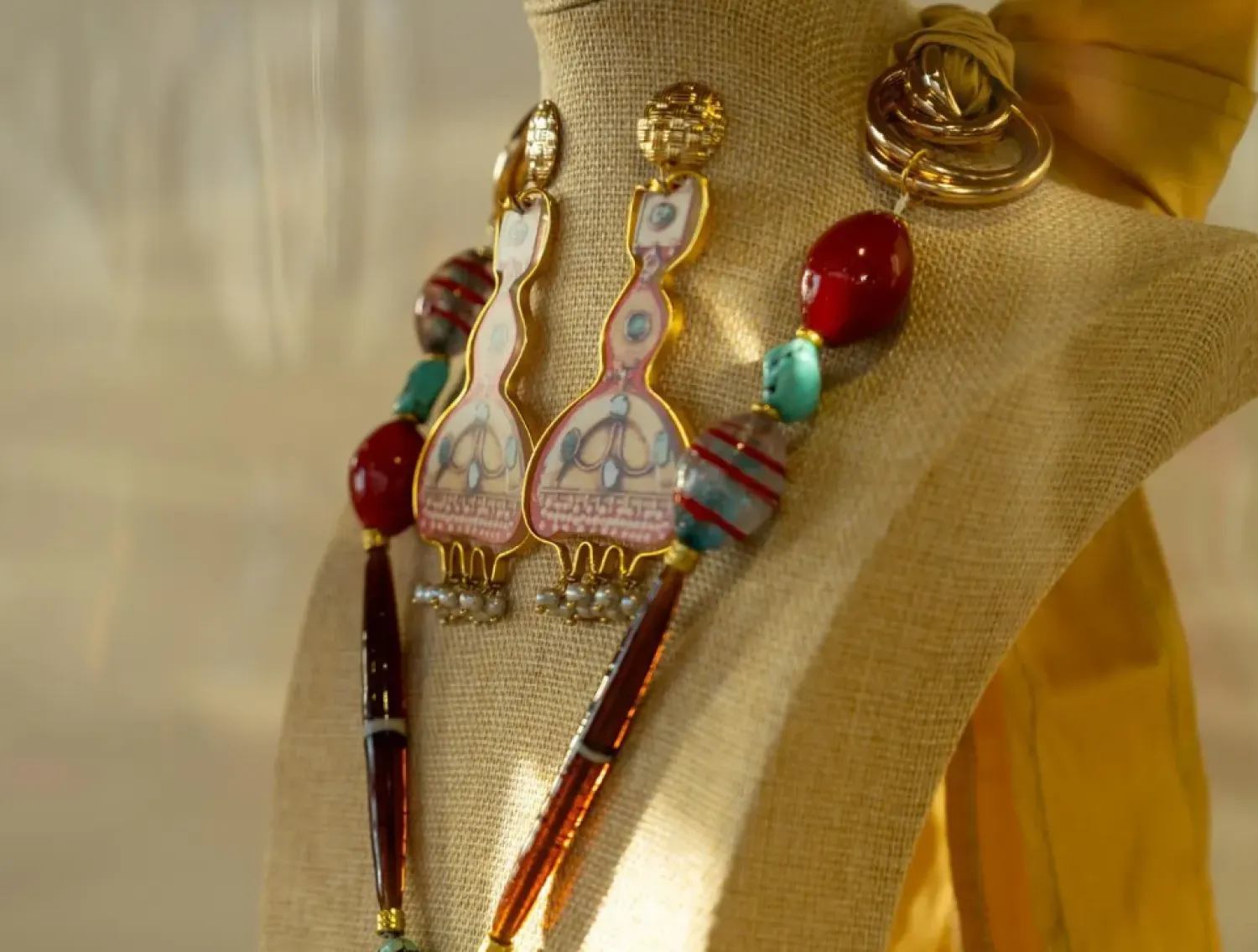
The collections celebrate Saudi heritage by blending traditional and contemporary design. Jewelry and accessory brands also exhibited throughout, providing Saudi designers with a platform to reach a broader global audience. These showcases emphasize the fusion of heritage and modern design, offering a new perspective on the Kingdom's creative identity.
The Saudi 100 Brands program, a flagship initiative of the Fashion Commission, supports emerging designers by providing tools, expertise, and platforms to grow their global presence. This collaboration with the Saudi Cup underscores the importance of celebrating cultural heritage while advancing design innovation.

Each piece in the exhibition incorporates heritage motifs, textiles, and storytelling, reimagined through innovative design to appeal to modern and international audiences.

The exhibition aims to celebrate national identity, highlight local creative talent, and present the evolving direction of Saudi fashion, SPA reported.

Visitors explored the intersection of craftsmanship and cultural expression, discovering how designers honor tradition while advancing fashion design.

The experience also introduced global audiences to Saudi Arabia’s dynamic and growing fashion ecosystem.

This participation reflects the Fashion Commission’s vision to develop a thriving fashion sector rooted in cultural heritage and global ambition. By combining cultural narratives with innovative design, the commission enables Saudi fashion to contribute to global creative industries, nurture talent, and position Saudi brands for sustained success.


L’Oreal Shares Sink as Sales Miss Forecasts 

This photo taken on February 16, 2018 shows a board with the L'Oreal logo outside of the L'Oreal plant, in Lassigny. (AFP)
TT

L’Oreal Shares Sink as Sales Miss Forecasts 

This photo taken on February 16, 2018 shows a board with the L'Oreal logo outside of the L'Oreal plant, in Lassigny. (AFP)

L'Oreal shares fell heavily on the Paris stock market on Friday after the cosmetics giant posted sales that fell short of analyst expectations, stoking fears of weakness for its luxury brands and in the key Chinese market.

While revenues rose seven percent in the fourth quarter in Europe -- still the company's biggest market -- they edged up just 0.7 percent in North America and fell five percent in North Asia, which includes China.

Overall, sales were up 1.5 percent to 11.2 billion euros ($13.3 billion) in the final quarter of 2025 -- usually when the company benefits from strong holiday-fueled buying.

This was a marked slowdown from the 4.5-percent growth seen the previous year.

On a like-for-like comparison that excludes the impact of currency fluctuations, sales rose six percent, whereas the consensus forecast was around eight percent, analysts said.

The luxury division (Luxe) in particular, which includes high-end perfumes and make-up and is L'Oreal's biggest by revenue, saw a 0.5-percent sales slide in the fourth quarter, to 4.2 billion euros.

"We think the miss, led by North Asia and Luxe, will be a concern amid a vague outlook," said David Hayes, an analyst at investment bank Jefferies.

L'Oreal's stock was down 3.2 percent in morning trading, partly recovering from a drop of more than six percent at the open.

Net profit for the full year was down 4.4 percent to 6.1 billion euros.

Chief executive Nicolas Hieronimus said when he presented the results on Thursday that L'Oreal had achieved a "solid" performance "despite a context that was at the very least volatile and unfavorable".

For 2026, he said the company had to be "cautious and humble", although he expected "the beauty market to continue its acceleration" unless there was "a new surprise".

"We're going to have to intensify our efforts in terms of innovation to energize the market and win over customers," he added.