


Rising Oil Prices Buy Iran Time in Nuclear Talks, Officials Say

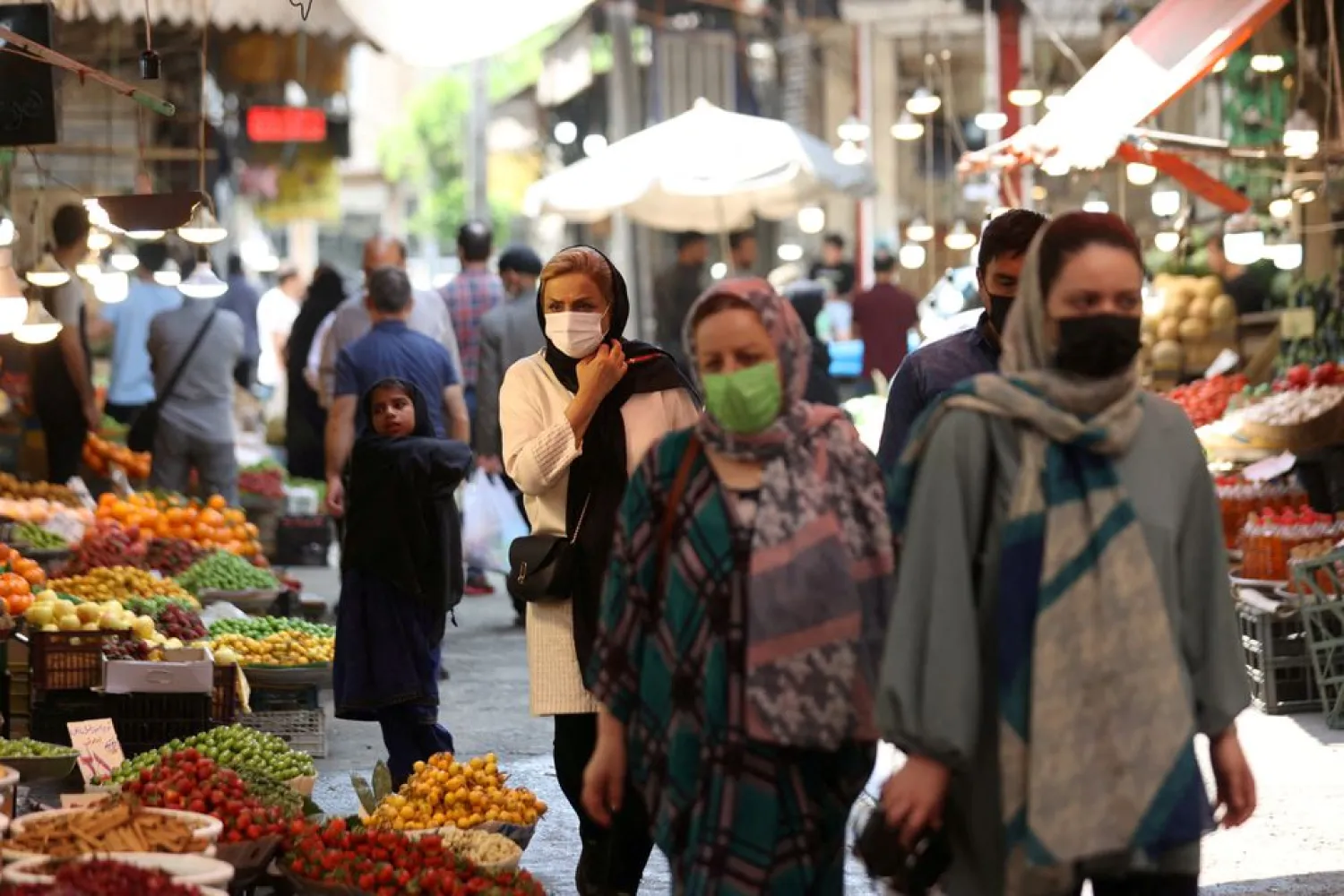
Iranians walk in a market in Tehran, Iran May 1, 2022. (West Asia News Agency via Reuters)
TT

Rising Oil Prices Buy Iran Time in Nuclear Talks, Officials Say

Iranians walk in a market in Tehran, Iran May 1, 2022. (West Asia News Agency via Reuters)

Emboldened by an oil price surge since Russia invaded Ukraine, Iran's clerical rulers are in no rush to revive a 2015 nuclear pact with world powers to ease sanctions on its energy-reliant economy, three officials familiar with Tehran's thinking exclusively told Reuters.

Last year, Tehran engaged in indirect talks with the United States as a route to cancelling US sanctions that have gutted revenues and dramatically worsened economic hardships for ordinary people, stirring discontent.

But the talks have been on hold since March, chiefly over Tehran's insistence on Washington removing the Iranian Revolutionary Guard Corps (IRGC) from the U.S. Foreign Terrorist Organization (FTO) list.

While the ultimate aim is still to resurrect the deal and so have sanctions lifted, the Iranian officials said soaring oil prices had opened a window of opportunity for Iran by increasing revenues, giving the economy months of breathing space.

"Our nuclear program is advancing as planned and time is on our side," said a senior Iranian official, who declined to be named because he was not authorized to discuss sensitive policy issues with the media.

"If the talks fail it will not be the end of the world," said the official, adding that the fact Iran's economy was not now so reliant on a revival of the deal would provide strong leverage for its negotiators if or when the talks resumed.

Iran's foreign ministry, which handles the nuclear talks, and the US State Department did not immediately respond to requests for comment.

Iran's finances came under intense pressure in 2018 when then-US President Donald Trump ditched the nuclear pact between Iran and world powers - approved by his predecessor Barack Obama - and reimposed sanctions that sharply cut the oil revenues that fund a sprawling Iranian state apparatus.

Oil exports from Iran, which sits on the world's fourth-largest reserves of crude, plummeted from a peak of 2.8 million barrels per day in 2018 to as low as 200,000 bpd.

Tehran retaliated a year later by gradually violating the deal's nuclear curbs, from rebuilding stockpiles of enriched uranium, refining it to higher fissile purity and installing advanced centrifuges to speed up output - reducing the time it would need to develop a nuclear bomb, if it so chose.

Tehran says it seeks only peaceful nuclear energy.

Although Iran does not divulge exact figures on oil sales, an Iranian oil official said they were currently around 1.5 million bpd with most going to China at a big discount that Iranian authorities have declined to reveal.

Global oil prices remain high, however, with Brent crude reaching $139 a barrel in March, its highest since 2008 after Russia's invasion of Ukraine exacerbated supply concerns.

The Iranian parliament increased the ceiling of oil and condensates exports from 1.2 million bpd at a price of $60 last year to 1.4 million bpd based on $70 a barrel in the state budget, Iranian state media reported in March.

Revenue hike
Tehran's refusal to back down from the FTO assignation demand has raised doubt about whether the nuclear impasse can be resolved. President Joe Biden's administration has made it clear that it has no such plans, while also not ruling it out.

On Wednesday, US State Department spokesman Ned Price told reporters that it was unclear whether or not it would be possible to revive the deal and said Washington was now bracing for either outcome.

Iranian authorities have publicly shrugged off US pressure, saying Tehran has become adept at working around sanctions as they have been a fact of life for decades.

Jihad Azour, the International Monetary Fund's (IMF) Middle East and Central Asia Department director, said the Iranian economy had adjusted to sanctions over the last few years.

"And the increase in oil prices and an increase in (Iran's) oil production are constituting an additional, I would say, increase in revenues," Azour told Reuters.

However, Henry Rome, Iran analyst at consultancy group Eurasia, said Tehran is underestimating the value of easing sanctions and overestimating its ability to muddle through longer term.

"Iranian leaders probably consider stronger domestic economic performance, limited US enforcement of oil sanctions and broader Western distraction given the Ukraine war as reasons not to be desperate to secure a deal," Rome said.

"Although, they likely remain open to a deal at the right price."

Despite the recent rise in revenues, sanctions continue to have a major impact on daily life in Iran, meaning that everyone from the business elite to lower-income families face soaring inflation, a sinking currency and rising joblessness.

Clerical rulers may therefore be wary of simmering disenchantment at home, according to a former Iranian government official.

Ultimately, they prefer an end to sanctions, fearing a return of unrest among lower-income Iranians whose periodic protests in recent years have reminded leaders how vulnerable they can be to grassroots anger over economic hardship.

Not enough people are yet feeling the benefits of rising oil revenues, the former government official added.

Iranian analyst Saeed Leylaz said Iran's home-grown economic problems, including mismanagement and corruption that deplete revenue needed for investment, job creation and development, pose a bigger challenge to the establishment than sanctions.

The official inflation rate is around 40% while some people estimate it at over 50%. Almost half of Iran's 82 million population are now below the poverty line. Unofficial estimates suggest unemployment is well above the official rate of 11%.

"All the economic indicators point to worsening economic realities in Iran. To say Iran sits on a tinderbox is no exaggeration," said Alex Vatanka, director of the Iran Program at Middle East Institute.

Prices of basic goods like bread, meat and rice are increasing daily. Iranian media frequently report layoffs and strikes by workers who have not been paid for months, including in government-owned factories.

Owning a home in Tehran is impossible for many. Prices have risen in recent months by around 50% in some areas. The currency has dropped over 70% against the US dollar since 2018.

"Where is this oil revenue going? Why we do not feel any improvement?" said teacher Mohsen Sedighi, a father-of-two in Tehran.



US Judge Blocks Deportation of Columbia University Palestinian Activist

Mohsen Mahdawi at a press conference in Vermont last year - Photo by Alex Driehaus/AP
TT

US Judge Blocks Deportation of Columbia University Palestinian Activist

Mohsen Mahdawi at a press conference in Vermont last year - Photo by Alex Driehaus/AP

A US immigration judge has blocked the deportation of a Palestinian graduate student who helped organize protests at Columbia University against Israel's war in Gaza, according to US media reports.

Mohsen Mahdawi was arrested by immigration agents last year as he was attending an interview to become a US citizen.

Mahdawi had been involved in a wave of demonstrations that gripped several major US university campuses since Israel began a massive military campaign in the Gaza Strip.

A Palestinian born in the occupied West Bank, Mahdawi has been a legal US permanent resident since 2015 and graduated from the prestigious New York university in May. He has been free from federal custody since April.

In an order made public on Tuesday, Judge Nina Froes said that President Donald Trump's administration did not provide sufficient evidence that Mahdawi could be legally removed from the United States, multiple media outlets reported.

Froes reportedly questioned the authenticity of a copy of a document purportedly signed by Secretary of State Marco Rubio that said Mahdawi's activism "could undermine the Middle East peace process by reinforcing antisemitic sentiment," according to the New York Times.

Rubio has argued that federal law grants him the authority to summarily revoke visas and deport migrants who pose threats to US foreign policy.

The Trump administration can still appeal the decision, which marked a setback in the Republican president's efforts to crack down on pro-Palestinian campus activists.

The administration has also attempted to deport Mahmoud Khalil, another student activist who co-founded a Palestinian student group at Columbia, alongside Mahdawi.

"I am grateful to the court for honoring the rule of law and holding the line against the government's attempts to trample on due process," Mahdawi said in a statement released by his attorneys and published Tuesday by several media outlets.

"This decision is an important step towards upholding what fear tried to destroy: the right to speak for peace and justice."


Fire Breaks out Near Iran's Capital Tehran, State Media Says

Smoke rises from a fire caused by an explosion in Tehran (File photo - Reuters)
TT

Fire Breaks out Near Iran's Capital Tehran, State Media Says

Smoke rises from a fire caused by an explosion in Tehran (File photo - Reuters)

A fire broke out in Iran's Parand near the capital city Tehran, state media reported on Wednesday, publishing videos of smoke rising over the area which is close to several military and strategic sites in the country's Tehran province, Reuters reported.

"The black smoke seen near the city of Parand is the result of a fire in the reeds around the Parand river bank... fire fighters are on site and the fire extinguishing operation is underway", state media cited the Parand fire department as saying.


Pakistan PM Sharif to Seek Clarity on Troops for Gaza in US Visit

US President Donald Trump looks at Pakistan's Prime Minister Shehbaz Sharif speaking following the official signing of the first phase of the Gaza ceasefire agreement between Israel and Hamas, during a world leaders' summit on ending the Gaza war, in Sharm El-Sheikh, Egypt, October 13, 2025. REUTERS/Evelyn Hockstein/File Photo
TT

Pakistan PM Sharif to Seek Clarity on Troops for Gaza in US Visit

US President Donald Trump looks at Pakistan's Prime Minister Shehbaz Sharif speaking following the official signing of the first phase of the Gaza ceasefire agreement between Israel and Hamas, during a world leaders' summit on ending the Gaza war, in Sharm El-Sheikh, Egypt, October 13, 2025. REUTERS/Evelyn Hockstein/File Photo

Before Pakistan commits to sending troops to Gaza as part of the International Stabilization Force it wants assurances from the United States that it will be a peacekeeping mission rather than tasked with disarming Hamas, three sources told Reuters.

Pakistan's Prime Minister Shehbaz Sharif is set to attend the first formal meeting of President Donald Trump's Board of Peace in Washington on Thursday, alongside delegations from at least 20 countries.

Trump, who will chair the meeting, is expected to announce a multi-billion dollar reconstruction plan for Gaza and detail plans for a UN-authorized stabilization force for the Palestinian enclave.

Three government sources said during the Washington visit Sharif wanted to better understand the goal of the ISF, what authority they were operating under and what the chain of command was before making a decision on deploying troops.

"We are ready to send troops. Let me make it clear that our troops could only be part of a peace mission in Gaza," said one of the sources, a close aide of Sharif.

"We will not be part of any other role, such as disarming Hamas. It is out of the question," he said.

Analysts say Pakistan would be an asset to the multinational force, with its experienced military that has gone to war with arch-rival India and tackled insurgencies.

"We can send initially a couple of thousand troops anytime, but we need to know what role they are going to play," the source added.

Two of the sources said it was likely Sharif, who has met Trump earlier this year in Davos and late last year at the White House, would either have an audience with him on the sidelines of the meeting or the following day at the White House.

Initially designed to cement Gaza's ceasefire, Trump sees the Board of Peace, launched in late January, taking a wider role in resolving global conflicts. Some countries have reacted cautiously, fearing it could become a rival to the United Nations.

While Pakistan has supported the establishment of the board, it has voiced concerns against the mission to demilitarize Gaza's militant group Hamas.