


Lebanon's Tourism Minister Calls for Removing Posters of Hezbollah Leaders from Airport Road

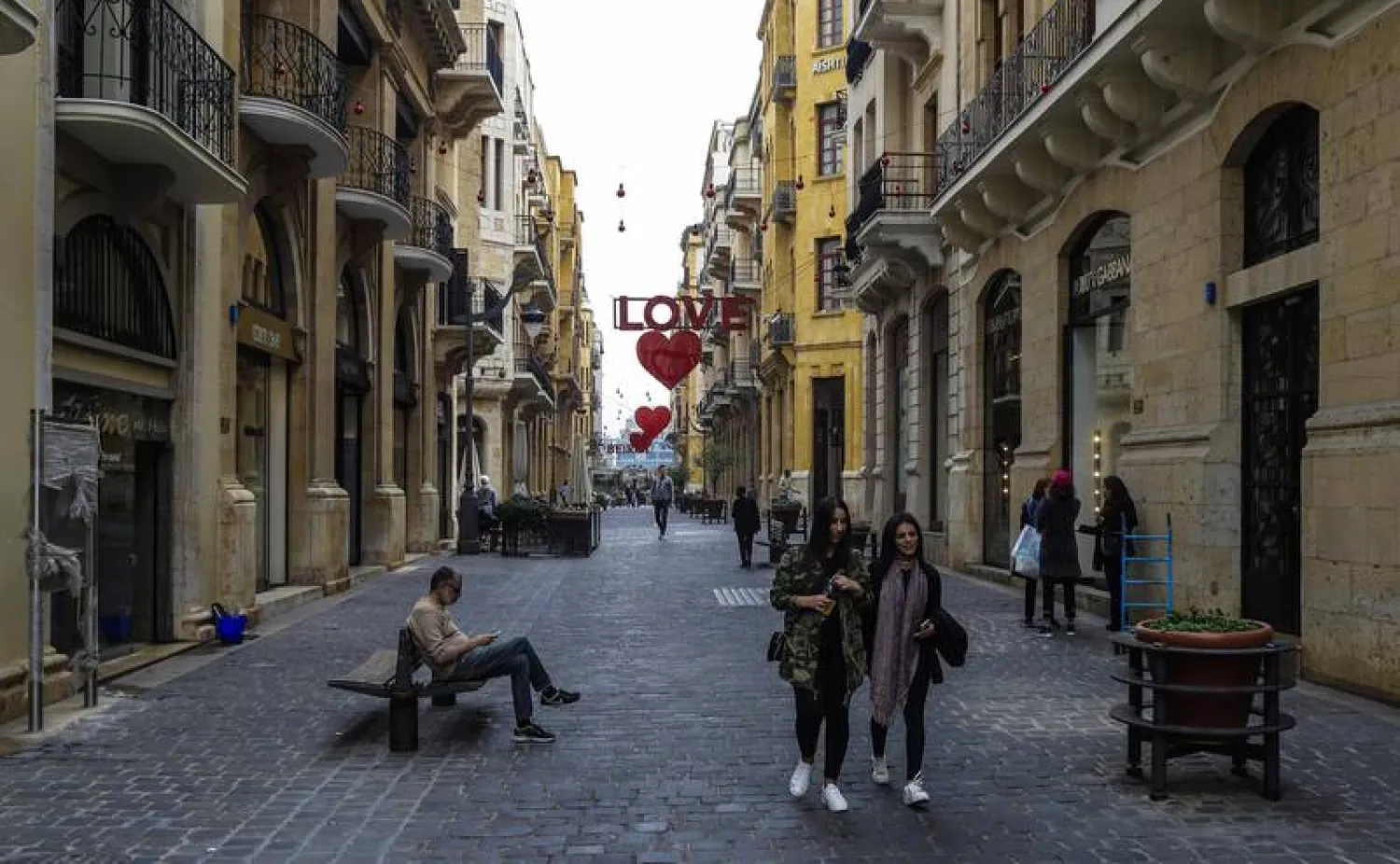
People walk in Downtown Beirut. (AFP file photo)
TT

Lebanon's Tourism Minister Calls for Removing Posters of Hezbollah Leaders from Airport Road

People walk in Downtown Beirut. (AFP file photo)

Lebanon's Tourism Minister Walid Nassar issued on Thursday a decree that allows tourist institutions to exceptionally and selectively list their prices in US dollars or Lebanese pounds. The final bill will also be issued in either currency.

The move is temporary and will end in September, the end of the tourism season in Lebanon, which is suffering from an unprecedented economic crisis.

Nassar told Asharq Al-Awsat that his ministry has kicked off measures to promote tourism, whether by welcoming tourists at the airport or organizing taxi services from the facility.

He revealed that it has also called for the removal of posters of Hezbollah leaders and slain members that have been posted along the airport highway.

The posters will be replaced with images of various Lebanese regions, he added.

His efforts have been positively received, he revealed.

"We are also planning to hold festivals in Downtown Beirut, specifically in Nejmeh square after the barricades have been removed around the area," he added.

Nejmeh square is also home to the parliament building. Last week, security forces removed concrete barriers that had been placed around 2019 to deter anti-government protesters from storming parliament. With the election of a new legislature, which includes opposition figures, the barriers were removed.

Before the crisis in Lebanon, Nejmeh square was a popular area for festivals and boasted several restaurants and cafes.

On the decision to list prices in dollars and Lebanese pound, Nassar said it stemmed from the government's inability to come up with a stable exchange rate.

The move will create competition between institutions and will attract hard cash that is needed to pay salaries and other needs, he added.

Nassar predicted Lebanon will have a promising summer and that some 10,000 to 12,000 people will arrive in the country daily in June. Seventy percent of arrivals are Lebanese expatriates and the rest are foreigners.

A tourist normally spends around 1,500 dollars on their trip, meaning the season will likely generate around 3 billion dollars, he added, hoping that the situation in Lebanon remains calm on the security and political levels.

The move to list prices in dollars was welcomed by the tourism sector.

Secretary General of the Federation of Tourism Establishments Jean Beiruti told Asharq Al-Awsat that the move is "bold and the result of two years of hard work."



Paris Seeks Roadmap for Lebanese Army, Security Forces Needs

A group photo of participants at the Cairo meeting to support the Lebanese army and Internal Security Forces, with Egyptian Foreign Minister Badr Abdelatty at center (AFP)
TT

Paris Seeks Roadmap for Lebanese Army, Security Forces Needs

A group photo of participants at the Cairo meeting to support the Lebanese army and Internal Security Forces, with Egyptian Foreign Minister Badr Abdelatty at center (AFP)

Paris is pinning high hopes on a preparatory meeting held in Cairo on Tuesday under Egyptian Foreign Minister Badr Abdelatty, seen as a key step toward the conference France will host in Paris on March 5, to rally support for the Lebanese army and the Internal Security Forces.

French diplomatic sources said President Emmanuel Macron’s special envoy for Lebanon Jean-Yves Le Drian represented France at the meeting.

He was joined by General Valentin Seiler, France’s representative in the ceasefire supervision mechanism between Lebanon and Israel and in the Technical Military Committee for Lebanon, which also includes the United States, Italy, Britain, Spain and Germany.

Civilian-military coordination

Paris described the Cairo gathering as both civilian and military, calling it “the result of close coordination among the members of the Quintet in terms of content, format and objectives.”

The meeting followed intensive groundwork by the Technical Military Committee for Lebanon, working with Lebanese security institutions to precisely define the needs of the Lebanese army and the Internal Security Forces.

The expanded session was preceded by talks between Abdelatty and Le Drian.

France wants Cairo to deliver a clear, comprehensive assessment of Lebanon’s needs and a detailed priority map. Urgent requirements include logistical support — fuel, troop mobility, communications and training — to help the army carry out tasks assigned by the political leadership.

Foremost among them is the second phase of consolidating state control over weapons, between the Litani and Awali rivers. Army Commander General Rodolphe Haykal said the operation could take between four and eight months.

Paris believes coordination among the main stakeholders is essential to avoid duplication, ensure complementarity and clarify what each party can provide. Expected assistance ranges from weapons and equipment to training, communications tools and financial support.

With 50 countries and 10 regional and international organizations invited to the Paris conference, coordination is seen as urgent so Lebanon knows exactly what it can expect.

What can Lebanon expect?

Sources declined to spell out what Beirut may secure in Paris. Several parties are tying their pledges to the Lebanese army’s progress in implementing UN Security Council Resolution 1701 and advancing the weapons consolidation plan, which faces resistance from Hezbollah.

Countries engaged in Lebanon are betting on the army not only to consolidate state authority over arms, but as a cornerstone of security and stability. Lebanon is seeking to recruit more troops, while the Internal Security Forces are expected to shoulder internal security duties to ease pressure on the army.

Yet mounting regional tensions could complicate those efforts. The possibility of US strikes on Iran, potential Israeli involvement, and intensified operations against Hezbollah would deepen the challenges confronting Lebanese authorities, especially the army.

Hopes for the Paris conference rest not only on military and financial aid, but also on political backing to shield Lebanon from a repeat of what it endured during the “support war” and its aftermath, the consequences of which continue to weigh on Lebanese citizens almost daily.


Lebanon Fears Being Dragged to War as US-Iran Tensions Spike

People gather near a building damaged in an Israeli strike in the village of Bednayel in eastern Lebanon, 21 February 2026. (EPA)
TT

Lebanon Fears Being Dragged to War as US-Iran Tensions Spike

People gather near a building damaged in an Israeli strike in the village of Bednayel in eastern Lebanon, 21 February 2026. (EPA)

Concern is mounting in Lebanon as tensions between the United States and Iran intensify, stoking fears that any direct military clash could spill onto Lebanese soil.

The evacuation of non-essential staff from the US embassy in Beirut has deepened unease, especially as it coincided with official Lebanese statements citing “indications” that Israel could launch powerful strikes in the event of escalation, potentially targeting strategic infrastructure, including the airport.

Warnings

Speaking from Geneva on the sidelines of a session of the United Nations Human Rights Council, Lebanese Foreign Minister Youssef Raggi said: “There are signs that the Israelis could strike very hard in the event of an escalation, potentially including strategic infrastructure such as the airport.”

“We are currently conducting diplomatic efforts to request that, even in the event of retaliation, Lebanese civilian infrastructure not be targeted,” he added.

In the same vein, Reuters quoted two senior Lebanese officials as saying Israel had sent an indirect message that it would hit Lebanon hard and target civilian infrastructure, including the airport, if Hezbollah joined any US-Iran war.

Presidency: No warnings received

As Lebanese officials work to prevent Hezbollah from dragging the country into a new “support war”, ministerial sources close to the presidency said “no warnings have reached the Lebanese presidency in this regard.”

The sources said assurances were conveyed through Parliament Speaker Nabih Berri that Hezbollah would not intervene in the war.

On the US embassy’s evacuation decision, the sources said Lebanese officials contacted the embassy in Beirut and were told the move was temporary and precautionary, linked to the regional security situation and talk of an imminent Iranian strike and a possible Hezbollah response from Lebanon.

US measures included closing the consular section and canceling all visa appointments, they added.

Lebanese authorities have not been informed of any similar steps by European embassies, the sources revealed.

Possible arena for confrontation

Dr. Sami Nader, director of the Levant Institute for Strategic Affairs, said Lebanon could become a potential arena for confrontation based on political and military realities, but described the US embassy’s steps as standard precautionary measures taken in similar circumstances.

“Hezbollah, through its Secretary-General Naim Qassem, said it will not remain neutral. Hezbollah has not been fully disarmed, and the plan to confine weapons to the state has not been completed,” Nader told Asharq Al-Awsat.

“Fears have therefore grown that Lebanon could become a parallel arena to what may happen in Iran, especially with the rising likelihood of a military strike on Tehran.”

While the scale of any military fallout in Lebanon from a regional war cannot be predicted, Nader said Israeli escalation in the Bekaa and the south last week aimed to preempt Hezbollah from launching a strike on Israel.

“The elements of a parallel arena in Lebanon are almost complete. That is why the Americans judged the risk level to be high in Lebanon and took this decision, unlike in other countries not exposed to becoming an arena of confrontation,” he explained.

Washington orders departures

The US State Department said in an updated travel advisory that on Feb. 23 it ordered non-essential embassy staff and their family members to leave Lebanon due to the security situation in Beirut.

Washington renewed its Level 4 advisory against travel to Lebanon, citing risks of crime, terrorism, civil unrest, kidnapping, unexploded landmines and the potential for armed conflict, particularly near the border.

It said US embassy personnel in Beirut face strict restrictions on personal travel, with further limits possible without prior notice amid growing security threats.

Kataeb warns against new war

Amid the tensions, the Kataeb party warned against dragging Lebanon into another war.

The party voiced concern over “statements by Hezbollah officials about their readiness to support Tehran if it comes under military strike,” alongside reports of field movements by officers from Iran’s Revolutionary Guard and elements linked to Palestinian groups in areas under Hezbollah’s control, as well as the widening of Israeli airstrikes inside Lebanon.

It renewed its call for the legitimate armed forces to act swiftly and decisively to dismantle Hezbollah’s security and military apparatus across all Lebanese territory without exception.

It warned that failure to extend state authority across Lebanon undermines the integrity of the parliamentary elections, the freedom of candidacy and voting, and the protection of the democratic process from pressure or intimidation.

It added that any tangible change in political life and governance remains conditional on the state’s monopoly over arms and control of decisions of war and peace.

The elections are set for May.


Hamas Denies Israeli Claims of Rocket System Moves

A woman carrying a child walks through mud between tents housing people displaced by war at the Bureij camp for Palestinian refugees in the central Gaza Strip on February 24, 2026. (Photo by Eyad Baba / AFP)
TT

Hamas Denies Israeli Claims of Rocket System Moves

A woman carrying a child walks through mud between tents housing people displaced by war at the Bureij camp for Palestinian refugees in the central Gaza Strip on February 24, 2026. (Photo by Eyad Baba / AFP)

The Hamas movement denied an Israeli media report alleging it had taken steps to reactivate its rocket system, calling the claims a “pretext” Israel was promoting to justify a return to war and the occupation of the Gaza Strip.

The Israeli Public Broadcasting Corporation said on Monday that vital materials had been smuggled into Gaza to operate Hamas’s rocket system, including hydroxyl-terminated polybutadiene (HTPB), a key component of solid rocket fuel that significantly boosts missile range and stability.

Hamas sources told Asharq Al-Awsat the allegations were “completely untrue,” noting that Israeli naval forces control all access points along Gaza’s coastline. They dismissed the report as “media fabrications.”

The sources said Palestinian armed wings have the right to possess weapons for self-defense, but described Israeli claims of smuggling explosive materials for solid rocket fuel as “baseless accusations” aimed at securing a green light for new strikes in the enclave.

They warned that Israeli security bodies were circulating such claims to the media as a “pretext for launching severe attacks inside the Strip.”

Asked whether the armed wing had resumed rocket production or rebuilt its military infrastructure, the sources declined to confirm or deny, saying only that “the resistance has the right to retain all its weapons to confront any new aggression.”

‘State of defense’

Days earlier, Israel’s Channel 14 cited an Israeli security source as saying Hamas could rebuild tunnels faster than the Israeli military could detect and destroy them, and that it retained vast financial resources and an advanced logistical network to safeguard key strategic assets.

The source said significant infrastructure in northern Gaza had not been reached by Israeli forces, despite the destruction of more than 40 tunnels over the past two months.

Last week, Israeli Prime Minister Benjamin Netanyahu said around 350 km of tunnels in Gaza remained intact — a figure Channel 14 described as “astronomical,” saying achieving that objective would take considerable time, particularly without fully occupying the Strip.

Hamas sources said most tunnels were destroyed during the war, though some were damaged and partially intact. They said the bodies of Israeli hostages were recovered from some tunnels after the war ended, but declined to say whether any had since been rehabilitated.

On the ground, Hamas is reinforcing its civilian control and retains authority over government operations in Gaza, including the security apparatus. Militarily, it has not publicly signaled any renewed activity by its armed wing.

Movement sources said the leadership is focused on administrative and organizational restructuring, while preparing contingency plans to confront any renewed Israeli assault amid repeated threats to resume fighting. They said the armed wing would remain in a defensive posture alongside other Palestinian factions if Israel returns to war, a scenario they said the various brigades do not seek.


Displaced Palestinians gather for an Iftar meal amid the rubble of destroyed buildings at the Jabalia refugee camp in the northern Gaza Strip, during the Muslim holy fasting month of Ramadan, on February 23, 2026. (Photo by Omar AL-QATTAA / AFP)

Occupation threat raised

Israel insists Hamas must surrender all its weapons, light and heavy, even in stages, according to leaks about a related US document.

Israeli Finance Minister Bezalel Smotrich, a member of the security cabinet, said the next phase would include “an official ultimatum” demanding Hamas hand over its weapons, headquarters and tunnels.

Failure to comply would grant Israel the right to take direct military action to achieve its objectives, he said, signaling the possibility of occupying parts of Gaza.

In remarks to the Israeli Public Broadcasting Corporation on Monday, Smotrich reaffirmed that Israel has not abandoned its goal of eliminating Hamas, but is giving US President Donald Trump the opportunity to implement this in his own way.

Hazem Qassem, a Hamas spokesperson, said Smotrich’s threat to resume fighting showed “disregard” for arrangements to end the war, accusing Israel of failing to meet its commitments in the first and second phases of the ceasefire agreement since it took effect in October last year.