
Moroccan Media Causes from Wall Magazines to Facebook

Book, media, morocco
TT

Moroccan Media Causes from Wall Magazines to Facebook

Book, media, morocco

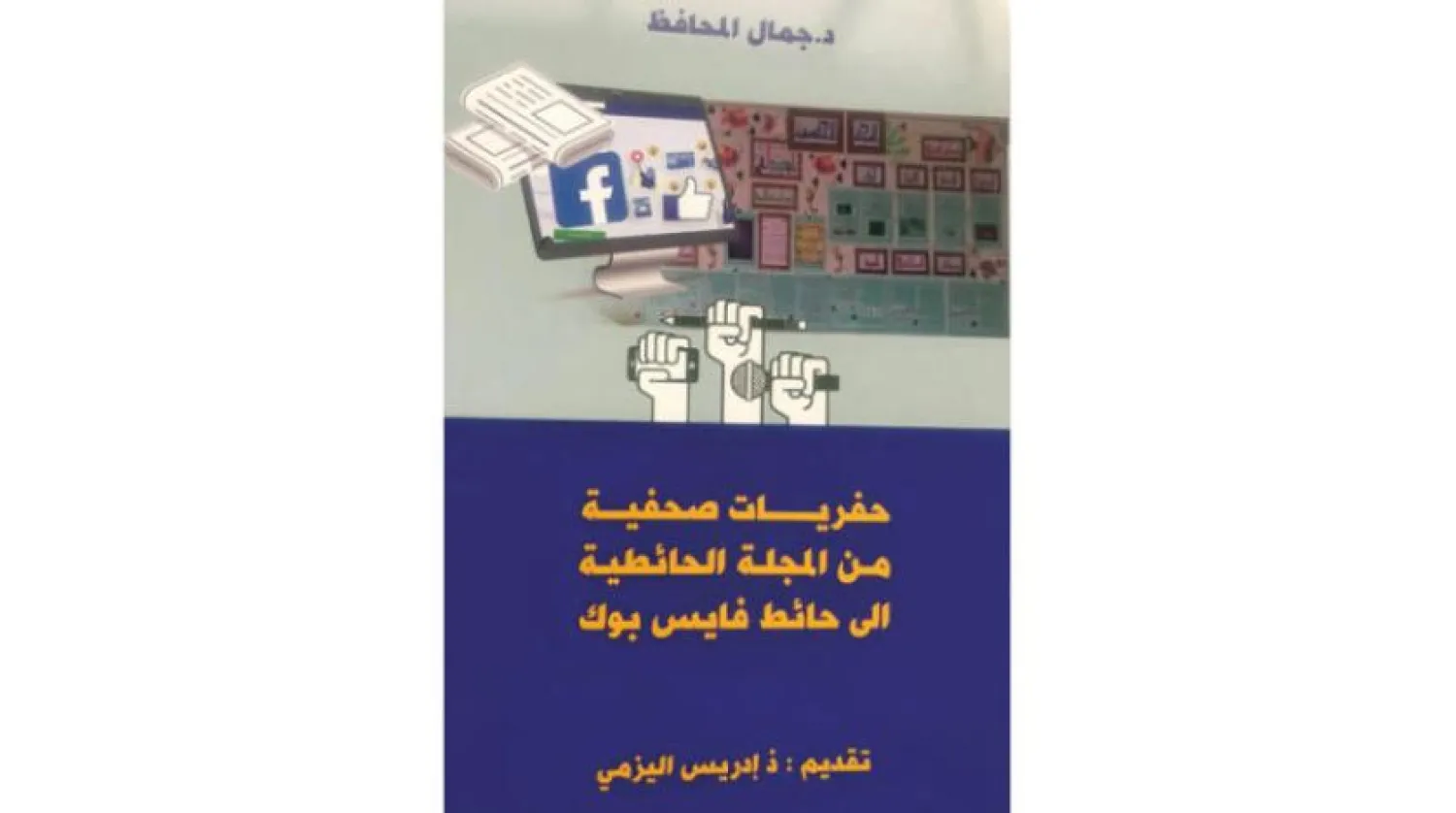
The Manahel Printing House, Rabat, released a new book entitled ‘Journalistic Excavations from Wall Magazine to Facebook Wall’ by Moroccan writer and journalist Jamal al-Mouhafez.

The book explores several journalistic and media causes in light of the challenges imposed by the digital revolution and showcases major occasions from the history of journalism and media in Morocco.

In his 400-page book, the writer sheds light on “the importance of media and communication in the contemporary world, and the analysis of the major journalistic occasions and events for lesson learning and answering the present questions.”

“We can’t understand journalism inclusively without having the sufficient knowledge of the society’s systems and entities because media outlets are part of the social structure, and their development is the result of the political, social, cultural, and economic transformations in any country. The author believes that the main problem in this context is proving the interaction between journalism and media and the political, social, and cultural spaces, because media is not a neutral actor; it affects and gets affected by major events,” the preamble reads.

“The content of this book attracts the reader with its historic depth. Citizen Jamal al-Mouhafez has always been haunted by the history of democracy in his country, and mostly by the role and impact of journalism and media on his community. He has always observed the development of this field, questioning major, fading concepts such as independence, credibility, and ethics,” Idris al-Yazmi, head of the Moroccan community abroad, says in the introduction.

According to al-Yazmi, reading this book is a historical journey full of interesting facts. However, history is not the dominating dimension in this book, which also features many articles that reflect concerns about the future of this profession, and how it is practiced nowadays in Morocco, our region, and the world.

What are the political, technological, economic, social, and ethical contexts and circumstances that surround journalists’ work? What about independence, neutrality, and ethics? What about discussion in media outlets, and the commitment to honor code in the field?

The book stands on the same distance between the media and the society in its political, social, cultural, and pedagogic features, which allows it to look at the exchanges and effects between both of them, and spot the reactions of each one towards the other.

Murad al-Qaderi, head of the poetry house in Morocco, writes on the book’s back cover: “This is not surprising. Dr. Jamal al-Mouhafez is a veteran journalist who has practiced this career for decades, and observed its paths, questions, and bets while serving in different media and civil positions.”

The book features over 100 texts and topics.


Once a National Obsession, Traditional Korean Wrestling Fights for Survival 

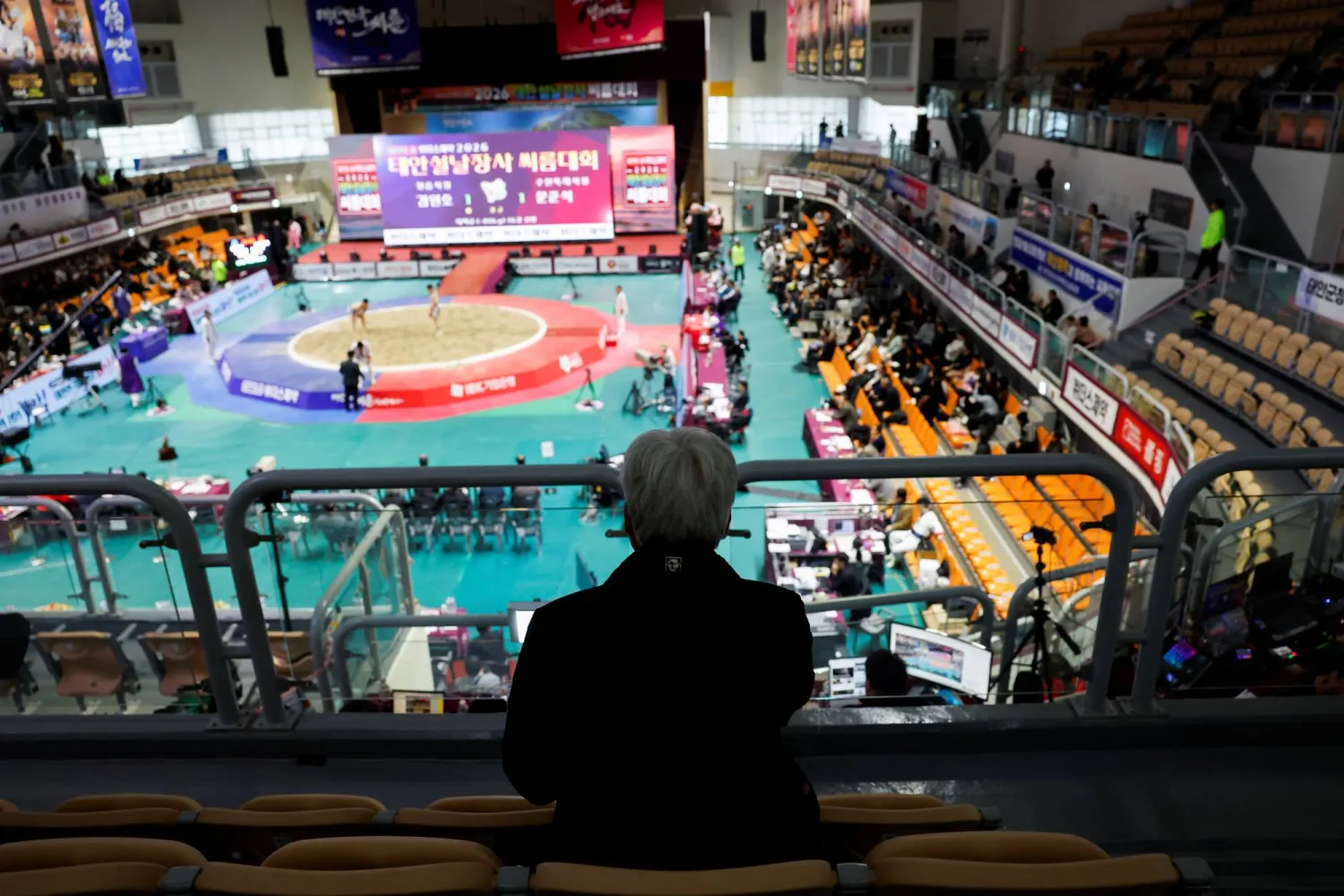
An elderly spectator watches a ssireum match during a Lunar New Year Ssireum championship at the Taean Complex Indoor Gymnasium in Taean, South Korea, February 14, 2026. (Reuters)
TT

Once a National Obsession, Traditional Korean Wrestling Fights for Survival 

An elderly spectator watches a ssireum match during a Lunar New Year Ssireum championship at the Taean Complex Indoor Gymnasium in Taean, South Korea, February 14, 2026. (Reuters)

As South Korea's global cultural influence expands in areas such as music, film and television, one form of entertainment struggling to attract attention even at home is Korea's traditional style of wrestling, known as ssireum.

Ssireum - pronounced like "see room" - had its heyday in the 1980s and early 1990s, when there were as many as eight professional teams and the top wrestlers became household names. Since then, it has been squeezed by tighter budgets and a public quick to move on to new trends.

Twenty-year-old Lee Eun-soo, who began training at the age ‌of nine, is ‌taking part in this year's Lunar New Year ‌tournament, ⁠the showcase event ⁠for the more than 1,500-year-old sport.

Lee lamented that at his former high school, the ssireum team currently has no members and there is talk of disbanding it.

"I once tried to imagine my life if I hadn’t done ssireum," Lee said. "I don’t think I could live without it."

A ssireum match involves two wrestlers facing off in an ⁠eight-meter (26.25 ft) sandpit ring, gripping each other by a ‌cloth belt called a "satba" and using ‌strength, balance, timing and stamina to force the opponent to the ground.

Ssireum ‌was inscribed on UNESCO's Representative List of the Intangible Cultural Heritage ‌of Humanity in 2018, but that international recognition has not translated into commercial success. Its relative obscurity contrasts with the high profile of Japan's sumo, another centuries-old form of wrestling.

Unlike sumo, which is supported by ‌a centralized professional ranking system and six major annual tournaments - or Olympic wrestling, with its global reach - ⁠ssireum remains ⁠largely domestic.

"Sport is something people won't come to watch if they don’t know the wrestlers or even the sport itself," said Lee Tae-hyun, a former ssireum wrestler and Professor of Martial Arts at Yong In University, who has promoted the sport overseas and believes it has commercial potential with the right backing.

Lee Hye-soo, 25, a spectator at the Lunar New Year tournament, said many Koreans are now unfamiliar with ssireum.

"My grandfather liked watching ssireum, so I watched it with him a lot when I was young," she said.

"I like it now too, but I think it would be even better if it became more famous."


Saudi Arabia Concludes Guest of Honor Role at Damascus International Book Fair 2026

The Kingdom’s pavilion, led by the commission, attracted strong attendance and active engagement through its cultural activities - SPA
TT

Saudi Arabia Concludes Guest of Honor Role at Damascus International Book Fair 2026

The Kingdom’s pavilion, led by the commission, attracted strong attendance and active engagement through its cultural activities - SPA

The Literature, Publishing and Translation Commission concluded the Kingdom’s Guest of Honor participation at the Damascus International Book Fair 2026, held in the Syrian capital from February 6 to 16, drawing strong attendance and engagement from visitors and cultural enthusiasts.

The Kingdom's pavilion was highly praised for its rich cultural content and high-quality programs, reflecting the vitality and growth of the Kingdom’s literary and cultural scene, SPA reported.

Literature, Publishing and Translation Commission CEO Dr. Abdullatif Abdulaziz Al-Wasel stated that the Kingdom’s role as Guest of Honor at the Damascus International Book Fair 2026, represented by a high-level cultural delegation led by Minister of Culture Prince Bader bin Abdullah bin Farhan, highlights the depth of Saudi-Syrian cultural relations based on partnership and mutual respect.

He noted that the participation demonstrates the Kingdom’s commitment to enhancing cultural exchange, a key objective of the National Culture Strategy under Saudi Vision 2030. Through this strategy, the commission emphasizes fostering constructive dialogue among peoples, exchanging knowledge and expertise, and consolidating the Kingdom’s active role in the Arab and international cultural landscape.

The Kingdom’s pavilion, led by the commission, attracted strong attendance and active engagement through its cultural activities. It showcased the commission’s programs and initiatives in literature, publishing, and translation, and featured a comprehensive cultural program, including literary seminars, cultural discussions, and poetry evenings with prominent Saudi writers and intellectuals.

These efforts enriched cultural dialogue with fair visitors and strengthened the presence of Saudi literature in the Arab cultural scene.

This edition of the Damascus International Book Fair marks a significant cultural milestone, reaffirming the value of books as carriers of meaning, spaces for dialogue, and starting points for a cultural journey that reflects the aspirations of the Arab cultural landscape toward a more open and aware phase.


Qiddiya City Begins Construction of Landmark Performing Arts Center

The Qiddiya Performing Arts Center supports the city’s positioning as a destination for creativity and cultural expression - SPA
TT

Qiddiya City Begins Construction of Landmark Performing Arts Center

The Qiddiya Performing Arts Center supports the city’s positioning as a destination for creativity and cultural expression - SPA

Qiddiya Investment Company has announced the commencement of construction works for the Performing Arts Center in Qiddiya City, marking an important milestone in the development of Qiddiya City as a destination for entertainment, sports and culture.

The announcement coincided with the laying of the foundation stone, signaling the start of construction works to be carried out by Nesma and Partners.

During the ceremony, held at the project site perched on the edge of the Tuwaiq Mountains, Managing Director of Qiddiya Investment Company Abdullah Aldawood delivered a speech announcing the official start of construction. He highlighted the importance of the project as a transformative addition that strengthens Qiddiya City’s cultural offering.

The Qiddiya Performing Arts Center supports the city’s positioning as a destination for creativity and cultural expression, while contributing to the development of local talent and attracting international artistic experiences.

The Qiddiya Performing Arts Center has been designed by Tom Wiscombe Architecture, in collaboration with BSBG, and features a futuristic architectural style defined by monumental forms. The design comprises interlocking architectural panels and five illuminated blades that blend harmoniously with the desert landscape, forming a prominent cultural landmark within Qiddiya City.

The start of construction follows the launch of the first phase of Qiddiya City in December 2025, which included the opening of Six Flags Qiddiya City. It’s part of the company’s broader approach to developing integrated destinations that enhance quality of life and deliver distinctive experiences across entertainment, sports and culture.