


Lebanese Publishers: Readers Don’t Trust Arabic Books, Prefer Translated Ones

Rana Idris, Dar Al Adab
TT

Lebanese Publishers: Readers Don’t Trust Arabic Books, Prefer Translated Ones

Rana Idris, Dar Al Adab

Publishers admit that Arabic readers favor translated books. Every publisher has his own explanation of this phenomenon and the reasons behind it, but they all agree it’s not healthy. According to Rana Idris, owner of Dar Al Adab Publishing, people in the Gulf region are the top buyers of translated books, followed by Egyptians, Maghrebis, and Iraqis.

Waiting for a change of taste, publishers have nothing to do but fulfill the readers’ desire by providing the best-translated publications, especially that selling translated books is the only means to keep the Arabic book alive today.

“We are preparing to publish nine new Arabic novels with losses that we cannot compensate for without selling translated novels, which are costly compared to Arabic books because we have to pay for copyrights and translation,” says Rana Idris.

It's not true that translated books are published without copyrights. “This happened in the past, but the situation has changed today,” says Hassan Yaghi, founder of Dar Al Tanweer Publishing, Beirut. “The chaos in this field is gone, and the market is now controlled. We face a lot of pressure, as publishing houses are forced to buy copyrights of foreign books for the sake of the book and the publishing process. This helps prevent chaos, and the spread of bad translations we used to see,” he adds.

“Copyrights of foreign books don’t cost the same; some cost $1,000 or $2,000, and some can cost up to $10,000. Some books are regular, some are highly demanded, and others are popular, best sellers, and competitive. Therefore, a publisher must pay to publish them; we are in a global market, and it’s better for the publisher not to steal copyrights because this could affect the writing process. Writers work for years to compose books, then someone comes and steal their efforts. This is a major reason behind the recession in this field,” Yaghi explains.

Publishing companies deal with different countries and regulators, and each have its own rules and work system. Rana Idris, who publishes novels translated from several languages, says the transfer is very costly.

“When I get an important new title, I pay $15,000-$20,000 in advance, and around $5,000 prepayment for the translator, in addition to the costs of editing, rereading, and review. Let’s say I got the copyrights to translate a novel by Murakami, I should pay $10,000-$15,000 to the publishing house, and another sum to the translator, in addition to the costs of editing, printing, and cover design…” she said.

For his part, Bassam Chebaro, owner of the Arabic Scientific Publishers, notes that some countries motivate the translation of books written in their languages, and pay for publishing houses for this purpose, which facilitates the mission of publishers and helps them save some costs.

Turkish, Russian, and Korean governments, for example, contribute to the translation costs of their publications. Relying on the sales, according to Chebaro, is useless because they are worthless and insufficient. “I worked in this field for 35 years. We used to print 5,000 copies of the book as a trial. However, today, we try with 1,000 copies, and some houses print only 500. Over 350,000 million people live in the Arab world, but we can’t print more than that, and sometimes these few prints remain unsold. Because of videos, mobile devices, and social media, our Arab people have abandoned reading and books, and the publishing industry is suffering,” he says.

Does the high demand for translated books in the Arabic market mean that the Arabic novel has degraded, and has been replaced with translated novels?

“The Arabic novel didn’t degrade, because it didn't advance in the first place. It has never reached an important level, and never been represented by names who can compete globally,” Yaghi said.

“Writing in the Arab world has remarkably weakened especially in the intellectual field since the works of Nasr Hamid Abu Zayd, Abdallah Laroui, and Mohammed Arkoun. The academic level has degraded, so did education in general, as well as scientific productivity. The mood of the readers has changed, they don’t favor the complex, intellectual books anymore, and prefer the easy, light philosophic books and entertaining novels,” he added.

But the publishers’ numbers are concerning. In the Arabic Scientific Publishers, over half of the published books are translated. “The house publishes over 6,000 books, half of them translated from foreign languages,” says Chebaro.

In Dar Al Adab, 65 percent of the novels published annually are translated, while only 35 percent publications are Arabic. In 2010, the numbers were reversed, Arab readers favored the Arabic novel at the time. However, the demand changed gradually, and the situation has been stable since 2017.

“I often take advantage of selling translated novels during bookfairs to remind the readers of great Arabic novels that are worth their attention. For example I tell the reader: Why don’t you read a book by this writer, her writing style is similar to Isabel Allende’s, or she discusses topics similar to those tackled by Elif Şafak,” Idris says.

The situation in Dar Al Tanweer is more significant, as 70 percent of its annual publications are translated. It’s a concerning number indeed. Does this mean that the Arabic book has become extinct, or about to?

We asked Founder Hassan Yaghi. “Yes, the Arabic book might be on the path of extinction. Our society is no more able to write, read, criticize, and promote books. Most readers resort to Amazon, instead of an Arabic reference, to explore the best and most popular books. Amazon has proved itself as a credible source worldwide, its reviews and feedback are trustworthy for buyers. This is what readers look for, a trusty reference,” he answers.

Rana Idris attributes the rejection of Arabic publications to many reasons, including “the lack of trust in the standard of Arabic writers. But this is unfair for novelists whose works are being read in the entire world, and neglected by their compatriots who don’t appreciate their talent.

“We live in a distrust phase. We don’t trust our civilization, culture, or writers. We don’t trust the Arabic language itself and its ability to fulfill its duty. In addition, there is a lack of serious criticism in newspapers and media which are usually the mediator between the reader and books. Most of today’s critics are fawners,” she adds.

Rana Idris sadly believes that there is a real difference between the serious criticism we read in The New Yorker for example, and what we read in some Arabic outlets. This contributes to a lower quality of Arabic books, and helps promote some local, non-talented writers.

Bassam Chebaro believes that piracy affects the Arabic productivity in this industry as well. When we search for ‘Arabic Books’ on Google, we find tens of thousands of results offered for free download. This doesn’t exist in other parts of the world, as many countries addressed this challenge with Google and regulated electronic publishing to put an end to such practices. “In fact, we don’t have a clear idea of our sales because the market of counterfeit publications is stronger than publishers, and our publications are being constantly violated. Our books are hacked in no time, we barely sell 3,000 to 4,000 copies before the book becomes available for free online. That’s why we say the Arabic books are violated, and that’s what the Arab Publishers Association (APA) seeks to address, and we hope they succeed.”

However, Chebaro insists that he will never be reluctant to translate and publish a foreign book that sold 700 million copies just because he’s concerned about piracy.

“Piracy isn’t the only concern for Arabic publishers. We are part of the writing and publishing industry in the world, but we are not major players. The lack of credible criticism, and the shrinking trust in Arabic books have affected the publishing industry. We are part of a huge market, but the Arabic presence in it is very slim.”
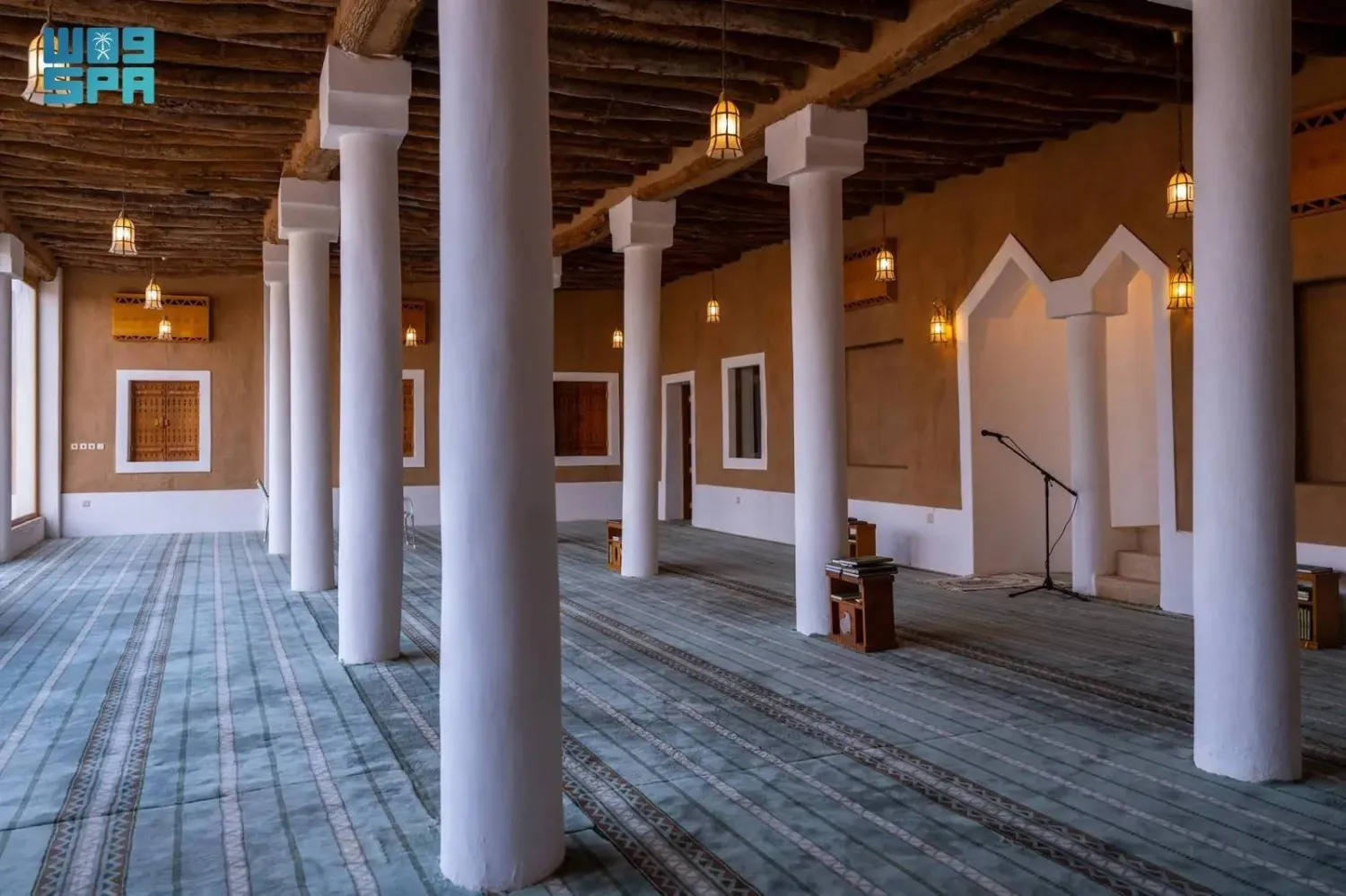


Prince Mohammed bin Salman Project Restores Century-Old Uqlat Al-Suqur Mosque in Qassim

The renovation utilized traditional mud, stone, and wood to preserve the mosque's authentic Najdi architectural style. (SPA)
TT

Prince Mohammed bin Salman Project Restores Century-Old Uqlat Al-Suqur Mosque in Qassim

The renovation utilized traditional mud, stone, and wood to preserve the mosque's authentic Najdi architectural style. (SPA)

The Prince Mohammed bin Salman Project for the Development of Historical Mosques has completed the restoration of the Uqlat Al-Suqur Mosque in Qassim Region, revitalizing a heritage landmark dating back to 1922, reported the Saudi Press Agency on Saturday.

Originally the only mosque in the area, it served as a vital religious and social hub for education and community governance.

The renovation, executed by specialized Saudi firms, utilized traditional mud, stone, and wood to preserve its authentic Najdi architectural style.

The project increased the mosque's area to 544 square meters, expanding its capacity to 250 worshippers while maintaining its historical identity.

The initiative aligns with Vision 2030 to preserve the Kingdom's urban heritage and boost the cultural and religious significance of its historical mosques for future generations.


Tomb More Than 1,000 Years Old Found in Panama

This handout picture released by Panama’s Ministry of Culture shows an archaeologist working inside a pre-Hispanic tomb approximately 1,200 years old, discovered at the El Cano Archaeological Park in Cocle, Panama, on February 20, 2026. (Handout / Panama’s Ministry of Culture / AFP)
TT

Tomb More Than 1,000 Years Old Found in Panama

This handout picture released by Panama’s Ministry of Culture shows an archaeologist working inside a pre-Hispanic tomb approximately 1,200 years old, discovered at the El Cano Archaeological Park in Cocle, Panama, on February 20, 2026. (Handout / Panama’s Ministry of Culture / AFP)

Archaeologists have discovered a tomb more than a thousand years old in Panama containing human remains alongside gold and ceramic artifacts, the lead researcher told AFP on Friday.

The discovery was made at the El Cano site in the Nata district about 200 kilometers (124 miles) southwest of Panama City.

Scientists and archaeologists have already unearthed other remains of pre-Hispanic cultures in the region that has been excavated for two decades.

The skeletal remains were found surrounded by gold objects and pottery decorated with traditional motifs, pointing to these being "high-ranking" individuals, archaeologist Julia Mayo told AFP, adding that the tomb was built between 800 and 1000 AD.

"The individual with the gold was the one with the highest social status in the group," she said.

That body was found with two bracelets, two earrings, and pectoral jewelry that featured bats and crocodiles, she added.

The El Cano archaeological site is linked to the societies that inhabited the central provinces of Panama between the 8th and 11th centuries.

"This is where they buried their dead for 200 years," said Mayo.

Nine other tombs "similar" to the one found on Friday had already been found at the site, she added.

Panama's Ministry of Culture said the discovery was "of great importance for Panamanian archaeology and the study of pre-Hispanic societies of the Central American isthmus," referring to the land that connects North and South America.

According to experts, these excavations demonstrate that death did not represent an end for these societies, but a transition to another phase where social status remained important.


When in Rome: Budapest Pizzeria Offers Time-Travel Twist with Ancient Rome-Inspired Pie

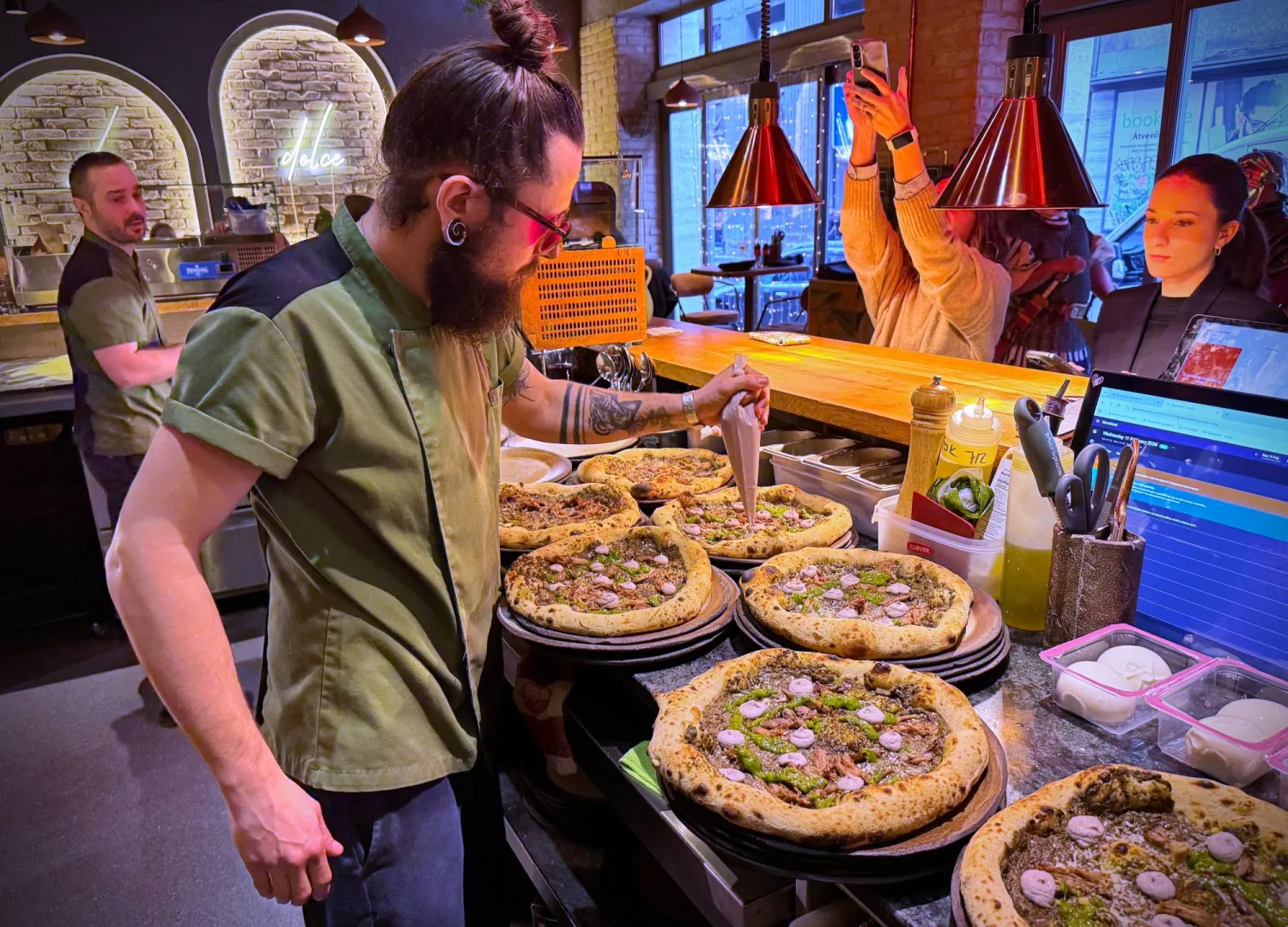
László Bárdossy, head chef of the Neverland Pizzeria adds topping on the restaurant's Roman-era pizza in Budapest, Hungary, on Feb. 11, 2026. (AP)
TT

When in Rome: Budapest Pizzeria Offers Time-Travel Twist with Ancient Rome-Inspired Pie

László Bárdossy, head chef of the Neverland Pizzeria adds topping on the restaurant's Roman-era pizza in Budapest, Hungary, on Feb. 11, 2026. (AP)

In Hungary’s capital, a city best known for its goulash, a pizzeria is inviting diners to travel back two millennia to a time before tomatoes, mozzarella or even the word “pizza” were known in Europe.

At Neverland Pizzeria in central Budapest, founder Josep Zara and his team have created a limited-edition pie using only ingredients that would have been available in ancient Rome, long before what we know today as pizza ever existed.

“Curiosity drove us to ask what pizza might have been like long ago,” Zara said. “We went all the way back to the Roman Empire and wondered whether they even ate pizza at the time.”

Strictly speaking, they did not. Tomatoes arrived in Europe centuries later from the Americas, and mozzarella was as yet unknown. Some histories have it that the discovery of mozzarella led directly to the invention of pizza in Naples in the 1700s.

But Romans did eat oven-baked flatbreads topped with herbs, cheeses and sauces, the direct ancestors of modern pizza, which were often sold in ancient Roman snack bars called thermopolia.

In 2023, archaeologists uncovered a fresco in Pompeii depicting a focaccia-like flatbread topped with what appear to be pomegranate seeds, dates, spices and a pesto-like spread. The image made headlines around the world, and sparked Zara’s imagination.

“That made me very curious about what kind of flavor this food might have had,” he said. “That’s where we got the idea to create a pizza that people might have eaten in the Roman Empire, using only ingredients that were in wide use at the time.”

Zara began researching Roman culinary history, consulting a historian in Germany as well as the ancient cookbook De re coquinaria, thought to have been authored around the 5th century. Following his research, he compiled a list of historically documented ingredients to present to the pizzeria's head chef.

“We sat down to imagine what we might be able to make using these ingredients, and without using things like tomatoes and mozzarella,” Zara said. “We had to exclude all ingredients that originated from America.”

Head chef László Bárdossy said the constraints forced the team into months of experimentation, and a few false starts.

“We had to discard a couple ideas,” Bárdossy said. “The fact that there wasn’t infrastructure like a water system at the time of the Romans made things difficult for us, since more than 80% of pizza dough is water. We had to come up with something that would have worked before running water.”

The solution: helping the dough rise using fermented spinach juice. Ancient grains such as einkorn and spelt, widely cultivated in Roman times, formed the base, and the dough ended up slightly more dense than that of most modern pizzas.

The finished pie is topped with ingredients associated with Roman aristocratic cuisine, including epityrum, an olive paste, garum, a fermented fish sauce ubiquitous in Roman cooking, confit duck leg, toasted pine nuts, ricotta and a grape reduction.

“Our creation can be called a modern pizza from the perspective that we tried to make it comprehensible for everyone,” Bárdossy said. “Although we wouldn’t use all its ingredients for everyday dishes. There is a narrow niche that thinks this is delicious and is curious about it, while most people want more conventional pizza, so it’s not for everyday eating. It’s something special.”

For Zara, the project reflects Neverland Pizzeria’s broader philosophy.

“We’ve always liked coming up with new and interesting things, but tradition is also very important for us, and we thought that these two things together suit us,” he said.

However, he added, there is a modern boundary the restaurant will not cross.

“We do a lot of experimentation with our pizzas. But of course, we definitely do not use pineapple,” he said.