


Ruling Could Dampen US Government Efforts to Rein in Big Tech

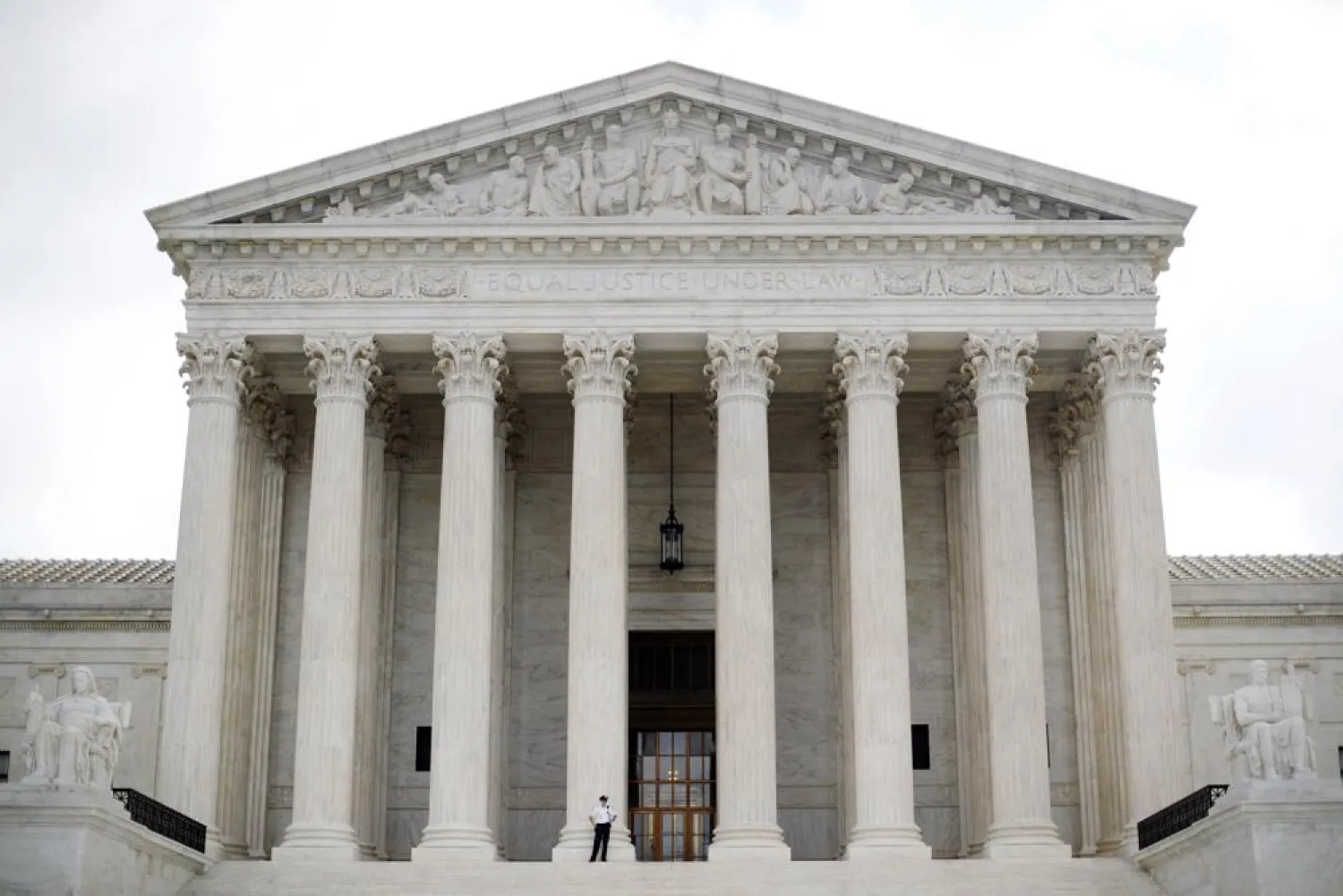
FILE — A police officer guards the main entrance to the Supreme Court in Washington, Oct. 9, 2018. (AP Photo/Pablo Martinez Monsivais, File)
TT

Ruling Could Dampen US Government Efforts to Rein in Big Tech

FILE — A police officer guards the main entrance to the Supreme Court in Washington, Oct. 9, 2018. (AP Photo/Pablo Martinez Monsivais, File)

The Supreme Court’s latest climate change ruling could dampen efforts by federal agencies to rein in the tech industry, which went largely unregulated for decades as the government tried to catch up to changes wrought by the internet.

In the 6-3 decision that was narrowly tailored to the Environmental Protection Agency, the court ruled Thursday that the EPA does not have broad authority to reduce power plant emissions that contribute to global warming. The precedent is widely expected to invite challenges of other rules set by government agencies.

“Every agency is going to face new hurdles in the wake of this confusing decision," said Alexandra Givens, the president and CEO of the Center for Democracy and Technology, a Washington-based digital rights nonprofit. “But hopefully the agencies will continue doing their jobs and push forward."

The Federal Trade Commission, in particular, has been pursuing an aggressive agenda in consumer protection, data privacy and tech industry competition under a leader appointed last year by President Joe Biden.

Biden's picks for the five-member Federal Communications Commission have also been pursuing stronger “net neutrality” protections banning internet providers from slowing down or blocking access to websites and applications that don’t pay for premium service.

A former chief technologist at the FTC during President Donald Trump's administration said the ruling is likely to instill some fear in lawyers at the FTC and other federal agencies about how far they can go in making new rules affecting businesses.

The court “basically said when it comes to major policy changes that can transform entire sectors of the economy, Congress has to make those choices, not agencies,” said Neil Chilson, who is now a fellow at libertarian-leaning Stand Together, founded by the billionaire industrialist Charles Koch.

Givens disagreed, arguing that many agencies, especially the FTC, have clear authority and should be able to withstand lawsuits inspired by the EPA decision. She noted that Chief Justice John Roberts, who wrote the opinion, repeatedly described it as an “extraordinary" situation.

Givens is among the tech advocates calling for Congress to act with urgency to make laws protecting digital privacy and other tech matters. But she said laws typically stay on the books for decades, and it's unrealistic to expect Congress to weigh in on every new technical development that questions an agency's mandate.

“We need a democratic system where Congress can give expert agencies the power to address issues when they arise, even when those issues are unforeseen,” she said. “The government literally can’t work with Congress legislating every twist and turn.”

Empowered by Congress in the 1970s to tackle “unfair or deceptive" business practices, the FTC has been in the vanguard of Biden’s government-wide mandate to promote competition in some industries, including Big Tech, health care and agriculture. A panoply of targets include hearing aid prices, airline baggage fees and “product of USA” labels on food.

Under Chair Lina Khan, the FTC also has widened the door to more actively writing new regulations in what critics say is a broader interpretation of the agency’s legal authority. That initiative could run into stiff legal challenges in the wake of the high court decision. The ruling could call into question the agency’s regulatory agenda — leading it to either tread more cautiously or face tougher and more expensive legal challenges.

Khan "hasn’t really been someone who pursues soft measures, so it may be a damn-the-torpedoes approach,” Chilson said.

University of Massachusetts internet policy expert Ethan Zuckerman said it would be hard to gauge any potential impact of the court’s ruling on existing tech regulation. That's partly because “there’s just not that much tech regulation to undo," he said.

He said one target could be the Consumer Financial Protection Bureau, “a bête noire for many conservatives.” Big companies such as Facebook parent Meta could also potentially appeal tough enforcement actions on the idea that federal agencies weren't explicitly authorized to regulate social media.

“We’re in uncharted territory, with a court that’s taking a wrecking ball to precedent and seems hell-bent on implementing as many right-wing priorities as possible in the shortest possible time,” Zuckerman said.

The ruling could dampen the appetite for agencies like the FTC to act to limit harm from artificial intelligence and other new technologies. It could have less effect on new rules that are more clearly in the realm of the agency imposing them.

Michael Brooks, chief counsel for the nonprofit Center for Auto Safety, said the ruling isn’t likely to change the government’s ability to regulate auto safety or self-driving vehicles, although it does open the door to court challenges.

For instance, the National Highway Traffic Safety Administration has clear authority to regulate auto safety from a 1966 motor vehicle safety law, Brooks said.

“As long as the rules they are issuing pertain to the safety of the vehicle and not anything that’s outside of their authority, as long as it’s related to safety, I don’t see how a court could do an end run around the safety act,” he said.

Unlike the EPA, an agency with authority granted by multiple, complex laws, NHTSA’s "authority is just so crystal clear," Brooks said.

NHTSA could have problems if it strayed too far from regulating safety. For example, if it enacted regulations aimed to shift buyers away from SUVs to more fuel-efficient cars, that might be struck down, he said. But the agency has historically stuck to its mission of regulating auto safety with some authority on fuel economy, he said.

However, it’s possible that a company such as Tesla, which has tested the limits of NHTSA’s powers, could sue and win due to an unpredictable Supreme Court, Brooks said.



Canada's Cohere, Germany's Aleph Alpha Reportedly in Merger Talks

FILE PHOTO: AI (Artificial Intelligence) letters and robot hand are placed on computer motherboard in this illustration created on June 23, 2023. REUTERS/Dado Ruvic/Illustration/File Photo
TT

Canada's Cohere, Germany's Aleph Alpha Reportedly in Merger Talks

FILE PHOTO: AI (Artificial Intelligence) letters and robot hand are placed on computer motherboard in this illustration created on June 23, 2023. REUTERS/Dado Ruvic/Illustration/File Photo

Artificial intelligence companies Cohere of Canada and Aleph Alpha of Germany are in talks to merge and have Berlin's support for a potential deal, newspaper Handelsblatt reported late on Thursday.

Citing government and industry sources, the paper said the German government would be willing to become a key customer of a combined company, part of a push to provide digital public services.

"If leading AI companies from Canada and Germany were to join forces that would send a very strong signal," German Digital Minister Karsten Wildberger told the ⁠paper.

Germany and Canada ⁠were already collaborating closely in the field, he was also quoted as saying.

Aleph Alpha told Reuters that regular discussions over strategic partnerships were standard practice in the AI industry and that Aleph Alpha had its own independent strategy, declining to comment further.

Cohere said it meets "with companies and institutions ⁠across Germany and Europe and continually evaluates strategic opportunities that support our global growth."

It also pointed Reuters to its international expansion efforts as well as to the Canadian-German Sovereign Technology Alliance agreed this year, but would not comment further.

Germany's research and digital ministries did not immediately respond to requests for comment.

Handelsblatt said merger talks started early this year and had reached an advanced stage, with plans for the new entity to be headquartered in both countries.

Germany has been eager to catch ⁠up with ⁠dominant AI players the US and China in a global race to master a transformational technology and attract high-income jobs. India has also emerged as a contender.

Last month, Berlin unveiled plans to encourage investments to boost AI data processing capacity at least fourfold by 2030.

Microsoft, which is collaborating with Cohere, unveiled $23 billion in AI investments in December, with the bulk earmarked for India and parts for Canada.

That was after Alphabet's Google said it would spend $15 billion over five years on an AI data center in India.


Apple Reportedly Leads Global Smartphone Shipments in 1st Quarter

FILE PHOTO: The Apple logo is seen during the preview of the redesigned and reimagined Apple Fifth Avenue store in New York, US, September 19, 2019. REUTERS/Brendan McDermid/File Photo
TT

Apple Reportedly Leads Global Smartphone Shipments in 1st Quarter

FILE PHOTO: The Apple logo is seen during the preview of the redesigned and reimagined Apple Fifth Avenue store in New York, US, September 19, 2019. REUTERS/Brendan McDermid/File Photo

iPhone-maker Apple led smartphone shipments in the first quarter, growing 5% year-on-year, ⁠even as overall ⁠global shipments remained ⁠under pressure due to a shortage of memory components and weak consumer sentiment, Counterpoint Research ⁠said ⁠on Friday.

Apple said on Thursday that it will shut down its retail store in Towson, Maryland, the first of its US locations where retail employees successfully unionized in 2022.

It described the decision as "difficult", citing the departure of several retailers and worsening conditions at the Towson Town Center mall as key reasons for the closure.

Apple said Towson employees will ⁠be eligible to ⁠apply for open roles at the company.

In 2022, more than 100 Apple workers in Towson voted to join the International Association of Machinists & Aerospace Workers (IAM) union, marking a milestone ⁠for unionization at major US corporations such as Amazon.com and Starbucks.

Around the same time, a similar union drive in Atlanta was withdrawn, with Apple workers alleging intimidation.


Saudi Day of Digital Transformation and AI at World Bank Focuses on Global AI Governance

The Saudi Data and Artificial Intelligence Authority (SDAIA) and the Digital Government Authority, in cooperation with the World Bank Group, organized the “Saudi Day of Digital Transformation and Artificial Intelligence. (SPA)
TT

Saudi Day of Digital Transformation and AI at World Bank Focuses on Global AI Governance

The Saudi Data and Artificial Intelligence Authority (SDAIA) and the Digital Government Authority, in cooperation with the World Bank Group, organized the “Saudi Day of Digital Transformation and Artificial Intelligence. (SPA)

The Saudi Data and Artificial Intelligence Authority (SDAIA) and the Digital Government Authority, in cooperation with the World Bank Group, organized the “Saudi Day of Digital Transformation and Artificial Intelligence” on Thursday at the World Bank Group headquarters in Washington.

The event brought together speakers from government entities, international experts, and academics, the Saudi Press Agency reported on Friday.

The event aimed to exchange expertise and best practices in AI and digital transformation, strengthen institutional cooperation, and review the latest initiatives and technologies supporting the development and efficiency of government services, thereby reinforcing the Kingdom’s global standing and leadership.

The sessions discussed the future of AI governance worldwide, prospects for developing regulatory frameworks, and the importance of expanding international cooperation to advance ethical and trustworthy practices for AI applications.

During the event, the Kingdom also highlighted several of its achievements in digital transformation, data, and AI.