



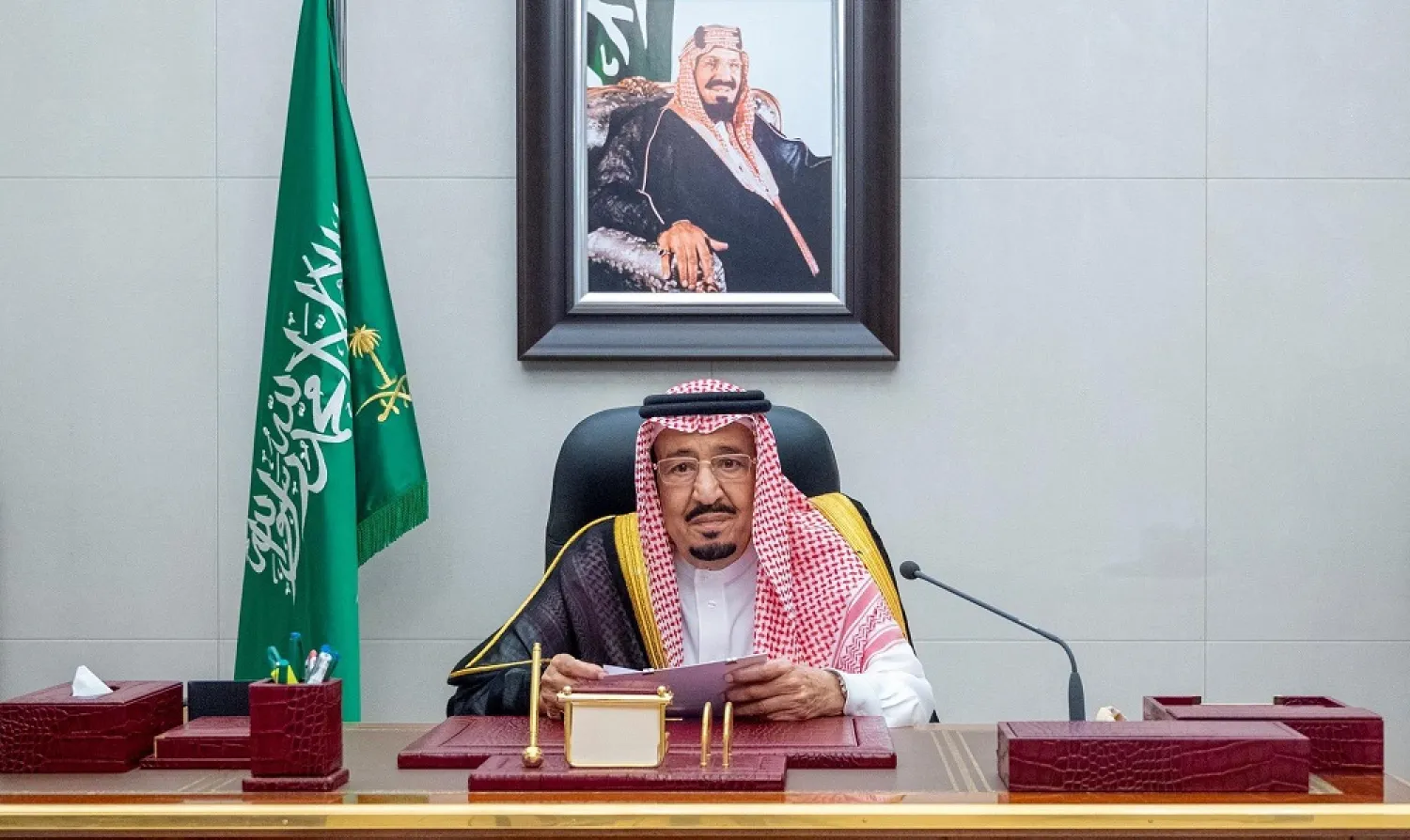

Custodian of the Two Holy Mosques King Salman bin Abdulaziz stressed on Sunday the importance of dialogue, negotiations and peaceful solutions in ending fighting, protecting civilians and establishing peace, security and development for all.
He underlined the Kingdom’s support to international efforts aimed at reaching a political solution to the Russia-Ukraine crisis and ending the fighting.
King Salman inaugurated on Sunday the proceedings of the third year of the eighth session of the Shura Council. Prince Mohammed bin Salman, Crown Prince and Prime Minister, was also at the inauguration.
King Salman added that the Kingdom “was and still is a mediator of peace and beacon of humanity given its high standing among nations and pivotal role in international politics.”
He also cited its pioneering role in supporting all that is good for mankind, highlighting Crown Prince Mohammed’s humanitarian initiatives towards resolving the crisis in Ukraine.
He underlined the success of his recent mediation to release prisoners from several countries, their transfer to Russia to the Kingdom and eventual return to their homes.
“The Kingdom is committed to helping countries most in need and affected from natural disasters and man-made crises,” he added, stressing that it is the greatest humanitarian donor in the Arab and Islamic world and among the top three on the international level.
Moreover, King Salman said Saudi Arabia was working with international partners to ease the impact of armed conflicts on food security. He said Riyadh stresses the importance of easing the export of grain and food goods because the continuous rise in food prices will push several communities on the verge of famine.
He noted that the Kingdom has contributed around 2.8 billion dollars towards improving food security.
Int'l contributions
On the economic level, King Salman stated that the Kingdom continues to achieve high levels of growth in spite of the rise in global inflation. He credited this success to its monetary, financial and economic policies.
He remarked that unemployment was also dropping in the Kingdom. As of the second quarter of 2022, unemployment stood at 9.7 percent. The Kingdom is aiming to reach 7 percent in line with its Vision 2030.
King Salman highlighted the Jeddah Security and Development Summit that was held with the participation of the United States and leaders of nine Arab countries in July. The gatherers stressed the importance of collective work in building a better future for the region and its people.
King Salman underlined Saudi Arabia’s standing and central role on the political and economic levels. “This standing constantly places it at the center of the world as it remains abreast of its developments, helps in confronting its challenges and invests in its opportunities to achieve its interests and that of its brothers and friends in service of humanity,” he declared.
In line with the Kingdom’s efforts to bolster relations with countries around the world, Crown Prince Mohammed bin Salman carried out several visits to a number of friendly and fraternal countries. The Kingdom has also hosted a number of world leaders and senior officials.
These visits have led to the signing of significant agreements that aim to achieve joint interests.
King Salman said the Kingdom is looking forward to elevating joint Gulf work to boost the Gulf Cooperation Council on all levels. He stressed the importance of continuing efforts towards achieving a prosperous economic bloc and joint defense and security system.
Stances and crises
King Salman remarked that the security of the Middle East demands swift efforts to reach a just and comprehensive solution to the Palestinian-Israeli conflict in line with international resolutions and the 2002 Arab peace initiative. The solution must lead to the establishment of an independent Palestinian state according to the 1967 borders with East Jerusalem as its capital.
He added that Riyadh condemns all unilateral measures that undermine the two-state solution, demanding their immediate halt.
On Yemen, King Salman hoped that the United Nations-sponsored truce would lead to a settlement to the conflict and a comprehensive political solution that would establish sustainable peace among the Yemeni people.
He underscored Saudi Arabia’s support to the Presidential Leadership Council and its efforts to restore security and stability in Yemen.
On Iraq, King Salman said its security is integral to that of the region. “Saudi Arabia support its security, stability, territorial integrity, Arab identity and social fabric,” he added. He stated that the Kingdom backs Iraq in its fight against terrorist groups and armed militias.
On Sudan, he declared that the Kingdom supports and encourages dialogue between political forces. It supports efforts aimed at maintaining the unity of the state and its institutions and backs Sudan as it confronts economic challenges.
Turning to Syria, King Salman urged respect to UN Security Council resolutions that preserve its sovereignty, stability and Arab identity. He stressed the need to prevent a renewal of fighting, maintain ceasefire agreements and ensure the delivery of humanitarian aid to those in need.
On Lebanon, he emphasized the need for political and economic reforms to be carried out that will help it overcome its crisis. Moreover, he stressed the need for its government to impose its authority throughout Lebanese territories.
Authorities must maintain security and confront attempts to smuggle drugs abroad and crack down on terrorist activities that are a threat to the security and stability of the region.
On Libya, King Salman said the Kingdom supports the comprehensive ceasefire and Libyan calls for the withdrawal of all foreign forces, fighters and mercenaries from its territories in line with Security Council resolution 2570.
King Salman also stressed the need to maintain humanitarian support to Afghanistan and continue efforts to prevent it from turning into a launchpad for terrorist attacks or haven for terrorists.
On global security and peace, the monarch said they cannot be achieved through an arms race or the possession of weapons of mass destruction. Rather, they are achieved through cooperation between countries to achieve development and progress.
“We urge the international community to intensify efforts to prevent the proliferation of weapons of mass destruction and ensure that the Middle East is devoid of them,” he demanded.
He called on Iran to “immediately respect its nuclear commitments and cooperate fully with the International Atomic Energy Agency and take serious steps to build trust between it and its neighbors and international community.”


